




The first few days after your baby’s birth can bring a mix of excitement, tiredness and uncertainty. If a neonatologist is involved, you may naturally worry, but their role is to assess your baby’s health and provide specialist support when needed.
A neonatologist is a paediatric specialist in newborn medicine who commonly cares for premature or unwell babies and babies needing additional support after birth. However, your baby may be assessed by another neonatal doctor, an advanced neonatal nurse practitioner or a general paediatrician working within the wider neonatal team.
Not every specialist review leads to neonatal-unit admission. Some babies need only an examination, additional observations or short-term treatment while remaining with you on a postnatal or transitional-care ward.
What Does a Neonatologist Do?
A neonatologist is a paediatrician with specialist expertise in neonatal medicine. Newborn babies undergo major changes in breathing, circulation, temperature regulation, blood-glucose control and feeding as they adapt to life outside the womb.
The neonatologist helps coordinate assessment and treatment when additional support is needed. Tests and treatments are delivered by the wider neonatal team and may include respiratory support, antibiotics, phototherapy, intravenous fluids or nutrition and feeding assistance, depending on the baby’s diagnosis and clinical condition.
Does Every Newborn Need a Neonatologist?
Not every newborn needs to see a neonatologist, and most healthy babies born at term can stay with you while receiving routine postnatal care. If your baby is breathing well, maintaining their temperature and feeding effectively, they will usually only need standard newborn checks.
Healthy babies still receive routine newborn care, including a newborn physical examination, hearing screening and blood-spot screening at the appropriate times. These assessments may be completed by trained midwives, nurses or doctors and do not normally require a consultant neonatologist.
A neonatal review may be requested when an examination, observation or pregnancy history raises a concern. The review may result in reassurance, planned monitoring, treatment on a postnatal ward or admission according to your baby’s needs.
When Does a Premature Baby Need Neonatal Care?

A baby born before 37+0 weeks of pregnancy is premature or preterm. Babies born between 32+0 and 36+6 weeks may sometimes remain with their parent in postnatal or transitional care while receiving additional feeding, temperature and blood-glucose support.
Babies born earlier, or those with breathing, circulation, infection or feeding concerns, are more likely to require admission to a neonatal unit. Gestational age is important, but the plan also depends on birth weight and the baby’s condition after delivery.
Why Might a Small or Low-Birthweight Baby Be Referred?
Low birth weight means a birth weight below 2.5 kg, regardless of gestational age. A baby described as small for gestational age has a birth weight below the expected range for the number of weeks of pregnancy, commonly below the 10th centile. Some babies are constitutionally small, while others have experienced fetal growth restriction.
The maternity or neonatal team may monitor feeding, temperature, blood glucose and weight according to the baby’s clinical condition and risk factors. Not every small baby requires neonatal admission, and a well baby may remain with you when the necessary monitoring can be provided safely.
When Do Breathing Problems Require a Neonatologist?
Fast breathing, persistent grunting, nostril flaring, chest recession, pauses in breathing or difficulty feeding because of breathlessness require prompt clinical assessment. The neonatal team may check oxygen saturation, breathing effort, heart rate, temperature and other signs to identify infection, respiratory distress, a heart condition or another cause.
Call 999 if your baby stops breathing, has repeated breathing pauses, develops severe breathing difficulty, cannot be woken or turns pale, blue or grey. Do not wait for a private neonatology appointment when these symptoms occur.
When Is Infection a Reason for Specialist Assessment?
Newborn infection can present with subtle changes such as feeding refusal, altered sleepiness or responsiveness, floppiness, abnormal breathing, temperature changes, jaundice during the first 24 hours or changes in colour. The team considers these findings alongside pregnancy and birth risk factors.
Blood cultures and other investigations may be arranged when infection is suspected. For possible early-onset neonatal infection, a baby with any red flag, or with two or more non-red-flag risk factors or clinical indicators, should normally have the recommended investigations and antibiotic treatment started without waiting for the test results.
Under the same early-onset infection framework, when there is no red flag and only one risk factor or clinical indicator, the neonatal team should use clinical judgement to decide whether antibiotics can be withheld and whether structured observations are required. If monitoring is needed, NICE recommends continuing it for at least 12 hours using a newborn early-warning system.
When Do Feeding Difficulties Need a Neonatal Review?
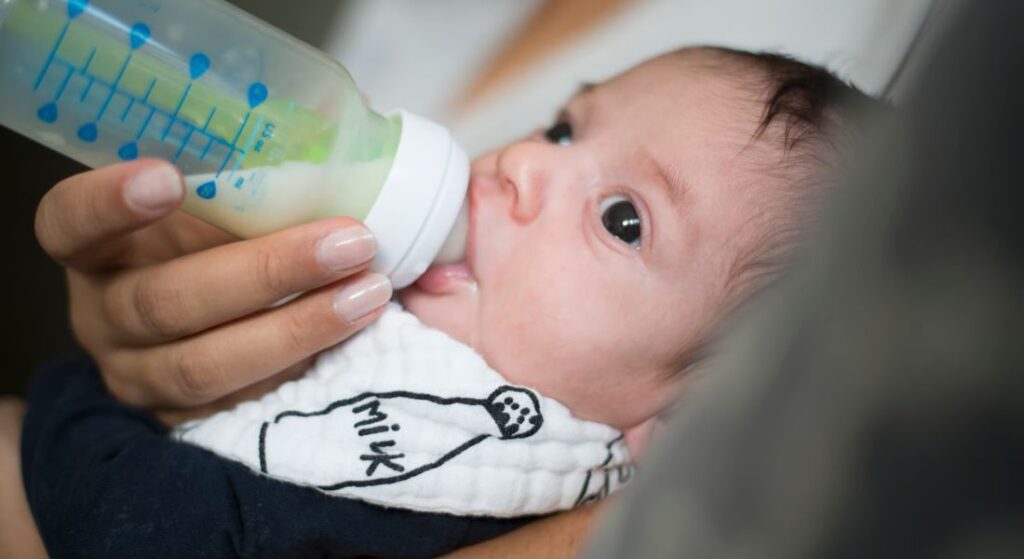
Feeding can take time to establish, but new feeding refusal, difficulty waking for feeds, breathlessness or sweating during feeds, repeated forceful vomiting or significantly fewer wet nappies require medical assessment. Green vomit is not a normal feeding problem and requires urgent hospital assessment.
The neonatal or paediatric team may assess feeding technique, breathing, hydration, muscle tone, weight and blood glucose. Treatment can include feeding support, expressed milk or formula through a tube, intravenous fluids or investigation of an underlying illness.
When Is Low Blood Sugar a Concern?
Low blood sugar can affect a baby’s energy levels and may require prompt treatment. Some newborns have a higher risk and need closer monitoring after birth.
- Higher risk: This includes babies born prematurely, babies who are small or large for gestational age, and babies born to mothers with diabetes.
- Possible symptoms: Poor feeding, unusual sleepiness, floppiness or abnormal movements.
- Careful monitoring: Blood glucose levels and symptoms guide treatment decisions.
- Treatment options: May include feeding support, glucose gel, tube feeding or intravenous glucose.
- Family-centred care: Treatment aims to support your baby while avoiding unnecessary separation whenever possible.
Most babies respond well to treatment, and repeat blood-glucose checks help the team assess whether treatment is working.
When Does Jaundice Require Specialist Care?
Jaundice causes yellowing of the skin or whites of the eyes because bilirubin has accumulated in the blood. When jaundice is suspected or visible during the first 24 hours, NICE recommends measuring and recording the serum bilirubin level urgently within two hours.
For later jaundice, the treatment decision depends on the measured bilirubin level, gestational age, baby’s age in hours and clinical condition rather than visible colour alone. Phototherapy is used when the relevant treatment threshold is reached. Poor feeding, unusual sleepiness, dark urine or pale chalky stools should also be reported promptly.
When Is an Abnormal Temperature Important?
Newborn babies, particularly those born prematurely or with low birth weight, can lose heat quickly. However, an unexplained temperature below 36°C can also be a clinical indicator of infection or another illness rather than simply meaning that your baby needs additional clothing.
A baby under three months with a temperature of 38°C or higher needs urgent medical assessment. Seek urgent assessment for a temperature below 36°C that remains low after it is checked correctly, especially when your baby is feeding poorly, unusually sleepy, floppy or breathing abnormally.
When Does a Difficult Birth Lead to Neonatal Care?

Your baby may need neonatal assessment after a difficult birth when there were concerns about their heart rate, oxygen supply, breathing, muscle tone, responsiveness or need for resuscitation. Significant maternal bleeding or another delivery complication may also prompt additional observation.
Your baby may need help with breathing, circulation, temperature control or stabilisation immediately after birth. The neonatal team will assess how the baby responds and determine whether observation, further tests or neonatal-unit care is required.
Therapeutic hypothermia may be considered for eligible babies born at 36 weeks or later who develop moderate or severe neonatal encephalopathy following suspected impaired oxygen and blood flow around birth. It should begin as soon as possible, usually within six hours. Eligibility also depends on the pregnancy and birth history, the baby’s examination and the local neonatal-network pathway.
Which Congenital Conditions May Need Neonatal Assessment?
If your baby is born with a congenital condition, they may need assessment from a neonatologist and other specialists. These conditions are present from birth and may affect areas such as the heart, lungs, brain, kidneys, digestive system or other parts of the body.
Your neonatologist will help stabilise your baby, arrange necessary tests and coordinate care with specialists such as cardiologists, surgeons or geneticists. Some conditions only need monitoring and follow-up, while others may require treatment soon after birth or care at a specialist children’s hospital.
When Do Heart and Circulation Concerns Need Review?
After your baby is born, their heart and circulation need to adjust as the lungs begin working and the umbilical cord is clamped. Most babies adapt well, but your baby may need specialist assessment if there are concerns about their oxygen levels, heart sounds, pulses, breathing or feeding.
A heart murmur does not automatically indicate a serious heart condition. Assessment should consider the baby’s oxygen saturation, femoral pulses, breathing, feeding, colour and overall clinical condition, with echocardiography arranged when the findings or local pathway indicate that imaging is needed.
Call 999 if your baby stops breathing, develops severe breathing difficulty, cannot be woken or suddenly turns pale, blue or grey. These symptoms require emergency care regardless of whether a murmur has previously been heard.
When Are Sleepiness, Floppiness or Unusual Movements Concerning?
Newborn babies naturally sleep for long periods, but you should usually be able to wake your baby for feeds and notice normal responses. If your baby becomes unusually sleepy, difficult to wake, floppy or has a weaker cry than usual, they may need prompt medical assessment.
The assessing neonatal or paediatric team may check for causes such as infection, low blood glucose, breathing problems or neurological concerns and arrange further tests when needed. Seek emergency help if your baby has a seizure, becomes unresponsive or limp, or cannot be woken, even if they appear to recover afterwards.
What Happens During a Neonatal Assessment?
During a neonatal assessment, your neonatologist will ask about your pregnancy, birth and your baby’s health since delivery. You may be asked about feeding, nappies, breathing, colour, behaviour and any changes you have noticed at home or in hospital.
Your baby will have a detailed examination, which may include checking their breathing, heart, muscle tone, reflexes, temperature, weight and oxygen levels. Further tests such as blood tests, scans or heart checks may be recommended if needed, and your neonatologist will explain what the results mean and whether your baby needs treatment, monitoring or follow-up care.
Is the Appointment Routine or an Emergency?
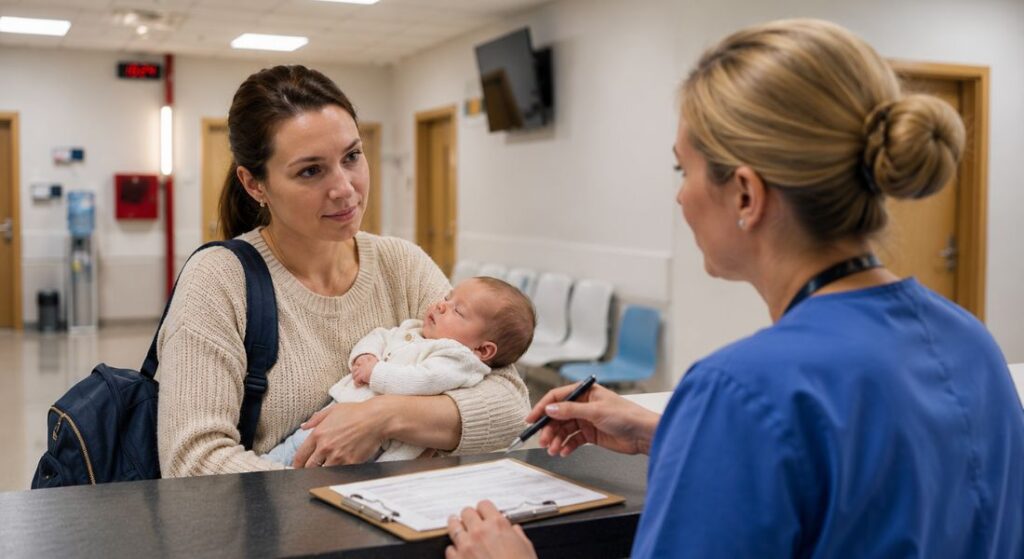
A planned appointment is appropriate for stable concerns such as follow-up after prematurity, neonatal treatment, feeding progress, growth or discussion of previous results. A private appointment should never delay urgent NHS assessment when your baby’s condition has changed suddenly.
Call 999 if your baby stops breathing, has severe difficulty breathing, becomes limp or unresponsive, cannot be woken, has a seizure or suddenly develops blue, grey, very pale or blotchy colouring. You should also call 999 if your baby is under eight weeks old and you are extremely worried about them.
Seek urgent same-day medical assessment for a temperature of 38°C or higher in a baby under three months, a persistent unexplained temperature below 36°C, green vomit, marked feeding reduction, significantly fewer wet nappies or increasing difficulty waking your baby.
Myth vs Fact
| Myth | Fact |
| Every newborn must be examined by a neonatologist. | Most healthy, full-term babies receive routine care without needing specialist neonatal assessment. |
| Only premature babies need neonatal care. | Full-term babies may need specialist care because of breathing difficulty, infection, low blood sugar, jaundice, a difficult birth or a congenital condition. |
| Mild feeding problems are never medically important. | Feeding can take time to establish, but new refusal, breathlessness or exhaustion during feeds, green vomit, fewer wet nappies or difficulty waking your baby require medical assessment. |
| Jaundice is always a normal newborn change. | Jaundice is common, but suspected or visible jaundice during the first 24 hours requires urgent serum bilirubin measurement within two hours. Later treatment decisions depend on the measured level, gestation and the baby’s age in hours. |
| A low temperature only means that your baby needs more clothing. | Environmental cold can reduce temperature, but an unexplained reading below 36°C is also a clinical indicator of possible neonatal infection and requires prompt assessment. |
| A baby who has been discharged cannot return to neonatal care. | Babies may need reassessment after discharge, although they may be treated by neonatal or general paediatric services depending on local arrangements. |
| A newborn with serious illness will always cry loudly or appear distressed. | An unwell newborn may instead become unusually sleepy, quiet, floppy or difficult to wake. |
| Blue or grey colouring can wait for a routine appointment. | Sudden blue, grey, pale or blotchy colouring, severe breathing difficulty or reduced responsiveness requires emergency help. |
| Parents should wait until several symptoms appear before asking for help. | One significant change can be enough to seek help. Call 999 for severe breathing difficulty, a seizure, reduced responsiveness or blue, grey, pale or blotchy skin, lips or tongue, and seek urgent assessment for fever, low temperature, green vomit or marked feeding reduction. |
Key Takeaways
- Most healthy full-term newborns do not require assessment by a neonatologist.
- Premature and full-term babies may need neonatal care for breathing, infection, feeding, glucose, jaundice or birth-related concerns.
- A neonatal review does not automatically mean admission to intensive care or separation from you.
- Jaundice within the first 24 hours and unexplained temperatures below 36°C or at least 38°C need urgent assessment.
- Green vomit, marked feeding reduction, fewer wet nappies or increasing difficulty waking may indicate serious illness.
- Call 999 if your baby stops breathing, has severe breathing difficulty, has a seizure, cannot be woken or turns pale, blue or grey.
FAQs
1. What is the main reason a newborn sees a neonatologist?
A newborn may see a neonatologist if they need specialist assessment, monitoring or treatment after birth. Common reasons include premature birth, breathing difficulties, infection concerns, feeding problems, low blood sugar, jaundice or complications during delivery.
2. Does seeing a neonatologist mean my baby is seriously ill?
No. A neonatologist may assess a baby to provide reassurance, perform additional checks or decide whether any treatment is needed. Some babies only require observation and do not need admission to a neonatal unit.
3. Do all premature babies need care from a neonatologist?
Premature babies should have a care plan based on their gestation and clinical condition, but not all require consultant-neonatologist review or neonatal-unit admission. Some moderate-to-late preterm babies remain in postnatal or transitional care with feeding, temperature and blood-glucose support.
4. When should a newborn’s breathing problems be assessed by a neonatologist?
Fast breathing, grunting, nostril flaring, chest recession or difficulty feeding because of breathlessness require prompt assessment. Call 999 if your baby stops breathing, has repeated pauses, develops severe breathing difficulty, cannot be woken or turns pale, blue or grey.
5. Why might a full-term baby need to see a neonatologist?
Full-term babies may need specialist assessment if they have difficulties adapting after birth, such as infection concerns, jaundice, low blood sugar, breathing problems, feeding difficulties or complications following a difficult delivery.
6. When do feeding problems require neonatal assessment?
Seek assessment when your baby repeatedly refuses feeds, is difficult to wake, becomes breathless or exhausted during feeding, has significantly fewer wet nappies or repeatedly vomits. Green vomit requires urgent hospital assessment.
7. What happens during a neonatal assessment?
A neonatologist will review your baby’s birth history, feeding, behaviour and symptoms before carrying out a detailed examination. They may check breathing, heart rate, temperature, oxygen levels, blood sugar and arrange tests if required.
8. Can a newborn see a neonatologist after leaving hospital?
Some babies receive neonatal follow-up after discharge, particularly after prematurity or significant neonatal illness. New concerns arising at home may instead be assessed by a midwife, GP, emergency paediatric team or general paediatrician according to the baby’s condition and local pathway.
9. When should you seek urgent help instead of waiting for a neonatal appointment?
Call 999 if your baby stops breathing, has severe breathing difficulty, has a seizure, cannot be woken or turns pale, blue or grey. Seek urgent same-day assessment for a temperature of 38°C or higher when under three months, a persistent temperature below 36°C, green vomit, poor feeding or significantly fewer wet nappies.
10. How can parents prepare for a neonatologist appointment?
Before the appointment, note any concerns about feeding, sleeping, breathing, nappies, weight gain or unusual behaviour. Bring details of your baby’s birth, hospital treatments, medicines and any questions you would like the neonatologist to explain.
Final Thoughts: Knowing When Your Newborn Needs Specialist Care
A neonatologist may become involved when a premature or full-term newborn needs specialist assessment, monitoring or treatment after birth. The review may lead to reassurance, observation while your baby remains with you, treatment on a postnatal or transitional-care ward, or admission to a neonatal unit according to their clinical needs.
If your baby is clinically stable and you need advice about prematurity, neonatal treatment, feeding, growth or follow-up after discharge, you can arrange an assessment with a neonatologist in London at London Paediatric Clinic. Do not wait for a private appointment if your baby is acutely or seriously unwell.
References:
- British Association of Perinatal Medicine (2020, updated 2025) ‘Therapeutic Hypothermia for Neonatal Encephalopathy’. Available at: https://www.bapm.org/resources/237-therapeutic-hypothermia-for-neonatal-encephalopathy
- British Association of Perinatal Medicine (2022) Service and quality standards for provision of neonatal care in the UK. Available at: https://www.bapm.org/resources/service-and-quality-standards-for-provision-of-neonatal-care-in-the-uk
- British Association of Perinatal Medicine (2024) Identification and management of neonatal hypoglycaemia in the full-term infant (birth–72 hours). Available at: https://www.bapm.org/resources/identification-and-management-of-neonatal-hypoglycaemia-in-the-full-term-infant-birth-72-hours
- Chen, I.-L. and Chen, H.-L. (2022) ‘New developments in neonatal respiratory management’, Pediatrics and Neonatology, 63(4), pp. 341–347. Available at: https://www.sciencedirect.com/science/article/pii/S1875957222000481
- General Medical Council (2023) Neonatal medicine syllabus 2023. Available at: https://www.gmc-uk.org/education/standards-guidance-and-curricula/curricula/neonatal-medicine-curriculum
- Giouleka, S., Gkiouleka, M., Tsakiridis, I. and Daniilidou, A. (2023) ‘Diagnosis and management of neonatal hypoglycemia: A comprehensive review of guidelines’, Children, 10(7), article 1220. Available at: https://www.mdpi.com/2227-9067/10/7/1220
- Harding, J.E., Alsweiler, J.M., Edwards, T.E. and McKinlay, C.J.D. (2024) ‘Neonatal hypoglycaemia’, BMJ Medicine, 3(1), article e000544. Available at: https://pmc.ncbi.nlm.nih.gov/articles/PMC11015200/
- Lamary, M., Bertoni, C.B., Schwabenbauer, K. and Ibrahim, J. (2023) ‘Neonatal Golden Hour: A review of current best practices and available evidence’, Current Opinion in Pediatrics, 35(2), pp. 209–217. Available at: https://pubmed.ncbi.nlm.nih.gov/36722754/
- Lord, K. and De León, D.D. (2024) ‘Approach to the neonate with hypoglycemia’, The Journal of Clinical Endocrinology & Metabolism, 109(9), pp. e1787–e1795. Available at: https://academic.oup.com/jcem/article/109/9/e1787/7647721
- Maramba, I.D.C., Lim, E., Menzies, J.C., Nijman, R., Zhou, S. and Latour, J.M. (2024) ‘Signs and symptoms of serious illness in infants aged up to 6 months: A rapid review of clinical guidelines’, BMJ Paediatrics Open, 8(1), article e002737. Available at: https://pubmed.ncbi.nlm.nih.gov/39074954/
- National Health Service (2023a) How to take your baby’s temperature. Page last reviewed 18 July 2023. Available at: https://www.nhs.uk/baby/health/how-to-take-your-babys-temperature/
- National Health Service (2023b) Is your baby or toddler seriously ill? Page last reviewed 24 August 2023. Available at: https://www.nhs.uk/baby/health/is-your-baby-or-toddler-seriously-ill/
- National Health Service (2024a) Getting to know your newborn. Page last reviewed 22 April 2024. Available at: https://www.nhs.uk/pregnancy/labour-and-birth/getting-to-know-your-newborn/
- National Health Service (2024b) Special care: ill or premature babies. Page last reviewed 30 April 2024. Available at: https://www.nhs.uk/pregnancy/labour-and-birth/special-care-ill-or-premature-babies/
- National Institute for Health and Care Excellence (2010, updated 31 October 2023) Jaundice in newborn babies under 28 days. Clinical guideline CG98. Available at: https://www.nice.org.uk/guidance/cg98
- National Institute for Health and Care Excellence (2021, updated 13 May 2026) Neonatal infection: Antibiotics for prevention and treatment. NICE guideline NG195. Available at: https://www.nice.org.uk/guidance/ng195