




If your child develops a headache after hitting their head, you may understandably worry about how long it will last. Headaches are common after concussion, and you may also notice tiredness, dizziness, nausea or difficulty concentrating.
Most children improve steadily over the first few weeks, with many concussion symptoms resolving within about two to four weeks, although some children take longer to recover. Seek urgent medical advice if your child’s headache is worsening or they develop repeated vomiting. If your child vomits after a head injury, contact NHS 111 for advice. Call 999 if they cannot stay awake, have a seizure, develop new weakness or numbness, or have problems with vision, walking, balance, understanding or speech.
Key Takeaways
- Headache is one of the most common symptoms after concussion, and loss of consciousness is not required for concussion to occur.
- Most concussion symptoms improve within about two to four weeks, although headaches can sometimes continue for longer.
- For the first 24–48 hours, relative rest is recommended rather than strict bed rest, with gentle everyday activity introduced as tolerated.
- Worsening headache or repeated vomiting needs urgent medical advice. Call 999 if your child cannot stay awake, has a seizure, develops new weakness or numbness, or has problems with vision, walking, balance, understanding or speech.
- If symptoms are not improving by around 14 days, seek further advice; symptoms lasting beyond 28 days should be reviewed by a GP.
- Return to education should come before unrestricted return to sport.
- After confirmed concussion in grassroots sport, return to competition should not occur before day 21. Your child should also have been symptom-free at rest for at least 14 days and have progressed successfully through the required return-to-sport stages.
What Is a Concussion?
A concussion is a temporary brain injury that can happen when your child receives a blow to the head or their head moves rapidly after an impact. You should know that they do not need to lose consciousness for a concussion to occur.
Your child may experience headache, dizziness, visual changes, poor concentration, mood changes or sleep problems. If concussion is suspected during sport, your child should stop playing immediately and should not return to the activity that day. UK grassroots guidance advises assessment by an appropriate healthcare professional or contact with NHS 111 within 24 hours.
Why Can a Concussion Cause Headaches?
Headache is one of the most common symptoms after a concussion, and you may notice your child develops pain that feels like pressure or tightness, or has migraine-like features. You should know that the injury itself, neck strain, muscle tension or stress can all contribute to post-concussion headaches.
A headache alone does not tell you how serious the injury was. You should look at the wider picture, including how the injury happened, how your child behaved afterwards and whether the headache is gradually improving.
What Can a Post-Concussion Headache Feel Like?
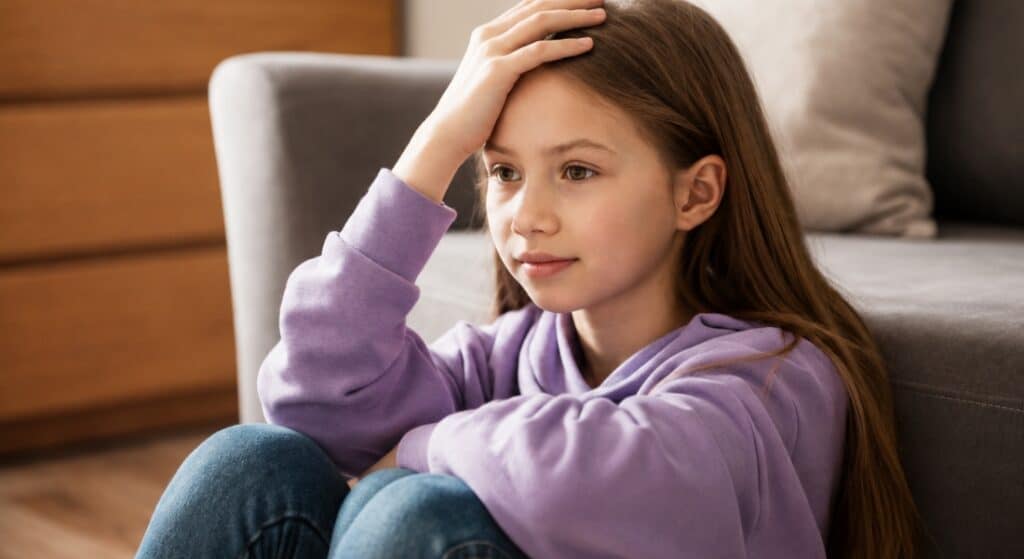
Your child may describe a post-concussion headache as pressure, throbbing or tightness, sometimes with nausea or sensitivity to light and sound. Headaches may become more noticeable with screens, concentration or activity, so these should be increased gradually.
Symptoms can appear immediately or become clearer during the first 24–48 hours. You should monitor your child closely, encourage them to report new symptoms and seek urgent medical advice if the headache becomes severe, worsens or occurs with other concerning changes.
Evidence Note
A 2021 study of children and adolescents seen after concussion found that post-traumatic headaches with migraine-like features were associated with a longer recovery than non-migraine headaches or no post-traumatic headache. This does not mean that every child with throbbing pain, nausea or light sensitivity will have a prolonged recovery, but it shows why describing the headache pattern can help guide follow-up and treatment.
How Long Can Headaches Last After a Concussion?
Most children improve within days or a few weeks, but you may find your child takes longer to recover. You may also notice headaches continuing after other symptoms have settled, sometimes for several months.
Persistent headaches do not usually mean that your child has sustained a more severe brain injury, but symptoms that are not improving should still be medically reviewed. If you notice ongoing symptoms affecting daily life, you should seek medical advice so you can support your child’s recovery.
Concussion Recovery and Reassessment Timeline
| Time after injury | What may happen | What you should do |
| First 24 hours | Headache, tiredness, dizziness or concentration problems may occur | Keep an adult with your child and watch for worsening symptoms |
| First 24–48 hours | Symptoms may fluctuate | Use relative rest, minimise screens if they worsen symptoms and allow gentle activity as tolerated |
| After 48 hours | Many children begin to improve gradually, although symptoms may fluctuate | Slowly increase schoolwork, everyday activities and light exercise without significantly worsening symptoms |
| Around 14 days | Many children are improving | Seek further advice if symptoms are deteriorating or have not started to improve |
| Beyond 28 days | Symptoms are considered prolonged/persistent | Arrange GP assessment; further or specialist management may be required |
| Return to competition | Recovery varies between children | After confirmed concussion, competition should not resume before day 21, after at least 14 days symptom-free at rest and successful progression through sport-specific training. |
What Are Persistent Post-Concussion Symptoms?
Most children improve steadily, but you may find your child continues to have headaches or other symptoms for longer. You may notice tiredness, dizziness, poor concentration, sleep problems or sensitivity to light and noise affecting your child’s daily routine.
If your child’s symptoms deteriorate or are not starting to improve by about 14 days, seek further advice, including through NHS 111 where appropriate. If symptoms are still present after 28 days, arrange a GP review, as further assessment or specialist support may be needed.
What Other Symptoms Can Occur Alongside the Headache?
Concussion can affect more than pain, so you may notice your child has dizziness, nausea, tiredness, visual changes or difficulty concentrating. Your child may also become more sensitive to light and noise or experience changes in mood and sleep.
Symptoms can fluctuate, so your child might feel better in the morning and develop a headache or tiredness later. If you notice your child is getting worse or developing new neurological symptoms, you should seek medical assessment.
What Should Your Child Do During the First 24 to 48 Hours?

During the first 24–48 hours, you should let your child rest from strenuous exercise, demanding schoolwork and activities that could cause another head injury. You can allow gentle walking and simple activities if they do not significantly worsen symptoms, rather than keeping your child in bed all day.
You should also limit screens if they make your child’s headache worse and allow them to sleep when tired. An adult should stay with your child during the first 24 hours, and you should follow any specific advice given by their healthcare professional.
Clinical Tip
Relative rest does not mean keeping your child awake or making them stay in bed in a dark room all day. If they have been assessed and sent home, they can sleep when tired, while an adult should remain with them for at least the first 24 hours. Gentle activities such as short walks or simple daily tasks can be introduced if they do not significantly worsen symptoms.
What Can You Give Your Child for the Headache?
For a mild headache after a minor head injury, your child may be able to take age-appropriate paracetamol. Follow the dosing instructions for their age and ask a healthcare professional if you are unsure whether paracetamol or ibuprofen is suitable.
If your child needs pain relief every day, you should arrange a medical review rather than continuing it indefinitely. You should never use painkillers to hide a worsening headache or help your child return to sport too soon.
Should Your Child Avoid Screens and Schoolwork?
Screens can make your child’s headache, visual discomfort or mental fatigue worse during early recovery. You should limit screen use for the first 24–48 hours, then gradually reintroduce it as your child tolerates it.
You can also help your child return to reading and schoolwork through short, manageable periods with regular breaks. You should work with their school to provide extra rest, shorter days or reduced homework if symptoms become more noticeable.
When Can Your Child Return to Exercise and Sport?
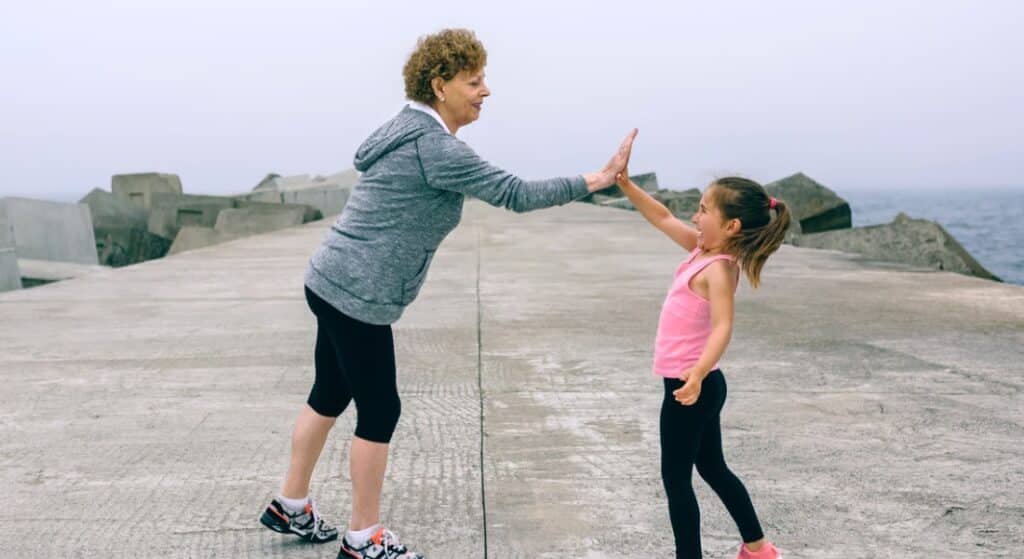
Your child should not return to sport on the same day if concussion is suspected, even if the headache quickly improves. After around 24–48 hours, you can gradually introduce gentle activity if your child’s symptoms remain stable.
You should prioritise a gradual return to school and daily activities before unrestricted sport. If concussion is confirmed, UK grassroots guidance says your child should not return to competition before day 21 after the injury. They should also have been free of concussion symptoms at rest for the preceding 14 days, be symptom-free during sport-specific training and complete the graduated return-to-activity and sport programme.
UK Guidance Note
For suspected concussion in grassroots sport, UK guidance advises immediate removal from play and assessment by an appropriate healthcare professional or contact with NHS 111 within 24 hours. After an initial 24–48 hours of relative rest, your child should gradually return to everyday activity and education before unrestricted sport.
If symptoms deteriorate or are not improving by 14 days, further medical advice should be sought. Symptoms that continue beyond 28 days should be reviewed by a GP. After confirmed concussion, return to competition should not occur before day 21. Your child should also have been symptom-free at rest for at least 14 days and should complete the appropriate stages of the graduated return-to-activity and sport programme before competition.
When Should a Continuing Headache Be Reassessed?
A headache that is gradually becoming less frequent or less intense can be part of concussion recovery, but you should arrange further assessment if your child is not improving as expected. UK grassroots concussion guidance advises seeking medical advice via NHS 111 if symptoms deteriorate or have not started to improve by 14 days.
If headaches or other concussion symptoms are still present after 28 days, your child should be reviewed by a GP. Earlier review is also appropriate if headaches are interfering significantly with school, sleep or everyday activities, or if your child needs frequent pain relief.
Will Your Child Need a Brain Scan?
Not every child with suspected concussion needs a brain scan. Concussion is usually assessed from the history, symptoms and clinical examination, while CT imaging is considered when doctors are concerned about complications such as bleeding inside the skull or a skull fracture.
If your child is recovering normally and the headache is gradually improving, brain imaging may not be needed. However, if you notice worsening headache, repeated vomiting, unusual drowsiness or new neurological symptoms, you should seek medical reassessment.
When Is a Headache After a Head Injury an Emergency?
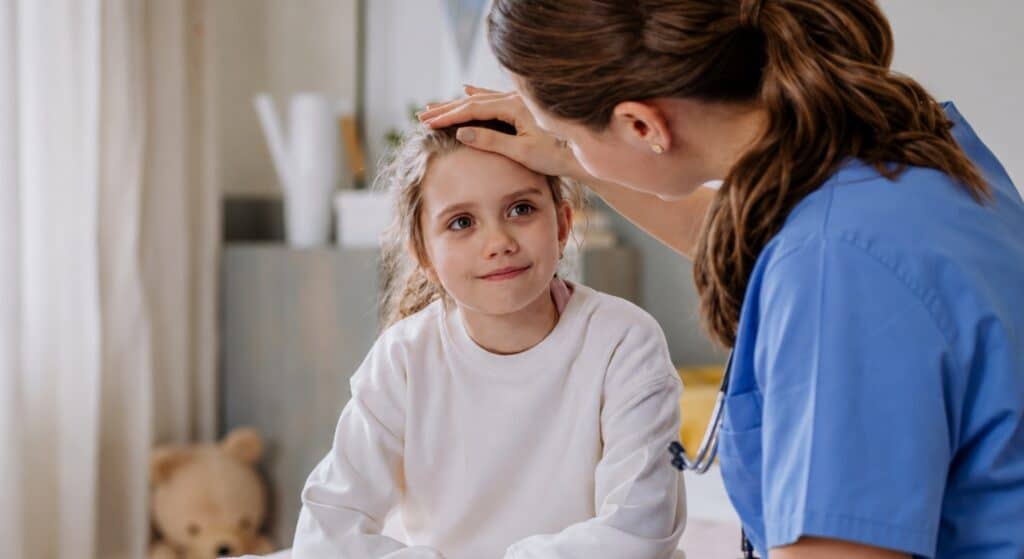
A mild headache that gradually improves is different from a severe or steadily worsening headache. Seek urgent medical assessment if your child develops repeated vomiting or an increasingly severe headache after the injury.
Call 999 if your child cannot stay awake, has a seizure, develops new weakness or numbness, has problems walking, balancing, understanding or speaking, develops problems with vision, or has clear fluid coming from the ears or nose, or is bleeding from the ears.
How Are Persistent Post-Concussion Headaches Treated?
Treatment depends on what your child’s headache feels like, as it may resemble migraine, tension-type pain or neck-related pain. You can help by keeping a headache diary and noting what makes your child’s symptoms better or worse.
Your child may benefit from regular sleep, meals, hydration and a gradual return to activity. If symptoms continue, you should speak with their doctor so you can address headaches alongside any dizziness, vision, sleep or emotional difficulties. Persistent headache does not automatically mean your child should return to complete rest. Their clinician may instead recommend a gradual, symptom-limited return to cognitive and physical activity, while also addressing factors such as migraine-like headache, neck pain, dizziness, sleep or emotional symptoms.
How Can You Support Your Child’s Recovery?
Recovery is not always perfectly steady, so you may notice your child has better and worse days. You can focus on progress over several days and encourage your child to report symptoms honestly rather than pushing through them to return to sport.
You should also keep your child’s school informed if headaches or concentration problems continue. A gradual return, regular breaks and sensible activity levels can help your child recover while staying involved in everyday life.
Myth vs Fact
| Myth | Fact |
| Your child must be knocked unconscious to have concussion. | No. Most concussions occur without loss of consciousness. |
| Your child should stay in bed until every symptom disappears. | No. After a short period of relative rest, gradual symptom-limited activity is recommended. |
| If the headache lasts several weeks, permanent brain damage is likely. | No. Persistent symptoms are not usually due to a more severe brain injury, although they still need assessment if they are not improving. |
| A child must be completely symptom-free before doing any schoolwork. | Not necessarily. A gradual return to education can begin while mild stable symptoms remain, provided activity does not significantly worsen them. |
| Day 21 automatically means your child can return to a match. | No. Day 21 is only the earliest competition point in standard grassroots guidance. Your child should also have been symptom-free at rest for at least 14 days and progressed successfully through sport-specific training before returning to competition. |
| A brain scan is required for every concussion. | No. Imaging is used when clinicians are concerned about a more serious head injury rather than routinely for every uncomplicated concussion. |
Frequently Asked Questions
1. How long can your child’s headache last after a concussion?
Most children gradually improve within days or a few weeks, but some may continue to experience headaches for longer. If your child’s headache is not improving, is affecting daily life or continues beyond four weeks, arrange a medical assessment.
2. What can a post-concussion headache feel like in your child?
Your child may describe the headache as pressure, tightness, aching or throbbing. It may resemble migraine or a tension-type headache and can occur alongside nausea, dizziness or sensitivity to light and sound.
3. Can your child develop a headache several hours after a head injury?
Yes. Concussion symptoms do not always appear immediately. Your child may initially seem well and then develop a headache, tiredness, dizziness or concentration difficulties during the following 24–48 hours.
4. What other symptoms can your child have after a concussion?
Alongside headaches, your child may experience dizziness, nausea, tiredness, visual problems, difficulty concentrating, sensitivity to light or noise, sleep changes or mood changes. Symptoms can vary from day to day during recovery.
5. What should your child do during the first 24–48 hours?
Your child should avoid strenuous exercise, demanding activities and anything that could result in another head injury. Gentle everyday activity is usually preferable to staying in bed all day, provided it does not significantly worsen symptoms.
6. Can your child use screens after a concussion?
Screens may make headaches, visual discomfort or mental fatigue worse during the early stages of recovery. You can reduce screen time initially and gradually increase it as your child becomes more comfortable, taking regular breaks when needed.
7. When can your child return to school and sport after a concussion?
Your child should return to school and normal activities gradually, based on how their symptoms respond. They should not return to sport on the same day as a suspected concussion. If concussion is confirmed, UK grassroots guidance says return to competition should not occur before day 21. Your child should also have been symptom-free at rest for at least 14 days and should complete the appropriate graduated return-to-activity and sport stages before competing.
8. What can you give your child for a post-concussion headache?
Your child may be able to take an age-appropriate dose of paracetamol, depending on their circumstances and the advice you have received. If your child needs regular pain relief or the headache is worsening, seek medical advice rather than continuing treatment without review.
9. When is your child’s headache after a head injury an emergency?
Seek urgent medical assessment if your child develops a severe or worsening headache or repeated vomiting. Call 999 if they cannot stay awake, have a seizure, develop new weakness or numbness, have problems with vision, walking, balance, understanding or speech, or have clear fluid coming from the ears or nose, or are bleeding from the ears.
10. Does your child need a brain scan after a concussion?
Not every child with a concussion needs a CT or MRI scan. Doctors decide whether imaging is necessary based on the injury, symptoms and examination. A scan may be recommended if there are signs suggesting a more serious brain injury, skull fracture or bleeding.
Final Thoughts: Supporting Your Child After a Concussion
Most children recover from concussion within a few weeks, although headaches and other symptoms can sometimes last longer. Gradual activity, appropriate monitoring and medical advice when symptoms persist can help support a safe recovery.
If your child’s symptoms are not improving or are affecting daily life, professional advice can help. If you’re considering specialist support for children’s headache treatment in London, you can get in touch with us at London Pediatric Clinic.
References:
- National Institute for Health and Care Excellence (NICE) (2023) Head injury: assessment and early management. NICE guideline NG232. Available at: https://www.nice.org.uk/guidance/ng232
- NHS (2025) Head injury and concussion. Page last reviewed: 29 May 2025. Available at: https://www.nhs.uk/conditions/head-injury-and-concussion/
- Department for Culture, Media and Sport (2023) Landmark concussion guidance for grassroots sport published. GOV.UK. Available at: https://www.gov.uk/government/news/landmark-concussion-guidance-for-grassroots-sport-published
- Blume, H.K. (2018) ‘Posttraumatic headache in pediatrics: An update and review’, Current Opinion in Pediatrics, 30(6), pp. 755–763. Available at: https://pubmed.ncbi.nlm.nih.gov/30188411/
- Kamins, J., Richards, R., Barney, B.J. et al. (2021) ‘Evaluation of posttraumatic headache phenotype and recovery time after youth concussion’, JAMA Network Open, 4(3), article e211312. Available at: https://pubmed.ncbi.nlm.nih.gov/33683335/
- Zemek, R., Barrowman, N., Freedman, S.B. et al. (2016) ‘Clinical risk score for persistent postconcussion symptoms among children with acute concussion in the ED’, JAMA, 315(10), pp. 1014–1025. Available at: https://pubmed.ncbi.nlm.nih.gov/26954410/
- Macnow, T., Curran, T., Tolliday, C. et al. (2021) ‘Effect of screen time on recovery from concussion: A randomized clinical trial’, JAMA Pediatrics, 175(11), pp. 1124–1131. Available at: https://pmc.ncbi.nlm.nih.gov/articles/PMC8424526/
- Vaughan, C.G., Ledoux, A.A., Sady, M.D. et al. (2023) ‘Association between early return to school following acute concussion and symptom burden at 2 weeks postinjury’, JAMA Network Open, 6(1), article e2251839. Available at: https://pmc.ncbi.nlm.nih.gov/articles/PMC9860528/
- Leddy, J.J., Master, C.L., Mannix, R. et al. (2021) ‘Early targeted heart rate aerobic exercise versus placebo stretching for sport-related concussion in adolescents: A randomised controlled trial’, The Lancet Child & Adolescent Health, 5(11), pp. 792–799. Available at: https://pubmed.ncbi.nlm.nih.gov/34600629/
- Patricios, J.S., Schneider, K.J., Dvorak, J. et al. (2023) ‘Consensus statement on concussion in sport: The 6th International Conference on Concussion in Sport–Amsterdam, October 2022’, British Journal of Sports Medicine, 57(11), pp. 695–711. Available at: https://pubmed.ncbi.nlm.nih.gov/37316210/