



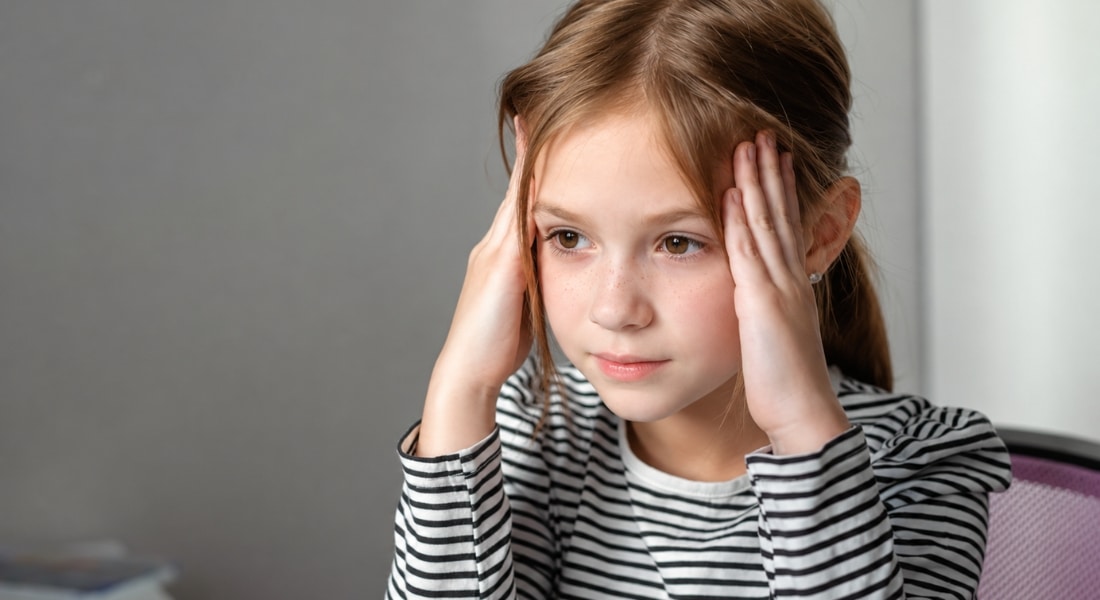
When your child sees flashing lights, zigzag patterns or a blurry patch before a headache, you may wonder what is happening. They might also experience tingling, numbness or difficulty finding words, which can occur with migraine aura.
A migraine aura is a temporary neurological disturbance that usually appears before or during a migraine attack and then goes away. You can help your child by recognising these symptoms and seeking medical advice if they are new, unusual or concerning.
Key Takeaways
- Migraine aura causes temporary neurological symptoms, most commonly visual changes but sometimes tingling, numbness or speech difficulty.
- Typical aura develops gradually over at least five minutes, and each symptom usually lasts between 5 and 60 minutes.
- Aura can occur before or during the headache, and sometimes no headache follows at all.
- Call 999 if your child suddenly develops weakness, double vision, reduced consciousness or major problems with balance. Visual symptoms affecting only one eye are also atypical of ordinary migraine aura and should be medically assessed.
- A headache diary can help your child’s clinician understand the timing, triggers, aura symptoms and treatment response.
- Children under 12 have specific NICE headache red flags that require same-day assessment.
- A first or unusual neurological episode should not automatically be assumed to be migraine.
What Is Migraine with Aura?
Migraine with aura causes your child to experience temporary neurological symptoms, often affecting vision but sometimes sensation or speech. You may notice the symptoms develop gradually over at least five minutes, with each typical aura symptom usually lasting between 5 and 60 minutes before resolving.
The headache may follow the aura, occur alongside it or sometimes not appear at all. If your child experiences these symptoms for the first time, you should seek medical advice rather than assuming they are caused by migraine.
What Does a Visual Migraine Aura Look Like in a Child?
Visual aura is the most common type, and your child may see flashing lights, sparkling dots, zigzag lines or shimmering areas. They may also notice blurred, distorted or missing parts of their vision, which can feel unusual and difficult for you to understand.
The disturbance often spreads gradually before settling, and your child may struggle to explain exactly what they see. Call 999 if your child suddenly loses vision or develops sudden blurred or double vision. Visual symptoms affecting only one eye are also not typical of ordinary migraine aura and should be medically assessed, particularly if they are new or unusual.
Clinical Tip
If your child has a familiar visual aura that has already been medically assessed, encourage them to describe or draw what they saw once the episode has settled. Record when it started, how it changed, how long it lasted and whether they noticed the disturbance in one eye or across their vision. This information can be useful at future appointments, but do not delay urgent medical assessment to record symptoms if the episode is new or concerning.
Can Migraine Aura Cause Tingling or Numbness?
Yes, migraine aura can cause your child to feel tingling or numbness, often starting in the fingers and gradually spreading up the arm. You may notice the sensation reaching the face, lips or tongue, and your child may find these symptoms frightening.
The gradual spread is typical of sensory aura, but you should distinguish altered sensation from true weakness. If your child suddenly cannot move an arm or leg normally or develops weakness affecting one side of their face or body, call 999.
Can Aura Affect Your Child’s Speech?
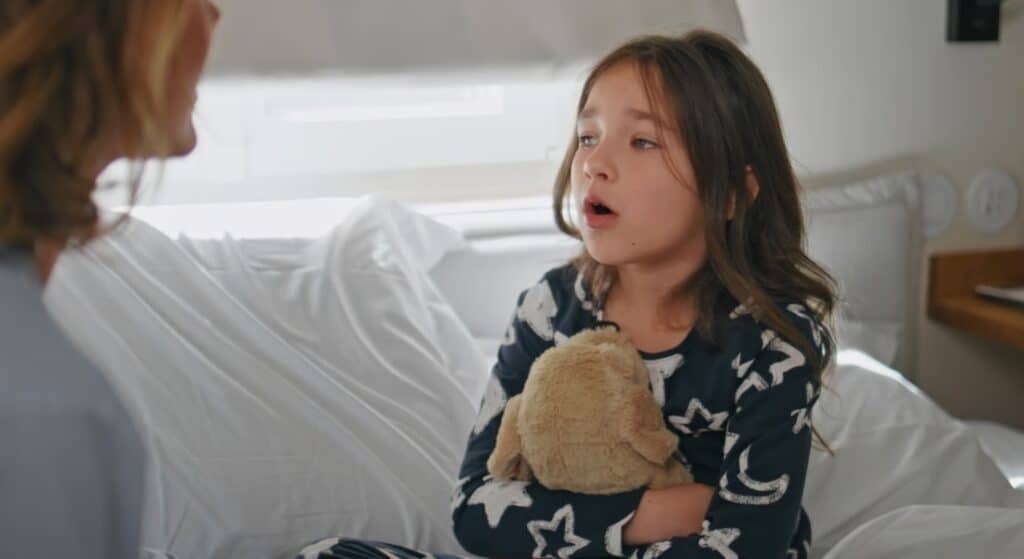
Migraine aura can temporarily affect your child’s speech or language, so they may struggle to find words, use the wrong word or speak unusually slowly. You may find this frightening, especially if your child knows what they want to say but cannot express it properly.
These symptoms should fully resolve when they are part of a typical migraine aura. If your child suddenly develops difficulty speaking or finding words, particularly if this is a first episode, call 999 rather than assuming it is migraine.
How Long Does Migraine Aura Usually Last?
Typical migraine aura develops gradually over several minutes rather than appearing suddenly, and your child’s symptoms usually last between 5 and 60 minutes. You may notice visual changes first, followed by tingling or temporary difficulty finding words, with symptoms sometimes occurring one after another.
The headache can begin during the aura or within about an hour afterwards. If an aura symptom lasts longer than 60 minutes, does not fully resolve or is very different from your child’s usual pattern, seek urgent medical advice, particularly if there is weakness, significant visual loss, confusion or reduced consciousness.
Does the Aura Always Come Before the Headache?
No, aura does not always mean your child will develop a headache immediately afterwards. You may notice visual changes or tingling before the pain, while in other attacks the headache can begin during the aura or not occur at all.
Your child may also have some migraine attacks with aura and others without it, so the pattern can vary. If their usual symptoms suddenly change or become more severe, you should discuss this with their doctor and keep a record of when each symptom occurs.
What Does the Headache Feel Like After an Aura?
After the aura ends, your child may develop a throbbing or pulsating headache that feels worse with movement. You may also notice nausea, vomiting or sensitivity to bright lights and loud sounds, with children sometimes feeling pain on both sides of the head.
Your child may want to rest in a dark, quiet room and feel tired even after the headache improves. You should describe the whole episode to their clinician, as migraine with aura can sometimes cause only mild head pain.
What Causes Migraine with Aura in Children?
Migraine is a neurological disorder involving temporary changes in brain activity, rather than simply a severe headache. Your child may be more likely to experience migraine if you have a family history, as it can run in families.
The aura is thought to involve a temporary wave of altered activity across the brain’s cortex, which can affect vision, sensation or language. This usually resolves completely, but you should have your child assessed if their symptoms are new or unusual.
What Can Trigger a Migraine with Aura?
Your child can have a migraine without an obvious trigger, although tiredness, disrupted sleep, stress, missed meals and dehydration may contribute. You may also notice changes around puberty, but a possible trigger will not necessarily cause an attack every time.
Keeping a headache diary can help you see whether your child’s attacks follow a consistent pattern. You can support them with regular meals, good sleep, enough fluids and sensible stress management rather than unnecessarily restricting their diet.
How Is Migraine with Aura Diagnosed in a Child?

There is no single blood test or scan that confirms migraine with aura, so your doctor will usually focus on your child’s symptoms and how they develop. You may be asked when symptoms start, whether they spread gradually and how long they last.
Your child will also have a neurological examination, while tests or scans may be considered if symptoms are unusual or concerning. You can make the assessment easier by keeping a diary of their aura symptoms, timing and headaches. If your child has a typical migraine pattern and a reassuring examination, brain imaging is not routinely needed simply to confirm migraine. Tests are considered when the history or examination suggests another possible cause.
Evidence Note
A 2018 study involving 164 children and adolescents with migraine aura found that aura features were broadly similar across paediatric ages and to those seen in adults. Using the ICHD-3 beta criteria applied in that study, 77.7% were classified as having migraine with typical aura, highlighting the importance of carefully assessing how neurological symptoms develop and resolve rather than relying on headache features alone.
When Can Aura Symptoms Be Mistaken for Something More Serious?
Migraine aura can cause visual changes, numbness or language difficulties, but similar symptoms can occur with other neurological conditions. You should know that typical aura usually develops gradually over several minutes and then resolves completely.
If your child suddenly develops weakness, vision loss, speech difficulty, confusion or a seizure, call 999. Once a specialist confirms a consistent migraine pattern, you can become more confident recognising your child’s usual symptoms.
Some symptoms are less typical of ordinary migraine aura and need further assessment. If your child suddenly develops true muscle weakness, double vision, significant problems with balance or a reduced level of consciousness, call 999. Visual symptoms affecting only one eye are also atypical and should be medically assessed, particularly if they are new or unusual.
Typical Migraine Aura or a Warning Sign?
| Feature | More typical of migraine aura | Needs urgent or further medical assessment |
| Onset | Symptoms usually build gradually over at least 5 minutes | Sudden neurological symptoms |
| Duration | Each symptom usually lasts 5–60 minutes and resolves | An individual aura symptom lasting beyond 60 minutes or not resolving as expected |
| Vision | Flashing lights, zigzags, spots or partial visual disturbance | Sudden vision loss, double vision or symptoms affecting one eye only |
| Sensation | Tingling or numbness that gradually spreads | New true weakness or inability to move normally |
| Speech | Temporary speech/language disturbance that follows a familiar pattern | Sudden speech difficulty or a major change from the usual pattern |
| Awareness/balance | Awareness usually remains normal | Reduced consciousness, severe confusion or major balance problems |
| Pattern | Similar, fully reversible episodes previously assessed as migraine | First episode or a major change from the usual pattern |
What Is Hemiplegic Migraine?
Hemiplegic migraine is an uncommon subtype of migraine with aura that can cause temporary weakness in your child’s arm, leg or one side of the body. You may also notice visual, sensory or speech changes during the same attack.
Unlike typical visual, sensory or speech aura, motor weakness in confirmed hemiplegic migraine can last longer than 60 minutes. However, new or sudden weakness should still be treated as an emergency rather than assumed to be migraine.
Because these symptoms can look like a stroke, you should not assume that a first episode is migraine. If your child suddenly develops one-sided weakness or cannot move normally, call 999.
When Should You Seek Urgent Medical Help?
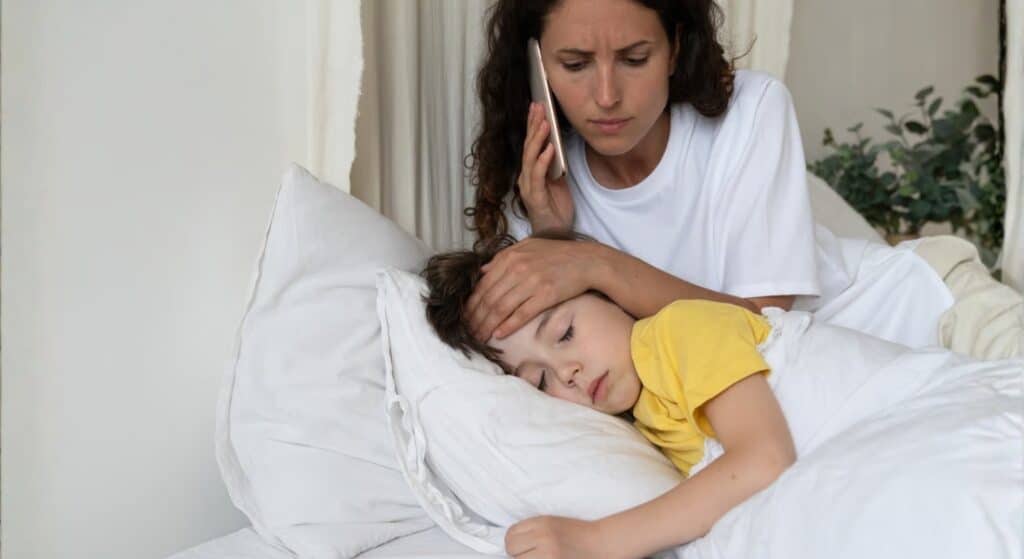
If your child has a familiar migraine pattern that has already been assessed, you may feel more confident recognising it. However, call 999 if your child develops a sudden and extremely painful headache, problems speaking, loss of vision, blurred or double vision, confusion or unusual drowsiness, a seizure, or weakness affecting one side of their face or body.
You should also seek medical advice if aura lasts longer than an hour or the headaches become more frequent, severe or disruptive. Call 999 if your child develops a headache following a recent head injury or has a very high temperature with symptoms suggesting meningitis.
UK Guidance Note
UK guidance differs according to your child’s age. NICE CG150 covers migraine diagnosis and treatment from age 12 onwards. It describes typical aura as fully reversible neurological symptoms that develop gradually over at least five minutes and last 5–60 minutes. Motor weakness, double vision, visual symptoms affecting only one eye, poor balance or reduced consciousness are atypical features that may need further investigation or referral.
For children under 12, NICE recommends immediate referral for same-day neurological assessment if a headache wakes them at night, is present on waking, progressively worsens, is triggered by coughing, sneezing or bending down, or occurs with vomiting, ataxia, altered consciousness, meningism, within five days of a head injury, or with squint or failure of upward gaze. All children under four with headache should be urgently referred for neurological assessment.
For girls aged 12 or over with migraine with aura, NICE also advises that combined hormonal contraceptives should not routinely be offered for contraception, so contraception should be discussed with an appropriate clinician.
How Is Migraine with Aura Treated in Children?
Treatment for a familiar migraine attack depends on your child’s age and individual circumstances. For young people aged 12–17, NICE recommends acute migraine treatment with a triptan together with an NSAID or paracetamol, taking individual preferences, medical conditions and potential adverse effects into account. In this age group, a nasal triptan should be considered in preference to an oral triptan. For children under 12, treatment should be individualised by their paediatric clinician, as the NICE CG150 migraine-treatment recommendations apply from age 12 onwards.
If your child has frequent or disabling attacks, preventive treatment may be considered based on their individual needs. You should follow your clinician’s advice on when medicines should be taken and seek specialist paediatric migraine care if attacks are difficult to manage or diagnose. If your child needs acute migraine medicine frequently, discuss this with their clinician, as overusing painkillers or migraine medicines can itself contribute to more frequent headaches.
What Can You Do at Home to Help Your Child?

During a familiar migraine attack, you can help your child by providing a quiet, dark room where they can rest or sleep. You should also encourage regular fluids, meals and sleep between attacks, as tiredness, dehydration and missed meals can sometimes contribute to migraine.
If your child has prescribed medication, you should follow the instructions on when and how to give it. You can also keep a migraine diary recording symptoms, duration, possible triggers and medicines, which helps you and their doctor recognise patterns.
How Can Migraine with Aura Affect School and Everyday Life?
Migraine aura can make it difficult for your child to read, write or concentrate, particularly when vision or speech is affected. You can work with their school to provide a quiet place to rest and ensure staff understand how to respond during an attack.
Frequent attacks may also make your child anxious about school, exams or activities. You can help by creating a clear plan with their healthcare team and school, so your child can manage symptoms while continuing to take part in everyday life.
Myth vs Fact
| Myth | Fact |
| Aura always comes before the headache. | No. Aura may occur before or during the headache, and sometimes no headache follows. |
| Migraine aura only affects vision. | No. It can also cause temporary sensory or speech/language symptoms. |
| Every episode of visual loss is migraine aura. | No. Sudden visual loss, double vision or symptoms affecting one eye only need medical assessment. |
| If my child has migraine, new weakness must be another aura. | No. New motor weakness is an atypical aura feature and should be assessed rather than assumed to be migraine. |
| Typical aura symptoms stay permanently. | Typical aura symptoms are fully reversible. Symptoms that do not resolve as expected need urgent medical assessment. |
| A brain scan is always needed to diagnose migraine. | No. Migraine is usually diagnosed from the symptom pattern and clinical assessment; imaging is considered when there are concerning or atypical features. |
Frequently Asked Questions
1. What does migraine with aura look like in your child?
Your child may see flashing lights, zigzag patterns, shimmering spots or areas of blurred or missing vision before or during a migraine. They may also experience tingling, numbness or temporary difficulty finding words.
2. How long does migraine aura usually last in children?
A typical migraine aura develops gradually over at least five minutes, and each aura symptom usually lasts between 5 and 60 minutes. Your child’s symptoms should then completely resolve, although the headache may continue afterwards or sometimes may not occur at all.
3. Can your child have a migraine aura without a headache?
Yes. Your child can experience aura symptoms without developing a significant headache afterwards. This can be confusing, particularly if you have not previously recognised visual, sensory or speech changes as part of migraine.
4. Can migraine aura cause numbness or tingling in your child?
Yes. Your child may experience pins and needles or numbness, often beginning in the fingers or hand and gradually spreading towards the arm, face or lips. Typical sensory aura develops gradually and then resolves completely.
5. Can migraine aura affect your child’s speech?
Yes. Your child may temporarily struggle to find words, use the wrong words or have difficulty understanding or expressing language. Because sudden speech problems can also have other causes, a first or unusual episode should be medically assessed.
6. What can trigger migraine with aura in your child?
Possible triggers include tiredness, disrupted sleep, missed meals, stress and dehydration. Triggers vary between children, so keeping a migraine diary can help you identify patterns without unnecessarily restricting your child’s normal diet or activities.
7. When should you seek urgent medical help for your child’s aura?
Call 999 if your child suddenly develops significant weakness, loss of vision, blurred or double vision, severe speech difficulty, confusion or unusual drowsiness, a seizure, or an extremely sudden and severe headache. Visual symptoms affecting only one eye or other neurological symptoms that are new, unusual or do not resolve as expected should also be medically assessed rather than assumed to be migraine.
8. How is migraine with aura diagnosed in children?
Your child’s diagnosis is usually based on their symptoms, how those symptoms develop and how long they last, together with a medical and neurological assessment. A doctor may recommend further tests if the symptoms are unusual or suggest another neurological condition.
9. How can you help your child during a migraine attack?
You can help by allowing your child to rest in a quiet, darkened environment and following any treatment plan recommended by their healthcare professional. Keeping them hydrated and maintaining regular meals and sleep between attacks may also help with overall migraine management.
10. Can your child outgrow migraine with aura?
Migraine patterns can change as your child grows, and some children may experience fewer attacks over time. However, there is no guarantee that migraine with aura will disappear completely, so ongoing symptoms or significant changes in the pattern should be discussed with their healthcare professional.
Final Thoughts: Helping Your Child Manage Migraine with Aura
Migraine with aura can be frightening when your child experiences visual changes, tingling or speech difficulties. Understanding their usual symptoms, keeping a migraine diary and knowing when to seek medical help can make these episodes easier to manage.
With the right diagnosis and treatment plan, you can help your child manage migraine while continuing with school and everyday activities. If you’re considering children’s migraine treatment in London, you can get in touch with us at London Pediatric Clinic to discuss your child’s needs.
References:
- National Institute for Health and Care Excellence (NICE) (2012, updated 2025) Headaches in over 12s: diagnosis and management. Clinical guideline CG150. Available at: https://www.nice.org.uk/guidance/cg150
- NHS (2026) Migraine. Page last reviewed: 10 March 2026. Available at: https://www.nhs.uk/conditions/migraine/
- Sport and Recreation Alliance (2024) UK Concussion Guidelines for Non-Elite (Grassroots) Sport. Updated November 2024. Available at: https://sportandrecreation.org.uk/campaigns-and-policy/concussion/concussion-guidelines-for-grassroots-sport
- Balestri, M., Papetti, L., Maiorani, D., Capuano, A., Tarantino, S., Battan, B., Vigevano, F. and Valeriani, M. (2018) ‘Features of aura in paediatric migraine diagnosed using the ICHD-3 beta criteria’, Cephalalgia, 38(11), pp. 1742–1747. Available at: https://pubmed.ncbi.nlm.nih.gov/29239213/
- Frattale, I., Papetti, L., Ursitti, F., Sforza, G., Monte, G., Voci, A., Proietti Checchi, M., Mazzone, L. and Valeriani, M. (2023) ‘Visual disturbances spectrum in pediatric migraine’, Journal of Clinical Medicine, 12(8), article 2780. Available at: https://www.mdpi.com/2077-0383/12/8/2780
- Bonemazzi, I., Brunello, F., Pin, J.N., Pecoraro, M., Sartori, S., Nosadini, M. and Toldo, I. (2023) ‘Hemiplegic migraine in children and adolescents’, Journal of Clinical Medicine, 12(11), article 3783. Available at: https://pmc.ncbi.nlm.nih.gov/articles/PMC10253806/
- National Institute for Health and Care Excellence (NICE) Suspected neurological conditions: recognition and referral. NICE guideline NG127. Available at: https://www.nice.org.uk/guidance/ng127?utm_source=chatgpt.com
- Szperka, C. (2021) ‘Headache in children and adolescents’, Continuum, 27(3), pp. 703–731. Available at: https://pmc.ncbi.nlm.nih.gov/articles/PMC9455826/
- Oskoui, M., Pringsheim, T., Holler-Managan, Y. et al. (2019) ‘Practice guideline update summary: Acute treatment of migraine in children and adolescents’, Neurology, 93(11), pp. 487–499. Available at: https://pubmed.ncbi.nlm.nih.gov/31413171/
- Oskoui, M., Pringsheim, T., Billinghurst, L. et al. (2019) ‘Practice guideline update summary: Pharmacologic treatment for pediatric migraine prevention’, Neurology, 93(11), pp. 500–509. Available at: https://pubmed.ncbi.nlm.nih.gov/31413170/