




Food allergies can make everyday family life feel more complicated. Something as ordinary as breakfast, a birthday party, a school lunch or eating in a restaurant can suddenly bring questions about ingredients, labels, cross-contact and what to do if your child develops symptoms.
As a parent, you may also be unsure whether your child genuinely has a food allergy. Perhaps they developed hives after eating something new, vomited after a meal, developed swelling around the lips or have ongoing digestive symptoms that you think might be related to food.
The most important starting point is an accurate assessment. Food allergy should not be diagnosed by guesswork, and your child should not be placed on a highly restrictive diet without a clear reason, as symptoms, timing and appropriate testing all need to be considered together.
With the right diagnosis and management plan, children with food allergies can still enjoy school, holidays, restaurants, parties and everyday family life. The aim is to keep your child safe without allowing fear of food to control every experience.
What Is a Food Allergy?
A food allergy happens when your child’s immune system reacts to a food that would normally be harmless. You may notice symptoms affecting different parts of the body, including the skin, digestive system, or breathing. The way it presents can vary quite a lot from one child to another.
Symptoms can range from mild reactions such as itching or hives to more severe reactions involving the airway, breathing, or circulation. You should be aware that a severe systemic reaction is called anaphylaxis and requires immediate emergency treatment. The speed and combination of symptoms often matter more than a single sign.
Food allergy is different from simply disliking a food or feeling uncomfortable after eating it. You should not assume every reaction is an allergy without proper assessment. A structured clinical review helps you understand whether the immune system is involved and what pattern your child is showing.
Why Do Children Develop Food Allergies?
There is rarely a single clear reason why your child develops a food allergy. You may find it is a combination of genetic susceptibility, immune system development, eczema, and other allergic conditions. These factors often interact over time rather than having one obvious cause.
Some children have several allergic conditions at the same time, such as food allergy, eczema, hay fever, or asthma. You should be aware that having one allergic condition does not automatically mean your child will develop all the others. Each child follows their own pattern.
Parents often blame themselves after a diagnosis, but food allergy is not caused by one simple parenting decision. You should focus on understanding your child’s specific allergy and learning how to manage it in a practical and confident way. This approach is far more helpful than searching for a single cause.
Common Food Allergens in Childhood
Almost any food can potentially cause an allergic reaction, but some are more commonly involved in childhood food allergy. NICE CKS notes that allergy can develop to almost any food, although common allergens include cow’s milk, egg, peanut, other legumes, tree nuts, fish, shellfish and wheat. You may find that awareness of these helps you understand what clinicians are considering.
The most relevant allergens can also change with age. Cow’s milk and egg allergy are particularly common in infancy and early childhood, while peanut and tree nut allergies may become more apparent later in childhood. You should keep in mind that patterns can shift as your child grows.
Your child’s own reaction history is more important than any general list of allergens. You should not avoid multiple common foods simply because they are known to cause reactions in other children. A targeted approach based on your child’s symptoms is safer and more practical.
Immediate Food Allergies
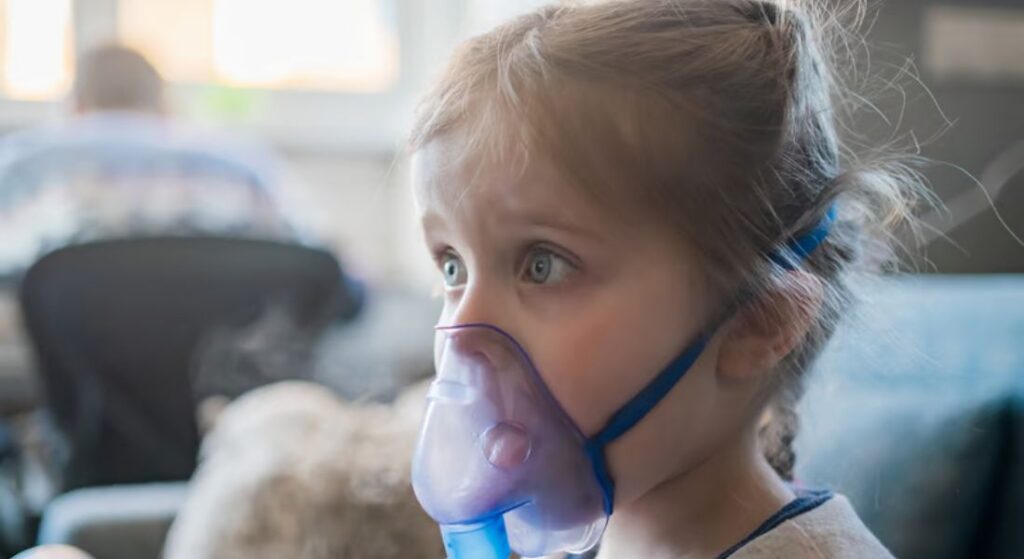
Some food allergies cause symptoms quickly after eating or coming into contact with the allergen. These are often called IgE-mediated allergies, and you may notice symptoms appearing within minutes to a couple of hours.
Symptoms can include hives, swelling, vomiting, coughing, wheezing, or breathing difficulty. You should pay close attention to how quickly symptoms start after eating, as timing is a key part of the allergy assessment.
If you think your child has had an immediate reaction, you should write down what they ate, how much was eaten, and how soon symptoms began. You may also find it helpful to take photos of any visible signs, as they can support the clinical assessment later.
Delayed Food Allergies
Not every food allergy causes symptoms straight away. You may notice that some reactions are delayed and develop over hours rather than minutes, depending on the immune mechanism involved. This can make the pattern harder to recognise at first.
Delayed reactions are often more difficult to link to a specific food because the connection is not always obvious. You may see symptoms affecting the digestive system, skin, or even feeding and growth over time. This is why careful observation of timing and repetition becomes important.
Standard skin-prick tests and specific-IgE blood tests are mainly designed to assess IgE-mediated sensitisation. You should not expect them to provide answers for every type of delayed food reaction. A detailed clinical history and a guided diagnostic approach are essential for making sense of these patterns.
Signs and Symptoms of Food Allergy
Food allergy symptoms can affect one area of the body or several at the same time. NHS guidance includes signs such as hives, swelling, coughing, wheezing, breathlessness, nasal symptoms, vomiting, tummy pain, diarrhoea, and dizziness. You may notice that reactions vary depending on the child and the trigger.
A reaction can look very different from one child to another. You might see mainly skin symptoms in one case, while another child develops vomiting and breathing symptoms. You should focus on the overall pattern rather than expecting a single “typical” presentation.
You should not assume that every food allergy must cause hives. Severe reactions can involve the airway, breathing, or circulation, and emergency action should not be delayed while waiting for a rash to appear. You should always follow your child’s emergency plan if you suspect a serious reaction.
Food Allergy Symptoms at a Glance
The table below can help you understand the different ways a reaction may appear. It is not a diagnostic tool, but it can help you record useful information for your child’s appointment.
| Area Affected | Possible Symptoms | What You Should Notice |
| Skin | Hives, itching, redness or swelling | Where it started and how quickly it spread |
| Face and lips | Swelling around the lips, eyes or face | Whether swelling is increasing |
| Mouth and throat | Itching, discomfort or swelling | Any change in voice or difficulty breathing |
| Digestive system | Vomiting, tummy pain or diarrhoea | Timing after eating and number of episodes |
| Breathing | Coughing, wheezing or breathlessness | Whether breathing is becoming difficult |
| Circulation | Dizziness, weakness or collapse | Treat as an emergency when part of suspected anaphylaxis |
A detailed description is more useful than simply saying that your child “reacted badly”. Try to record exactly what you saw and how quickly the reaction developed.
Skin Reactions After Food
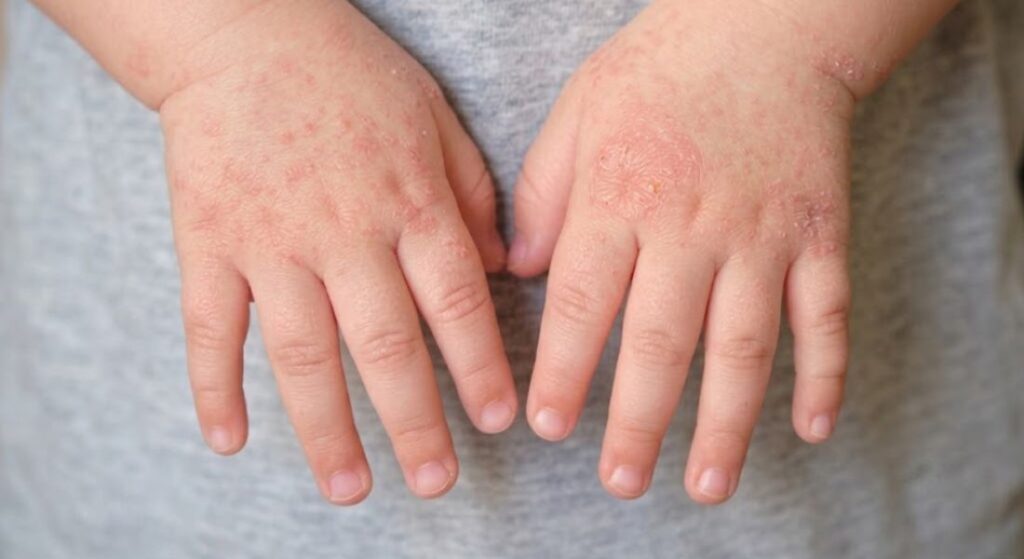
Hives are raised, itchy areas that can appear anywhere on your child’s body. You may see them during an allergic reaction, but they can also occur for other reasons, so appearance alone is not always enough to confirm allergy. You should always consider timing and context alongside the rash itself.
Swelling around the lips, eyes, or face can also happen during an allergic reaction. You may notice that the combination of symptoms and how quickly they appear after food exposure helps the clinician judge whether allergy is likely. This pattern is often more important than any single sign.
Photos can be very helpful because the skin may look normal by the time you attend an appointment. You should try to take clear images when symptoms appear, but never delay emergency treatment if your child is unwell. Safety always comes first.
Digestive Symptoms and Food Allergy
Food allergy can sometimes cause vomiting, tummy pain, or diarrhoea. You may notice these symptoms after eating a suspected food, but digestive symptoms in children are also very common for many other reasons. This is why you should not assume allergy based on a single episode.
One episode of tummy pain after a meal does not automatically mean your child has a food allergy. The clinician will look at timing, repetition, the amount eaten, the suspected food, and whether any other symptoms were present. You may find that the pattern over time is more important than one isolated event.
If your child has ongoing digestive symptoms, poor growth, feeding difficulties, or symptoms that do not respond to usual treatment, food allergy may be one of several possible causes. NICE advises considering food allergy in certain persistent symptom patterns, including cases where conditions such as eczema or reflux have not improved with standard management. You should seek assessment rather than guessing.
Breathing Symptoms During a Food Reaction
Food allergy reactions can sometimes involve breathing symptoms such as coughing, wheezing, breathlessness, or noisy breathing. You should treat these symptoms seriously, especially if they develop soon after your child eats a suspected allergen. You may notice that breathing changes can escalate quickly.
If your child has asthma as well as a food allergy, you should make sure the allergy team is aware of both conditions. You should bring current inhalers to appointments so the full picture of your child’s respiratory health is clear. This helps ensure the management plan covers both conditions safely.
Severe breathing difficulty during an allergic reaction is a medical emergency. You should follow your child’s allergy action plan and use the prescribed adrenaline auto-injector immediately when it is indicated. You should not delay treatment while waiting to see if symptoms settle.
Understanding Anaphylaxis
Anaphylaxis is a severe allergic reaction that can develop quickly and affect your child’s airway, breathing, or circulation. You may notice symptoms escalating rapidly after exposure to a known allergen, and this requires immediate emergency action.
Adrenaline is the first-line treatment for anaphylaxis. Resuscitation Council UK guidance is clear that antihistamines and corticosteroids are not suitable as first-line treatment for airway, breathing, or circulation problems. You should not rely on them in a severe reaction.
If you suspect anaphylaxis, you should follow your child’s emergency plan, use the prescribed adrenaline auto-injector as instructed, and call 999 straight away. You should not wait to see if symptoms improve with antihistamines, as delays can put your child at risk.
UK Safety-Net Note:
Anaphylaxis can develop quickly and should always be treated as a medical emergency. If your child develops serious airway, breathing or circulation symptoms after exposure to a likely allergen, follow their emergency action plan immediately. Use their prescribed adrenaline auto-injector as instructed and call 999 without delay. Do not wait for a rash to appear and do not delay adrenaline while waiting to see whether an antihistamine helps.
Food Allergy and Food Intolerance Are Different
Food allergy and food intolerance are often confused, but they are not the same condition. Food allergy involves the immune system, while food intolerance happens through different mechanisms. You may notice that symptoms overlap, but the underlying cause is different.
Food intolerance often leads to digestive symptoms such as bloating, tummy pain, or diarrhoea, which can appear some time after eating the food. These symptoms can be uncomfortable, but they should not automatically be treated as an IgE-mediated food allergy. You should look carefully at the timing and pattern before drawing conclusions.
The distinction matters because testing and management are very different. You should not assume conditions are the same without proper assessment. For example, lactose intolerance is not the same as cow’s milk protein allergy, and each requires a different approach.
How Food Allergy Is Diagnosed
Food allergy diagnosis should always start with an allergy-focused medical history. NICE recommends this as the central step when assessing children and young people with suspected food allergy. You will usually find that the consultation focuses more on your child’s story than on tests at the beginning.
The clinician will ask what your child ate, how much was eaten, how quickly symptoms appeared, and what treatment was needed. You may also be asked whether the food had been tolerated before or whether similar reactions have happened more than once. These details help you and the clinician build a clear pattern.
Tests are then considered based on this history rather than used as a blanket screening tool. The aim is to answer a specific clinical question rather than testing every possible food. You should expect testing only when it is likely to add useful information.
The Importance of the Allergy-Focused History
Before the appointment, it helps to write a simple timeline of what happened during the reaction. You do not need medical language, just a clear sequence of events that you can easily explain. This gives your clinician a much clearer picture of your child’s symptoms.
For example, you might note that your child ate a biscuit containing egg at 2 pm, developed hives around the mouth 15 minutes later, and then vomited shortly after. This is far more helpful than saying something general like “egg makes my child unwell,” because it shows timing and pattern clearly.
You should also record what treatment was given and whether it helped. If emergency services were involved or your child attended hospital, you should bring any discharge letters with you. This information helps build a complete and accurate assessment.
Skin-Prick Testing
Skin-prick testing is a recognised first-line test for suspected IgE-mediated food allergy when it is used in the right clinical context. A small amount of allergen is placed on the skin, which is then lightly pricked, and the reaction is measured. You may find it is used to support, rather than replace, your child’s clinical assessment.
The test can show sensitisation, but the result must always be interpreted alongside your child’s history. You should not assume that a positive result automatically means your child will react when eating the food. The clinical picture is just as important as the test result.
This is why targeted testing is so important. You should avoid testing foods your child already eats regularly without any symptoms, as this can create confusing results and unnecessary concern. A focused approach helps you get clearer and more meaningful answers.
Specific-IgE Blood Testing
Specific-IgE blood testing measures antibodies directed against particular allergens. NICE recommends using blood tests or skin-prick testing when an IgE-mediated food allergy is suspected, but only after a careful clinical history has already been taken. You should always see testing as part of a wider assessment rather than a standalone step.
As with skin testing, the result must be interpreted alongside what actually happens when your child eats or is exposed to the food. You may find that the test result on its own does not match your child’s real-life reaction pattern, which is why context is essential.
A positive result cannot reliably predict how severe a future reaction will be. This is why you should rely on specialist interpretation rather than the number alone. Careful review helps you understand what is truly clinically relevant for your child.
Understanding Sensitisation and Clinical Allergy
One of the key things you need to understand is the difference between sensitisation and clinical allergy. You may see a positive allergy test result, but that does not always mean your child will have symptoms when eating the food. This distinction is often where confusion starts.
BSACI guidance emphasises that testing should focus on foods that your child has actually reacted to, and results must always be interpreted alongside the clinical history. You should not treat a test result in isolation, as it can easily be misleading without context.
This is why large, untargeted allergy panels can create problems. You may end up with a long list of positive results that do not reflect real-life reactions. You should avoid removing foods your child has been eating safely unless there is a clear clinical reason.
Evidence Note:
Research and clinical guidance consistently show that food allergy diagnosis should not rely on a positive test result alone. Skin-prick testing and specific-IgE blood tests can identify sensitisation, but the result needs to be interpreted alongside your child’s symptoms, timing of reactions and exposure history. For you as a parent, this means a carefully recorded reaction history can be just as important as the test itself, and broad testing without a clear clinical question may lead to unnecessary food avoidance.
Component-Resolved Testing
Component-resolved diagnostics may be used in selected cases when a more detailed understanding of sensitisation is needed. This type of testing looks at specific proteins within a food rather than testing the whole food extract. You may find it is only offered when standard assessment does not fully explain the pattern.
In some situations, it can help your specialist interpret more complex allergy patterns, such as certain nut sensitisation profiles or pollen-related food reactions. You should not view it as a standalone answer, as results still need to be considered alongside your child’s history and symptoms.
You do not need to request every advanced test available for your child. Your specialist will decide whether this type of testing will genuinely help clarify the diagnosis. You should focus on whether the result will change management rather than simply increasing the number of tests done.
How Different Diagnostic Approaches Fit Together
Food allergy assessment may involve more than one step. The right combination depends on whether the suspected reaction is immediate, delayed or unclear.
| Assessment Method | Main Role | Important Limitation |
| Allergy-focused history | Identifies timing, symptoms and likely trigger | Relies on accurate information |
| Skin-prick testing | Supports assessment of IgE-mediated sensitisation | Positive result alone does not prove clinical allergy |
| Specific-IgE blood test | Measures antibodies to selected allergens | Must be interpreted with the clinical history |
| Diagnostic elimination and reintroduction | May help selected delayed allergy assessments | Needs clear professional guidance |
| Oral food challenge | Helps confirm or exclude allergy in selected cases | Must be planned according to individual risk |
| Component testing | May clarify selected complex sensitisation patterns | Not required for every child |
The most advanced test is not automatically the best test. A carefully taken history followed by targeted investigations is often more useful than a large panel of unrelated results.
Oral Food Challenges
An oral food challenge is used in selected cases to check whether your child reacts when they eat a food under a controlled and planned protocol. BSACI notes that these challenges are usually carried out in hospital and may be used to confirm a diagnosis or assess whether tolerance has developed over time. You should only consider this when advised by your allergy team.
During the challenge, carefully measured amounts of the food are given step by step while your child is closely observed. The exact structure depends on the food involved, your child’s previous reaction history, and the expected level of risk. You may find that this structured setting allows clearer answers than testing at home.
You should never try to recreate a hospital food challenge at home, especially after a significant previous reaction. Any reintroduction should take place in the setting recommended by your child’s allergy team. This ensures your child’s safety is properly managed throughout the process.
Diagnosing Delayed Food Allergy
Delayed food allergy can be more difficult to identify, so the diagnostic approach may need to be different. In selected cases, you may be advised to remove a suspected food for a short period, followed by a planned reintroduction to see whether symptoms return. This helps you and your clinician understand whether the food is truly linked to the symptoms.
BSACI guidance recognises that diagnostic diets and structured reintroduction can play a role in food allergy assessment. However, if an IgE-mediated allergy is suspected or if there has been a history of severe reactions, reintroduction may need to take place in hospital as a supervised food challenge. You should always follow specialist advice in these situations.
A restrictive diet should always have a clear purpose and a planned review. You should not remain on a limited diet indefinitely simply because the next step has not been discussed. Regular review helps you and your child avoid unnecessary long-term restriction.
Why Broad Commercial Food Allergy Testing Can Be Misleading
You may come across broad commercial allergy tests such as IgG panels, hair analysis, kinesiology, or bioresonance that claim to identify multiple “problem” foods. These tests can look appealing if you are trying to quickly understand your child’s symptoms, but they are not reliable for diagnosing food allergy.
BSACI guidance states that methods such as IgG testing, hair analysis, bioresonance, and kinesiology are not valid diagnostic tools for food allergy. You should be cautious if a test promises a long list of food sensitivities without considering your child’s actual reaction history. These results can be misleading and difficult to interpret.
You may find that relying on these tests leads to unnecessary food avoidance and added confusion. A better approach is a history-led assessment supported by recognised allergy testing when appropriate. You should always prioritise clinically validated methods over tests that simply offer broad results.
Myth vs Fact:
| Myth | Fact |
| A positive allergy test proves that your child is allergic to the food. | A positive test may show sensitisation, but your child’s reaction history and clinical assessment are also essential. |
| The higher the IgE result, the more severe the next reaction will be. | Allergy tests may help estimate the likelihood of clinical allergy in selected situations, but they cannot reliably predict the severity of a future reaction. |
| Testing more foods gives more accurate answers. | Broad testing can produce clinically irrelevant positive results and may lead to unnecessary food avoidance. |
| IgG panels, hair testing and bioresonance can diagnose food allergy. | These are not validated diagnostic methods for food allergy and can result in misleading restrictions. |
| Every child with suspected food allergy needs an oral food challenge. | Oral food challenges are used selectively when they are likely to clarify diagnosis or assess whether tolerance has developed. |
Managing a Confirmed Food Allergy
Once a food allergy is confirmed, the aim is to prevent reactions while keeping your child’s life and diet as normal as it can safely be. You should focus on the specific allergen and your child’s individual level of risk rather than applying broad restrictions. This helps you avoid unnecessary limitations.
Your child’s plan may include allergen avoidance, careful label reading, prescribed emergency medication, and a clear allergy action plan. You may also need to share information with your child’s school or nursery so everyone understands what to do. In some cases, dietetic support may also be part of the plan.
Good allergy management is not about making your child fearful of food. You should aim to build simple, practical routines that become easier over time. With the right structure, you can manage the allergy confidently while supporting a normal daily life.
Avoiding the Right Food, Not Every Possible Food
Targeted avoidance is far more effective than removing a wide range of foods unnecessarily. You should focus on avoiding the confirmed allergen based on professional advice, rather than cutting out foods that your child already tolerates safely. This helps keep the diet practical and balanced.
This approach is especially important for growing children. You may notice that removing foods such as milk, wheat, or egg without clear reason can quickly reduce variety in the diet. Over time, this can affect nutritional balance and make everyday meals more difficult for your child.
If several foods are being restricted or there are concerns about growth, you should ask whether a paediatric dietitian is needed. You may find that tailored advice helps you maintain safety while still supporting healthy development.
Reading Food Labels in the UK
Reading food labels becomes an essential skill when your child has a food allergy. In the UK, food law requires clear information about 14 regulated allergens, and these must be highlighted in the ingredients list of prepacked foods. You will often see them in bold to make them easier to identify.
The regulated allergens include milk, egg, peanut, tree nuts, sesame, soya, fish, crustaceans, molluscs, cereals containing gluten, celery, mustard, lupin, and sulphur dioxide and sulphites above a set level. You should take time to become familiar with these so you can quickly recognise potential risks when shopping.
You should always read the full ingredients list rather than relying only on highlighted allergens or bold text. Your child may still react to ingredients outside the regulated list in some cases. Careful label reading helps you make safer choices and avoid accidental exposure.
Understanding Precautionary Allergy Warnings
You may notice precautionary statements on food packaging such as “may contain” or “produced in a factory that handles”. These warnings relate to the possibility of unintended allergen exposure rather than the allergen being an intended ingredient. You should not treat them in the same way as a listed ingredient.
How you respond to these warnings should always be based on your child’s individual allergy plan. You may feel tempted to copy what another family does, but this can lead to unnecessary restriction or, in some cases, confusion. Your child’s risk level and reaction history are what matter most.
If precautionary labelling is making food choices difficult, you should ask your allergy team for clear, practical guidance. You will find that advice often depends on your child’s specific allergen and history. A personalised approach helps you make safer and more realistic decisions.
Preventing Cross-Contact at Home
Cross-contact happens when an allergen is unintentionally transferred from one food to another. You might see this happen through shared utensils, chopping boards, kitchen surfaces, hands, or cooking equipment. Even small amounts can matter depending on your child’s level of sensitivity.
The level of precaution you need depends on your child’s specific allergy and their management plan. Simple habits such as regular handwashing, keeping preparation areas clean, and using separate utensils when advised can significantly reduce risk. You should focus on the measures that are actually relevant rather than trying to eliminate every possible exposure.
It is important to build routines that are safe but still realistic for everyday life. Your home should feel manageable, not like a clinical environment, in order to keep your child protected. A balanced approach helps you maintain both safety and normal family living.
Eating Out With a Food Allergy
Eating out with a food allergy requires clear communication, even though restaurants and takeaways must provide allergen information for regulated allergens. You should always tell staff about your child’s allergy and make sure they understand the specific trigger. This helps reduce the risk of misunderstandings when ordering.
You should ask direct questions about ingredients and preparation rather than relying on whether a dish is described as “safe”. Staff may need time to check recipes or confirm details with the kitchen, so it is better to be specific. You may find that clearer questions lead to more reliable answers.
You should always carry your child’s prescribed emergency medication when eating out. Even with careful planning, accidental exposure can still happen. Being prepared ensures you can act quickly if needed.
Supporting Good Nutrition and Growth

Food restriction needs to be balanced with your child’s nutritional requirements, especially in babies and young children who are growing quickly. You may need to think beyond simply avoiding allergens and focus on whether your child is still getting enough energy, protein, and key nutrients.
If your child is avoiding cow’s milk, several protein sources, or multiple major food groups, you should ask whether dietetic support is needed. Replacement products are not always nutritionally equivalent, so it is important not to assume that all alternatives provide the same benefits. You may need tailored advice to keep the diet balanced.
Your child’s growth should be reviewed when there are significant dietary restrictions, feeding difficulties, or concerns about weight gain. You should aim to manage the allergy effectively without allowing avoidable nutritional problems to develop. This helps you protect both safety and healthy development at the same time.
Cow’s Milk Allergy
Cow’s milk allergy is a common food allergy in babies and young children, but it is not the same as lactose intolerance. You should not assume similar symptoms mean the same condition, as the underlying mechanism is different. This distinction matters when you are trying to understand your child’s reactions.
Depending on your child’s allergy pattern, the approach to assessment and reintroduction can vary quite a lot. In some cases, a structured milk ladder may be used, but this is only suitable for selected children and specific types of milk allergy. You may not be offered this option at all if it is not appropriate for your child.
You should never start a milk ladder just because you have seen one online or heard about it from others. Your child’s plan must come from their healthcare team, as it is tailored to their specific risk. Following the correct guidance helps keep reintroduction safe and controlled.
Egg Allergy
Egg allergy can present in different ways, and your child’s level of tolerance may not be the same as another child’s. You may find that some children can manage extensively heated or baked egg but react to less-cooked forms, while others need to avoid egg more broadly. This variation is important when planning diet changes.
Your child’s allergy specialist should always guide any reintroduction or food challenge. You should not follow another family’s plan, as allergy patterns can differ significantly between children. What works safely for one child may not be appropriate for another.
You should keep your child’s school and other carers updated whenever advice changes. An outdated avoidance plan can cause confusion and unnecessary restriction. Clear, up-to-date information helps everyone manage your child’s allergy safely and confidently.
Peanut and Tree Nut Allergies
Peanut is a legume, while tree nuts are a separate group of foods, and a child’s pattern of allergy can vary widely between them. You may find your child reacts to peanut, one specific tree nut, several nuts, or sometimes a combination. This is why assumptions about “all nuts” are not always accurate.
Testing can become complex because positive sensitisation does not always mean a true clinical allergy. You may see a result that looks concerning, but it still needs to be interpreted alongside your child’s actual reaction history. BSACI guidance supports focused testing rather than broad screening.
A positive result to one nut does not automatically mean every nut must be avoided. Your child’s reaction history and specialist assessment should guide which foods need to be excluded. A specialist assessment can help you understand exactly what needs to be avoided and what may still be safe. This avoids unnecessary restriction while keeping your child protected.
Adrenaline Auto-Injectors
Some children at risk of anaphylaxis are prescribed adrenaline auto-injectors. You and anyone caring for your child need to be completely clear about when and how to use the specific device your child has been given. Confidence in using it matters as much as having it available.
You should keep the devices easily accessible, check expiry dates regularly, and make sure your child’s school or nursery fully understands the emergency plan. Training should be refreshed over time rather than treated as something done once and forgotten. This helps you stay prepared in real situations.
During suspected anaphylaxis, you should use the adrenaline auto-injector straight away according to your child’s plan and call 999. You should not wait to see if symptoms improve before acting. Early use of adrenaline is essential in managing a severe reaction.
Antihistamines and Their Role
Antihistamines can help manage some mild allergic symptoms such as itching or hives, depending on the plan your child has been given. You may find they are useful for day-to-day symptom relief, but only when they are part of the agreed treatment approach.
However, antihistamines do not replace adrenaline in anaphylaxis. You should always be clear that adrenaline is the key first-line treatment for severe allergic reactions, as set out in Resuscitation Council UK guidance. Relying on antihistamines alone in a serious reaction is not safe.
It is important that everyone caring for your child understands the difference between a mild reaction plan and an emergency anaphylaxis plan. You should make sure this is clearly communicated so there is no delay in giving the correct treatment when it matters most.
Managing Food Allergy at School or Nursery
Your child’s school or nursery should have clear, specific information about their allergy so staff know exactly what they are managing. You should make sure they understand the confirmed allergen, typical reaction pattern, and what to do in an emergency. This helps you feel more confident that your child is properly supported.
You should provide an up-to-date allergy action plan along with any prescribed medicines. It is important not to assume that information shared with one member of staff automatically reaches everyone involved in your child’s care. You may need to check that all relevant adults are aware.
In England, schools can obtain spare adrenaline auto-injectors for emergency use under specific arrangements, but your child’s own prescribed devices remain essential. You should ensure they are always available, in date, and carried as advised. This gives your child the best possible safety net during the school day.
Birthday Parties and Playdates
Birthday parties and playdates can feel challenging because you may not have full control over the food being served. With a bit of planning, you can make these situations safer without your child feeling left out. The aim is to balance safety with normal social experiences.
It helps to speak to the host in advance and explain your child’s allergy clearly. You can also ask what food will be provided, and depending on your child’s needs, you may choose to send a safe alternative. This gives you more control over what your child is eating.
You should make sure the responsible adult knows where the emergency medication is kept and how to contact you if needed. As your child gets older, you can gradually involve them in asking questions and recognising unsafe foods or situations. This helps build confidence while still keeping them safe.
Travelling With a Child Who Has a Food Allergy
Travelling with a child who has a food allergy needs more planning because food labels, local dishes, and healthcare access can vary. You should carry enough prescribed medication and keep emergency medicines easily accessible at all times. This helps you stay prepared wherever you are.
It is useful to learn key local phrases to explain your child’s allergy and carry written translation cards if needed. You should also check healthcare access and travel insurance before you go, so you are not making decisions under pressure while abroad. This preparation gives you more confidence when travelling.
For flights and long journeys, you should plan safe food options in advance rather than relying on what may be available. Your child’s emergency plan should always travel with you. This ensures you are ready to act quickly if needed.
Supporting Your Child Emotionally
Food allergy can affect your child’s confidence as well as their physical health. You may notice them feeling anxious about restaurants, school trips, or the possibility of eating something by mistake. These worries are understandable, especially when the condition affects everyday situations.
It helps to talk openly about risk without making every food situation feel frightening. You should explain that the allergy is important, but also reassure your child that there is a clear plan in place to keep them safe. This balance helps them feel protected rather than overwhelmed.
As your child grows, you can gradually give them age-appropriate responsibility. You may encourage them to ask questions about food, read labels, and carry their medication when needed. These small steps can help build confidence and independence over time.
Can Children Grow Out of Food Allergies?
Some childhood food allergies can improve over time, while others may continue into later childhood or adulthood. The likelihood of this varies depending on the specific allergen and your child’s individual pattern. You may notice that allergy status is not always fixed.
Reassessment is important because your child’s allergy can change as they grow. However, you should not try to test this yourself by giving a previously avoided food at home, especially after a significant reaction. This can be unsafe and is not a reliable way to confirm resolution.
The allergy team may repeat testing, review previous results, or suggest a supervised food challenge when appropriate. You should always follow professional advice when considering whether a food can be reintroduced. This helps ensure any changes are done safely and correctly.
When Your Child Needs Specialist Allergy Care
Specialist allergy care may be needed when your child’s diagnosis is unclear or when several foods are being suspected. You may also need referral if reactions have been severe or if food avoidance is becoming difficult to manage safely. This helps you get a clearer and more structured assessment.
In some situations, you may notice that symptoms affect more than one system or that day-to-day management is becoming complicated. When this happens, you should not feel you need to manage it alone. A specialist can help you and your child understand what is truly necessary to avoid and what is not.
NICE recommends referral to secondary or specialist allergy services when the allergy-focused history or test results suggest it is needed. You should expect specialist input when the picture is complex or uncertain. This ensures you and your child get the most appropriate care and advice.
How to Prepare for a Food Allergy Appointment
Before your child’s food allergy appointment, it helps to write down the suspected food, the ingredients, and roughly how much was eaten. You should also note how quickly symptoms started and the order in which they appeared, as this can give important clues. Keeping it clear and simple makes it easier for you to explain what happened.
If you have them, bring photos or videos of any visible reactions, as these can be very helpful for the clinician. You should also take any emergency department letters, previous allergy test results, and a list of your child’s current medicines. This gives a complete picture of your child’s history.
You should not try to expose your child to a suspected allergen just to get more information. This can be unsafe and is not needed for assessment. The specialist will decide whether any testing or a supervised food challenge is appropriate for your child.
When to Seek Emergency Help

Suspected anaphylaxis is a medical emergency, and you should act immediately if you think your child is having a severe reaction. You should follow your child’s emergency plan, use prescribed adrenaline straight away when it is indicated, and call 999 without delay.
You should not wait for all possible symptoms to appear before taking action. If your child develops serious airway, breathing, or circulation problems after exposure to a likely allergen, this requires urgent treatment. Acting early can make a critical difference.
Antihistamines should never delay the use of adrenaline in anaphylaxis. If adrenaline has been prescribed for your child, it remains the first-line emergency treatment. You should always prioritise it when the emergency plan advises its use.
Key Takeaways:
- Food allergy diagnosis should begin with a detailed allergy-focused clinical history.
- Immediate and delayed food allergies can present differently and may require different diagnostic approaches.
- Skin-prick and specific-IgE blood tests support diagnosis but do not confirm clinical allergy on their own.
- Broad commercial allergy panels and alternative tests can lead to confusing results and unnecessary dietary restriction.
- Oral food challenges are valuable in selected cases but should only be carried out according to a specialist plan and in an appropriate clinical setting.
- Avoid only confirmed allergens rather than removing multiple foods unnecessarily.
- Significant food restriction may require dietetic support and growth monitoring.
- Your child’s school, nursery and other carers should understand their allergy plan and emergency medicines.
- If you suspect anaphylaxis, follow the emergency plan, give prescribed adrenaline promptly and call 999.
FAQs:
1. What are the first signs of a food allergy in children?
Early signs can include hives, swelling around the lips or eyes, vomiting, tummy pain, diarrhoea, coughing, wheezing or breathing difficulty. Symptoms may appear within minutes in immediate (IgE-mediated) reactions or be delayed in other types of food allergy. The timing and pattern of symptoms are key clues for diagnosis.
2. How quickly do food allergy reactions appear after eating?
Immediate food allergies typically cause symptoms within minutes to two hours after eating. Delayed reactions may take several hours or longer to appear and can affect the skin, digestive system or general wellbeing. The timing of symptoms is one of the most important factors in assessing food allergy.
3. What foods most commonly cause allergies in children?
Common allergens include cow’s milk, egg, peanut, tree nuts, fish, shellfish, wheat, soya and sesame. However, any food can potentially trigger an allergic reaction. A child’s individual reaction history is more important than general lists of common allergens.
4. How is a food allergy diagnosed in children?
Diagnosis starts with a detailed allergy-focused medical history, including what was eaten, symptom timing and reaction pattern. Depending on the case, skin-prick testing, specific IgE blood tests, elimination and reintroduction diets or supervised oral food challenges may be used. Testing must always be interpreted alongside clinical history.
5. Are allergy tests enough to confirm a food allergy?
No. A positive skin-prick test or blood test shows sensitisation but does not confirm a clinical allergy. Tests must be interpreted with symptoms and reaction history. Some children may have positive tests but still tolerate the food without any reaction.
6. What is the difference between food allergy and food intolerance?
Food allergy involves the immune system and can cause rapid or severe reactions such as hives, swelling or breathing difficulty. Food intolerance does not involve the immune system and usually causes digestive symptoms such as bloating or diarrhoea. The two conditions require different management approaches.
7. What should I do if my child has a severe allergic reaction?
If you suspect anaphylaxis, use your child’s adrenaline auto-injector immediately if prescribed, call 999 and state that it is anaphylaxis. Do not wait for all symptoms to develop. Antihistamines are not a substitute for adrenaline in severe reactions.
8. Can children grow out of food allergies?
Some children may outgrow allergies such as milk or egg allergy, while others, such as peanut allergy, may persist longer. Reassessment should always be guided by an allergy specialist. Food should never be reintroduced at home after a significant reaction without medical advice.
9. What is an oral food challenge?
An oral food challenge is a planned assessment in which increasing amounts of a food are given according to a structured protocol to determine whether a reaction occurs. Formal food challenges are usually carried out under specialist supervision in an appropriate clinical setting, with the location and level of monitoring based on your child’s individual risk.
10. How should food allergies be managed long-term?
Long-term management includes avoiding confirmed allergens, reading food labels, carrying prescribed emergency medication and having a written allergy action plan. Some children may also need antihistamines or adrenaline auto-injectors. With a structured plan, most children can safely participate in normal daily life.
Final Thoughts: Bringing Clarity and Control to Food Allergy Management
When your child may have a food allergy, clarity is one of the most important goals. A structured assessment can help separate genuine allergy from sensitisation, intolerance or unrelated symptoms, reducing unnecessary uncertainty and helping you make safer decisions about food, school and everyday activities.
Long-term management should focus on avoiding confirmed allergens rather than restricting foods without a clear reason. With an accurate diagnosis, appropriate nutritional support and a clear emergency action plan where needed, you can help your child take part safely in school, social events, travel and normal family life without allowing food allergy to create unnecessary fear.
When the diagnosis remains uncertain, specialist assessment is safer and more useful than repeated trial-and-error food avoidance or broad testing panels. If you are looking for a children’s allergy clinic in London, you can contact London Paediatric Clinic to discuss your child’s symptoms, possible triggers and the most appropriate next steps.
References:
- National Institute for Health and Care Excellence (NICE) (2011) Food allergy in under 19s: assessment and diagnosis. Clinical guideline CG116. Available at: https://www.nice.org.uk/guidance/cg116″
- National Institute for Health and Care Excellence (NICE) (2024) Food allergy. Clinical Knowledge Summary. Available at: https://cks.nice.org.uk/topics/food-allergy/
- Resuscitation Council UK (2021) Emergency treatment of anaphylaxis: Guidelines for healthcare providers. Available at: https://www.resus.org.uk/library/additional-guidance/guidance-anaphylaxis
- British Society for Allergy and Clinical Immunology (BSACI) (no date) Other tests. Available at: https://www.bsaci.org/resources/allergy-management/food-allergy/investigations/other-tests/
- Food Standards Agency (2025) Food allergen icons and posters. Available at: https://www.food.gov.uk/business-guidance/download-your-allergen-icons-and-posters
- Department of Health (2017) Guidance on the use of adrenaline auto-injectors in schools. Available at: https://www.gov.uk/government/publications/using-emergency-adrenaline-auto-injectors-in-schools
- Jasielska, M., Buczyńska, A., Adamczyk, P. and Grzybowska-Chlebowczyk, U. (2023) Nutritional Status of Children with Newly Diagnosed Food Allergies, Children, 10(10), 1687.
Available at: https://www.mdpi.com/2227-9067/10/10/1687 - Di Cesare, G. et al. (2025) Are We Meeting the Needs? A Systematic Review of Nutritional Gaps and Growth Outcomes in Children with Multiple Food Allergies, Nutrients, 17(9), 1590.
Available at: https://www.mdpi.com/2072-6643/17/9/1590 - Lieberman, J., Muraro, A. and Blaiss, M. (2024) How to diagnose IgE-mediated food allergy, Archives of Disease in Childhood: Education and Practice Edition, 109(5), pp. 247–251.
Available at: https://pmc.ncbi.nlm.nih.gov/articles/PMC11503118/ - Calvani, M., Bianchi, A., Reginelli, C., Peresso, M. and Testa, A. (2019) Oral Food Challenge, Medicina, 55(10), 651. Available at: https://pmc.ncbi.nlm.nih.gov/articles/PMC6843825/
- Tedner, S.G., Asarnoj, A., Thulin, H., Westman, M., Konradsen, J.R. and Nilsson, C. (2022) Food allergy and hypersensitivity reactions in children and adults: A review, Journal of Internal Medicine, 291(3), pp. 283–302. Available at: https://pubmed.ncbi.nlm.nih.gov/34875122/