




Many parents worry about what speech delay means for their child’s future. If your child is talking later than expected, you may wonder whether they will catch up, whether they will need long-term speech therapy or whether delayed talking could be a sign of a wider developmental issue. These concerns are common, and it is natural to want clear answers about what lies ahead for your child.
The reassuring news is that many children with speech delay make very good progress. Your child may catch up with their peers, children with good understanding, gesture use, social communication and steady progress may have factors associated with a more reassuring outlook. However, not every child catches up without support, and some children benefit from early assessment and intervention because of hearing difficulties, developmental language disorder, speech sound disorder, autism or other developmental differences.
Research suggests that many late talkers go on to develop language skills within the average range during early childhood, although some continue to have communication or learning needs. This guide explains the factors that influence progress, when you should seek professional advice and how you can support your child’s communication development with confidence.
What Does “Catching Up” Mean?
“Catching up” does not mean the same thing for every child. If your child has a speech delay, progress may look different depending on their individual strengths and challenges. For one child, catching up may mean going from very few words at age 2 to using short sentences by age 3. For another, it may mean clearer speech, better understanding or greater confidence when communicating.
Speech delay can affect different areas of communication. Your child may mainly have delayed spoken words, unclear speech, difficulty understanding language, challenges using sentences or differences in social communication. Some children experience only one of these difficulties, while others have a combination.
Your child may make excellent progress in one area but still need support in another. For example, they may begin using more words but remain difficult to understand, or they may speak in sentences but continue to find it hard to follow instructions. This is why it is important to look at your child’s overall communication development rather than focusing on speech alone.
Can Children Catch Up After Speech Delay?
Some children can catch up after a speech delay, while others continue to need support. If your child has a mild delay that mainly affects spoken words, while their understanding, hearing, play, gestures and social communication are developing well, their outlook may be more reassuring. However, no single feature can predict whether an individual child will fully catch up.
However, your child’s outlook depends on the cause and pattern of the delay. A late talker with good understanding may have a different outcome from a child with receptive language difficulties, hearing loss, autism, developmental language disorder or global developmental delay. This is why an individual assessment is important if you have concerns.
The NHS advises speaking to your GP or health visitor if you are worried about your child’s speech or language development, as they can arrange referral to local speech and language therapy if needed. The most balanced approach is to stay optimistic while making sure your child receives assessment and support if progress is slower than expected.
Late Talkers: Who Are They?
A late talker is usually a toddler who has delayed spoken words but is otherwise developing broadly as expected. If your child is a late talker, they may understand language, use gestures, point, play socially, show interest in people and communicate in different ways even though they are not using as many spoken words as expected.
Some late talkers experience a “language burst” and begin catching up with their peers, while others may continue to have difficulties with language, speech sounds, literacy or learning. Your child’s progress often depends on their understanding, communication skills, hearing and overall development.
Research suggests that many children with early language delay many children show significant improvement and may reach language abilities within the expected range during early school years, although some continue to have difficulties. This is why you should monitor your child’s progress and seek advice if you remain concerned, even when they seem otherwise well.
Why Some Children Catch Up and Others Do Not
Children catch up at different rates because speech delay can happen for many different reasons. If your child has an isolated expressive language delay, they may make rapid progress as their vocabulary develops. A child with hearing difficulties may improve once their hearing is supported, while some children may continue to need speech and language therapy to build communication skills.
The outcome can also depend on your child’s wider developmental profile. A child with developmental language disorder may make steady progress but still need support with language and learning at school. A child with autism may benefit from communication support that is adapted to their social communication style and sensory needs.
The most important factor is not only how many words your child uses at a particular age. Professionals will look at the bigger picture, including understanding, gestures, pointing, play, speech clarity, hearing, social interaction, behaviour, learning, feeding, overall development and whether your child is continuing to make progress over time.
Why Outcomes Differ Between Children
Research shows that children with speech delay do not all follow the same developmental pathway. Some late talkers catch up naturally, while others continue to experience language, literacy or communication difficulties.
Factors such as understanding language, gesture use, hearing, social communication and the presence of wider developmental concerns can help professionals understand which children may need additional support.
Factors That Affect Communication Progress
The table below explains some of the main factors that influence whether a child may catch up.
| Factor | Why It Matters |
| Underlying cause | Isolated delay often has a better outlook than delay linked with wider developmental concerns |
| Understanding language | Children with good understanding may have a better prognosis than those with receptive delay |
| Gestures and pointing | Strong gestures often support communication and later language |
| Hearing | Hearing difficulties can delay speech and need assessment |
| Severity of delay | More severe early delay may be linked with a higher chance of ongoing difficulty |
| Progress over time | Steady gains are reassuring, even if slower than expected |
| Social communication | Reduced joint attention, gestures or social response may need broader assessment |
| Speech clarity | A child may catch up in vocabulary but still need help with speech sounds |
| Early support | Parent strategies, therapy and nursery support can improve communication opportunities |
| School language demands | Some difficulties become clearer when classroom language becomes more complex |
No single factor predicts everything, but the overall pattern helps guide prognosis.
Gestures Can Be a Positive Sign

Gestures are an important part of early communication and can show that your child is trying to connect and share meaning. If your child points, waves, reaches, shows objects, nods, shakes their head, brings things to you or looks between you and an object, they are already communicating even if they do not yet use many spoken words.
Gesture use can provide useful information about how your child communicates before spoken language develops. It is one part of the wider developmental picture considered alongside understanding, play, hearing and social interaction. This does not mean gestures replace spoken language, but they are an important foundation that helps your child express needs, share interests and build communication skills.
If your child has delayed speech but uses gestures well and enjoys social interaction, this can be a reassuring sign. However, if your child also has limited gestures, pointing or sharing of interests, it is worth seeking advice from a health visitor, speech and language therapist or other professional.
Expressive Delay vs Receptive Delay
Expressive language refers to what your child can say or communicate, while receptive language refers to what your child understands. This difference is important because a child who understands well but has fewer spoken words may have a different outlook from a child who finds both understanding and expressing language difficult.
Research reviewing predictors of expressive-language outcomes in late talkers suggests that early receptive language skills are associated with later language development. This means that your child’s ability to understand words, follow instructions and respond to everyday communication can provide important information about their progress.
When you think about your child’s language development, it is helpful to look beyond word count alone. Notice whether your child understands familiar words, simple questions, daily routines and instructions. If your child does not seem to understand language as expected, seeking professional advice can help identify the right support.
Hearing Should Be Assessed
Hearing is one of the most important factors to consider when your child has speech delay. Your child does not need to have severe hearing loss for communication to be affected. Even mild or fluctuating hearing difficulties can make it harder to hear speech sounds clearly, particularly in noisy environments.
Conditions such as glue ear and repeated ear infections can affect hearing during important stages of language development. If your child is missing parts of conversations or not hearing certain sounds clearly, this may affect speech clarity, vocabulary development and understanding.
The NHS explains that hearing tests can assess how well your child hears sounds and speech, with the type of assessment depending on their age and needs. If your child has delayed speech, unclear speech, poor listening, frequent ear infections or inconsistent responses to their name, it is worth asking whether a hearing assessment is needed.
Clinical Tip
A child can pass newborn hearing screening and still develop hearing difficulties later. Changes such as glue ear or repeated ear infections can affect hearing during important stages of speech and language development.
Speech Delay After Hearing Problems
Children with hearing difficulties can make good progress once the hearing issue is identified and appropriately managed. However, your child may still need speech and language therapy to develop vocabulary, improve speech clarity, strengthen listening skills or build confidence with communication.
If your child has missed months of clear access to speech sounds, they may need extra time and support to catch up. Progress can be very positive, but it is important to recognise that they may need extra time and support to develop communication skills that were affected during the period of reduced hearing.
You should not assume your child’s hearing has remained unchanged simply because they passed their newborn hearing screening. Hearing can change later in childhood. If your child responds to loud sounds but misses quieter speech, struggles in background noise or seems inconsistent in listening, a hearing review may still be helpful.
Developmental Language Disorder and Long-Term Outcomes
Developmental language disorder (DLD) is a persistent difficulty understanding or using language that affects everyday communication or learning and is not explained by another known biomedical condition. Some children who are initially described as late talkers may later be identified as having DLD if their language difficulties continue and significantly affect everyday life.
The Royal College of Speech and Language Therapists (RCSLT) describes developmental language disorder as a condition where children have ongoing difficulties understanding and using language that affect everyday communication and learning. If your child has DLD, they can make meaningful progress, but they may continue to need support as language demands increase through nursery, school and later education.
For some children, “catching up” may not mean that every difficulty disappears completely. Your child may develop stronger communication skills while still benefiting from strategies, adjustments and ongoing support to help them learn and participate confidently.
Speech Sound Delay and Catching Up
Some children have age-appropriate language skills but their speech is difficult for others to understand. If your child knows what they want to say but struggles to pronounce certain sounds clearly, this may be related to speech sound delay or speech sound disorder.
Some speech sound difficulties improve naturally as children develop, while others continue and may benefit from speech and language therapy. Your child may increase their vocabulary and start using more sentences but still need support if their speech remains unclear.
Speech clarity can affect your child’s confidence, friendships and participation at nursery or school. If your child is much harder to understand than expected for their age, becomes frustrated when communicating or is making slow progress, it is worth seeking an assessment.
Autism and Speech Delay Outcomes
Some autistic children have speech delay, but autism is not defined by speech delay alone. If your child is autistic, their communication profile may include differences in social communication, interaction, flexibility, sensory processing and behaviour patterns. Some autistic children develop spoken language later, some use alternative communication methods and some speak fluently but need support with social communication.
NICE explains that delay or regression in speech and language can be associated with autism and recommends following autism recognition and referral guidance when appropriate. Your child’s progress depends on their individual strengths, needs and the support they receive.
Children with autism can make meaningful communication progress with the right support. The focus is not only on increasing spoken words, but also on helping your child communicate effectively, understand others, build social connections, manage sensory needs and reduce frustration in everyday life.
Does Early Intervention Help?
Early support can make a meaningful difference for many children with speech delay. If your child needs help, support does not always mean intensive clinic-based therapy. Depending on your child’s needs, it may include parent coaching, speech and language therapy, hearing assessment, nursery strategies, visual supports, play-based communication activities, school advice or a wider developmental assessment.
The Royal College of Speech and Language Therapists (RCSLT) explains that speech and language therapists work with children and families to develop personalised strategies that support each child’s individual communication needs. Research, including a Cochrane review, also suggests that speech and language therapy can be beneficial for children with expressive phonological and expressive vocabulary difficulties, although outcomes vary depending on the type of language difficulty.
The most effective support is tailored to your child rather than following the same approach for everyone. Understanding your child’s strengths and specific areas of difficulty helps ensure that intervention is focused on the skills they need most.
Early Support Does Not Mean Something Is Seriously Wrong
Some parents worry that being referred to speech and language therapy means their child has a serious or lifelong condition. A referral to speech and language therapy does not by itself mean that your child has a serious or lifelong condition. It means that their communication strengths and difficulties can be assessed and that you can receive appropriate guidance or support.
Early support can strengthen communication skills and may reduce secondary difficulties such as frustration or barriers to participation and learning. It can help you learn practical strategies, create more opportunities for communication, reduce your child’s frustration and identify whether any further assessment or support is needed as they grow.
Every child’s needs are different. Your child may only need advice and monitoring, while others benefit from short-term or longer-term therapy. Seeking help early does not automatically give your child a diagnosis. It helps professionals clarify what support, monitoring or further assessment may be appropriate and gives your child the best opportunity to develop communication skills confidently.
What Progress May Look Like
Progress after a speech delay is not always dramatic or immediate. If your child is developing new communication skills, you may notice small improvements before bigger milestones appear. These early changes are often an important sign that your child is moving in the right direction.
Your child may begin to babble more, copy sounds, use more gestures, point more often, bring objects to show you, understand more words, follow simple instructions, learn new words, combine two words, attempt longer sentences, become easier to understand, show less frustration or join in play more confidently.
These are all meaningful signs of progress. Your child does not need to speak perfectly to be developing well, and recognising these smaller achievements can help you see how their communication skills are growing over time.
Regression Needs Prompt Assessment
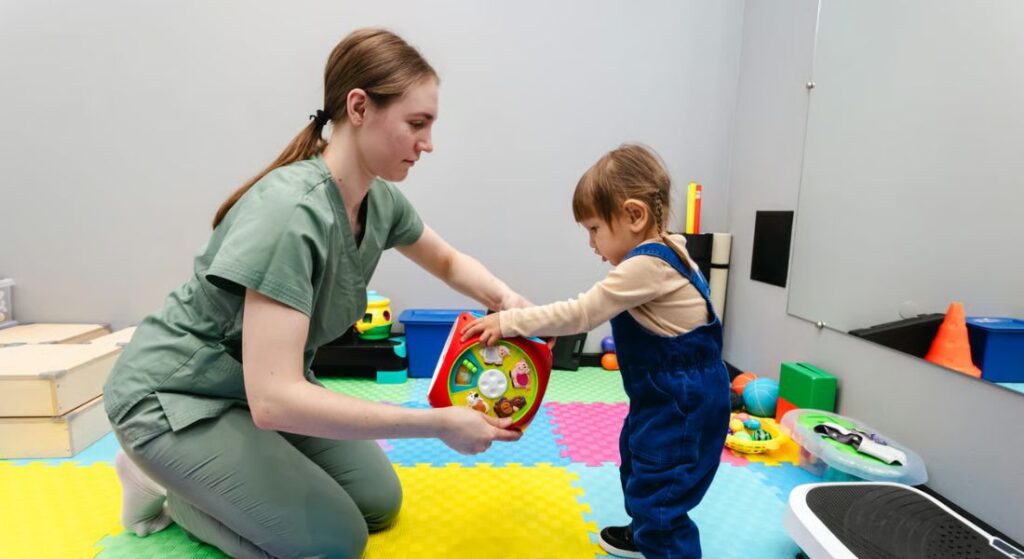
Regression means your child loses skills they previously had. This may include losing words, no longer using gestures, showing less interest in social interaction, losing play skills or experiencing a decline in motor skills. Unlike slow progress, regression is a change from skills your child had already developed.
NICE recommends referral to the autism team for children under 3 years who show regression in language or social skills. For older children with language regression, or any child with motor regression, NICE recommends referral through paediatric or neurological pathways for further assessment.
If your child loses words, social skills or other developmental abilities, you should not wait to see whether they return on their own. Seeking prompt medical or developmental advice can help identify the cause and ensure your child receives the appropriate assessment and support as early as possible.
Progress at a Glance
| Type of Progress | What Parents May Notice |
| More interaction | Child looks, shares, takes turns or enjoys social games more |
| Better understanding | Child follows routines and simple instructions more easily |
| More gestures | Child points, waves, shows, nods or uses signs |
| More sounds | Child babbles, copies sounds or uses sound effects |
| First words | Child uses meaningful words consistently |
| Word combinations | Child starts saying phrases such as “more milk” or “mummy go” |
| Clearer speech | Familiar and unfamiliar adults understand more |
| Less frustration | Child can communicate needs more successfully |
| Better nursery participation | Child joins routines, play or group activities more confidently |
| Better confidence | Child tries to communicate more often |
Progress should be judged over weeks and months, not one difficult day.
Why Some Children Improve Slowly
Slow progress does not always mean that therapy is not working. If your child seems to be improving gradually, remember that communication develops through many different skills. Your child may first be strengthening listening, attention, turn-taking, gestures, speech sounds and understanding before you notice a significant increase in spoken words.
Progress may also be slower if your child’s speech delay is linked to receptive language difficulties, hearing problems, neurodevelopmental differences, oral-motor difficulties, speech sound disorder, developmental language disorder (DLD), autism or learning difficulties. Every child develops at their own pace, and the underlying cause can influence how quickly changes are seen.
The most important question is whether your child’s support plan matches their individual needs and whether progress is being reviewed regularly. If your child is making very little progress despite appropriate support, it is worth discussing whether a reassessment or a different approach may be helpful.
Can a Child Catch Up Without Speech Therapy?
Some children do catch up without formal speech therapy, particularly if they are late talkers who have good understanding, use gestures well, have normal hearing and show strong social communication. If your child fits this pattern, they may make steady progress with supportive communication at home and regular monitoring.
However, it is not always possible to predict which children will catch up naturally and which will need extra support. This is why relying on a “wait and see” approach can be risky if your child has warning signs such as poor understanding, limited gestures, hearing concerns, regression, very few words by around 2 years of age, unclear speech, concerns raised by nursery or wider developmental delays.
Seeking professional advice does not mean your child will automatically need intensive therapy. In many cases, guidance, practical strategies and regular monitoring provide a sensible middle ground while making sure your child receives additional support if it becomes necessary.
The Role of Parents at Home
You play one of the most important roles in supporting your child’s communication development. You do not need to become your child’s therapist, as many opportunities to encourage speech and language happen naturally during everyday routines and play.
Simple strategies can make a real difference. You can get face to face with your child, follow their interests, use simple language, comment more than you question, pause and give them time to respond, copy their sounds, expand on what they say, offer choices, use gestures, read together, sing songs, play turn-taking games and reduce background noise.
The NHS recommends talking to children during everyday activities, switching off the television or radio when possible and giving them enough time to respond. These small, consistent interactions create valuable opportunities for communication and can complement any professional advice or therapy your child receives.
Comment More, Test Less
It is natural to encourage your child by asking questions such as, “What’s this?”, “Can you say car?” or “What colour is it?” While questions can be helpful, asking too many can make communication feel more like a test than a conversation.
Instead, try commenting on what your child is doing. If your child is playing with a car, you could say, “Car. Fast car. The car is going.” If your child says “car”, you can build on it by saying, “Yes, red car.” This gives your child clear language to hear and copy without any pressure to respond.
Children often learn best when communication feels natural, enjoyable and meaningful. By following your child’s interests and modelling language during everyday activities, you create opportunities for them to develop their speech and language with confidence.
Nursery and School Support
Nursery and school can play an important role in helping your child develop their communication skills. Your child is likely to benefit from support during everyday activities, not just during clinic appointments. Simple strategies such as visual routines, clear instructions, repetition, language modelling, small-group activities, vocabulary support and extra processing time can make a real difference.
The Royal College of Speech and Language Therapists (RCSLT) explains that speech and language therapists working in education settings help children and young people reach their communication and learning potential while reducing barriers created by speech, language and communication needs.
If your child is starting nursery or school with a speech delay, it is helpful to share information about what supports their communication best. Working together with teachers, nursery staff and therapists can help create a consistent approach and give your child the best opportunity to make progress.
Why School Can Reveal Ongoing Difficulties
Some children appear to catch up in everyday conversation but find things more difficult once they start school, where language demands become much greater. Your child may need to understand instructions, follow stories, answer questions, learn new vocabulary, develop reading and writing skills, and take part in more complex social conversations.
If your child has developmental language disorder (DLD) or persistent language difficulties, they may need extra support with literacy and classroom learning. Research suggests that DLD can have a lasting impact on language skills, including reading, spelling, writing and storytelling, which are all important for success at school.
This does not mean that every child with a history of speech delay will experience difficulties at school. However, it does highlight the importance of monitoring your child’s progress over time so that any ongoing challenges can be identified and supported as early as possible.
Long-Term Outcomes: What Parents Should Know
Long-term outcomes after a speech delay can vary from one child to another. Your child may catch up completely and need no further support, while others continue to need help with speech sounds, language, reading, writing, social communication or learning at school. Many children make good progress, but the journey is different for everyone.
The Royal College of Speech and Language Therapists (RCSLT) explains that when communication needs are not identified and supported, they can have long-term effects on children’s learning and wider outcomes. This is not intended to worry you, but to highlight the value of recognising difficulties early and providing the right support when it is needed.
The best outcome is not defined only by a particular word count or speech score. It is that your child can communicate effectively, build relationships, participate in learning, support their emotional wellbeing and take part confidently in everyday life.
Speech Therapy: What It May Involve
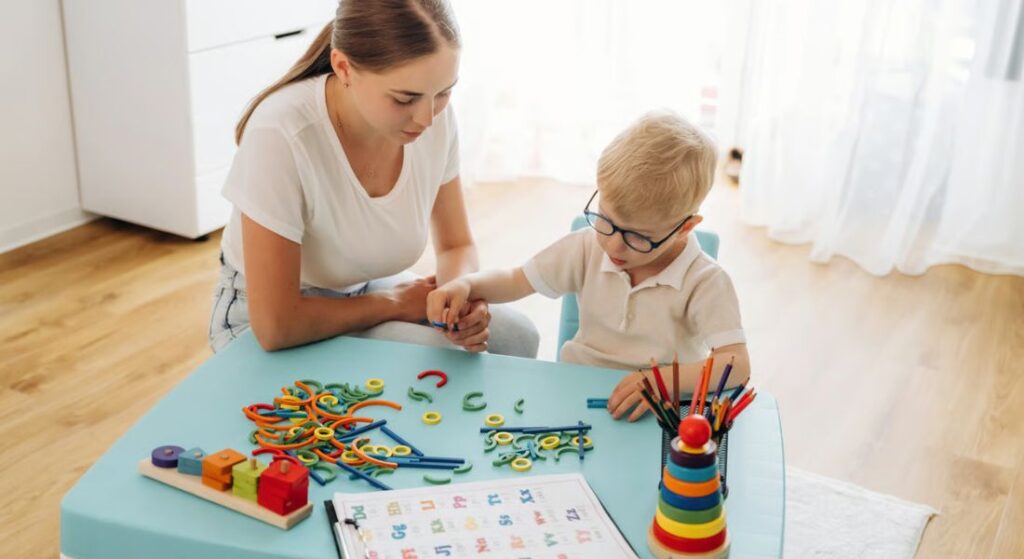
Speech and language therapy is tailored to your child’s individual needs. Depending on the type of difficulty, your child may benefit from parent coaching, attention and listening strategies, support with first words, vocabulary development, sentence building, speech sound therapy, understanding language, social communication, play-based activities, visual supports, augmentative and alternative communication (AAC) such as signs, pictures or communication boards, nursery or school advice, and feeding or swallowing support where appropriate.
The Royal College of Speech and Language Therapists (RCSLT) explains that speech and language therapists support children with communication needs as well as eating, drinking and swallowing difficulties. The type and amount of therapy your child needs will depend on their strengths, challenges and stage of development.
Therapy is usually most effective when the strategies are used consistently in everyday life. By practising communication during play, mealtimes, reading and daily routines, you can help your child build new skills between appointments and make steady progress over time.
What Makes Outcomes Better?
Several factors can improve your child’s communication outcomes. Early identification, hearing assessment, speech and language therapy when needed, practical strategies at home, nursery or school support, good understanding, strong use of gestures, regular progress reviews and addressing any underlying medical or developmental causes can all make a positive difference.
The way you support your child also matters. Encouraging communication through everyday interactions, celebrating small achievements and reducing frustration can help your child build confidence while developing new skills. Working closely with professionals and education settings helps create a consistent approach across different environments.
Children often make the best progress when they feel understood rather than pressured. If your child has reliable ways to communicate and knows they will be listened to, they are more likely to join in, enjoy learning and continue developing their communication skills.
When Catching Up May Take Longer
Catching up may take longer if your child has additional factors affecting their communication. These can include poor understanding of language, limited gestures or social communication, hearing difficulties, developmental language disorder, speech sound disorder, autism, learning difficulties, prematurity-related developmental needs, feeding or oral-motor concerns, genetic or neurological conditions, significant anxiety or delayed access to support.
These factors do not mean your child cannot make progress. Instead, they suggest that your child may need more time, targeted intervention and ongoing support to develop their communication skills. Every child’s journey is different, and comparing progress with other children is rarely helpful.
It is important to have realistic expectations while recognising every step forward. Even if your child does not catch up quickly or completely, they can still make meaningful progress that improves communication, confidence, learning and participation in everyday life.
Signs That Your Child Is Moving in the Right Direction
As your child develops, progress is often seen through a series of small changes rather than one dramatic breakthrough. You may notice more attempts to communicate, better understanding, new gestures, more speech sounds, new words, increased imitation, stronger social interest, improved turn-taking, longer attention, clearer speech or less frustration during everyday activities.
Even small improvements are meaningful. If your child has learned a few new words, points more often, brings you toys to share, copies your actions or follows more instructions than before, these are all positive signs that their communication skills are developing.
Keeping a simple record of your child’s progress can be very helpful. Looking back over weeks or months often makes it easier for you to recognise how much they have achieved, even when day-to-day changes seem small.
Signs That More Support Is Needed
Seek professional advice if your child has made little or no progress over several months, has very few meaningful words by around age 2, is not beginning to combine two words by around age 2, has difficulty understanding simple language, or if you have concerns about their communication at any age.
NICE advises that delay or regression in speech and language can sometimes be a feature of autism and recommends following autism recognition and referral guidance when appropriate. Concerns raised by your child’s nursery or school should also be taken seriously, as they may notice communication difficulties in different situations.
If your child is not making the progress you would expect, it is better to seek advice sooner rather than waiting indefinitely. An early assessment can help identify the cause of the delay and ensure your child receives the support that best meets their individual needs.
Red Flags That Should Not Be Ignored
Seek prompt medical or developmental advice if your child loses words or other previously acquired skills, stops responding to sounds, develops seizures, has a sudden change in speech, or develops new feeding or swallowing difficulties. Regression in language, social or motor skills should always be assessed promptly.
Other concerns, such as limited gestures, poor understanding, very unclear speech, reduced social communication or marked frustration, also warrant timely professional assessment, but they are not necessarily medical emergencies.
NICE recommends referral for young children who show regression in language or social skills. For older children with language regression, or children of any age with motor regression, paediatric or neurological assessment may also be appropriate.
If your child develops any of these warning signs, do not wait to see if they improve on their own. Seeking professional advice promptly can help identify the underlying cause and ensure your child receives the appropriate assessment and support as early as possible.
Red Flags at a Glance
| Red Flag | Why It Matters |
| Loss of words | Regression needs prompt assessment |
| No response to sound | Hearing or neurological concern may be present |
| Limited gestures or pointing when expected for age | Communication development may need assessment |
| Poor understanding | Receptive language difficulty can affect outcomes |
| No progress over months | Needs review of diagnosis and support |
| Very unclear speech for age | May suggest speech sound disorder |
| Feeding or swallowing difficulty | May need paediatric or SLT feeding assessment |
| Seizures or sudden changes | Needs medical assessment |
| Limited social communication | May suggest broader developmental assessment |
| Nursery or school concerns | Difficulties may be clearer in group settings |
These signs do not automatically mean a serious diagnosis, but they should be taken seriously.
What If My Child Needs AAC?
AAC stands for augmentative and alternative communication. If your child finds speech difficult, unclear or unreliable, AAC can provide additional ways to communicate. It may include gestures, signs, picture cards, communication boards, books or electronic communication devices, depending on your child’s needs.
The Royal College of Speech and Language Therapists (RCSLT) explains that AAC tools and strategies can benefit people with communication needs, and speech and language therapists play an important role in assessing whether AAC is appropriate and helping families use it effectively.
Using AAC does not mean giving up on speech. Instead, it gives your child another way to express themselves while their communication skills continue to develop. For many children, AAC reduces frustration, encourages participation and supports more successful communication at home, nursery and school.
Monitoring Progress Over Time
Monitoring your child’s progress should be simple and practical rather than overwhelming. You can keep track of changes in vocabulary, word combinations, speech clarity, understanding, gestures, play, social interaction, frustration levels, nursery or school feedback and how well your child communicates their everyday needs.
Try not to focus on counting words every day. Instead, look for patterns over several weeks or months. Your child may make gradual improvements that are easy to miss in day-to-day life but become much clearer when you look back over time.
Short videos taken every few months can be a helpful way to see how your child is progressing. If your child is receiving speech and language therapy, ask which specific goals are being monitored and how you will know whether the current support is helping them make progress.
What Parents Should Avoid
If you are concerned about your child’s communication, try not to delay seeking advice. It is also important not to assume that boys always talk later, that bilingualism explains every speech delay or that screen-based learning alone will help your child develop their language skills.
You should also avoid putting too much pressure on your child by asking them to repeat words constantly or correcting every mistake they make. Comparing your child with siblings or other children can increase anxiety without providing useful information. It is equally important not to ignore hearing concerns or dismiss any loss of speech or other developmental skills.
Remember that you are not to blame if your child has a speech delay. Your child is most likely to make progress when they feel supported, understood and encouraged in a calm, positive environment rather than pressured to perform.
Bilingual Children Can Catch Up Too
Growing up with more than one language does not cause a true speech delay. If your child is learning two or more languages, they may mix words from different languages or have a larger vocabulary in one language than another, depending on the amount of exposure they receive. This is a normal part of bilingual language development for many children.
However, if your child is delayed across all the languages they use, has poor understanding, limited gestures or concerns with social communication, it is important to seek an assessment. NICE advises professionals not to assume that language delay is simply because English is not the family’s first language.
The best support for bilingual children should recognise and value every language used at home. You should usually continue speaking the language you are most comfortable with, as rich and natural communication in your strongest language helps support your child’s overall language development.
Screen Time and Catching Up
Screens cannot replace real-life interaction when it comes to language development. If your child has a speech delay, they learn best through responsive conversations with people who listen, pause, respond, repeat words and follow their interests during everyday activities.
The NHS advises switching off background television or radio because constant background noise can make it harder for children to listen and learn language. It also encourages parents to talk with their children throughout daily routines, as these everyday interactions provide valuable opportunities for communication.
This does not mean that every screen is harmful. The main concern is when screen time replaces talking, play, reading, movement, sleep and shared attention with other people. If your child has a speech delay, spending more time interacting face to face is usually far more beneficial than simply watching additional educational videos.
When to See a GP or Health Visitor
If you are worried about your child’s speech or language development, speak to your GP or health visitor. Your child should be assessed if they have delayed speech, poor understanding, unclear speech, hearing concerns, frequent ear infections, poor response to their name, developmental concerns, regression, feeding difficulties or significant frustration related to communication.
The NHS advises parents to seek advice from a GP or health visitor if they have concerns about their child’s speech or language development. If needed, your child can be referred for speech and language therapy or other appropriate assessments.
You do not need to know whether your child will catch up before asking for help. An early review can help you understand your child’s needs, decide whether monitoring is appropriate and identify whether support or further assessment should begin now.
When to See a Paediatrician
A paediatrician may be helpful if your child’s speech delay is part of a wider developmental picture. Your child may benefit from a paediatric assessment if speech delay occurs alongside regression, poor social communication, reduced response to their name, hearing concerns, feeding or swallowing difficulties, motor delay, poor growth, sleep problems, seizures, behavioural distress, features of autism, learning concerns or a complex medical history.
Before the appointment, it can be useful to bring information such as developmental milestone notes, nursery or school feedback, hearing history, short videos of your child communicating, a list of the words they use, your family history and any previous assessment reports. These details can help build a clearer picture of your child’s development.
A paediatrician can assess whether your child’s speech delay is an isolated difficulty or part of a broader developmental condition. This helps ensure your child receives the most appropriate investigations, referrals and support based on their individual needs.
When to See a Speech and Language Therapist
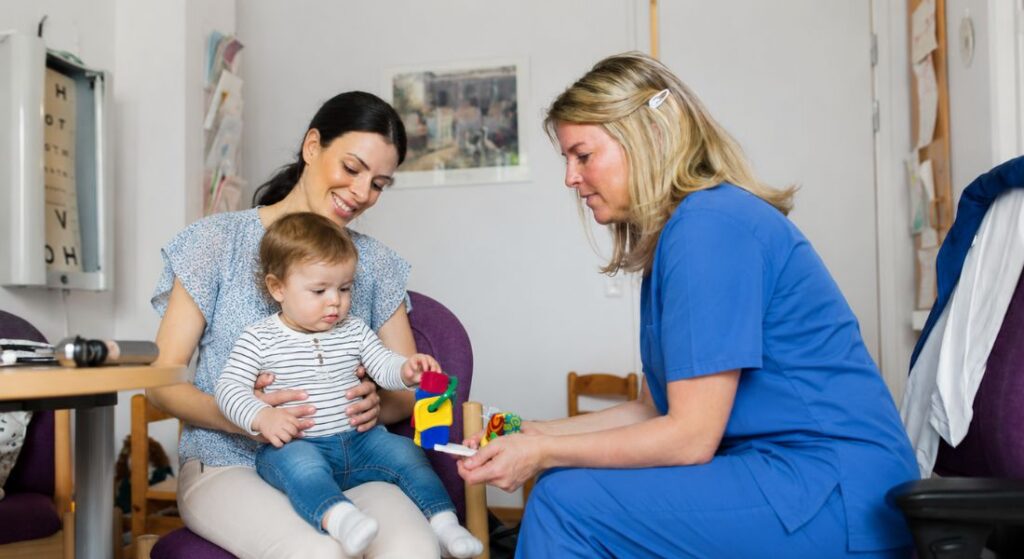
A speech and language therapist can assess your child’s communication skills in detail to understand their individual strengths and areas of difficulty. During the assessment, your child may be evaluated for attention, listening, play, understanding, vocabulary, sentence use, speech sounds, fluency, social communication, voice and, where relevant, feeding or swallowing.
The Royal College of Speech and Language Therapists (RCSLT) explains that speech and language therapists work directly with children and families to develop personalised strategies that meet each child’s individual needs. An assessment can help you understand whether your child is likely to make progress with monitoring and home-based strategies or whether they would benefit from more structured therapy.
Referral routes vary across the UK. In some areas, you can refer your child directly to speech and language therapy services, while in others a referral is made through your GP, health visitor, nursery or school. If you are concerned about your child’s communication, it is worth asking what referral pathway is available in your local area.
What to Ask at an Appointment
Preparing a few questions before your appointment can help you make the most of the discussion and leave with a clear plan for your child. You may want to ask whether your child’s delay is mainly expressive, receptive or both, whether their understanding is age-appropriate, if a hearing test is needed, whether their gestures and play are reassuring, if their speech clarity is expected for their age, and whether developmental language disorder, autism or another developmental condition should be considered.
You can also ask what you should be doing at home while waiting, whether nursery or school should use specific communication strategies, how your child’s progress will be measured, when they should be reviewed again and which warning signs would need more urgent assessment.
Asking these questions can help you understand your child’s needs and the next steps in their care. A clear explanation and practical advice will make it easier for you to support your child with confidence at home while working alongside healthcare and education professionals.
Myths vs Facts
| Myth | Fact |
| All children with speech delay catch up on their own | Many improve, but some need assessment and support |
| Late talking is always harmless | Some late talkers have ongoing language, literacy or developmental needs |
| Boys always talk late, so there is no need to worry | Concerns should still be assessed |
| If a child understands, speech delay does not matter | Expressive difficulties can still affect confidence and behaviour |
| If a child starts talking, all future risk disappears | Some children later struggle with speech clarity, language or literacy |
| Speech therapy means something is seriously wrong | Therapy can be early support, not a severe diagnosis |
| AAC stops children from learning to talk | AAC can support communication while speech continues to develop. It may reduce frustration and help children participate more effectively. |
| Screens can teach speech as well as people | Children learn best through responsive interaction |
| A passed newborn hearing screen means hearing is fine forever | Hearing can change later |
| Regression is a normal phase | Loss of words or social skills needs prompt assessment |
Understanding these myths helps parents stay hopeful without ignoring concerns.
Key Takeaways
- Many children with speech delay make strong progress, and some late talkers catch up with their peers.
- Research on late talkers suggests that many children with early expressive language delay reach average language scores by age 5, 6 or 7, but early delay can also identify children with autism, hearing impairment, receptive language delay, intellectual disability or other risks.
- Children with good understanding, strong gestures, social communication and steady progress may have a more reassuring outlook, while receptive language difficulties can predict more persistent expressive language concerns.
- Hearing should be checked when speech is delayed, because hearing tests can assess how well children hear sounds and speech.
- Speech and language therapy can support communication, speech sounds, vocabulary, understanding, social communication, AAC and feeding or swallowing needs, depending on the child’s profile.
- A Cochrane review found some evidence that speech and language therapy may help children with expressive phonological and expressive vocabulary difficulties, though evidence varies by area of need.
- Speech and language needs can affect school learning if they persist, especially literacy, writing, narratives and classroom language.
- Regression, loss of words, poor response to sound, no gestures, poor understanding, feeding or swallowing difficulty, and wider developmental concerns should prompt assessment.
- Parents should seek advice from a GP, health visitor, speech and language therapist or paediatrician if they are worried about speech, language, hearing, development or long-term communication progress.
Frequently Asked Questions
1. At what age should I worry if my child is not talking?
Every child develops at their own pace, but it is worth seeking advice if your child has very few meaningful words around age 2, is not beginning to combine words, has difficulty understanding simple instructions, or if you have concerns about their communication at any age.
2. Can a child with speech delay catch up without therapy?
Some children, particularly late talkers with good understanding, hearing and social communication, may catch up without formal therapy. However, it is not always possible to predict which children will improve independently, so professional advice is recommended if you have concerns.
3. Does speech delay always mean autism?
No. Speech delay can occur for many different reasons and does not automatically mean a child is autistic. While speech delay can be one feature of autism, many children with delayed speech have other causes, such as hearing difficulties, developmental language disorder or isolated expressive language delay.
4. How can speech development be encouraged at home?
Speech and language development can be encouraged by talking during everyday activities, reading together, singing songs, playing face-to-face games, following the child’s interests and allowing time for responses. Regular, meaningful interactions provide valuable opportunities for communication and can complement any professional advice or therapy the child receives.
5. Should my child have a hearing test if they have speech delay?
A hearing assessment is often recommended when speech is delayed, even if your child passed their newborn hearing screening. Temporary or mild hearing loss, including glue ear, can affect speech and language development.
6. Can bilingual children catch up after a speech delay?
Yes. Learning two or more languages does not cause speech delay. If a child has delays across all the languages they are exposed to, or has additional communication concerns, they should still be assessed in the same way as any other child.
7. Does screen time affect speech development?
Excessive screen time may reduce opportunities for face-to-face interaction, which is important for language learning. Children develop communication skills best through conversations, play and responsive interactions with parents and caregivers.
8. How long does it take for speech therapy to work?
The length of therapy varies depending on the child’s age, the cause of the speech delay and the severity of their communication difficulties. Some children make noticeable progress within a few months, while others may benefit from longer-term support.
9. What are the signs that my child is making progress?
Positive signs include using more words, improving understanding, following simple instructions, pointing or using more gestures, combining words into short phrases, speaking more clearly and showing less frustration when communicating.
10. When should specialist advice be sought for speech delay?
Specialist advice should be sought if a child is not making progress, has poor understanding of language, loses previously acquired words or skills, has hearing concerns, struggles with social communication, or if nursery or school staff have raised concerns about their development.
Final Thoughts: Helping Your Child Reach Their Communication Potential
Many children with speech delay make excellent progress, and some eventually catch up with their peers, particularly when the delay is mild and their understanding, hearing and social communication are developing well. However, every child follows a different path, which is why it is important not to rely on a wait-and-see approach if you have ongoing concerns. Early assessment can identify whether your child simply needs time, targeted support or further investigation into an underlying condition. If you are concerned about speech delay in children, seeking professional advice early can provide reassurance and ensure your child receives the right support at the right time.
The goal is not simply for your child to say more words, but to communicate confidently, learn effectively and take part fully in everyday life. With the right combination of parent support, speech and language therapy when needed, and guidance from healthcare professionals, many children continue to make meaningful progress. If you are worried about your child’s speech, language or overall development, speaking to a GP, paediatrician or speech and language therapist is the best first step towards understanding their individual needs. If your child needs specialist paediatric care for speech delay in children in London, you can contact us at London Paediatric Clinic for support.
References:
- Rescorla, L. (2011) ‘Late talkers: Do good predictors of outcome exist?’, Developmental Disabilities Research Reviews, 17(2), pp. 141–150. Available at: https://pubmed.ncbi.nlm.nih.gov/23362033/
- Roberts, M.Y. and Kaiser, A.P. (2015) ‘Early intervention for toddlers with language delays: A randomized controlled trial’, Pediatrics, 135(4), pp. 686–693. Available at: https://pmc.ncbi.nlm.nih.gov/articles/PMC4379460/
- NHS (2024) ‘Hearing tests’. Page last reviewed 12 November 2024. Available at: https://www.nhs.uk/tests-and-treatments/hearing-tests/
- Royal College of Speech and Language Therapists (RCSLT) (no date) ‘What is speech and language therapy?’. Available at: https://www.rcslt.org/speech-and-language-therapy/
- Royal College of Speech and Language Therapists (RCSLT) (2024) ‘Augmentative and alternative communication (AAC) overview’. Last updated May 2024. Available at: https://www.rcslt.org/speech-and-language-therapy/clinical-information/augmentative-and-alternative-communication/
- National Institute for Health and Care Excellence (NICE) (2011) ‘Autism spectrum disorder in under 19s: recognition, referral and diagnosis (NICE clinical guideline CG128)’. Published 28 September 2011, last updated 20 December 2017 and last reviewed 14 June 2021. Available at: https://www.nice.org.uk/guidance/cg128
- National Institute for Health and Care Excellence NICE (2013, updated 2021) ‘Autism spectrum disorder in under 19s: support and management (NICE guideline CG170)’. Published 28 August 2013, last updated 14 June 2021. Available at: https://www.nice.org.uk/guidance/cg170