



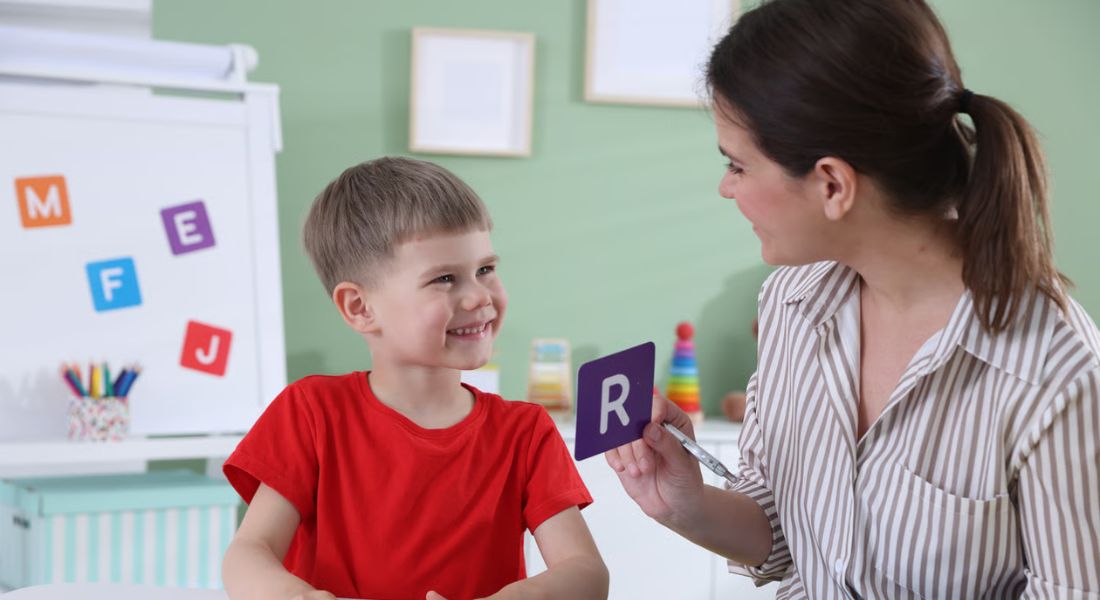
Communication is an important part of your child’s development. Learning to understand language, express ideas, interact with others, and take part in everyday conversations helps your child build relationships, develop confidence, and participate more fully at home, nursery, and school.
If your child is speaking less than expected, is difficult to understand, struggles to follow instructions, or becomes frustrated when trying to communicate, you may be wondering whether speech and language therapy could help. It is natural to compare your child’s development with that of other children, but every child develops differently and concerns should be considered in the context of your child’s individual progress.
Speech and language therapy can support children with a wide range of communication difficulties. An early assessment can help you understand your child’s strengths and challenges, identify whether support is needed, and provide practical strategies to encourage communication development in a way that meets your child’s individual needs.
What Is Speech and Language Therapy?
Speech and language therapy is a specialist service that supports children with speech, language and communication difficulties. Speech and language therapists may also assess and support stammering, voice difficulties and problems with eating, drinking or swallowing.
You may think that speech therapy is only about helping children pronounce sounds correctly, but it covers much more than speech clarity. Depending on your child’s needs, therapy may focus on understanding language, building vocabulary, forming sentences, developing social communication skills, and increasing confidence when communicating.
The support your child receives will depend on their age, development, and specific difficulties. Some children benefit from advice and practical strategies that parents can use at home, while others may need more structured therapy over a longer period to help them achieve their communication goals.
How Do I Know If My Child Needs Speech and Language Therapy?
Every child develops communication skills at their own pace, but there are times when additional support may be helpful. You may become concerned if your child is using fewer words than expected, has difficulty combining words into phrases, does not understand simple instructions, or becomes frustrated because they cannot communicate what they want.
You might also notice that your child avoids talking, mainly communicates through gestures, or repeats words and phrases but does not yet use them flexibly to express a wide range of messages. These signs do not necessarily mean there is a serious problem, but they can indicate that a closer look at your child’s communication development would be beneficial.
A speech and language assessment can help you understand your child’s strengths and areas of difficulty. It does not automatically mean your child will need ongoing therapy, but it can provide reassurance when development is on track or identify where additional support may be useful.
Why Early Support Can Be Helpful
The early years are an important time for communication development. During this period, your child is learning new words, understanding language, developing social skills, and building the foundations needed for future learning.
Seeking advice early can help identify communication difficulties and provide support where needed. This may reduce the impact that communication difficulties have on confidence, behaviour, relationships or participation in nursery and school. Early assessment also makes it easier to understand your child’s strengths and decide whether any additional support would be beneficial.
Asking for advice does not mean assuming that your child has a long-term problem. In many cases, it simply gives you practical strategies to support communication at home and helps ensure that your child’s development is monitored appropriately as they grow.
What Areas Can Speech and Language Therapy Help With?
Speech and language therapy can support many different aspects of communication. Depending on your child’s needs, therapy may help with speech sounds, understanding language, using words and sentences, social communication, listening skills, and communication during play and everyday activities.
You may notice that your child understands what is being said but finds it difficult to express their thoughts and needs. Alternatively, your child may talk frequently but struggle to be understood, follow conversations, take turns in communication, or use language effectively in social situations.
Therapy is tailored to your child’s individual strengths and challenges. The aim is not to make every child communicate in the same way, but to help your child develop the skills they need to communicate more effectively, confidently, and successfully in daily life.
When an SLT Assessment May Be Helpful
| What You Notice | Area That May Need Assessment | Possible Next Step |
| Your child uses few spoken words | Expressive language | SLT assessment or monitoring |
| Your child struggles to follow instructions | Understanding or receptive language | Language and hearing assessment |
| Speech is difficult to understand | Speech sound development | Speech sound assessment |
| Your child repeats sounds or gets stuck when talking | Fluency or stammering | Specialist SLT advice |
| Your child communicates differently in social situations | Social communication | Individual communication assessment |
| Your child speaks at home but not in other settings | Selective mutism or anxiety | SLT and psychological or educational support |
| Your child has persistent hoarseness | Voice | GP or ENT assessment before specialist voice therapy |
| Your child coughs or chokes during meals | Eating, drinking or swallowing | Prompt medical and specialist SLT assessment |
| Your child has lost communication skills | Developmental or neurological concern | Prompt paediatric assessment |
Speech Difficulties and Language Difficulties Are Different
Speech and language are closely connected, but they are not the same. Speech refers to how your child produces sounds and words, while language refers to how they understand information and use words, sentences, and meaning to communicate.
You may notice that your child knows exactly what they want to say but struggles to pronounce certain sounds clearly. In other cases, your child may speak clearly but find it difficult to understand questions, follow instructions, learn new vocabulary, or put words together into sentences.
Understanding this difference is important because the right support depends on the underlying difficulty. A speech and language therapist will look at your child’s overall communication skills rather than focusing only on how clearly they speak, helping to identify the most appropriate support for their needs.
Common Reasons Children Are Referred for Speech Therapy
Children may be referred for speech and language therapy for many different reasons. You may be advised to seek an assessment if your child has delayed speech, unclear pronunciation, difficulty understanding language, limited vocabulary, problems forming sentences, or challenges with social communication.
Communication difficulties can also affect other areas of your child’s life. If your child struggles to express their needs, thoughts, or feelings, you may notice frustration, emotional outbursts, withdrawal from social situations, or behaviour that seems linked to communication challenges.
A referral for speech and language therapy is not a negative label or diagnosis. It is simply an opportunity to understand your child’s communication profile more clearly and identify practical strategies that can help them communicate more effectively and confidently.
What Happens During a Speech and Language Assessment?

During a speech and language assessment, the therapist will usually ask questions about your child’s development, communication skills, medical history, hearing, and daily experiences. You may also be asked how your child communicates at home, in nursery, or at school.
The therapist will often observe your child while they play, interact, follow instructions, answer questions, or take part in age-appropriate communication activities. For younger children, play-based assessment is commonly used because it provides a natural picture of how they communicate in everyday situations.
After the assessment, the therapist will explain what they have observed and discuss the next steps with you. Depending on your child’s needs, this may involve therapy sessions, practical strategies to use at home, monitoring progress, or recommendations for nursery and school support.
Does My Child Need Therapy If They Are a Late Talker?
Some children who begin talking later make substantial progress without long-term therapy. Good understanding, gesture use and steady progress may be reassuring signs, but they do not guarantee that your child will catch up. An assessment may be helpful if progress is limited, concerns persist or there are difficulties in other areas of communication or development.
However, it is not always easy to tell whether your child is simply developing at a slower pace or whether additional support would be helpful. An assessment can provide a clearer understanding of your child’s communication strengths and identify any areas that may benefit from intervention.
If you have concerns about speech delay in your child, seeking specialist advice can offer reassurance, practical guidance, and a clear plan for monitoring progress. Rather than waiting and hoping for improvement, you can gain a better understanding of what support, if any, may be needed.
Speech and Language Therapy for Toddlers
Toddlers learn communication through everyday interactions, play, repetition, and relationships with the people around them. If your child needs support at this age, speech and language therapy is usually designed to be fun, engaging, and integrated into normal daily activities rather than feeling like formal lessons.
A therapist may use toys, books, songs, games, and familiar routines to encourage your child to communicate. You may also be shown practical techniques that help you build language opportunities into activities such as mealtimes, bath time, story time, and play.
Your involvement is particularly important because most communication learning happens at home rather than during therapy sessions. Small changes in how you talk, listen, and respond to your child can create many more opportunities for speech and language development throughout the day.
Speech and Language Therapy for Preschool Children
During the preschool years, your child is developing more advanced communication skills. They begin asking questions, telling stories, explaining ideas, following longer instructions, and taking part in more complex conversations with adults and other children.
You may notice that your child struggles with vocabulary, sentence building, speech clarity, or being understood by others. These difficulties can affect their confidence, social interactions, and ability to participate fully in nursery activities and group learning.
Speech and language therapy at this stage often focuses on preparing your child for school. Support may help improve communication skills, listening and attention, understanding and using language, speech clarity, and social interaction so that your child feels more confident when starting school.
Speech Therapy for School-Age Children
Communication difficulties can continue beyond the early years and may become more noticeable once your child starts school. As learning becomes more language-based, children may need support with understanding, expressing ideas and participating confidently in the classroom.
- Following instructions: Your child may find it difficult to understand or remember spoken instructions, especially when they become more complex.
- Expressing ideas clearly: They may struggle to organise their thoughts, explain events or answer questions in detail.
- Classroom participation: Communication challenges can affect taking part in discussions, asking questions and sharing ideas.
- Learning and literacy skills: Difficulties with language may sometimes impact reading, writing and overall academic progress.
- Confidence and friendships: Speech and language challenges can affect social interactions, relationships and self-confidence.
Speech and language therapists can work with your child, family and school to develop practical strategies that support communication in everyday situations. The aim is to help your child communicate more effectively and feel more confident when learning and interacting with others.
How Speech Therapy Sessions Usually Work
Speech therapy sessions are tailored to your child’s individual needs and communication goals. Depending on the situation, the therapist may work directly with your child, provide activities for home practice, or collaborate with parents, nursery staff, and teachers to support communication across different environments.
During sessions, your child may take part in games, conversations, storytelling activities, speech sound practice, or tasks designed to improve understanding and use of language. The specific approach will depend on your child’s age, strengths, and the areas of communication being targeted.
A good therapy plan should be practical and realistic for your family. The goal is to help your child develop communication skills that they can use confidently in everyday situations, rather than only during therapy sessions.
How Parents Can Support Speech Development at Home
You play an important role in supporting your child’s communication development. Everyday activities such as reading together, playing, talking during daily routines, and responding to your child’s attempts to communicate can all create valuable opportunities for learning language.
You can encourage communication by following your child’s interests and building on what they are already saying or showing you. For example, if your child says “car”, you might expand this by saying “red car” or “the car is going fast”, helping them hear and learn new words and sentence structures.
The aim is not to constantly question or test your child. Communication develops most effectively when your child feels relaxed, listened to, and encouraged to share their thoughts during enjoyable everyday interactions.
Clinical Tip: Make Communication Easier, Not Harder
- Follow your child’s lead: Join activities your child already enjoys and add simple words to what they are doing.
- Pause before helping: Give your child enough time to respond through words, sounds, gestures, signs or pictures.
- Model rather than correct: If your child says “dog run”, you can reply, “Yes, the dog is running,” without asking them to repeat it.
- Use comments instead of constant questions: Saying “The train is going fast” may create less pressure than repeatedly asking, “What is this?”
- Reduce background noise: Turn down television or music when you are talking, reading or playing together.
- Accept every communication method: Respond to gestures, signs, pictures and communication devices as meaningful attempts to communicate.
NHS language-development guidance supports following the child’s interests, sharing books, using everyday routines and giving children opportunities to lead interactions.
Does Speech Therapy Work?
Speech and language therapy can help many children, but the level and type of improvement vary. Outcomes depend on your child’s communication profile, the underlying cause, the intervention used, how regularly strategies are practised and how well support is coordinated across home and education settings.
You may notice progress in different ways. For some children, improvements include clearer speech, a larger vocabulary, better understanding of language, stronger social communication skills, or increased confidence when interacting with others. While some children make rapid gains, others benefit from ongoing support over a longer period.
The goal of therapy is not to achieve perfect speech or communication. Instead, it is to help your child communicate more effectively, express their needs and ideas with greater confidence, and participate more comfortably in everyday activities at home, nursery, school, and social settings.
Evidence Note
Research suggests that targeted speech and language interventions can improve selected communication outcomes, but effectiveness varies according to the child’s communication profile, the goal being addressed and the intervention used.
A systematic review and meta-analysis involving parent-training interventions found positive associations with children’s language outcomes and parents’ use of communication-support strategies. A 2025 review of vocabulary interventions for primary-school-aged children with developmental language disorder found that children’s responses varied and that intervention should be individualised and monitored. The review also identified considerable variation in study design, intervention delivery and outcome measurement.
Evidence should therefore be applied to your child’s individual needs rather than assuming that one programme, therapy frequency or number of sessions will be suitable for every child.
Speech Therapy and Social Communication

Some children do not have difficulty producing speech but find it challenging to use communication effectively in social situations. You may notice that your child finds conversational turn-taking, understanding implied meaning, repairing misunderstandings or communicating their needs across different situations difficult.
Speech and language therapists can help your child develop these social communication skills through structured activities, guided practice, and everyday communication opportunities. This support can make it easier for your child to participate in conversations and build positive relationships with family members, friends, and classmates.
Social communication support is always tailored to your child’s individual needs. By identifying your child’s strengths and specific challenges, therapy can focus on helping them communicate more confidently and comfortably in a variety of social situations.
Speech Therapy and Developmental Language Disorder
Developmental language disorder, or DLD, describes persistent difficulties with understanding or using language that affect everyday life and are not associated with a known biomedical cause. DLD can occur alongside difficulties such as ADHD, dyslexia or motor coordination problems, so your child’s overall development should still be considered during assessment.
You may notice that your child struggles with learning new vocabulary, forming sentences, remembering words, following instructions, or explaining their thoughts and experiences. Speech and language therapy can help your child develop communication skills and practical strategies that make everyday communication easier and more effective.
Support for DLD is often an ongoing process because language demands become more complex as your child grows. The goal is to help your child communicate successfully, build relationships, and access learning opportunities both in school and in everyday life.
Hearing and Speech Development
Hearing plays an important role in your child’s speech and language development. Children learn sounds, words, and communication patterns by listening to the people around them, so hearing difficulties can sometimes affect how speech and language skills develop.
You may want to discuss a hearing assessment if your child has frequent ear infections, does not always respond when their name is called, seems to miss parts of conversations, or appears unable to hear certain sounds. Hearing difficulties are not always obvious and can sometimes fluctuate, particularly when conditions such as glue ear are present.
Checking your child’s hearing is often an important part of investigating communication concerns. If a hearing problem is identified, appropriate treatment or support may help improve your child’s access to speech and language and support their overall communication development.
When Should You Ask for Professional Advice?
You do not need to wait until your child is significantly behind their peers before seeking advice. If you have concerns about your child’s speech, language, understanding, or communication skills, it is reasonable to discuss them with a healthcare professional or speech and language therapist.
A professional assessment can help you understand whether your child would benefit from speech and language therapy, monitoring, or simple communication strategies that can be used at home. It may also identify whether further assessment is needed for hearing, development, or other related concerns.
Many parents find that speaking with a specialist provides reassurance and a clearer understanding of their child’s development. Whether support is needed or not, getting professional advice can help you feel more confident about the next steps and how best to support your child’s communication.
Speech Therapy and Autism
If your child is autistic, they may experience differences in speech, language, and social communication. These differences can affect how they understand others, express their needs, interact during play, build relationships, and take part in conversations.
Speech and language therapy can support an autistic child’s functional communication, understanding, self-advocacy and ability to express choices, needs and feelings. Depending on your child’s preferences, support may include spoken language, gestures, signs, visual supports or augmentative and alternative communication. Therapy should respect your child’s communication style rather than forcing eye contact, suppressing harmless autistic behaviours or encouraging them to hide their differences.
Speech Therapy and Pronunciation Difficulties
Some children understand language well but have difficulty pronouncing certain sounds clearly. You may notice that your child replaces sounds, leaves sounds out, or says words differently from other children of the same age.
These speech sound difficulties can sometimes affect your child’s confidence, particularly if other people find them difficult to understand. Your child may become frustrated when speaking, avoid talking in groups, or rely on others to speak for them in certain situations.
A speech and language therapist can assess your child’s speech patterns and determine whether the difficulties are part of normal development or whether targeted support would be beneficial. Targeted support may help your child develop clearer speech and communicate with greater confidence when assessment shows that therapy is appropriate.
Speech Therapy for Children Who Understand But Do Not Talk Much
You may notice that your child appears to understand much more than they can express. However, understanding language should still be considered during assessment because children may use familiar routines, gestures and contextual clues to work out what is expected. Many parents describe this as their child knowing what they want to say but finding it difficult to express their thoughts, needs, or ideas.
Speech and language therapy can help your child develop expressive language skills, including learning new vocabulary, combining words into phrases, building sentences, and communicating more effectively in everyday situations. Therapy activities are often based around play, conversation, and interests that motivate your child to communicate.
It is important to look at your child’s overall communication profile rather than focusing only on the number of words they use. Their understanding of language, use of gestures, social interaction, and attempts to communicate all provide valuable information about how their communication skills are developing.
Supporting Children With Limited Vocabulary
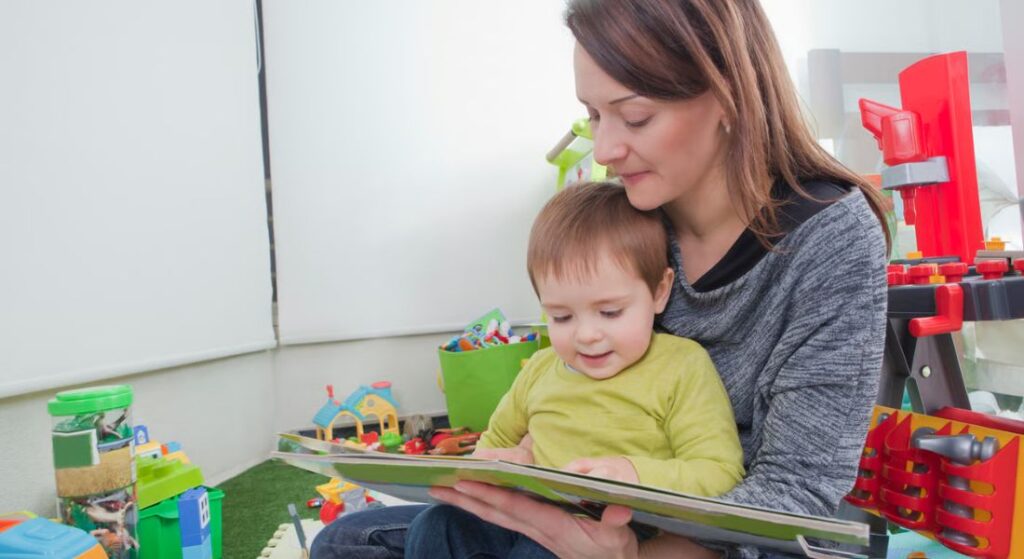
Vocabulary is an important part of your child’s communication development. Your child needs words to talk about objects, actions, feelings, experiences, and ideas, allowing them to express themselves more clearly and take part in conversations.
You may notice that your child uses only a small number of words or relies on the same words repeatedly. When vocabulary is limited, it can be harder for your child to explain what they want, share experiences, ask questions, or interact confidently with others.
Speech and language therapy can help your child build vocabulary in a natural and meaningful way. You may also be given practical strategies to introduce new words through play, books, daily routines, and everyday conversations, creating regular opportunities for language learning throughout the day.
Speech Therapy for Understanding Language
Some children find it difficult to understand spoken language, even when their hearing is normal. You may notice that your child struggles to follow instructions, answer questions, understand new concepts or remember information that has been explained to them.
These difficulties can sometimes be mistaken for poor listening, inattention or a lack of interest. Your child may actually be finding it difficult to process and understand the language they hear, which can affect communication, learning and participation in everyday activities.
A speech and language therapist can assess your child’s understanding and identify where support may be needed. Strategies may include simplifying language, breaking instructions into smaller steps, giving extra processing time and using visual supports.
Speech Therapy and Communication Confidence
When your child finds communication difficult, it can sometimes affect their confidence. You may notice that they avoid conversations, become quieter in social situations, rely on others to speak for them, or become upset when they are not understood.
Speech and language therapy can help your child develop communication skills while also creating positive experiences that build confidence. As your child experiences success when expressing themselves and being understood by others, they may become more willing to participate in conversations and social activities.
You can support your child’s confidence by giving them time to communicate, listening attentively, and responding positively to their attempts to express themselves. Reducing pressure and focusing on successful communication rather than perfect speech can help your child feel more comfortable and confident when talking.
The Role of Play in Speech Development
Play is one of the most important ways your child learns communication skills. Through play, your child practises taking turns, using language, understanding emotions, solving problems, and developing the social skills needed for everyday interactions.
Speech and language therapists often use play-based activities because they reflect how children naturally learn and communicate. When your child is interested, engaged, and enjoying an activity, they are often more motivated to interact, listen, and use language.
You can support communication by joining in with your child’s play rather than directing every activity. By following your child’s interests, responding to their ideas, and creating enjoyable back-and-forth interactions, you can encourage communication in a natural and meaningful way.
Reading and Language Development
Reading together is a simple and effective way to support your child’s communication development. Shared reading can help your child learn new vocabulary, improve listening skills, develop imagination, and build a better understanding of language, while also creating valuable opportunities for interaction.
You do not need to read long stories every time you open a book. You can support language development by talking about pictures, naming objects, commenting on what is happening, and giving your child opportunities to share their own thoughts and observations.
If your child has communication difficulties, books can be adapted to suit their needs. Using repetition, simple language, visual cues, and familiar stories can help make reading more accessible and enjoyable while encouraging your child to engage with language at their own pace.
Using Everyday Activities to Build Communication
Your child’s communication skills develop throughout the day, not just during speech and language therapy sessions. Everyday routines such as getting dressed, preparing meals, shopping, travelling, and tidying up can all provide valuable opportunities for learning and using language.
You can support communication by talking about what you are doing, introducing new words, commenting on activities, offering choices, and encouraging your child to share their thoughts and preferences. These small interactions may seem simple, but they can help build language skills naturally over time.
The goal is to make communication a regular part of daily life rather than creating separate teaching sessions. By using everyday moments as opportunities for conversation and interaction, you can help your child develop communication skills in a way that feels natural and enjoyable.
Speech Therapy and Behaviour Difficulties
When your child finds communication difficult, frustration can sometimes affect their behaviour. You may notice tantrums, crying, withdrawal, emotional outbursts, or difficulties managing feelings when your child is unable to express their needs, thoughts, or preferences clearly.
Helping your child develop communication skills can sometimes reduce this frustration by giving them more effective ways to express themselves and understand others. However, behaviour can have many different causes, so it is important to consider your child’s communication, development, environment, and emotional wellbeing as part of the overall picture.
A speech and language therapist can help identify whether communication difficulties may be contributing to behaviour challenges. They can also suggest practical strategies that support communication and reduce situations that may lead to frustration in everyday life.
Speech Therapy Before Starting School
Starting school involves many communication demands. Your child will be expected to understand instructions, ask and answer questions, express ideas, interact with classmates, and take part in a wide range of learning activities throughout the day.
If communication difficulties are identified before your child starts school, early support can help them develop important skills and feel more confident in the classroom environment. Addressing challenges before they begin school may also make it easier for them to participate in learning and social activities from the start.
It is helpful to ensure that teachers and school staff understand your child’s communication needs. Sharing relevant information and strategies can help provide consistent support, allowing your child to continue developing their communication skills both in school and at home.
Working With Nursery and School Staff
Your child’s communication development is often supported most effectively when parents, therapists, nursery staff, and teachers work together. Speech and language therapists may provide practical advice to education staff about strategies that can help your child communicate more successfully throughout the day.
Nursery and school staff can reinforce communication skills during everyday activities such as lessons, playtime, group discussions, story sessions, and social interactions. This gives your child regular opportunities to practise new skills in real-life situations rather than only during therapy appointments.
When support is consistent across home, school, and therapy settings, your child has more opportunities to develop and use communication skills naturally. This collaborative approach can help build confidence, encourage progress, and ensure that everyone is working towards the same communication goals.
How Long Will My Child Need Speech Therapy?
There is no fixed amount of time that every child needs speech and language therapy. The length of support depends on your child’s individual needs, the type of communication difficulty, their developmental progress, and how they respond to therapy.
Some children may make good progress after a short period of support and may only need guidance, home strategies, or occasional reviews. Other children may benefit from longer-term therapy, especially when communication difficulties are more complex or continue to affect everyday life.
Regular reviews help you and your child’s therapist understand progress and decide what support is needed next. Therapy may continue, change focus, reduce in frequency, or move towards monitoring as your child becomes more confident and independent with their communication skills.
Can Parents Refer Their Child for Speech Therapy?
Referral pathways for speech and language therapy vary depending on where you live and how local services are organised. However, if you have concerns about your child’s communication development, you can often raise these concerns and seek advice rather than waiting for someone else to identify a problem.
Your child may be referred through a GP, health visitor, paediatrician, nursery, school, or directly through local speech and language therapy services where parent referral is available. The process depends on the services offered in your area and your child’s individual circumstances.
You know your child better than anyone, and your observations are valuable during assessment. If you notice concerns about your child’s speech, language, understanding, or communication, discussing them early can help you access advice, support, and appropriate next steps.
UK Guidance Note
There is no single NHS referral process for children’s speech and language therapy across the whole UK. Depending on your area, you may be able to refer your child directly, or you may need support from a health visitor, GP, nursery, school or SENCO.
A hearing assessment should be considered when speech or language concerns are present, particularly if your child has recurrent ear problems, fluctuating responses to sound or possible glue ear.
If communication concerns occur alongside reduced social interaction, repetitive behaviours, sensory differences or regression, your child may also need a broader developmental assessment. Speech and language therapy does not diagnose autism by itself, although an SLT may contribute to a multidisciplinary assessment.
What Happens After a Speech Therapy Referral?
After your child is referred for speech and language therapy, the service will usually review the information provided and decide the most appropriate next step. This may include arranging an assessment, offering advice, or requesting further information about your child’s communication development.
The first appointment is usually focused on understanding your child’s communication profile rather than immediately starting treatment. The therapist may discuss your concerns, ask about your child’s development, observe how they communicate, and explain what support may be helpful.
Depending on the assessment findings, your child may be offered speech and language therapy, home-based strategies, advice for nursery or school, or ongoing monitoring. The aim is to provide support that matches your child’s individual communication needs.
When a Paediatric Assessment May Be Recommended

Sometimes speech and language difficulties occur alongside other areas of concern. A paediatric assessment may be recommended if there are questions about your child’s overall development, social communication, behaviour, movement, hearing, learning, or other aspects of their health and development.
A paediatrician can look at your child’s development as a whole rather than focusing only on speech. This broader view can help identify whether there are additional needs and guide the right support or referrals if required.
Having a paediatric assessment does not mean assuming that something is wrong with your child. It is an opportunity to understand their development more clearly and ensure they receive appropriate advice, support, and care based on their individual needs.
Choosing the Right Support for Your Child
Every child has their own communication journey, and the most helpful support depends on your child’s individual strengths, challenges, age, and the situations where they need help. There is no single approach that works for every child.
Some children benefit from direct speech and language therapy sessions, while others may make progress through parent-led strategies, nursery support, school-based interventions, or a combination of different approaches. The right plan is based on understanding what your child needs rather than using the same method for everyone.
The aim of support is to help your child communicate more effectively, express themselves with greater confidence, and take part more comfortably in everyday activities at home, nursery, school, and social situations.
Supporting Your Child Emotionally During Therapy
Starting speech and language therapy can feel unfamiliar for both you and your child. Some children need time to feel comfortable with a new therapist, a different environment, or new activities before they fully engage.
You can help make therapy a positive experience by praising your child’s efforts, celebrating small steps forward, and avoiding pressure to communicate perfectly. When communication feels enjoyable rather than like a test, your child may feel more confident trying new skills.
Your support outside therapy sessions is also important. Creating a relaxed environment where mistakes are accepted and communication attempts are encouraged can help your child build confidence and continue developing their skills over time.
Common Misunderstandings About Speech Therapy
You may worry that speech and language therapy means your child has a serious problem. However, children receive speech and language support for many different reasons, from mild communication difficulties to more complex needs that require ongoing help.
Another common misunderstanding is that speech therapy only focuses on helping children pronounce sounds correctly. In reality, speech and language therapy covers a wide range of communication skills, including understanding language, expressing thoughts, social communication, interaction, and building confidence.
The aim of therapy is not to compare your child with other children or make them communicate in a particular way. It is about understanding your child’s individual communication needs and providing support that helps them develop skills in a way that works best for them.
Why Every Child’s Progress Looks Different
Every child responds to speech and language therapy in their own way. Some children may develop new words or communication skills quickly, while others may make slower progress with smaller improvements over a longer period.
Progress does not always mean using more words straight away. You may notice your child becoming more confident when asking for things, understanding instructions better, joining in play, taking turns in conversations, or expressing their feelings more clearly.
Small steps can be important signs of development. Communication skills build over time, and consistent support from you, therapists, nursery, and school can help your child continue making progress at their own pace.
When to Seek Specialist Advice
You may want to seek specialist advice if you have ongoing concerns about your child’s speech, if other people find your child difficult to understand, if your child struggles to understand language, or if communication difficulties cause frustration.
Before the appointment, note when your concerns began, whether any skills have been lost, and how your child communicates at home and in nursery or school. Information about hearing, feeding and wider development can also help the clinician understand the full picture.
If you are looking for advice about speech delay in children, a specialist review can help clarify possible causes, recommend appropriate assessments and guide the next steps.
How Speech and Language Therapy Can Support Your Child’s Future
Communication skills play an important role in many areas of your child’s life, including learning, friendships, independence, and emotional wellbeing. Supporting communication development can help your child participate more confidently in everyday activities and build stronger connections with others.
Speech and language therapy focuses on practical skills that your child can use at home, in school, and in social situations. The best results often come when you, your child’s therapist and nursery or school staff work together to provide consistent support.
If you have concerns about your child’s communication development, seeking advice can be a helpful first step. Understanding your child’s individual needs can help you access the right support at the right time and give your child the best opportunity to develop their communication skills.
Myth vs Fact
| Myth | Fact |
| Speech therapy only teaches pronunciation. | SLTs support speech, language, social communication, stammering, voice, AAC and eating, drinking or swallowing difficulties. |
| Every late talker needs long-term therapy. | Some children need monitoring or parent strategies, while others benefit from targeted intervention. |
| A therapist can predict exactly when a child will catch up. | Assessment can identify risks and support needs, but individual development cannot be predicted with certainty. |
| Using signs or AAC stops children from talking. | AAC can support communication and may be used alongside spoken-language development. |
| Repeated language has no meaning. | Echolalia may serve several communication, processing or emotional-regulation functions. |
| Bilingualism causes language disorder. | Learning more than one language does not cause DLD or speech delay. Assessment should consider all languages the child uses. |
| Autistic children should be taught to communicate like everyone else. | Support should improve access, understanding and self-expression while respecting each child’s communication style. |
| You must wait for a GP referral everywhere. | Some NHS services accept parent referrals, while others use health or education referral pathways. |
| Loss of language is just a phase. | Loss of previously acquired communication skills requires prompt developmental or medical assessment. |
Key Takeaways
- Speech and language therapy supports more than pronunciation.
- An assessment does not automatically mean that your child needs ongoing therapy.
- Therapy should be based on your child’s individual communication profile and daily needs.
- Hearing should be considered when speech or language development is delayed.
- Some late talkers catch up, but this cannot be predicted with certainty.
- Parent-led communication strategies may help when they are matched to your child’s individual needs.
- Signs, pictures and AAC can support communication alongside speech.
- Autistic communication support should be functional, individualised and respectful.
- NHS referral routes vary between local areas.
- Loss of words or social communication skills requires prompt assessment.
- Feeding or swallowing problems may also require specialist SLT input.
- UK speech and language therapists should be registered with the HCPC.
FAQs:
1. When should a child be referred for speech and language therapy?
A child may benefit from referral if they are using fewer words than expected, have difficulty understanding language, struggle to communicate clearly, or become frustrated when trying to express themselves. Concerns about speech, language, social communication, or feeding can all warrant assessment. Early referral can help identify whether support is needed and provide guidance for families.
2. What are the signs that a child may need speech and language therapy?
Signs can include delayed speech, unclear pronunciation, difficulty following instructions, limited vocabulary, trouble forming sentences, or challenges with social communication. Some children may rely heavily on gestures or become upset when they cannot communicate effectively. Persistent concerns should be discussed with a healthcare professional or speech and language therapist.
3. Can speech and language therapy help late talkers?
Yes, speech and language therapy can support children who are talking later than expected. An assessment can identify your child’s current strengths and difficulties and help determine whether monitoring, parent-led strategies or targeted support may be appropriate. It cannot predict with certainty how quickly an individual child will progress.
4. What happens during a speech and language therapy assessment?
The therapist will usually gather information about the child’s development, communication skills, hearing, medical history, and daily interactions. They may observe the child playing, communicating, following instructions, and responding to questions. The assessment helps identify strengths, areas of difficulty, and the most appropriate support plan.
5. How does speech and language therapy help children?
Speech and language therapy can support speech clarity, language understanding, vocabulary development, sentence building, social communication, and confidence. Therapy is tailored to each child’s individual needs and goals. Parents are often given practical strategies to use at home to reinforce progress.
6. Can speech and language therapy support autistic children?
Yes, speech and language therapists frequently support autistic children with communication and social interaction skills. Support may focus on functional communication, understanding language, expressing choices and needs, self-advocacy, navigating communication breakdowns or using AAC when helpful. Support is tailored to the child’s strengths and communication profile.
7. Does being bilingual cause speech or language delay?
No, learning more than one language does not cause speech or language delay. Bilingual children may mix languages or develop vocabulary differently across their languages, which is often a normal part of bilingual development. If communication difficulties are present in all languages a child uses, further assessment may be recommended.
8. How long does speech and language therapy usually take?
The length of therapy varies depending on the child’s needs, the type of communication difficulty, and their response to support. Some children benefit from a short period of intervention, while others may require ongoing therapy. Regular reviews help ensure that support remains appropriate and effective.
9. What can parents do at home to support speech and language development?
Parents can support communication by talking during everyday activities, reading together, playing interactively, and following the child’s interests. Using simple language, repeating key words, and giving children time to respond can also help. Consistent communication opportunities throughout the day often support progress.
10. When should speech and language difficulties be assessed urgently?
Prompt medical or developmental assessment is recommended if your child loses previously acquired speech, language or social communication skills. Call 999 if your child is choking, struggling to breathe, unresponsive, develops sudden weakness, or has a first seizure or a seizure lasting more than five minutes. For urgent but non-life-threatening concerns, contact your GP urgently or call NHS 111.
Final Thoughts: Knowing When to Seek Support for Your Child’s Communication
Every child develops communication skills at their own pace, but persistent difficulties with speech, language, understanding, or social communication should not be ignored. Seeking advice does not mean assuming there is a serious problem. Instead, it helps you understand your child’s strengths, identify any areas where support may be beneficial, and ensure they have the best opportunity to develop confidence and communication skills. If you are concerned about speech delay in children or about your child’s communication milestones, a specialist assessment can help identify their strengths, clarify any areas of difficulty and guide an individual support plan.
References:
- Royal College of Speech and Language Therapists (RCSLT) (n.d.) What is speech and language therapy? Available at: https://www.rcslt.org/speech-and-language-therapy/
- Royal College of Speech and Language Therapists (RCSLT) (n.d.) How to find a speech and language therapist. Available at: https://www.rcslt.org/speech-and-language-therapy/how-to-find-a-speech-and-language-therapist/
- Royal College of Speech and Language Therapists (RCSLT) (n.d.) Developmental language disorder. Available at: https://www.rcslt.org/speech-and-language-therapy/clinical-information/developmental-language-disorder/
- Royal College of Speech and Language Therapists (RCSLT) (2024) Augmentative and alternative communication (AAC) overview. Last updated May 2024. Available at: https://www.rcslt.org/speech-and-language-therapy/clinical-information/augmentative-and-alternative-communication/
- NHS (n.d.) First words and little sentences: 1 to 2 years. Best Start in Life. Available at: https://www.nhs.uk/best-start-in-life/toddler/learning-to-talk/first-words-and-little-sentences-1-to-2-years/
- NHS (n.d.) Chatting and building sentences: 2 to 3 years. Best Start in Life. Available at: https://www.nhs.uk/best-start-in-life/toddler/learning-to-talk/chatting-and-building-sentences-2-to-3-years/
- National Institute for Health and Care Excellence (NICE) (2011, updated 2017; amended 2025) Autism spectrum disorder in under 19s: recognition, referral and diagnosis. Clinical guideline CG128. Available at: https://www.nice.org.uk/guidance/cg128
- National Institute for Health and Care Excellence (NICE) (2023) Otitis media with effusion in under 12s. NICE guideline NG233. Available at: https://www.nice.org.uk/guidance/ng233
- Health and Care Professions Council (HCPC) (2025) Professions and protected titles. Page updated 12 May 2025. Available at: https://www.hcpc-uk.org/about-us/who-we-regulate/the-professions/
- Bishop, D.V.M., Snowling, M.J., Thompson, P.A., Greenhalgh, T. and the CATALISE-2 Consortium (2017) ‘Phase 2 of CATALISE: a multinational and multidisciplinary Delphi consensus study of problems with language development: terminology’, Journal of Child Psychology and Psychiatry, 58(10), pp. 1068–1080. Available at: https://pubmed.ncbi.nlm.nih.gov/28369935/
- Roberts, M.Y., Curtis, P.R., Sone, B.J. and Hampton, L.H. (2019) ‘Association of parent training with child language development: a systematic review and meta-analysis’, JAMA Pediatrics, 173(7), pp. 671–680. Available at: https://pubmed.ncbi.nlm.nih.gov/31107508/
- Ansari, R., Chiat, S., Cartwright, M. and Herman, R. (2025) ‘Vocabulary interventions for children with developmental language disorder: a systematic review’, Frontiers in Psychology, 16, article 1517311. Available at: https://pubmed.ncbi.nlm.nih.gov/40177040/
- Blackburn, C., Tueres, M., Sandanayake, N., Roberts, J. and Sutherland, R. (2023) ‘A systematic review of interventions for echolalia in autistic children’, International Journal of Language & Communication Disorders, 58(6), pp. 1977–1993. Available at: https://pubmed.ncbi.nlm.nih.gov/37462136/
- NHS (2023) What to do if someone has a seizure (fit). Available at: https://www.nhs.uk/symptoms/what-to-do-if-someone-has-a-seizure-fit/
- NHS (2025) What to do if your child has an accident. Available at: https://www.nhs.uk/baby/first-aid-and-safety/first-aid/what-to-do-if-your-child-has-an-accident/
- NHS (2024) Symptoms of a stroke. Page last reviewed 12 September 2024. Available at: https://www.nhs.uk/conditions/stroke/symptoms/