



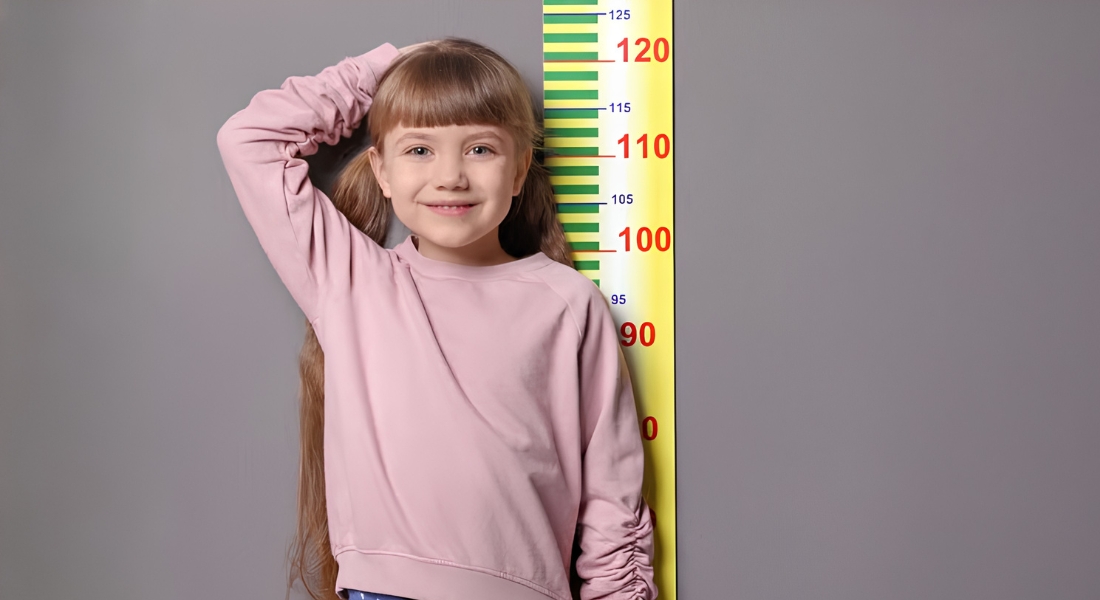
If you’ve ever wondered why your child’s paediatrician checks their height and weight, even when you’ve come in for something completely different, there’s a good reason. These simple measurements can reveal a lot about how your child is growing, and for babies and younger children, head circumference can add another useful part of the picture.
Rather than expecting your child to sit on a particular centile, your paediatrician is interested in the pattern they follow over time. If their growth changes unexpectedly, you can talk through what it might mean and whether closer monitoring or further assessment would be helpful.
Why Is Growth Such an Important Part of Children’s Health?
Your child’s growth can provide useful clues about their health because repeated measurements show how they are developing over time. You may notice that your paediatrician looks at weight, height and head growth alongside your child’s symptoms, nutrition, development and family growth pattern.
A change in growth can sometimes suggest that further assessment is needed, although some children are naturally smaller or larger than average. If something about your child’s growth worries you, it is worth raising it at their appointment. The wider picture, including their health, development and family build, usually matters far more than one measurement.
What Exactly Does a Growth Chart Show?
A growth chart shows your child’s height, weight or other measurements against their age, helping you and your paediatrician see how your child is growing over time. You may see measurements from different appointments plotted together to show your child’s individual growth pattern.
Think of the chart as a way of seeing the bigger picture rather than as a test result. A single point cannot diagnose a health condition, but several measurements can help show whether your child is continuing along their usual path.
What Do Growth Centiles Mean?
Growth centiles show how your child’s height or weight compares with other children of the same age and sex. You may see your child on a lower or higher centile without this meaning that anything is wrong, as children naturally grow at different rates.
What matters more is whether your child follows a reasonably consistent pattern that makes sense for them and their family. Being well above or below the 50th centile does not automatically mean there is a problem.
What Do Different Growth Measurements Tell You?
| Growth measurement | What it can help show | How it is interpreted |
| Weight | Changes in nutrition, feeding and overall growth | Looked at over time alongside height, symptoms and previous measurements |
| Height or length | Longer-term physical growth | Compared with age, previous growth and family height pattern |
| BMI | The relationship between weight and height | Interpreted using an age- and sex-specific BMI centile rather than adult BMI ranges |
| Head circumference | Head growth during infancy and early childhood | Considered alongside development, family head size and previous measurements |
| Growth centile | How a measurement compares with children of the same age and sex | The pattern over time is usually more useful than one isolated centile |
| Growth rate | How quickly your child is growing between measurements | Persistent slowing or unexpected changes may prompt further assessment |
No single measurement gives a complete picture of your child’s health. Your paediatrician interprets these measurements together and looks at how they change over time before deciding whether monitoring or further assessment is needed.
Why Does the Pattern Matter More Than One Measurement?

One growth measurement can be misleading, so your paediatrician looks at repeated measurements over time. You may see small changes because of illness, clothing or differences in how your child was measured.
Your child’s overall growth pattern is usually more informative than one isolated number or a small movement between centiles. If a change looks significant or continues over time, it is worth raising at your child’s next review. Their health, feeding, development and family pattern can then help put the change into context.
Evidence Note
UK-WHO growth charts are designed to show how a child’s measurements change over time. RCPCH explains that centile lines compare a child with others of the same age and sex, while NICE emphasises reviewing previous measurements when assessing possible faltering growth. This is why a pattern across several measurements usually provides more useful information than one result on its own.
What Can Your Child’s Weight Tell You?
Your child’s weight can give you useful clues about their nutrition, growth and overall health. You may notice changes in appetite, feeding, weight loss or slow weight gain that you should discuss with your paediatrician.
Weight is most useful when it is considered alongside your child’s height, symptoms and previous measurements. If you have noticed a clear change in their appetite or weight, mentioning when it started and how it has progressed can make the pattern easier to understand.
What Can Your Child’s Height Tell You About Their Growth?
Your child’s height can help you understand their longer-term growth, as height usually changes more slowly than weight. Children under 2 years are usually measured lying down for length, while children aged 2 years and over are measured standing for height, with shoes removed to improve accuracy.
If your child seems to be growing more slowly than expected, comparing their current height with earlier measurements and their family height pattern can be helpful. A persistent change may then need a closer look.
Why Might Your Paediatrician Ask How Tall You Are?
Your height and the other biological parent’s height can help your paediatrician understand whether your child’s height fits with their inherited family pattern. A lower height centile may be consistent with your child’s family growth pattern if their biological parents are shorter.
Family height is only one part of the picture. Your child’s growth rate, previous measurements and overall health also help show whether their height is following an expected pattern.
What Can Your Child’s BMI Tell You?
BMI compares your child’s weight with their height, but you cannot interpret it in the same way as an adult’s BMI. For children aged 2 to 18, you may see BMI plotted as a centile using their age, sex, height and weight.
BMI is only one part of your child’s overall growth picture and is not a diagnosis on its own. If their BMI changes unexpectedly, you can ask what that change means alongside their height, weight and previous growth.
When Might a Low BMI or Poor Weight Gain Need a Closer Look?

A low BMI does not always mean your child is unwell, as some children are naturally slim. The more useful question is whether they are eating, developing and growing as expected for them.
You may not need tests or supplements straight away, as your paediatrician may first review your child’s feeding and symptoms. If your child’s growth is being monitored, follow the weighing schedule recommended by their healthcare professional rather than weighing them more frequently at home.
UK Guidance Note
NICE recommends assessing BMI centile when there are concerns about faltering or linear growth in a child over 2 years old. A BMI below the 2nd centile may reflect undernutrition or a naturally small build, while a BMI below the 0.4th centile suggests probable undernutrition that requires assessment and appropriate intervention. These thresholds are interpreted alongside your child’s wider growth pattern, health and clinical assessment rather than used as a diagnosis on their own.
Why Might Your Baby’s Head Circumference Be Measured?
Head circumference can give your paediatrician useful information about your baby’s or young child’s growth. You may see head circumference measured particularly during infancy and in children under 4 when there is a concern about head size or growth.
Your paediatrician will consider head size alongside your child’s development, family pattern and any symptoms. You should mention any noticeable changes in head growth so they can decide whether further assessment is needed.
When Might Your Child’s Head Growth Need a Closer Look?
An unusual head measurement does not automatically mean your child has a brain disorder. Its meaning becomes clearer when it is considered alongside previous measurements, your child’s development and any other symptoms.
A change in the pattern can sometimes matter more than the centile itself. NICE recommends paediatric assessment when a child’s head circumference differs by 2 or more centile lines from an earlier measurement, with more urgent assessment if there are symptoms that could suggest raised pressure inside the skull.
If your child’s head circumference is above the 98th centile but has not changed by more than 2 centile lines, NICE advises considering the head size of their biological parents when development is normal and there are no signs of raised pressure inside the skull. If familial macrocephaly is likely and there are no other concerns, routine referral may not be needed.
How Is Growth Assessed If Your Baby Was Born Prematurely?

If your baby was born prematurely, you may notice that their growth is assessed differently because they had less time to grow before birth. Your paediatrician will consider their gestational age and corrected age when comparing their growth with other children.
The way corrected age is used depends partly on how early your baby was born and which growth chart is appropriate. RCPCH’s neonatal and infant close-monitoring charts are designed for very preterm infants and those with significant early health concerns and can track growth up to 2 years corrected age.
You may see your baby’s growth monitored more closely if they were very premature or had early health concerns. Your paediatrician or neonatal team will choose the most suitable growth chart based on your baby’s birth history and ongoing needs.
Myth vs Fact
| Myth | Fact |
| Every healthy child should be close to the 50th centile. | No. Healthy children can grow on higher or lower centiles, and their pattern over time is usually more informative than being close to the middle line. |
| Moving between centiles always means something is wrong. | No. Small changes can occur, although significant or persistent changes may need further assessment. |
| A low BMI always means a child is undernourished. | No. A low BMI can sometimes reflect a naturally small build, although very low BMI may require assessment. |
| A large head circumference always means there is a neurological problem. | No. Family head size, development and the pattern of head growth also matter, although significant changes may require assessment. |
| Premature babies’ growth should always be interpreted using chronological age alone. | No. Corrected age and an appropriate growth chart may be needed, depending on gestation and clinical circumstances. |
Can Puberty Change Your Child’s Growth Pattern?
Puberty can quickly change your child’s height, weight and body shape, so your paediatrician will interpret their growth pattern alongside their stage of puberty. You may notice your child growing faster or slower than others of the same age.
Children enter puberty at different times, so comparing your child directly with classmates can sometimes be misleading. What matters is whether their growth makes sense alongside their stage of puberty, previous measurements and family pattern.
What Can Cause a Change in Your Child’s Growth?
Many different factors can influence how your child grows, and a change in height or weight does not automatically mean something is wrong. Your paediatrician will usually look at your child’s overall growth pattern, health, development and family background before deciding whether further assessment is needed.
- Nutrition: Your child’s growth can be affected if they are not getting enough energy, protein, vitamins or minerals from their diet.
- Long-Term Health Conditions: Ongoing illnesses can sometimes affect your child’s appetite, weight gain or overall growth.
- Hormonal Factors: Hormone-related conditions may influence your child’s height, weight or the timing of puberty.
- Digestive Problems: Conditions that affect digestion or nutrient absorption can sometimes contribute to poor weight gain or slower growth.
- Genetics and Family Pattern: Your child may naturally be shorter or taller depending on the growth patterns they inherit from their biological parents.
What matters most is whether the change fits with your child’s previous development and overall health. A persistent or unexpected change is worth getting checked, particularly when it appears alongside changes in appetite, energy, development or other symptoms.
Why Does Measuring Your Child Accurately Matter?

Growth charts are only useful when your child’s measurements are accurate. You may see a centile change because of differences in weighing or measuring, so your paediatrician may repeat an unusual result before deciding what it means.
You can help by removing your child’s shoes for height measurements and following the recommended weighing process. Bringing previous measurements can also help your paediatrician decide whether an apparent centile change reflects a genuine growth pattern or a difference in measurement.
Clinical Tip
Bring your child’s red book or any previous growth records to the appointment if you have them. A series of measurements taken over time is usually more useful than one isolated result, and previous records can help your paediatrician see whether your child is following their usual growth pattern.
When Should Your Child’s Growth Be Reviewed by a Paediatrician?
Seek advice from your GP, health visitor or paediatrician if your child’s weight, height or head circumference changes unexpectedly, particularly if you notice other symptoms or developmental concerns. You can bring your child’s red book to your appointment, as previous measurements help your paediatrician understand their growth pattern.
A referral may also be considered if your child’s growth remains slower than expected or their measurements change significantly over time. Your GP, health visitor or paediatrician can then advise whether monitoring or a more detailed assessment would be useful.
Key Takeaways
- Your child’s growth pattern over time usually matters more than one isolated measurement.
- Height, weight, BMI and head circumference each provide different clues about your child’s growth.
- A higher or lower centile does not automatically mean that something is wrong.
- Persistent or unexpected changes in growth may need a closer look.
- Bringing your child’s red book or previous measurements can help give a clearer picture of how they are growing.
Frequently Asked Questions
1. Why does your paediatrician measure your child’s height and weight?
These measurements help show whether your child is growing steadily for their age and individual pattern. Looking at them over several appointments can reveal changes that may not be obvious from a single measurement.
2. What do your child’s growth centiles mean?
Your child’s growth centile shows how their height or weight compares with other children of the same age and sex. Being on a higher or lower centile does not necessarily mean there is a problem, as children naturally follow different growth patterns.
3. Is it a problem if your child moves between growth centiles?
Not necessarily. Small movements can happen naturally, but a larger or continuing shift may be worth reviewing alongside your child’s health, eating and development.
4. Why does your paediatrician measure your child’s head circumference?
Your paediatrician may measure your child’s head circumference during the early years to monitor head growth. You can ask about the measurement if you notice a change or have concerns about your child’s development.
5. Why does your paediatrician ask how tall you and your child’s other biological parent are?
Your height and the other biological parent’s height can help your paediatrician understand whether your child’s growth is consistent with their family pattern. Family height is useful context, but it is only one part of understanding how your child is growing.
6. What does your child’s BMI centile mean?
Your child’s BMI centile compares their weight with their height, age and sex. A child’s BMI is interpreted differently from an adult BMI because age and sex are taken into account alongside their wider growth pattern.
7. When should you be concerned about your child’s slow weight gain?
It is worth seeking advice if your child is gaining weight more slowly than expected, particularly if you have also noticed changes in appetite, energy, development or general wellbeing.
8. How is your premature baby’s growth measured?
If your baby was born prematurely, your paediatrician will consider their gestational age and corrected age when assessing their growth. You may find that your baby’s measurements are monitored more closely during the early years.
9. Can puberty affect your child’s growth pattern?
Yes. Puberty can change how quickly your child gains height and weight. Their stage of puberty, previous measurements and family pattern can help put these changes into context.
10. When should you seek medical advice about your child’s growth?
Ask for medical advice if you notice a persistent or unexpected change in your child’s height, weight or head size, especially when it is accompanied by other symptoms or developmental concerns. Bringing earlier measurements can help show whether the change is new or part of your child’s usual growth.
Final Thoughts: Understanding Your Child’s Growth
Watching your child’s height or weight move around a growth chart can sometimes be confusing, but one number rarely tells the whole story. What matters more is how your child is growing over time and whether that pattern fits with their health, development, nutrition and family background.
If something about your child’s growth has changed or simply does not feel right to you, it is reasonable to ask for it to be reviewed. If you’re looking for a private paediatrician in London, you can get in touch with our team at London Paediatric Clinic.
References:
- Royal College of Paediatrics and Child Health (RCPCH) (no date) UK-WHO growth charts – 0–4 years. Available at: https://www.rcpch.ac.uk/resources/uk-who-growth-charts-0-4-years
- Royal College of Paediatrics and Child Health (RCPCH) (no date) UK-WHO growth charts – 2–18 years. Available at: https://www.rcpch.ac.uk/resources/uk-who-growth-charts-2-18-years
- Royal College of Paediatrics and Child Health (RCPCH) (no date) UK-WHO growth charts – guidance for health professionals. Available at: https://www.rcpch.ac.uk/resources/uk-who-growth-charts-guidance-health-professionals
- National Institute for Health and Care Excellence (NICE) (2017) Faltering growth: recognition and management of faltering growth in children. NICE guideline NG75. Available at: https://www.nice.org.uk/guidance/ng75
- Royal College of Paediatrics and Child Health (RCPCH) (no date) UK-WHO growth charts – neonatal and infant close monitoring (NICM). Available at: https://www.rcpch.ac.uk/resources/uk-who-growth-charts-neonatal-infant-close-monitoring-nicm
- Royal College of Paediatrics and Child Health (RCPCH) (no date) UK-WHO growth charts – childhood and puberty close monitoring (CPCM). Available at: https://www.rcpch.ac.uk/resources/uk-who-growth-charts-childhood-puberty-close-monitoring-cpcm
- National Institute for Health and Care Excellence (NICE) (2019, updated 2023) Suspected neurological conditions: recognition and referral. NICE guideline NG127. Available at: https://www.nice.org.uk/guidance/ng127