




You may wonder whether your child is developing as expected when they learn to smile, sit, walk, talk or play at a different pace from other children. Your paediatrician looks at movement, speech, social skills, play, learning and independence rather than focusing on one milestone.
You can share what you notice at home, as this helps your paediatrician understand your child’s overall development. If a delay is identified, you can discuss the next steps and support your child as they continue to develop.
What Does “Child Development” Actually Mean?
Development includes the skills your child gains as their brain and body mature, not just physical growth. You may notice changes in movement, hand skills, speech, learning, behaviour, social interaction and independence as your child develops.
These areas are closely connected, so your paediatrician may ask about sleep, feeding, hearing, nursery, behaviour and communication. Details about what happens at home, nursery or school can add useful context that may not be obvious during a single appointment.
What Areas of Your Child’s Development Will Be Assessed?
Your paediatrician will look at several areas of your child’s development rather than focusing on just one milestone or skill. You can share both the things your child does well and any areas you are concerned about, as this helps build a clearer picture of their overall development.
- Gross Motor Skills: Your paediatrician may look at how your child sits, stands, walks, runs, balances and coordinates larger movements.
- Fine Motor Skills: You may be asked about how your child uses their hands and fingers for activities such as reaching, drawing, feeding or dressing.
- Speech and Language: Your paediatrician will consider how your child understands language, communicates their needs and uses words, sounds or gestures.
- Learning and Play: You can discuss how your child learns new skills, follows instructions, solves simple problems and interacts with toys or activities.
- Social and Emotional Development: Your paediatrician may also look at how your child interacts with other people, manages emotions and behaves at home, nursery or school.
These areas of development are closely connected, so your paediatrician will usually consider them together rather than separately. If you notice difficulties in one or more areas, you can discuss them during the assessment so your child can receive appropriate monitoring, further assessment or support.
Child Development Areas at a Glance
| Developmental area | Examples your paediatrician may consider |
| Gross motor | Sitting, standing, walking, running, balance and coordination |
| Fine motor | Reaching, grasping, drawing, feeding and dressing |
| Speech and language | Understanding words, communicating needs, speech, sounds and gestures |
| Learning and cognition | Following instructions, problem-solving, memory, play and learning new skills |
| Social and emotional | Interaction, play with others, communication, emotional responses and behaviour |
| Everyday independence | Feeding, dressing and other age-appropriate daily activities |
How Will Your Paediatrician Assess Your Child’s Movement?
Gross motor skills include your child’s larger movements, such as sitting, standing, walking, running and balancing. You may notice your paediatrician watching how your child moves naturally to assess their posture, coordination, balance and symmetry.
Your paediatrician will consider both the timing and quality of your child’s movements. If you have noticed unusual stiffness, floppiness, persistent toe walking or differences in how your child uses each side of their body, mention this at the assessment. A clear hand preference before 1 year, corrected for gestational age where appropriate, can also be important.
Will Your Paediatrician Assess Your Child’s Speech and Language?
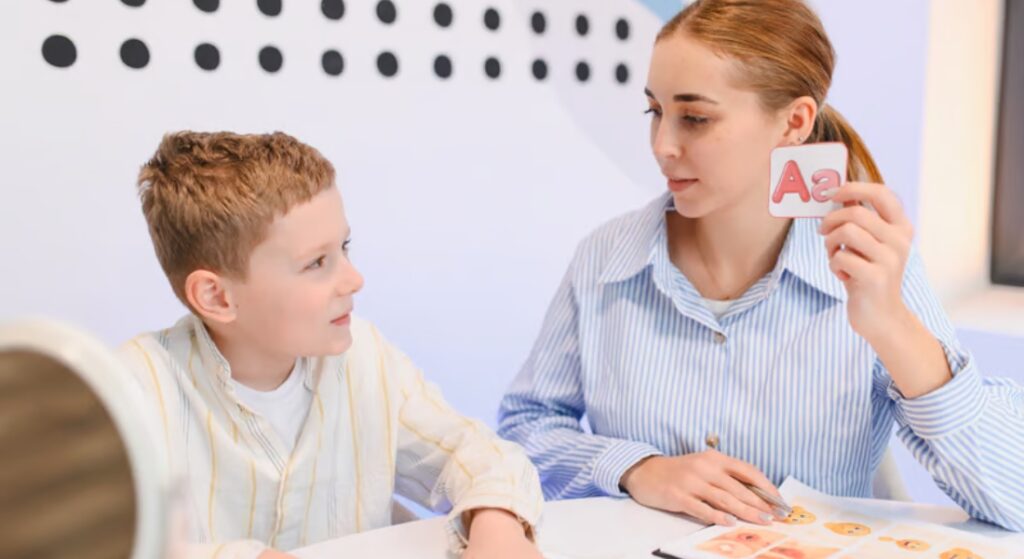
Speech and language include how your child understands, communicates and uses words, gestures and sounds. You may be asked when you first noticed your child babbling, using words, following instructions or communicating their needs.
You can show your paediatrician how your child communicates with you during everyday situations. If you notice concerns about speech, understanding or lost skills, you should mention them so your paediatrician can decide whether further assessment is needed.
What Can Your Child’s Hand Skills Tell You?
Fine motor skills help your child use their hands and fingers for tasks such as reaching, feeding, drawing and dressing. You may see your paediatrician observe how your child picks up objects, uses both hands and coordinates their movements.
Your paediatrician will consider your child’s fine motor skills alongside their vision, muscle tone and overall development. If everyday tasks such as feeding, drawing or dressing seem particularly difficult, sharing specific examples can help show whether closer developmental assessment or occupational therapy input may be useful.
Why Might Hearing Be Checked When Speech Is Delayed?
Hearing and language development are closely linked, so hearing difficulties can sometimes affect how your child learns words and speech sounds. You may not always notice hearing problems, as your child may still respond to some sounds or use other cues to understand you.
If you notice delayed speech or inconsistent responses to sound, your paediatrician may recommend a hearing assessment. You can think of this as a useful step to check whether your child’s communication difficulties may be linked to their hearing.
How Will Your Child’s Social and Emotional Development Be Assessed?
Social and emotional development includes how your child interacts, plays, communicates and responds to feelings. You may notice your child behaving differently at home, nursery or school, so your observations can help your paediatrician understand their social development.
Your paediatrician may watch how your child interacts with you and responds to others during the appointment. Differences in social interaction alone do not diagnose autism. Your paediatrician will consider your child’s communication, language, hearing, behaviour and wider developmental pattern before deciding whether further assessment is appropriate.
How Will Your Paediatrician Explore Your Child’s Learning and Thinking Skills?
Cognitive development includes how your child thinks, learns, remembers, understands and solves problems. You may notice these skills through play, following instructions, learning new tasks and managing everyday activities.
Your paediatrician may ask what you notice at home and what teachers see at nursery or school. You can discuss any learning concerns, while formal cognitive testing may be arranged separately if your child needs a more detailed assessment.
Why Is Your Child’s Developmental History So Important?

Your child’s developmental history gives your paediatrician important context before they assess how your child plays or communicates. You may be asked about pregnancy, birth, prematurity, early health problems and when your child developed key skills.
You do not need to remember exact dates, as the overall sequence and progress are more important. You can bring your child’s red book and share any relevant family history to help your paediatrician understand their development.
Why Might Your Paediatrician Ask About Your Child’s Play and Behaviour?
Play gives your child a natural way to show how they think, communicate, solve problems and interact. You may notice your paediatrician watching how your child plays, explores toys or responds to simple activities.
Your child’s behaviour also needs to be understood in context, including what you see at home, nursery or school. You can share concerns about attention, sleep, emotions or behaviour so your paediatrician can consider possible underlying needs.
Clinical Tip
Bring your child’s red book and any relevant nursery or school reports if you have them. Before the appointment, it can also help to note the developmental skills you are concerned about, when you first noticed the difference and whether your child has gained, stopped making progress in or lost any skills.
How Does Prematurity Affect Developmental Assessment?
If your child was born prematurely, corrected age is generally used during the first 2 years when interpreting developmental skills such as walking and talking. This helps place your child’s progress in the context of how early they were born rather than comparing them only by chronological age.
Your paediatrician will also consider your child’s gestational age, neonatal history and wider developmental progress when deciding whether routine monitoring or more detailed follow-up is appropriate.
Could a Developmental Questionnaire Help?
Developmental questionnaires can help structure information about your child’s skills, but they support rather than replace professional assessment. In England, tools such as the Ages and Stages Questionnaire (ASQ) may be used as part of health and development reviews, including the 12-month and 2-to-2-and-a-half-year reviews.
Your answers can highlight skills that may not be seen during one appointment. A questionnaire score is not a diagnosis; it is one part of the wider picture considered alongside your concerns, professional observation and clinical findings.
UK Guidance Note
In England, the Healthy Child Programme includes structured health and development reviews during the early years. Current guidance allows developmental tools such as the ASQ and ASQ:SE to support these reviews, but questionnaire results should always be considered alongside professional observation, parental concerns and the child’s wider health and development. A screening tool on its own does not provide a developmental diagnosis.
Why Is Losing Previously Acquired Skills More Concerning?

Developmental regression means your child loses a skill they could previously do, rather than simply taking longer to learn a new one. You should tell your paediatrician if your child stops using words, walking, playing or performing another established skill.
Seek prompt medical assessment if your child clearly loses skills they could previously perform, particularly movement, language or social skills. The appropriate referral pathway depends on your child’s age and the type of regression, and may involve paediatric neurodevelopmental, neurological or autism assessment.
What Does It Mean If Your Child Is Late Reaching a Milestone?
You may notice your child reaches a milestone later than another child, but you do not need to assume this means there is a developmental problem. You may see your child progress quickly in one area while taking longer in another, which is why your paediatrician looks at their overall development.
You should discuss your concerns if you notice significant delays, difficulties across several areas or unusual symptoms. Your paediatrician can help you understand whether your child needs monitoring, further assessment or additional support.
Myth vs Fact
| Myth | Fact |
| Every child should reach every milestone at exactly the same age. | No. Development varies between children, and the overall pattern is usually more useful than one isolated milestone. |
| Being late with one milestone always means a developmental disorder. | No. One later milestone does not provide a diagnosis, although persistent or broader delays may need assessment. |
| A developmental questionnaire can diagnose a condition. | No. Screening tools support assessment but do not replace clinical evaluation. |
| Speech delay always means autism. | No. Hearing, language development and other factors also need to be considered. |
| Losing a skill is the same as learning it late. | No. Developmental regression means losing a previously acquired skill and needs prompt assessment. |
Will Your Child Need Any Further Tests?
Developmental concerns do not automatically mean your child needs blood tests or scans. Your paediatrician will choose tests based on your child’s history, development and examination, and you may be advised to arrange hearing or vision checks.
Your child may also be offered further tests if there are specific neurological, muscular or genetic concerns. Your paediatrician will focus on investigations that answer a clear clinical question rather than testing for every possible cause.
Who Else Might Support Your Child’s Development?
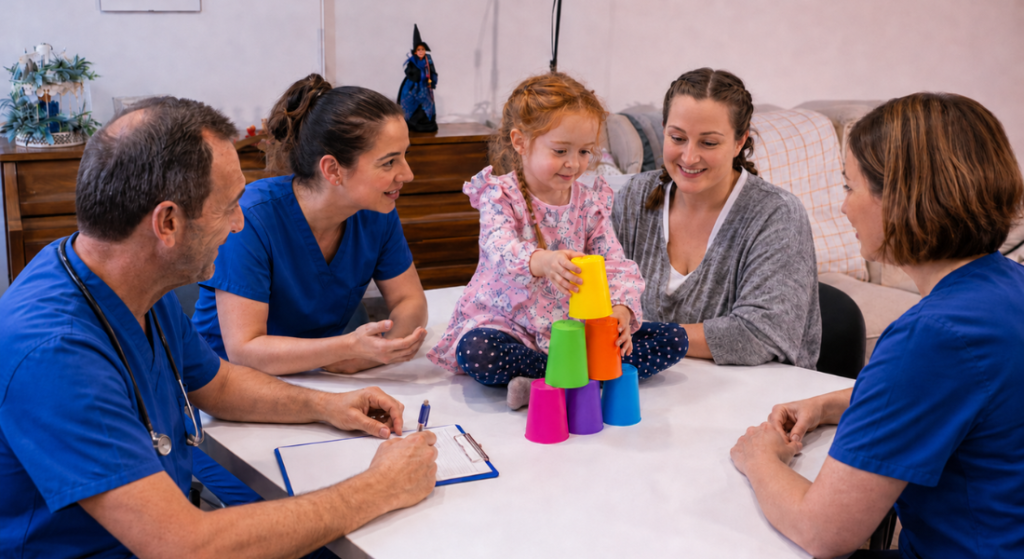
Your child’s developmental assessment may involve several professionals because each can look at different skills. You may see a speech and language therapist, physiotherapist, occupational therapist, psychologist or hearing and vision specialist, depending on your child’s needs.
You can also share information from your child’s nursery or school, as they may notice things you do not see at home. Being referred to several professionals does not mean your child has several conditions; each professional can help build a broader picture of your child’s development.
Key Takeaways
- Your paediatrician assesses development across movement, communication, learning, play, behaviour and social interaction rather than relying on one milestone.
- Information from home, nursery or school can be an important part of the developmental picture.
- Hearing and vision may need assessment when relevant to developmental concerns.
- Screening questionnaires can support assessment but do not diagnose developmental conditions on their own.
- Prematurity may affect how early milestones are interpreted.
- A clear loss of previously acquired skills requires prompt medical assessment.
Frequently Asked Questions
1. When should you seek advice about your child’s development?
Seek advice from your health visitor, GP or paediatrician if you are concerned about your child’s developmental progress, notice difficulties across several areas or see a loss of previously acquired skills. Sharing what you notice at home, nursery or school can help professionals assess the overall pattern.
2. What areas of development will your paediatrician assess?
Your paediatrician may assess your child’s movement, hand skills, speech, language, learning, play, behaviour and social interaction. You can share your child’s strengths and difficulties to help your paediatrician build a complete picture.
3. How will your paediatrician assess your child’s speech and language?
Your paediatrician may ask when your child started babbling, using words, following instructions and communicating their needs. You can show how your child communicates at home and mention any concerns about understanding or using language.
4. Why might you be asked about your child’s hearing if their speech is delayed?
Hearing difficulties can sometimes affect how your child learns speech and language. You should mention inconsistent responses to sounds or delayed speech, as your paediatrician may recommend a hearing assessment.
5. How will your paediatrician assess your child’s movement and motor skills?
Your paediatrician may watch how your child sits, stands, walks, runs, balances and uses their hands. You should mention concerns such as unusual stiffness, floppiness, persistent toe walking or a clear hand preference before 1 year, corrected for gestational age where appropriate.
6. What if your child is late reaching a developmental milestone?
You do not need to assume that being late with one milestone means your child has a developmental problem. Your paediatrician will consider your child’s overall progress, strengths and development across different areas.
7. Why is losing a skill more concerning than learning it late?
If your child loses a skill they previously had, this is called developmental regression and should prompt medical assessment rather than waiting for a routine developmental review. You should mention any loss of speech, movement, play or social skills so your child can receive appropriate assessment.
8. Does prematurity affect how your child’s development is assessed?
Yes. If your child was born prematurely, corrected age is generally used during the first 2 years when assessing early developmental milestones. You should tell your paediatrician your child’s gestational age so they can interpret their development appropriately.
9. Will your child need tests if there is a developmental concern?
Your child will not automatically need blood tests or scans because of a developmental concern. Your paediatrician will decide whether your child needs hearing or vision checks, further assessments or other tests based on their history, development and examination.
10. Which other professionals might you and your child see?
Depending on your child’s needs, you and your child may see a speech and language therapist, physiotherapist, occupational therapist, psychologist or hearing and vision specialist.
Final Thoughts: Supporting Your Child’s Development
Your child’s development can progress at a different pace across movement, speech, learning, play and social skills. If you have concerns, sharing what you notice at home, nursery or school can help your paediatrician understand the overall pattern and decide whether your child needs monitoring, further assessment or additional support.
If you’re looking for a private paediatrician in London, you can get in touch with our team at London Paediatric Clinic.
References:
- GOV.UK (2026) Part 2: health visiting (ages 0 to 5). Updated 12 March 2026. Available at: https://www.gov.uk/government/publications/delivery-of-the-healthy-child-programme/part-2-health-visiting-ages-0-to-5
- National Institute for Health and Care Excellence (NICE) (2017) Developmental follow-up of children and young people born preterm. NICE guideline NG72. Available at: https://www.nice.org.uk/guidance/ng72
- National Institute for Health and Care Excellence (NICE) (2019, updated 2023) Suspected neurological conditions: recognition and referral. NICE guideline NG127. Available at: https://www.nice.org.uk/guidance/ng127
- NHS (2024) Hearing tests. Available at: https://www.nhs.uk/tests-and-treatments/hearing-tests/
- National Institute for Health and Care Excellence (NICE) (2011, updated 2017) Autism spectrum disorder in under 19s: recognition, referral and diagnosis. Clinical guideline CG128. Available at: https://www.nice.org.uk/guidance/cg128
- Lipkin, P.H. and Macias, M.M. (2020) ‘Promoting optimal development: Identifying infants and young children with developmental disorders through developmental surveillance and screening’, Pediatrics, 145(1), article e20193449. Available at: https://pubmed.ncbi.nlm.nih.gov/31843861/