




Noticing that your newborn baby’s skin or eyes look yellow can be worrying. Newborn jaundice happens when bilirubin, a yellow pigment produced during the normal breakdown of red blood cells, builds up faster than your baby’s developing liver can remove it.
Jaundice commonly becomes visible after the first 24 hours and often improves as feeding becomes established and the liver matures. However, the appearance or spread of the yellow colour cannot show the bilirubin concentration.
Suspected or obvious jaundice therefore requires bilirubin measurement according to your baby’s age and gestation rather than assessment from skin colour alone. NICE recommends measuring bilirubin within six hours in babies more than 24 hours old who have suspected or obvious jaundice.
The timing, gestational age, feeding, behaviour and measured bilirubin level help determine whether your baby needs observation, phototherapy or investigation for an underlying condition. Jaundice during the first 24 hours, pale stools, dark urine or jaundice accompanied by poor feeding or difficulty waking require prompt medical assessment.
Why Does Bilirubin Build Up After Birth?
After birth, your baby naturally has more red blood cells, and when these cells break down, they produce bilirubin. Your baby’s liver needs to process and remove this bilirubin, but because the liver is still developing, it may take a few days before it can do this efficiently.
Regular feeding helps your baby pass bilirubin through stools and reduces the amount that can be reabsorbed from the bowel. In most cases, bilirubin levels fall as your baby’s liver matures, although factors such as prematurity, bruising, infection or certain blood and liver conditions can cause levels to rise more quickly.
How Can You Recognise Jaundice at Home?
Look at your baby in bright natural light and check the whites of their eyes, gums and the skin after gently pressing it. Jaundice may begin on the face and become visible further down the body as bilirubin rises, but this pattern cannot reliably indicate the actual bilirubin level.
Yellowing can be more difficult to recognise on brown or black skin, so also look inside the mouth and at the palms and soles. Check nappies for urine that is dark yellow or brown and stools that are pale, creamy or chalky. Contact your midwife, GP or NHS 111 if your baby is over 24 hours old and you suspect jaundice; a bilirubin test is needed to assess it accurately.
Why Is Jaundice During the First 24 Hours More Concerning?
Jaundice appearing during the first 24 hours is not treated as routine physiological jaundice. It may be associated with haemolysis, infection or another underlying condition that is causing bilirubin to rise unusually early or rapidly.
NICE recommends an urgent serum bilirubin measurement within two hours and an urgent medical review as soon as possible and within six hours. Serum bilirubin should then be measured every six hours until the level is below the relevant treatment threshold and is stable or falling.
What Is Physiological Jaundice?
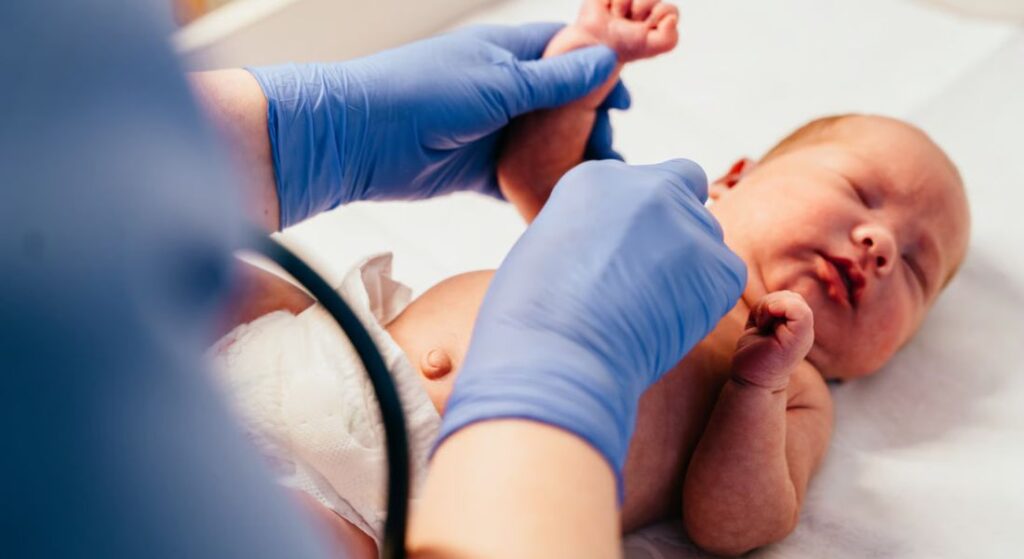
Physiological jaundice is the common and temporary type of newborn jaundice that happens as your baby’s body adjusts after birth. It usually appears after the first 24 hours, often becoming noticeable around the second or third day, while your baby remains otherwise well and able to feed.
Your baby’s bilirubin levels may still be checked if the yellow colour is more noticeable or if there are any risk factors. In most cases, mild physiological jaundice improves as your baby’s liver becomes more efficient, and feeding support with regular monitoring is all that is needed.
How Are Feeding and Jaundice Connected?
When a baby is not receiving enough milk, bilirubin may be cleared less efficiently through the bowel. Poor intake can also contribute to dehydration, increasing sleepiness and making effective feeding more difficult.
Offer feeds frequently and ask for feeding support if your baby is difficult to wake, struggles to latch, feeds for very short periods or has fewer wet nappies. Breastfeeding can usually continue, but expressed milk, donor milk, formula or tube feeding may occasionally be recommended according to the baby’s condition. Feeding support must not replace bilirubin measurement or phototherapy when treatment thresholds are reached.
What Is Breast Milk Jaundice?
Breast milk jaundice describes persistent unconjugated jaundice in an otherwise well breastfed baby who is feeding and growing appropriately. It usually becomes noticeable after the first several days and can continue beyond two weeks.
Breastfeeding can normally continue, but breast milk jaundice should be considered only after other causes of prolonged jaundice have been assessed. Pale stools, dark urine, poor weight gain, illness or abnormal blood results are not features to dismiss as breast milk jaundice.
Myth vs Fact
| Myth | Fact |
| You can judge the bilirubin level from how yellow a baby looks. | Visual inspection can identify possible jaundice but cannot measure its severity. |
| Jaundice during the first day is a normal newborn change. | Jaundice before 24 hours requires an urgent serum bilirubin test and medical review. |
| Breastfeeding must stop whenever a baby is jaundiced. | Breastfeeding can usually continue with appropriate feeding support and bilirubin monitoring. |
| Sunlight through a window is a suitable treatment. | Phototherapy uses controlled medical equipment and should not be replaced by sunlight. |
| Every baby receiving phototherapy needs neonatal intensive care. | Many babies receive monitoring or conventional phototherapy while remaining on a postnatal ward. |
| Pale stools are a normal result of milk feeding. | Pale, creamy, grey or chalky stools, particularly when accompanied by dark urine or persistent jaundice, can indicate impaired bile flow and require urgent medical assessment. |
Which Babies Have a Higher Risk of Significant Jaundice?
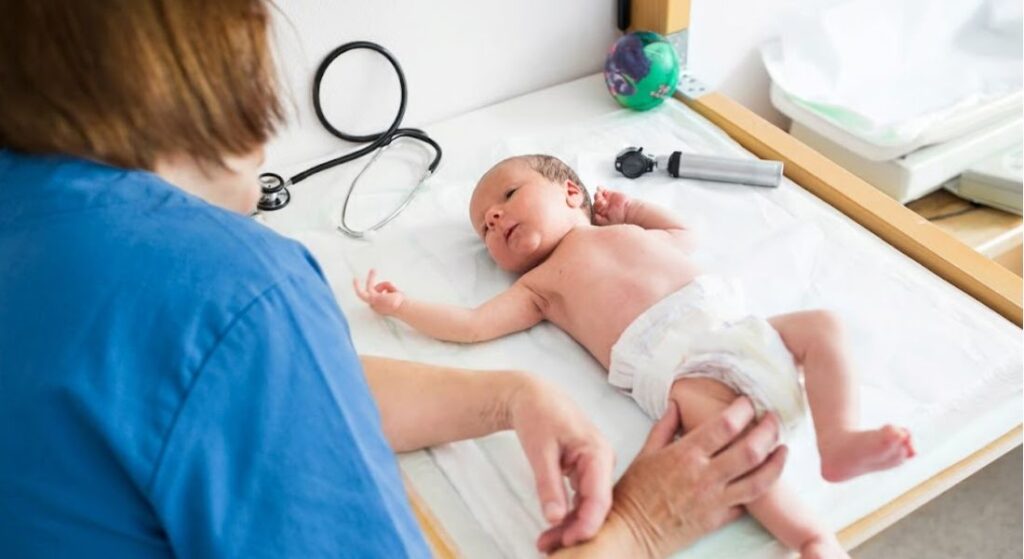
NICE identifies four factors associated with an increased likelihood of significant hyperbilirubinaemia: birth before 38 weeks, a previous sibling who required phototherapy for neonatal jaundice, the mother’s intention to breastfeed exclusively and visible jaundice during the first 24 hours.
These factors do not mean that your baby will necessarily require treatment. Exclusive breastfeeding can usually continue, but timely feeding support should be offered, and babies with these risk factors should receive an additional jaundice check by a healthcare professional during the first 48 hours.
Other clinical circumstances, including significant bruising, haemolysis, infection or inadequate milk intake, can also contribute to a rising bilirubin level and influence the monitoring plan.
How Can Blood-Group Differences Cause Jaundice?
Blood-group differences between you and your baby can sometimes cause jaundice when antibodies from your blood affect your baby’s red blood cells. This causes the cells to break down more quickly, a process called haemolysis, which can lead to bilirubin rising faster than in typical newborn jaundice.
Your baby’s healthcare team may carry out blood tests and monitor bilirubin levels closely if this is suspected. Treatment such as phototherapy is often effective, but babies with significant red blood cell breakdown may need additional care until their bilirubin and blood counts become stable.
When Can Jaundice Indicate Infection or Liver Disease?
Most newborn jaundice is temporary and is not caused by infection or liver disease. However, yellowing can sometimes be associated with infection, haemolysis, liver disease or impaired bile flow.
Your baby needs prompt assessment if jaundice occurs with poor feeding, unusual sleepiness, abnormal temperature, breathing difficulty or a significant change in behaviour.
Check your baby’s nappies for pale, creamy or chalky stools and urine that is dark yellow or brown and stains the nappy. These findings can indicate conjugated jaundice or impaired bile flow and need urgent medical assessment rather than observation at home. Keep a photograph or sample of an unusually pale stool when practical to show the healthcare professional.
Clinical Tip
Note how often your baby feeds, whether they wake for feeds and the approximate number of wet and dirty nappies. Photographs of changing skin colour or unusually pale stools can help the healthcare team, but they do not replace an examination and bilirubin test.
Which Symptoms Mean You Should Seek Emergency Help?
Call 999 or go to A&E if your baby has jaundice and is less than 24 hours old, is sleepier than usual or difficult to wake, is not feeding, becomes floppy or unusually stiff, has jerking or twitching movements, produces no wet nappies or develops breathing difficulty.
Immediate assessment is also required when a jaundiced baby has a temperature of 38°C or higher or 36°C or lower.
Ask for an urgent GP or midwife appointment or contact NHS 111 if your baby is more than 24 hours old and you first notice jaundice, the jaundice is worsening or not improving, or the urine becomes dark yellow or brown or the stools become pale or creamy. Do not wait for a private or planned neonatal appointment when urgent symptoms are present.
How Is the Bilirubin Level Measured?
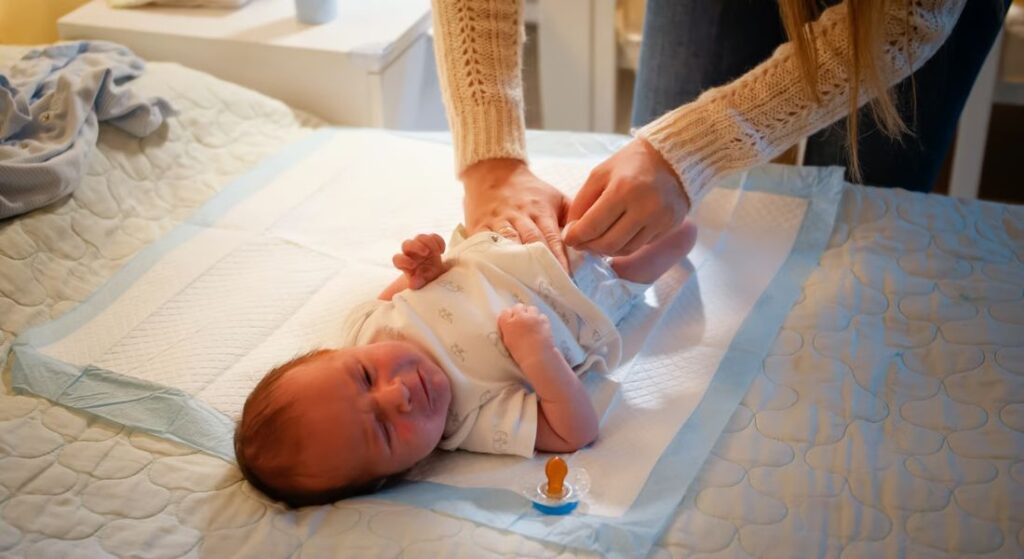
A transcutaneous bilirubinometer estimates the bilirubin level by placing a handheld device against the skin. It can be used when your baby is more than 24 hours old and was born at 35 weeks’ gestation or later.
A serum blood test must be used during the first 24 hours, in babies born before 35 weeks and whenever a bilirubin result is at or above the relevant treatment threshold.
A transcutaneous result above 250 micromol/litre must also be confirmed with a serum measurement. Once the level reaches a treatment threshold, serum testing should be used for subsequent measurements. Every result is interpreted according to your baby’s gestational age and exact age in hours.
How Do Doctors Decide Whether Treatment Is Needed?
Doctors decide whether your baby needs treatment by looking at the bilirubin level alongside their age in hours, gestational age and overall health. The yellow colour alone does not show whether treatment is needed, so the bilirubin result is compared with recommended treatment thresholds.
Your baby’s team will also consider how quickly the bilirubin is rising and whether there are factors such as prematurity, infection or increased red blood cell breakdown. Ask when the level will be checked again and where it sits compared with the treatment line, as this can help you understand the monitoring plan.
Understanding Phototherapy for Newborn Jaundice
| Aspect | What It Involves | Why It Matters | What Parents Should Know |
| How phototherapy works | Controlled medical light changes bilirubin into forms the body can remove | Helps reduce bilirubin levels safely | Sunlight and home light sources should not be used |
| Monitoring during treatment | Regular checks of bilirubin levels, temperature and hydration | Ensures treatment is working effectively | The care team will monitor your baby throughout |
| Eye protection | Special eye covers are used during treatment | Protects your baby’s eyes from the light | Eye care is provided as part of routine treatment |
| Feeding and cuddles | Short breaks may be possible during conventional phototherapy | Supports feeding and parent–baby bonding | Breaks depend on your baby’s condition |
| Intensive phototherapy | Continuous light exposure is usually required | Maximises the effectiveness of treatment | Expressed milk may be given if feeding breaks are not advised |
| Ongoing assessment | The team reviews your baby’s response to treatment | Determines when phototherapy can be safely stopped | Further treatment is only continued if clinically necessary |
Can Jaundice Ever Require Intensive Treatment?
Most babies who need treatment respond to phototherapy. Intensified phototherapy may be used when the bilirubin level is rising quickly, is close to an exchange-transfusion threshold or is not falling adequately with initial treatment.
Intravenous immunoglobulin may be used as an addition to continuous intensified phototherapy in selected babies with rhesus or ABO haemolytic disease when the bilirubin continues to rise by more than 8.5 micromol/litre per hour.
An exchange transfusion is a rare emergency treatment used when the bilirubin reaches the exchange-transfusion threshold or when the baby has clinical features of acute bilirubin encephalopathy. Exchange transfusion requires neonatal intensive care.
When Is Jaundice Considered Prolonged?
Jaundice is considered prolonged when it continues for more than 14 days in a baby born at 37 weeks or later or for more than 21 days in a baby born before 37 weeks. Breast milk jaundice is one possible explanation, but it should not be diagnosed from feeding history alone without assessing for other causes.
NICE recommends checking for pale chalky stools and dark urine that stains the nappy, measuring conjugated bilirubin, completing a full blood count and reviewing the mother’s and baby’s blood groups and direct antiglobulin test. The team should confirm that routine newborn metabolic screening was completed and consider a urine culture only when a urinary tract infection is clinically suspected.
When Is Specialist Neonatal Care Needed?
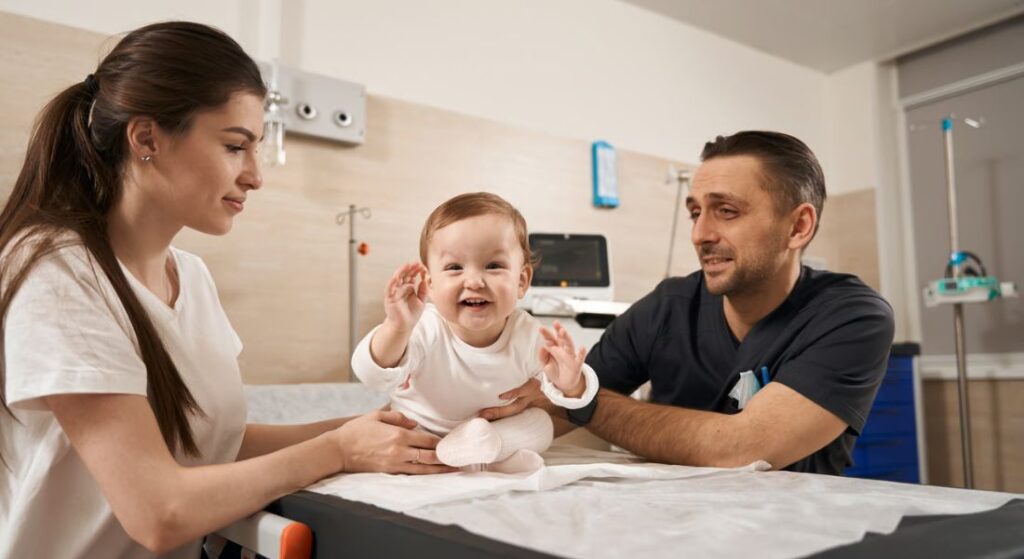
A neonatal or paediatric team may become involved when jaundice appears during the first 24 hours, bilirubin reaches a treatment threshold, rises unusually quickly or is associated with haemolysis, prematurity, infection or signs of illness. Consultant-neonatologist involvement depends on the severity and organisation of the local service.
Many babies can remain with their parent while receiving feeding support, monitoring or conventional phototherapy on a postnatal ward. Neonatal-unit admission may be required for intensified phototherapy, intravenous treatment, exchange transfusion, significant illness or monitoring that cannot be provided safely on the ward.
Key Takeaways
- Newborn jaundice is common, but its severity cannot be judged reliably from skin colour.
- Jaundice during the first 24 hours requires an urgent serum bilirubin test and medical review.
- Bilirubin treatment decisions depend on gestational age, age in hours and the measured level.
- Breastfeeding can usually continue, although some babies require additional feeding support.
- Pale stools, dark urine, poor feeding or difficulty waking need urgent medical assessment.
- Call 999 or go to A&E if your jaundiced baby is less than 24 hours old, is difficult to wake, is not feeding, becomes floppy or stiff, has jerking movements, produces no wet nappies, has breathing difficulty or has a temperature of 38°C or higher or 36°C or lower.
Frequently Asked Questions
1. How common is jaundice in newborn babies?
Newborn jaundice is very common, especially during the first few days after birth. Most cases are mild and improve naturally as your baby’s liver becomes more effective at processing bilirubin.
2. When should newborn jaundice be considered concerning?
Jaundice needs urgent assessment if it appears during the first 24 hours. After 24 hours, seek prompt advice if it is worsening, your baby feeds poorly, is difficult to wake, has dark urine, pale stools or appears unwell. The bilirubin level must be measured rather than estimated from colour.
3. Can jaundice go away without treatment?
Yes. Many babies with mild newborn jaundice do not need treatment and improve with regular feeding and monitoring. However, some babies need treatment if their bilirubin level becomes too high.
4. How can parents tell if a baby has jaundice?
Look for yellowing in bright natural light, including in the whites of the eyes, gums and gently blanched skin. Yellowing can be harder to see on brown or black skin, so also check the palms, soles and inside the mouth. Visual checks can suggest jaundice but cannot measure the bilirubin level.
5. Does breastfeeding cause newborn jaundice?
Breastfeeding itself is not a reason to stop feeding. Inadequate milk intake can contribute to rising bilirubin during the early days, while breast milk jaundice can persist in an otherwise thriving baby. Prolonged jaundice still needs assessment before it is attributed to breast milk.
6. How is jaundice treated in newborn babies?
Many babies need only feeding support and repeat bilirubin measurements. Phototherapy is started when the measured level reaches the relevant threshold. Intensified phototherapy, intravenous immunoglobulin or exchange transfusion is reserved for selected higher-risk cases.
7. Does every baby with jaundice need to go to a neonatal unit?
No. Many babies can remain with their parents while receiving monitoring or phototherapy on a postnatal ward. Admission to a neonatal unit depends on factors such as bilirubin level, gestational age, feeding, breathing and overall health.
8. Why do premature babies have a higher risk of jaundice?
Premature babies are more likely to develop jaundice because their liver is less mature and they may have more difficulty feeding effectively. This can make it harder for their body to remove bilirubin.
9. What symptoms of jaundice mean urgent medical help is needed?
Call 999 or go to A&E if your jaundiced baby is difficult to wake, is not feeding, is floppy or stiff, has jerking movements, has breathing difficulty, produces no wet nappies or has a temperature of 38°C or higher or 36°C or lower.
10. Can newborn jaundice cause long-term problems?
Most newborn jaundice resolves without lasting complications. A very high bilirubin level that is not treated promptly can rarely cause acute bilirubin encephalopathy and lasting neurological injury known as kernicterus.
Final Thoughts: Jaundice in Newborn Babies When Should Parents Be Concerned?
Seeing your newborn baby develop yellow skin or eyes can feel alarming, but most cases of newborn jaundice are mild and improve with time, regular feeding and appropriate monitoring. Understanding when jaundice is expected and when it needs medical attention can help you feel more prepared and confident in making decisions about your baby’s care.
Your healthcare team will look at more than just the yellow colour, including your baby’s age, feeding, behaviour and bilirubin levels, before recommending treatment. If you’re considering a neonatologist in London, you can get in touch with us at London Paediatric Clinic.
References:
- Ahlfors, C.E., Wennberg, R.P., Ostrow, J.D. and Tiribelli, C. (2009) ‘Unbound (free) bilirubin: Improving the paradigm for evaluating neonatal jaundice’, Clinical Chemistry, 55(7), pp. 1288–1299. Available at: https://academic.oup.com/clinchem/article/55/7/1288/5629211
- British Association of Perinatal Medicine (2017) Neonatal transitional care: A framework for practice. Available at: https://www.bapm.org/resources/24-neonatal-transitional-care-a-framework-for-practice-2017
- Chastain, A.P., Geary, A.L. and Bogenschutz, K.M. (2024) ‘Managing neonatal hyperbilirubinemia: An updated guideline’, Journal of the American Academy of Physician Associates, 37(10), pp. 19–25. Available at: https://pubmed.ncbi.nlm.nih.gov/39259272/
- Gao, C., Guo, Y., Huang, M., He, J. and Qiu, X. (2023) ‘Breast milk constituents and the development of breast milk jaundice in neonates: A systematic review’, Nutrients, 15(10), article 2261. Available at: https://www.mdpi.com/2072-6643/15/10/2261
- Gilmour, S.M. (2004) ‘Prolonged neonatal jaundice: When to worry and what to do’, Paediatrics & Child Health, 9(10), pp. 700–704. Available at: https://academic.oup.com/pch/article/9/10/700/2648482
- Great Ormond Street Hospital for Children NHS Foundation Trust (2024) Neonatal jaundice. Published 31 July 2024. Available at: https://www.gosh.nhs.uk/conditions-and-treatments/conditions-we-treat/neonatal-jaundice/
- Hansen, T.W.R. (2010) ‘Phototherapy for neonatal jaundice—Therapeutic effects on more than one level?’, Seminars in Perinatology, 34(3), pp. 231–234. Available at: https://www.sciencedirect.com/science/article/abs/pii/S0146000510000224
- Kato, S., Iwata, O., Yamada, Y., Kakita, H., Yamada, T., Nakashima, H., Sugiura, T., Suzuki, S. and Togari, H. (2020) ‘Standardization of phototherapy for neonatal hyperbilirubinemia using multiple-wavelength irradiance integration’, Pediatrics and Neonatology, 61(1), pp. 100–105. Available at: https://www.sciencedirect.com/science/article/pii/S1875957219304875
- Maisels, M.J. (2015) ‘Managing the jaundiced newborn: A persistent challenge’, CMAJ, 187(5), pp. 335–343. Available at: https://pmc.ncbi.nlm.nih.gov/articles/PMC4361106/
- National Health Service (2024) Special care: Ill or premature babies. Page last reviewed 30 April 2024. Available at: https://www.nhs.uk/pregnancy/labour-and-birth/special-care-ill-or-premature-babies/
- NHS (2026) ‘Jaundice in babies’. Available at: https://www.nhs.uk/conditions/jaundice-in-babies/
- National Institute for Health and Care Excellence (2010, updated 31 October 2023) Jaundice in newborn babies under 28 days. Clinical guideline CG98. Available at: https://www.nice.org.uk/guidance/cg98
- North Bristol NHS Trust (2024) Prolonged jaundice and your baby. Published December 2024. Available at: https://www.nbt.nhs.uk/our-services/a-z-services/childrens-outpatients/childrens-outpatient-information-leaflets/prolonged-jaundice-your-baby
- Noureldein, M., Mupanemunda, G., McDermott, H., Pettit, K. and Mupanemunda, R. (2021) ‘Home phototherapy for neonatal jaundice in the UK: A single-centre retrospective service evaluation and parental survey’, BMJ Paediatrics Open, 5(1), article e001027. Available at: https://pmc.ncbi.nlm.nih.gov/articles/PMC8137171/
- Okwundu, C.I., Bhutani, V.K., Uthman, O.A., Smith, J., Olowoyeye, A., Fiander, M. and Wiysonge, C.S. (2024) ‘Transcutaneous bilirubinometry for detecting jaundice in term or late preterm neonates’, Cochrane Database of Systematic Reviews, 2024(5), article CD011060. Available at: https://pubmed.ncbi.nlm.nih.gov/38804265/
- Shoris, I., Gover, A., Toropine, A., Iofe, A., Zoabi-Safadi, R., Tsuprun, S. and Riskin, A. (2023) ‘“Light” on phototherapy—Complications and strategies for shortening its duration, a review of the literature’, Children, 10(10), article 1699. Available at: https://www.mdpi.com/2227-9067/10/10/1699