




If your child has frequent headaches, you may worry about a brain tumour. The reassuring fact is that brain tumours are rare in children, and most children with headaches do not have a brain tumour. When a brain tumour does cause headache, other symptoms or neurological changes are often present as well.
Most childhood headaches have more common causes, such as migraine, viral illness, dehydration, tiredness or tension. However, you should seek medical advice if headaches progressively worsen, repeatedly wake your child, occur with vomiting, affect vision or balance, or come with unusual drowsiness or neurological changes.
Key Takeaways
- Most headaches in children are not caused by brain tumours.
- A progressively worsening headache or headache associated with vomiting, altered consciousness, balance problems or certain eye signs needs medical assessment.
- For children under 12, NICE specifies headache red flags that require same-day assessment.
- A first seizure, sudden extremely painful headache, new weakness or major speech/balance problems require emergency help.
- Recurrent headache does not automatically mean your child needs an MRI or CT scan.
- The overall symptom pattern and neurological examination are more informative than any single symptom.
Why Can a Brain Tumour Cause Headaches?
A brain tumour can sometimes increase pressure inside your child’s skull by taking up space or affecting fluid circulation. This may cause headaches, vomiting, drowsiness or vision problems.
Symptoms can also depend on where the tumour develops. If your child has headaches alongside new balance, movement, speech or vision problems, you should arrange medical assessment rather than assuming it is a routine headache.
Does a Recurrent Headache Usually Mean a Brain Tumour?
Recurrent headaches are much more commonly caused by conditions such as migraine or tension-type headaches than by a brain tumour. You may also notice headaches after illness, not drinking enough, skipped meals or tiredness.
Recurring headaches should be discussed with a healthcare professional, while a headache that is worsening, waking your child at night or occurring with other concerning symptoms needs more urgent assessment. If you are concerned, your child’s doctor can review the overall pattern and help you understand the likely cause.
Evidence Note
A systematic review including 4,171 children with central nervous system tumours found that, among children with intracranial tumours, headache was reported in 33%, nausea or vomiting in 32%, and abnormalities of gait or coordination in 27%. These findings show why doctors assess the combination and progression of symptoms rather than using headache alone to identify a possible tumour.
Should You Worry About Morning Headaches?
Morning headaches do not automatically mean your child has a brain tumour. Poor sleep, migraine, dehydration and other common conditions can also cause headaches on waking.
However, NICE considers a headache present on awakening a red flag in children under 12 and recommends immediate referral for same-day assessment. If your child also has vomiting, vision or balance problems, unusual tiredness or worsening headaches, you should seek medical advice promptly.
How Common Are Brain Tumours in Children?
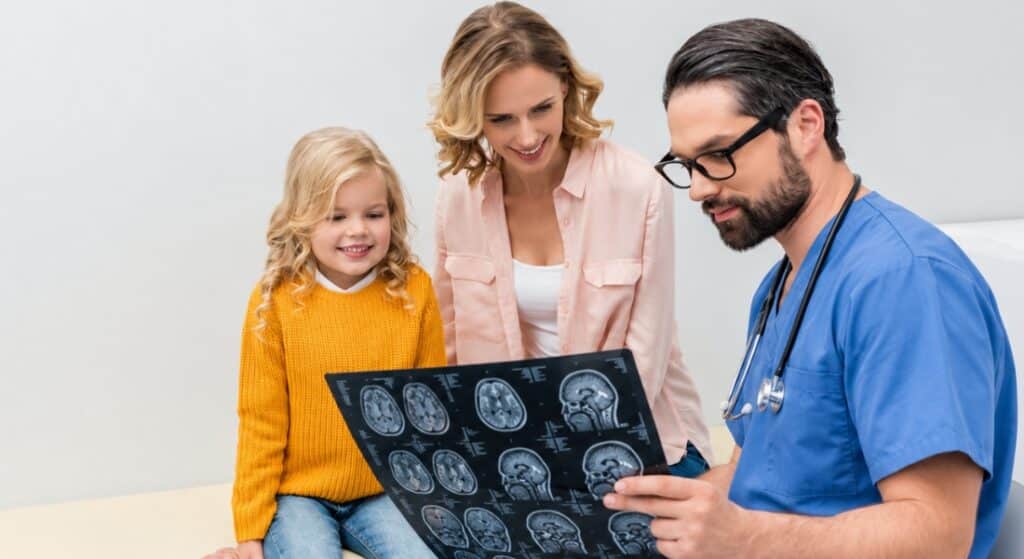
Brain tumours can occur in children, but they are rare compared with childhood headaches. Cancer Research UK estimates that around 420 children develop brain and central nervous system tumours each year in the UK.
If your child has a headache, you should not assume it is a brain tumour. Headache as the only symptom is less typical of a childhood brain tumour, particularly when there are no neurological changes or other warning signs.
Is Vomiting with a Headache a Warning Sign?
Vomiting is common in children and can occur with migraine, so it does not automatically mean your child has a brain tumour. However, NICE considers headache with vomiting a red flag requiring immediate referral for same-day assessment in children under 12.
If your child has repeated vomiting with worsening headaches, balance or vision problems, or unusual sleepiness, you should seek medical advice promptly. Look at the overall pattern rather than assuming each symptom has a harmless cause.
What Vision Changes Should Parents Look For?
Vision changes can have common causes such as migraine or eyesight problems, but new or worsening symptoms alongside headaches need attention. Your child may notice blurred or double vision, a new squint or unusual eye movements.
NICE considers headache with a squint or difficulty looking upwards a red flag in children under 12, requiring same-day neurological assessment. If your child develops new visual symptoms alongside headaches, seek urgent GP advice or contact NHS 111 rather than assuming they simply need stronger glasses.
Why Do Balance and Coordination Problems Matter?
The brain controls your child’s balance, coordination and movement, so new difficulties in these areas can be important when they occur with headaches. You may notice stumbling, unusual clumsiness, changes in walking or difficulty with activities they previously managed well.
NICE considers headache with ataxia a red flag requiring immediate referral for same-day assessment in children under 12. If your child has a headache with clear difficulty walking or balancing, follow NHS emergency advice and call 999 or go to A&E.
What Headache Patterns Are More Concerning?
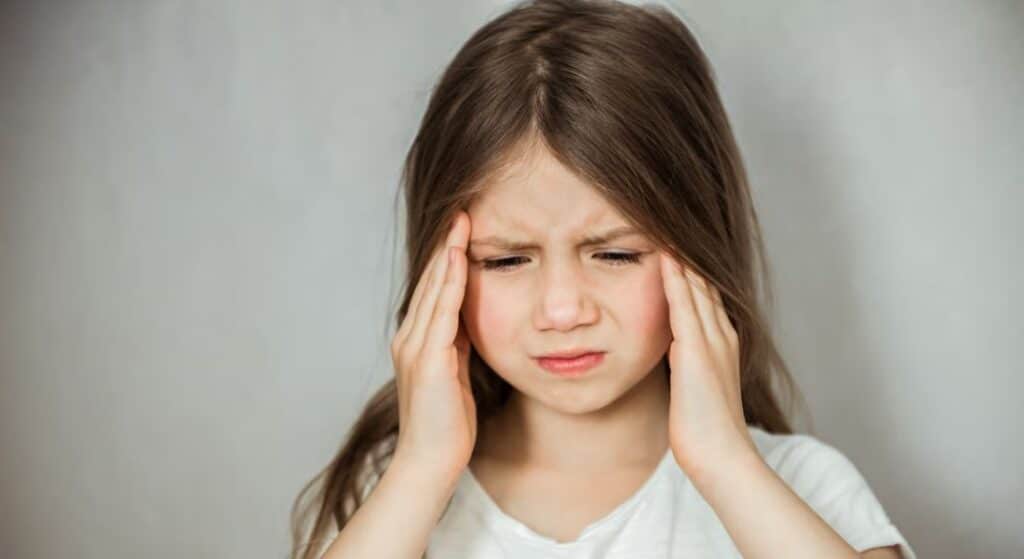
A headache that progressively worsens deserves more attention than one that stays predictable. For children under 12, NICE considers worsening headaches, headaches that wake your child or are present on waking, and those triggered by coughing, sneezing or bending down as red flags requiring same-day assessment.
These symptoms do not automatically mean a brain tumour. However, if your child’s usual headache pattern changes significantly, you should tell their doctor promptly so the cause can be assessed properly. Other NICE red flags for children under 12 include headache with vomiting, ataxia, altered consciousness or pervasive lethargy, fever with signs suggesting meningitis, headache within 5 days of a head injury, and headache associated with a squint or difficulty looking upwards.
Can Brain Tumours Cause Behaviour or Personality Changes?
Behaviour changes are common in children and usually have many possible explanations. However, you may notice unexplained confusion, unusual tiredness, personality changes or difficulties with concentration that are different from your child’s normal behaviour.
These symptoms are more concerning when they persist, worsen or occur with headaches, vomiting, seizures, vision or balance problems. If your child seems increasingly unlike themselves without an obvious reason, you should mention the change during their medical assessment.
Are Seizures a Possible Warning Sign?
A seizure does not automatically mean your child has a brain tumour. Childhood seizures can have several causes, including febrile seizures and epilepsy, but brain tumours can sometimes trigger seizures by affecting nearby brain activity.
If your child has a seizure for the first time, call 999. A significant change in an existing seizure pattern also needs prompt medical assessment, particularly if it occurs with headache or other new neurological symptoms.
Can Symptoms Look Different in Babies and Very Young Children?
Very young children may not be able to tell you about headache, vision changes or nausea. You may instead notice unusual irritability, sleepiness, repeated vomiting, balance problems or loss of previously acquired skills.
In babies and very young children, increasing head circumference, a bulging fontanelle or loss of developmental skills can sometimes accompany raised pressure or neurological disease and should be medically assessed. NICE recommends urgent neurological assessment for all children under four with headache, so you should seek medical advice if you notice concerning changes in your baby or toddler.
When Should a Child with a Headache Be Assessed the Same Day?

For children under 12, NICE recommends immediate referral for same-day assessment when certain headache red flags are present. These include headaches that wake your child, occur on waking, progressively worsen, or are triggered by coughing, sneezing or bending down.
Headache with vomiting, ataxia or poor coordination, altered consciousness or pervasive lethargy, fever with signs suggesting meningitis, a new squint or difficulty looking upwards also requires same-day assessment. NICE also includes headache occurring within 5 days of a head injury. If your child is under four and has a headache, they should have urgent neurological assessment even without these additional warning signs. The specific same-day red-flag list above applies to children under 12. For children and young people aged 12 and over, NICE uses its headache guideline for over-12s, which also recommends further assessment or referral when features suggest a possible secondary cause.
When Does Your Child’s Headache Need More Urgent Assessment?
| Pattern | What it may mean for next steps |
| Occasional headache with a familiar pattern and no red flags | Usually suitable for routine assessment if recurrent or troublesome |
| Headaches becoming progressively worse | Same-day assessment in children under 12 |
| Headache waking your child or present on waking | Same-day assessment in children under 12 |
| Headache with vomiting | Same-day assessment in children under 12 |
| Headache with new squint or difficulty looking upwards | Same-day assessment in children under 12 |
| First seizure | Call 999 |
| Headache that starts suddenly and is extremely painful | Call 999 or go to A&E |
| New weakness, numbness, major speech, walking or balance difficulty | Call 999 or go to A&E |
When Should You Call 999?
Some symptoms need emergency care rather than a routine appointment. You should call 999 if your child has a first seizure, becomes difficult to wake, loses consciousness or develops sudden severe weakness, speech problems or another major neurological change.
Call 999 or go to A&E if your child develops a headache that starts suddenly and is extremely painful, or has headache with new weakness or numbness, difficulty speaking, balancing or walking, or other severe neurological changes. If your child seems seriously unwell, you should seek emergency help rather than trying to identify the cause at home.
What Will a Doctor Check When Your Child Has Recurrent Headaches?

Assessment usually begins with your child’s headache history. Your doctor may ask when the headaches started, how long they last, whether they occur on waking or wake your child, and whether vomiting, vision, balance or behaviour changes are present.
Your child may also have a neurological and eye examination, including checks of strength, coordination, walking and the back of the eyes. For children with recurrent headache, NICE recommends fundoscopy to examine the back of the eyes. If this shows abnormalities such as optic-disc swelling, urgent neurological assessment is needed. For children with recurrent headache, NICE also recommends checking blood pressure against reference ranges for age and height. The clinician should ask about painkiller use and whether headaches are consistently worse when your child is upright and relieved by lying down, as this pattern warrants referral. You can bring a headache diary recording symptoms, timing and medicines, which can help your doctor understand the pattern.
Clinical Tip
A headache diary can be useful, but do not wait for several weeks of diary entries if a red flag develops. Record when headaches occur, whether they wake your child, vomiting, visual symptoms and any change in balance, behaviour or alertness, and seek medical advice promptly if the pattern becomes concerning.
Does Every Child with Recurrent Headaches Need a Brain Scan?
No. You should not assume your child needs an MRI or CT scan simply because they have recurrent headaches. Doctors consider the headache pattern, neurological examination and any warning signs before deciding whether imaging is appropriate. Imaging is not normally used simply to provide reassurance when the history and examination support a primary headache disorder and there are no concerning features.
If your child’s symptoms suggest a possible neurological problem, further investigation may be needed. For persistent or concerning headaches, specialist assessment can help you understand whether the pattern fits migraine or another common headache disorder and whether further tests are necessary.
What Can You Do If Your Child’s Headaches Continue but No Red Flags Are Present?
If your child has been assessed and no concerning features were found, you can keep a headache diary to track changes. Record headaches alongside your child’s sleep, fluids, meals and activities to help identify possible patterns.
You should follow the healthcare professional’s advice, encourage regular meals, good hydration and suitable sleep, and use recommended pain relief as directed. If headaches start waking your child, worsen or occur with vomiting, vision, balance, weakness or behaviour changes, you should arrange another medical review.
Myth vs Fact
| Myth | Fact |
| A child who gets recurrent headaches probably has a brain tumour. | No. Brain tumours are rare, and most childhood headaches have more common causes. |
| A morning headache always means raised pressure from a tumour. | No. Migraine, sleep problems and other causes can also produce morning headaches, although NICE treats headache on waking as a red flag in under-12s. |
| Vomiting with headache proves a brain tumour is present. | No. Migraine and infections can also cause vomiting, but headache with vomiting warrants same-day assessment in children under 12. |
| Every child with recurrent headache needs an MRI. | No. Imaging decisions depend on history, examination and warning signs. |
| A normal-looking child can never have a concerning headache. | No. A changing or progressive pattern can still need assessment. |
| One red-flag symptom means your child definitely has a tumour. | No. Red flags mean further assessment is needed; they are not themselves a diagnosis. |
Frequently Asked Questions
1. Can headaches in children be a sign of a brain tumour?
Brain tumours are rare in children, and headaches are much more commonly caused by migraine, viral illness, dehydration, tiredness or tension. Headache alone does not usually mean your child has a brain tumour, but you should seek medical advice if headaches persist, progressively worsen or occur with vomiting, vision changes, balance problems, unusual drowsiness or other neurological symptoms.
2. What types of headaches are more concerning in children?
Headaches that progressively worsen, wake your child during the night, are present on waking or are triggered by coughing, sneezing or bending down can be more concerning. These symptoms do not automatically mean a brain tumour, but for children under 12, NICE considers them red flags requiring immediate referral for same-day assessment.
3. Are morning headaches a warning sign of a brain tumour?
Morning headaches do not automatically mean your child has a brain tumour, as migraine, poor sleep, dehydration and other common conditions can also cause headaches on waking. However, NICE considers headaches present on awakening a red flag in children under 12, particularly when they occur with vomiting, vision or balance problems, unusual tiredness or worsening symptoms.
4. Is vomiting with a headache a serious warning sign?
Vomiting can occur with migraine and other common childhood illnesses, so it does not automatically indicate a brain tumour. However, headache with vomiting is a red flag requiring immediate referral for same-day assessment in children under 12, especially if your child also has worsening headaches, balance problems, vision changes or unusual sleepiness.
5. What vision changes should I look out for in a child with headaches?
New blurred or double vision, a new squint or unusual eye movements can be important when they occur alongside headaches, although they can also have other causes such as migraine or eyesight problems. NICE considers headache with a squint or difficulty looking upwards a red flag in children under 12, so new visual symptoms with recurrent headaches should be medically assessed.
6. Can balance, coordination or walking problems occur with brain tumours?
New problems with balance, coordination or walking can sometimes occur when a condition affects areas of the brain responsible for movement and coordination. If your child develops stumbling, unusual clumsiness, unsteadiness or difficulty with activities they previously managed well alongside headaches, prompt medical assessment is recommended.
7. Can seizures be a sign of a brain tumour in children?
Seizures can have many causes in children, including epilepsy and febrile seizures, so a seizure does not automatically mean your child has a brain tumour. However, if your child has a seizure for the first time, call 999. A significant change in an existing seizure pattern, particularly with new headaches or neurological symptoms, also needs prompt medical assessment.
8. When should a child with a headache be assessed urgently?
For children under 12, NICE recommends same-day assessment for headaches that wake them at night, are present on waking, progressively worsen or are triggered by coughing, sneezing or bending down. Headache with vomiting, ataxia, altered consciousness or pervasive lethargy, fever with signs suggesting meningitis, headache occurring within five days of a head injury, a new squint or difficulty looking upwards also requires same-day assessment. A first seizure, sudden extremely painful headache or major neurological change requires emergency care.
9. Does every child with recurrent headaches need an MRI or CT scan?
No, recurrent headaches do not automatically mean your child needs an MRI or CT scan. Doctors usually consider the headache pattern, neurological examination and any warning signs before deciding whether brain imaging is appropriate, and further investigation is recommended when symptoms or examination findings suggest a possible neurological problem.
10. What should I do if my child’s headaches continue but there are no red flags?
If your child has been assessed and no concerning features were found, keeping a headache diary can help you track symptoms and identify patterns. Encourage regular meals, good hydration and suitable sleep, follow your healthcare professional’s advice, and arrange another medical review if headaches worsen, wake your child or develop alongside vomiting, vision, balance, weakness or behaviour changes.
Final Thoughts: When Should You Worry About Your Child’s Headaches?
Most headaches in children are caused by common conditions such as migraine, illness, dehydration or tiredness, rather than a brain tumour. However, worsening headaches or symptoms such as vomiting, vision changes, balance problems or unusual drowsiness should be medically assessed.
If you need children’s headache treatment in London, get in touch with us at London Paediatric Clinic.
References:
- National Institute for Health and Care Excellence (NICE) (2019, updated 2023) Suspected neurological conditions: recognition and referral. NICE guideline NG127. Available at: https://www.nice.org.uk/guidance/ng127
- Cancer Research UK (no date) Brain tumours in children. Available at: https://www.cancerresearchuk.org/about-cancer/childrens-cancer/brain-tumours
- The Brain Tumour Charity (no date) Headaches in children. Available at: https://www.thebraintumourcharity.org/brain-tumour-signs-symptoms/child-brain-tumour-symptoms/headaches/
- Wilne, S., Collier, J., Kennedy, C., Koller, K., Grundy, R. and Walker, D. (2007) ‘Presentation of childhood CNS tumours: A systematic review and meta-analysis’, The Lancet Oncology, 8(8), pp. 685–695. Available at: https://pubmed.ncbi.nlm.nih.gov/17644483/
- Wilne, S.H., Ferris, R.C., Nathwani, A. and Kennedy, C.R. (2006) ‘The presenting features of brain tumours: A review of 200 cases’, Archives of Disease in Childhood, 91(6), pp. 502–506. Available at: https://pmc.ncbi.nlm.nih.gov/articles/PMC2082784/
- Cheng, S. and Goldman, R.D. (2023) ‘Neuroimaging to diagnose central nervous system tumours in children’, Canadian Family Physician, 69(3), pp. 165–167. Available at: https://pmc.ncbi.nlm.nih.gov/articles/PMC10030132/
- Peragallo, J.H. (2019) ‘Visual function in children with primary brain tumors’, Current Opinion in Neurology, 32(1), pp. 75–81. Available at: https://pmc.ncbi.nlm.nih.gov/articles/PMC6379778/
- Tsze, D.S., Ochs, J.B., Gonzalez, A.E. and Dayan, P.S. (2019) ‘Red flag findings in children with headaches: Prevalence and association with emergency department neuroimaging’, Cephalalgia, 39(2), pp. 185–196. Available at: https://pmc.ncbi.nlm.nih.gov/articles/PMC10693908/
- Lewis, D.W., Ashwal, S., Dahl, G., Dorbad, D., Hirtz, D., Prensky, A. and Jarjour, I. (2002) ‘Practice parameter: Evaluation of children and adolescents with recurrent headaches’, Neurology, 59(4), pp. 490–498. Available at: https://pubmed.ncbi.nlm.nih.gov/12196640/
- Alehan, F.K. (2002) ‘Value of neuroimaging in the evaluation of neurologically normal children with recurrent headache’, Journal of Child Neurology, 17(11), pp. 807–809. Available at: https://pubmed.ncbi.nlm.nih.gov/12585718/