




A neonatologist is a children’s doctor who specialises in caring for newborn babies, especially those who are born prematurely, become unwell or need extra medical support after birth. You may meet a neonatologist before or shortly after your baby is born if there are concerns during pregnancy or if your baby needs specialist care during delivery or in the first few days of life.
Being referred to a neonatologist does not always mean your baby is seriously unwell. Many babies only need a careful assessment, extra monitoring or short-term support with feeding or breathing before they can stay with you on the postnatal ward or go home, and understanding the neonatologist’s role can help you feel more informed and reassured.
What Is a Neonatologist?
A neonatologist is a paediatrician with additional specialist training in neonatal medicine. They care for newborn babies who are premature, unwell or need specialist assessment or support around the time of birth. Neonatal services may also care for babies beyond their first 28 days when ongoing treatment is related to prematurity or a condition that began during the newborn period.
Your baby may be assessed by a consultant neonatologist, another neonatal doctor or an advanced neonatal nurse practitioner working within the neonatal team. The consultant oversees complex clinical decisions, coordinates specialist input and helps explain your baby’s condition, treatment and follow-up plan.
Why Do Some Newborn Babies Need Specialist Care?
Newborn babies undergo major changes in breathing, circulation, temperature control, blood-glucose regulation and feeding as they adapt to life outside the womb. Most make this transition without specialist treatment, but some need closer observation or medical support.
Premature or unwell babies can show subtle signs of deterioration and may respond differently to medicines, fluids and respiratory support than older children. The neonatal team considers gestational age, birth weight, clinical condition and stage of development when planning care.
How Is a Neonatologist Different From a General Paediatrician?
A neonatologist is a paediatrician who has completed additional subspecialty training in neonatal medicine. General paediatricians care for babies, children and teenagers with a wide range of conditions and may also assess common newborn concerns, particularly outside a specialist neonatal unit.
Neonatologists focus on babies who need specialist care around birth, including premature babies, critically unwell newborns and babies requiring respiratory, nutritional or intensive monitoring. They work with paediatricians, obstetricians, fetal-medicine specialists, neonatal nurses and other professionals rather than replacing their roles.
Evidence Note
Neonatal medicine ranges from assessing a well term baby with feeding or postnatal concerns to providing full intensive care for an extremely premature or critically unwell baby. Some babies remain with their parents on a postnatal or transitional-care ward, while others need special, high-dependency or intensive care according to their clinical needs.
When Might You Meet the Neonatal Team Before or During Birth?

You may meet a consultant neonatologist or another member of the neonatal team before birth when pregnancy findings suggest that your baby could need specialist support. The team may discuss likely treatments, where delivery should take place and what may happen immediately after birth.
Before and During Birth: How the Neonatal Team May Help
| Situation | When It Happens | What the Neonatal Team May Do | Why It Matters |
| Pregnancy consultation | If there is a risk of premature birth or a condition is identified on pregnancy scans | Explains possible treatments and neonatal care after birth | Helps parents understand and prepare for what to expect |
| Delivery planning | Before the birth when specialist care may be needed | Discusses the safest place for delivery and the care plan | Ensures appropriate facilities and staff are available |
| Attendance at birth | If premature delivery, a complex birth or concerns about the baby are expected | A neonatal clinician assesses the baby and provides stabilisation or treatment when required; consultant involvement depends on the expected complexity. | Allows prompt medical support when needed |
| Breathing support | If the baby has difficulty adapting after birth | Supports the baby’s transition after birth and provides resuscitation, oxygen or other breathing support when clinically required. | Helps stabilise the baby quickly |
| Neonatal assessment | Immediately after delivery if there are medical concerns | Evaluates the baby’s condition and decides if further care is needed | Ensures timely treatment and monitoring |
| Reassurance for families | Throughout pregnancy and around the time of birth | Answers questions and explains each stage of care | Helps parents feel informed and supported during delivery |
Clinical Tip
Ask where your baby is expected to receive care, whether the neonatal team is likely to attend the delivery, whether transfer to another hospital is possible and how you will receive updates if your baby is admitted. You can also ask about expressing breast milk, visiting arrangements, skin-to-skin contact and who to contact if your labour begins earlier than expected.
When Does a Premature Baby Need a Neonatologist?
A premature baby is born before 37 completed weeks of pregnancy, and the earlier your baby arrives, the more likely they are to need specialist neonatal care. Depending on how early they are born, your baby may need support with breathing, feeding, temperature control or protection from infection, while some babies only require extra monitoring before staying with you in transitional care.
Very premature babies are more likely to need care in a neonatal intensive care unit, where a neonatologist can oversee their treatment and monitor their progress closely. Your baby’s care plan will be reviewed regularly according to their breathing, feeding, growth, temperature control and overall stability. As their needs reduce, they may move to a lower category of care, return to a local neonatal unit or begin preparing for discharge.
Does a Small or Low-Birthweight Baby Need Specialist Care?
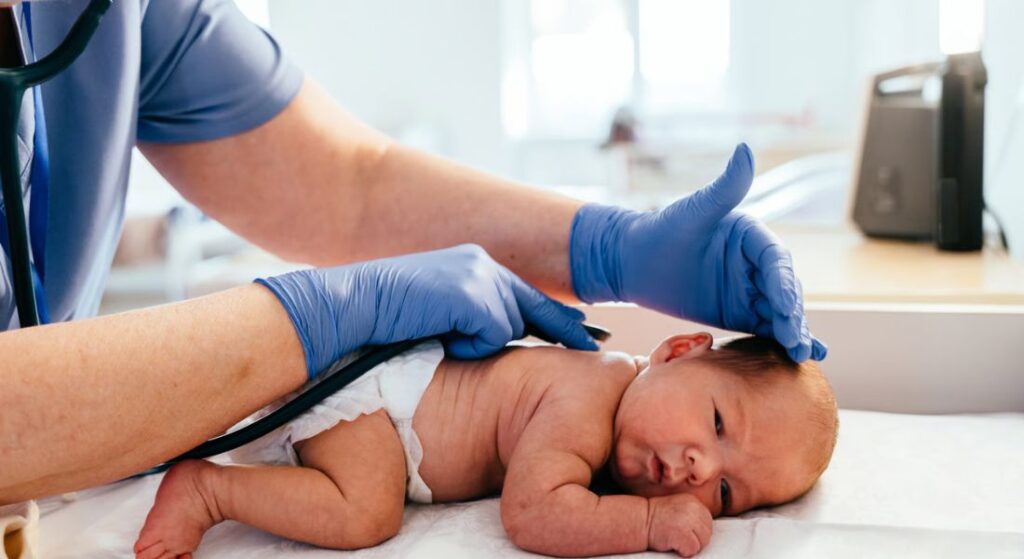
Some babies are small because they are born prematurely, while others are born at full term but have grown more slowly during pregnancy. If your baby has a low birth weight, they may need extra support to maintain their body temperature, blood sugar levels and feeding during the first few days of life.
The maternity or neonatal team may monitor your baby’s temperature, feeding and blood glucose according to their individual risk factors and clinical condition. Not every small baby requires admission to a neonatal unit; a well baby may remain with you on a postnatal or transitional-care ward when the necessary observations and feeding support can be provided safely.
How Does a Neonatologist Treat Breathing Difficulties?
If your baby has breathing difficulties, a neonatologist will assess how well they are breathing by checking their breathing pattern, oxygen levels and overall condition. Depending on the findings, your baby may also need tests such as blood samples, blood gas monitoring or a chest X-ray to identify the underlying cause.
Some babies need brief monitoring or additional oxygen, while others require CPAP, mechanical ventilation or another form of respiratory support. The treatment and duration depend on the cause and severity of the problem, which may include prematurity, infection, retained lung fluid, an air leak or another heart or lung condition.
When Does a Newborn Infection Need Neonatal Care?
Newborn babies can become unwell quickly, and signs of infection may be subtle. Possible warning signs include breathing difficulty, poor feeding, unusual sleepiness or irritability, temperature changes, altered colour, abnormal movements or a change in heart rate or oxygen levels.
The neonatal team assesses the baby’s symptoms together with pregnancy, labour and birth risk factors. Blood cultures and other tests may be arranged, and antibiotics are started promptly when the clinical indicators or infection risk justify treatment rather than waiting for culture results. The team will review whether antibiotics should continue when the results and the baby’s progress are available.
Can a Neonatologist Treat Jaundice and Low Blood Sugar?
A neonatal clinician may assess and treat jaundice when bilirubin levels require closer monitoring or treatment. Jaundice that appears within the first 24 hours requires urgent medical review and bilirubin measurement. Phototherapy is recommended according to the baby’s bilirubin level, age in hours, gestational age and other clinical factors rather than from skin colour alone.
Low blood glucose is managed according to the baby’s risk factors, symptoms and measured glucose level. A well baby may receive feeding support and, in selected cases, glucose gel, while persistent, very low or symptomatic hypoglycaemia may require tube feeding or intravenous glucose. The team will also investigate an underlying cause when the problem is severe or does not resolve.
How Can a Neonatologist Support Feeding?

If your baby cannot yet coordinate sucking, swallowing and breathing safely, expressed breast milk or formula may be given through a feeding tube. Babies who cannot receive enough milk through the stomach may also need intravenous fluids or parenteral nutrition while enteral feeds are introduced gradually.
You may be encouraged to express breast milk soon after birth so it can be safely given to your baby when needed. Your baby’s neonatologist will work closely with neonatal nurses and other feeding specialists to monitor their progress, gradually increase feeds and help them move towards feeding independently as they become stronger.
What Happens After a Difficult Birth?
After a difficult birth, the neonatal team assesses your baby’s breathing, circulation, alertness, muscle tone, reflexes and neurological condition. Tests may include blood gases, continuous brain-activity monitoring, blood tests and imaging, depending on what happened during labour and how your baby responds after birth.
Therapeutic hypothermia may be offered to eligible babies born at 36 weeks or later who have moderate or severe neonatal encephalopathy after reduced oxygen and blood flow around birth. Cooling is time-sensitive and should begin as soon as possible, usually within six hours, with specialist neonatal input. Not every baby who needed resuscitation or had a difficult delivery meets the treatment criteria.
Which Congenital Conditions May Require a Neonatologist?
Some congenital conditions may require a neonatologist to provide specialist care from the moment your baby is born. These conditions can affect the heart, lungs, digestive system, kidneys, brain or other parts of the body, and your baby may need monitoring, medicines or transfer to a specialist centre for further treatment.
Your baby’s neonatologist will coordinate their overall care while working closely with cardiologists, surgeons and other specialists to ensure they receive the right treatment at the right time. They will also monitor your baby’s breathing, feeding, fluids and comfort, keeping you informed and supporting you throughout their care.
What Are the Different Levels of Neonatal Care?
Some babies receive transitional care while remaining with a parent on a postnatal or transitional-care ward. Specialist neonatal units are designated as special care units, local neonatal units or neonatal intensive care units, according to the level and duration of care they provide.
Special care units provide special and transitional care for their local population. Local neonatal units also provide high-dependency care and short periods of intensive care, while neonatal intensive care units care for the smallest and most critically unwell babies and provide the widest range of specialist support. Babies may transfer between hospitals or levels of care as their needs change.
UK Guidance Note
UK neonatal services work through regional networks so that babies can receive the level of care their condition requires. Transfer to a specialist centre does not necessarily mean that your baby has suddenly worsened, and transfer back to a local unit is often arranged once highly specialised care is no longer needed.
What Tests and Treatments Can a Neonatologist Arrange?
The neonatal team selects tests according to the clinical question rather than routinely performing every investigation. These may include blood tests, blood cultures, X-rays, ultrasound examinations, echocardiography, MRI or continuous monitoring of heart rate, breathing, oxygen saturation and temperature.
Your baby’s treatment will depend on the underlying cause and may include oxygen, CPAP, ventilation, antibiotics, intravenous fluids, tube feeding or phototherapy. Although the equipment around your baby can seem overwhelming, much of it is used to monitor their condition, and your neonatal team will explain what each monitor, tube and wire is doing so you feel more informed and reassured.
Who Works With the Neonatologist?

Your baby’s care is provided by a multidisciplinary team, with the neonatologist working alongside neonatal nurses, paediatric doctors and other healthcare professionals to provide the best possible support. Depending on your baby’s condition, specialists such as cardiologists, surgeons, neurologists, dietitians, physiotherapists and feeding experts may also become involved.
The consultant neonatal team coordinates your baby’s medical care and brings together advice from the professionals involved. Day-to-day care and communication are shared across neonatal doctors, advanced neonatal nurse practitioners, nurses and allied healthcare professionals, with responsibilities depending on the unit and your baby’s needs.
How Can You Be Involved in Your Baby’s Care?
Even if your baby is being cared for in a neonatal unit, you remain an essential part of their care and recovery. Your neonatal team will support you in learning how to hold, comfort and care for your baby safely, and once your baby is stable, you may be encouraged to have skin-to-skin contact to help strengthen your bond.
As your baby’s condition improves, you may be able to help with everyday care such as changing nappies, taking their temperature or supporting feeds. Your baby’s healthcare team will keep you updated, answer your questions and explain any unfamiliar medical terms, so you can feel more confident and involved in your baby’s care.
What Happens When Your Baby Is Ready to Leave Neonatal Care?
Your baby will be ready to leave neonatal care when they meet an individual discharge plan. This usually includes stable breathing and temperature, an established feeding plan and confidence that any medicines, oxygen, tube feeding or equipment can be managed safely at home. The neonatal team will provide training and arrange additional support when needed.
Some babies will need follow-up appointments with the neonatal team or other specialists to monitor their growth and development after discharge. Once you are home, seek urgent medical advice if your baby becomes difficult to wake, feeds much less than usual, has breathing difficulties, has a temperature of 38°C or above or develops a significant change in colour. Call 999 immediately if your baby stops breathing, cannot be woken, has severe difficulty breathing or appears blue or grey.
Myth vs Fact
| Myth | Fact |
| A neonatologist only treats premature babies. | Neonatologists care for premature babies and full-term newborns who have breathing problems, infections, feeding difficulties, congenital conditions or other medical needs. |
| Every baby seen by a neonatologist must be admitted to intensive care. | Some babies only need an examination, additional observations or short-term treatment and can remain on a postnatal or transitional-care ward. |
| A neonatal-unit admission means you cannot touch or care for your baby. | Parents are usually encouraged to be involved whenever it is medically safe, including through skin-to-skin contact, feeding, comforting and nappy changing. |
| All neonatal units provide the same treatments. | Units provide different levels of care. A baby who needs highly specialised treatment may be transferred to a regional neonatal intensive care unit. |
| Tubes and monitors always mean that a baby is critically ill. | Some equipment provides routine monitoring or temporary support while a baby grows, feeds or recovers. |
| A full-term baby will never need neonatal care. | Full-term babies may require specialist care because of infection, breathing difficulty, low blood sugar, jaundice, a difficult birth or a congenital condition. |
| Going home means that no further neonatal follow-up is needed. | Some babies need developmental, feeding, respiratory or specialist reviews after discharge, even when they are well enough to leave hospital. |
| Parents should avoid asking questions while the team is busy. | You are an essential part of your baby’s care and should receive clear explanations about tests, treatment, progress and discharge planning. |
Frequently Asked Questions
1. What is a neonatologist?
A neonatologist is a paediatric doctor with specialist training in caring for newborn babies, particularly those who are premature, unwell or require extra medical support after birth. They diagnose and treat conditions affecting babies during the neonatal period and coordinate care with other specialists when needed.
2. When does a baby need to see a neonatologist?
A baby may need a neonatologist if they are born prematurely, have breathing difficulties, an infection, jaundice requiring treatment, low blood sugar, a congenital condition or complications during or immediately after birth. Some babies are also assessed because of concerns identified during pregnancy.
3. Does seeing a neonatologist mean my baby is seriously ill?
Not necessarily. Many babies are reviewed by a neonatologist as a precaution or for additional monitoring. Some only need a brief examination or short-term support before remaining with their parents or going home.
4. What conditions do neonatologists commonly treat?
Neonatologists commonly manage prematurity, respiratory distress, neonatal infections, jaundice, low blood sugar, feeding difficulties, congenital abnormalities, birth complications and conditions requiring neonatal intensive care.
5. Can a full-term baby need a neonatologist?
Yes. Although premature babies are more likely to require specialist care, full-term babies may also need a neonatologist because of breathing problems, infection, jaundice, low blood sugar, congenital heart disease or complications during delivery.
6. What is the difference between a neonatologist and a paediatrician?
A paediatrician cares for children of all ages, while a neonatologist specialises in the care of newborn babies, especially those with complex medical needs or those requiring neonatal intensive care.
7. Can I stay with my baby in the neonatal unit?
In most neonatal units, parents are encouraged to spend as much time as possible with their baby. Depending on your baby’s condition, you may be able to provide skin-to-skin care, help with feeding, change nappies and take part in daily care.
8. What tests might a neonatologist recommend?
Depending on your baby’s condition, a neonatologist may arrange blood tests, chest X-rays, ultrasound scans, echocardiograms, MRI scans, hearing tests or continuous monitoring of breathing, heart rate and oxygen levels.
9. Will my baby always need intensive care if a neonatologist is involved?
No. Many babies cared for by a neonatologist do not require intensive care. Some only need observation, feeding support, treatment for jaundice or short-term oxygen therapy before moving to a lower level of care or going home.
10. Will my baby need follow-up after leaving neonatal care?
Some babies, particularly those born prematurely or with complex medical conditions, require follow-up appointments to monitor their growth, development, feeding and overall health. Others who recover fully may only need routine care from their GP or paediatrician.
Final Thoughts: Reassurance Through Specialist Newborn Care
A neonatologist plays an important role in supporting babies who need extra medical attention during their earliest days, whether because of prematurity, illness or birth-related complications. Understanding their role can help you feel more informed and confident if your baby requires specialist neonatal care.
If you are looking for experienced support from a neonatologist in London, the team at London Paediatric Clinic is here to guide you through every stage of your baby’s care. Expert advice and personalised treatment can provide reassurance while helping your newborn receive the care they need.
References:
- British Association of Perinatal Medicine (2017) Neonatal transitional care: A framework for practice. Available at: https://www.bapm.org/resources/24-neonatal-transitional-care-a-framework-for-practice-2017
- British Association of Perinatal Medicine (2020, updated 20 March 2025) Therapeutic hypothermia for neonatal encephalopathy: A framework for practice. Available at: https://www.bapm.org/resources/237-therapeutic-hypothermia-for-neonatal-encephalopathy
- British Association of Perinatal Medicine (2022) Service and quality standards for provision of neonatal care in the UK. Available at: https://www.bapm.org/resources/service-and-quality-standards-for-provision-of-neonatal-care-in-the-uk
- British Association of Perinatal Medicine (2023) NEWTT2 – Deterioration of the newborn: A framework for practice. Available at: https://www.bapm.org/resources/deterioration-of-the-newborn-newtt-2-a-framework-for-practice
- British Association of Perinatal Medicine (2024) Identification and management of neonatal hypoglycaemia in the full-term infant: Birth to 72 hours. Available at: https://www.bapm.org/resources/identification-and-management-of-neonatal-hypoglycaemia-in-the-full-term-infant-birth-72-hours
- General Medical Council (2023) Neonatal medicine syllabus 2023. Available at: https://www.gmc-uk.org/education/standards-guidance-and-curricula/curricula/neonatal-medicine-curriculum
- National Health Service (2023a) How to take your baby’s temperature. Page last reviewed 18 July 2023. Available at: https://www.nhs.uk/baby/health/how-to-take-your-babys-temperature/
- National Health Service (2023b) Is your baby or toddler seriously ill? Page last reviewed 24 August 2023. Available at: https://www.nhs.uk/baby/health/is-your-baby-or-toddler-seriously-ill/
- National Health Service (2024) Special care: Ill or premature babies. Page last reviewed 30 April 2024. Available at: https://www.nhs.uk/pregnancy/labour-and-birth/special-care-ill-or-premature-babies/
- National Institute for Health and Care Excellence (2010, updated 31 October 2023) Jaundice in newborn babies under 28 days. Clinical guideline CG98. Available at: https://www.nice.org.uk/guidance/cg98
- National Institute for Health and Care Excellence (2017) Developmental follow-up of children and young people born preterm. NICE guideline NG72. Available at: https://www.nice.org.uk/guidance/ng72
- National Institute for Health and Care Excellence (2019) Specialist neonatal respiratory care for babies born preterm. NICE guideline NG124. Available at: https://www.nice.org.uk/guidance/ng124
- National Institute for Health and Care Excellence (2020) Neonatal parenteral nutrition. NICE guideline NG154. Available at: https://www.nice.org.uk/guidance/ng154
- National Institute for Health and Care Excellence (2021, updated 9 June 2026) Postnatal care. NICE guideline NG194. Available at: https://www.nice.org.uk/guidance/ng194
- National Institute for Health and Care Excellence (2021, updated 13 May 2026) Neonatal infection: Antibiotics for prevention and treatment. NICE guideline NG195. Available at: https://www.nice.org.uk/guidance/ng195
- Resuscitation Council UK (2025) Newborn resuscitation and support of transition of infants at birth guidelines. Published 27 October 2025. Available at: https://www.resus.org.uk/professional-library/2025-resuscitation-guidelines/newborn-resuscitation-and-support-transition-infants-birth