




Neonatal infections can begin with subtle changes, and a newborn baby may not develop the symptoms you would expect in an older child. Poor feeding, unusual sleepiness, abnormal breathing, temperature changes or a difference in your baby’s colour or responsiveness may be the first signs that they need urgent medical assessment.
Many babies recover well with prompt treatment, although the outlook depends on the type and severity of the infection, your baby’s gestational age and how unwell they are when treatment begins. However, newborn babies can deteriorate quickly, so you should trust your instincts and seek medical help without waiting for several symptoms to appear. Call 999 if your baby stops breathing, cannot be woken, has a seizure or develops severe breathing difficulty or blue or grey colouring.
What Is a Neonatal Infection?
A neonatal infection is an infection that develops during your baby’s first 28 days of life. It may affect the lungs, bloodstream, brain, urinary tract or another part of the body, and can be caused by bacteria, viruses or, less commonly, fungi.
Some infections remain localised, while others can spread through the bloodstream or affect organs such as the lungs or brain. The healthcare team will assess your baby’s symptoms, pregnancy and birth history and any investigation results before deciding whether treatment is required.
When the decision is made to treat suspected bacterial infection, antibiotics are started promptly without waiting for final culture results. Starting treatment does not necessarily mean that infection has already been confirmed.
Why Newborn Babies Are More Vulnerable
Your newborn’s immune system is still developing, so they may be less able to fight infection than an older child. Premature babies and those with underlying medical conditions may be at even greater risk, but serious infections can also occur in babies who were born full term and seemed well at birth.
A newborn with an infection may not develop a high temperature and can instead become sleepy, feed poorly or seem different from usual. If you notice changes in your baby’s feeding, breathing, colour or responsiveness, you should seek medical advice promptly.
Early-Onset and Late-Onset Neonatal Infection
Early-onset neonatal infection develops less than 72 hours after birth and is commonly associated with organisms acquired before or during delivery. Late-onset neonatal infection develops 72 hours or more after birth and may be acquired from the home, hospital environment or another source after birth.
Both types can become serious and require prompt assessment. You do not need to determine which category applies: seek medical advice whenever your newborn develops changes in feeding, breathing, temperature, colour, behaviour or alertness.
Risk Factors During Pregnancy, Labour and Birth

Factors that may increase the chance of early-onset infection include birth before 37 weeks, Group B Streptococcus identified during the current pregnancy, a previous baby affected by invasive GBS infection, prelabour rupture of the membranes and suspected or confirmed maternal sepsis during labour or the early postnatal period. The importance of the time between the waters breaking and birth depends partly on whether the baby is born at term or prematurely.
Risk factors do not mean that your baby definitely has an infection. The maternity and neonatal teams consider the complete combination of risk factors and your baby’s clinical condition when deciding whether observation, investigation or antibiotics are appropriate. NICE updated its neonatal-infection guidance in May 2026.
Subtle Changes That May Be the First Sign
| Change You Notice | Why It Matters |
| Feeding less than usual | May be an early sign of infection |
| Difficult or impossible to wake | Requires prompt assessment |
| Unusual irritability | May indicate illness |
| Fewer wet nappies | Possible dehydration or infection |
| Increasing jaundice with poor feeding or unusual sleepiness | Needs medical review |
| Sudden floppiness, marked stiffness or abnormal jerking | Requires urgent assessment |
Clinical Tip
When you contact a healthcare professional, tell them your baby’s exact age in days, whether they were born prematurely, when the change began, any temperature reading and whether feeding, wet nappies, breathing, colour or alertness are different from normal.
Also mention Group B Strep during pregnancy, maternal infection around the time of birth or possible contact with a cold sore. This information can help the medical team, but do not delay emergency care to complete a symptom record.
Where Should You Seek Help?
Call 999 if your baby stops breathing, cannot be woken, has a seizure, develops severe breathing difficulty, turns blue or grey, or has a rash that does not fade when pressed. You should also call 999 if your baby is under eight weeks old and you are extremely worried about them.
For other urgent changes, including a temperature of 38°C or above, poor feeding, unusual sleepiness, fewer wet nappies or behaviour that is clearly different from normal, contact your GP or NHS 111 without delay. You may be advised to take your baby to A&E. Do not wait for a routine appointment or for several symptoms to appear.
Feeding Problems and Fewer Wet Nappies
Poor feeding is one of the most important warning signs that your newborn may be unwell. If your baby repeatedly refuses feeds, becomes too sleepy to finish feeding, vomits frequently or produces fewer wet nappies than expected, you should seek medical advice promptly.
Green vomit, severe breathing difficulty, unusual drowsiness or a baby who is too unwell to feed requires emergency assessment. Call 999 immediately if your baby is unresponsive, blue or grey, or has significant difficulty breathing.
Temperature Changes in a Newborn Baby
A temperature of 38°C or higher in a baby under three months requires urgent medical advice. An unexplained temperature below 36°C also needs urgent assessment, particularly when your baby is feeding poorly, unusually sleepy, floppy or breathing abnormally.
Use a digital thermometer in your baby’s armpit and follow the manufacturer’s instructions. Do not rely only on touching the forehead, and do not assume that a normal temperature rules out infection when your baby’s feeding, breathing, colour or behaviour has changed.
Breathing and Colour Changes
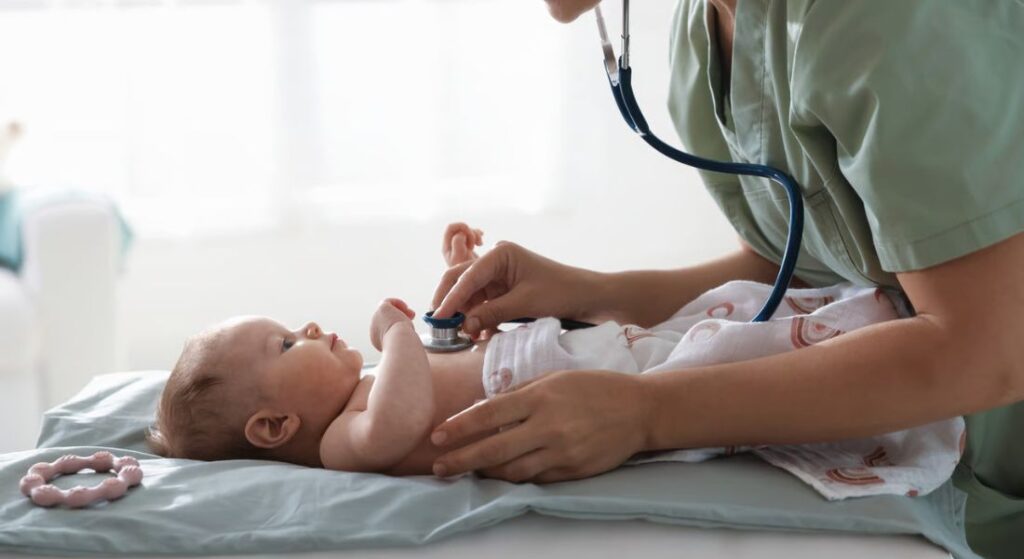
An infection can make your baby breathe much faster or slower than usual. You may notice grunting, flaring nostrils, the skin pulling in around the ribs or changes in your baby’s colour, including blue, grey, very pale or blotchy skin, lips or tongue. On brown or black skin, blue, grey, pale or blotchy colour changes may be easier to see on your baby’s lips, tongue, gums, palms of the hands or soles of the feet.
Call 999 immediately if your baby has severe breathing difficulty, repeated pauses in breathing, blue or grey lips or tongue, or becomes floppy or difficult to wake. These symptoms need emergency assessment and should not be monitored at home.
When Infection Develops into Sepsis
Sepsis is a life-threatening reaction to an infection that can affect your baby’s breathing, circulation and organs. It may begin with subtle signs such as poor feeding, unusual sleepiness or temperature changes before becoming much more serious.
Signs that may indicate sepsis or another serious illness include difficulty waking, floppiness, breathing problems, seizures, poor feeding and blue, grey, pale or blotchy colouring. Call 999 or go to A&E immediately if your baby has these symptoms or you believe something is seriously wrong.
Meningitis in Newborn Babies
Meningitis is an infection affecting the protective layers around your baby’s brain and spinal cord, and it needs urgent medical treatment. Instead of the symptoms seen in older children, your newborn may feed poorly, become unusually sleepy, develop a high-pitched cry, or seem floppy or unusually stiff.
Call 999 if your baby has a seizure, cannot be woken, has severe breathing difficulty or develops a non-fading rash. Seek emergency medical assessment if you are concerned about meningitis, particularly if your baby has a bulging soft spot, a weak or high-pitched cry, unusual stiffness, floppiness or reduced responsiveness.
Group B Strep Infection
Group B Streptococcus is a common bacterium that many healthy adults carry without symptoms. Most exposed babies remain well, but GBS can occasionally cause sepsis, pneumonia or meningitis, particularly during the first week after birth.
The NHS does not routinely screen every pregnant woman for GBS. Antibiotics during labour may be offered when GBS is found during the current pregnancy, a previous baby had GBS infection or another recognised risk is present. These antibiotics reduce early-onset GBS infection but do not prevent every case or late-onset GBS infection.
UK Guidance Note
Routine GBS screening is not offered to every pregnant woman in the UK. If GBS is identified or another recognised risk is present, your maternity team should explain whether antibiotics during labour and additional observations after birth are recommended.
Viral Infections and Neonatal Herpes
Neonatal herpes is a rare but potentially serious infection caused by the herpes simplex virus. A baby may develop poor feeding, irritability, a temperature of 38°C or higher, unusual sleepiness, breathing difficulty or sores on the skin, eyes or inside the mouth. However, neonatal herpes can occur without an obvious blistering rash.
Contact your GP or NHS 111 immediately if your baby develops possible early symptoms. Call 999 if they become floppy, difficult to wake, respond abnormally, have breathing difficulty, develop a seizure or turn blue.
How Neonatal Infections Are Diagnosed
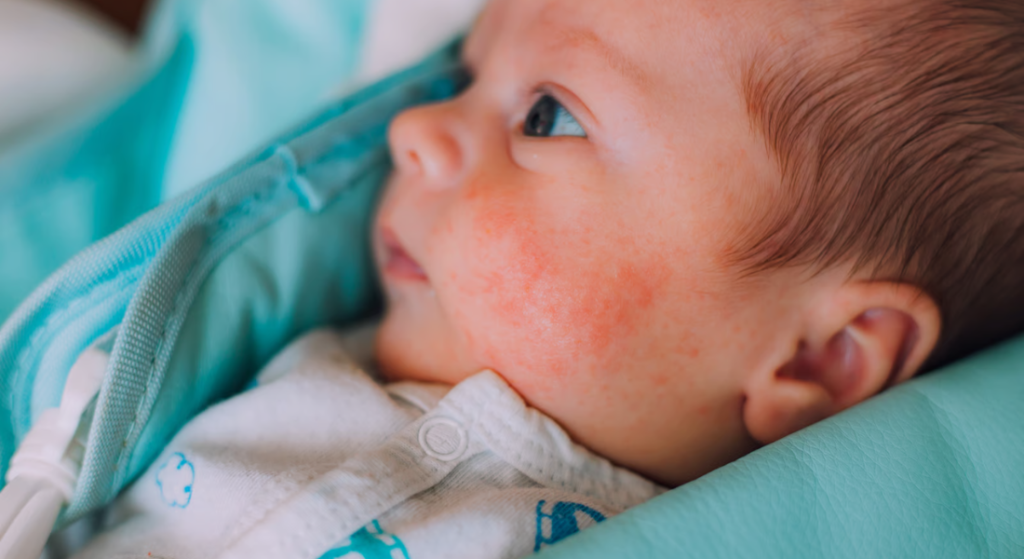
The medical team will assess your baby’s breathing, temperature, heart rate, circulation, oxygen levels, feeding and alertness. Investigations are selected according to the pregnancy and birth history, symptoms and suspected source of infection.
When antibiotics are required, NICE recommends taking a blood culture before the first dose and measuring baseline C-reactive protein, usually called CRP. CRP is a marker of inflammation, but it cannot confirm or exclude infection by itself and must be interpreted alongside your baby’s condition, culture results and other findings.
Why a Lumbar Puncture May Be Needed
A lumbar puncture collects a small sample of cerebrospinal fluid from the lower back to investigate meningitis. It may be recommended when there are clinical signs suggesting meningitis, when a blood culture grows an organism associated with meningitis or when your baby is not responding to antibiotics as expected.
When it is clinically appropriate and safe, the test may be performed before antibiotics because treatment can affect the results. However, your baby must first be stabilised, and antibiotics should not be delayed when a lumbar puncture cannot be performed safely or promptly. Having the procedure does not mean that meningitis has been confirmed.
Antibiotics and Other Hospital Treatments
If the clinical assessment indicates that your baby needs antibiotics, NICE recommends giving them as soon as possible and always within one hour of the decision to treat. A blood culture should be taken first when this can be done without delaying treatment.
The team regularly reviews your baby’s condition, culture results and blood-test trends. The need for intravenous antibiotics is reviewed using your baby’s clinical condition, blood-culture result and other investigation findings. For suspected early-onset infection, stopping treatment may be considered at approximately 36 hours when the relevant NICE criteria are met. For suspected late-onset infection, review commonly takes place at approximately 48 hours.
Prevention, Recovery and Follow-Up

Although not every neonatal infection can be prevented, you can reduce some risks by washing your hands before handling your baby, keeping feeding equipment clean and avoiding contact with people who are unwell. Anyone with a current cold sore or a recent history of cold sores should not kiss your baby. Everyone should wash their hands before handling your baby, and kissing near your baby’s mouth, nose or eyes should be avoided.
Recovery depends on the type of infection and how quickly treatment begins, and some babies may need follow-up appointments after leaving hospital. Before you go home, make sure you understand your baby’s medicines, follow-up plan and the warning signs that mean you should seek urgent medical advice.
Ask who to contact if your baby becomes unwell again after discharge and whether any hearing, developmental or specialist follow-up is required. Seek urgent advice if symptoms return, feeding deteriorates or your baby becomes less responsive, even if treatment has recently been completed.
Myth vs Fact
| Myth | Fact |
| A newborn infection always causes a high fever. | Some infected babies have a low or normal temperature and instead become sleepy, floppy or feed poorly. |
| Several symptoms must appear before parents seek help. | One significant change in feeding, breathing, colour or responsiveness can justify urgent assessment. |
| Starting antibiotics confirms that the baby has an infection. | Antibiotics may begin before results are available and can be stopped when infection becomes unlikely. |
| A baby cannot have neonatal herpes without blisters. | Some babies become seriously unwell without an obvious rash or sores. |
| Antibiotics during labour prevent every GBS infection. | Antibiotics during labour reduce the likelihood of early-onset GBS infection but do not prevent every case and do not prevent late-onset GBS infection. |
| A lumbar puncture means meningitis has been diagnosed. | The procedure is used to investigate meningitis and guide treatment; it does not confirm the diagnosis by itself. |
Key Takeaways
- Neonatal infection can develop during the first 28 days and may begin with very subtle symptoms.
- Poor feeding, unusual sleepiness, abnormal temperature, breathing changes or altered colour require prompt assessment.
- Call 999 for stopped breathing, seizures, inability to wake, severe breathing difficulty or blue or grey colouring.
- Antibiotics are started promptly when bacterial infection is suspected but are reviewed as results become available.
- Neonatal herpes can occur without visible blisters, and people with cold sores should not kiss a newborn.
- Trust your instincts and seek help when your baby behaves differently, even when no single symptom seems severe.
FAQs
1. What is a neonatal infection?
A neonatal infection is an infection that develops during your baby’s first 28 days of life. It can affect different parts of the body, including the lungs, bloodstream, brain or urinary tract, and may be caused by bacteria, viruses or, less commonly, fungi.
2. What are the first signs of infection in a newborn baby?
Early signs can be subtle and may include poor feeding, unusual sleepiness, irritability, fewer wet nappies, temperature changes, breathing difficulties or changes in your baby’s colour or responsiveness. If your baby seems different from usual, you should seek medical advice promptly.
3. Can a newborn have a serious infection without a fever?
Yes. A newborn with serious infection may have a normal or low temperature rather than a fever. Poor feeding, unusual sleepiness, breathing difficulty, floppiness, colour changes or reduced responsiveness still require urgent assessment.
4. When should I call 999 for my newborn?
Call 999 if your baby stops breathing, has repeated breathing pauses, develops severe breathing difficulty, has a seizure, cannot be woken, becomes unresponsive or turns pale, blue or grey. A non-fading rash or serious concern about a baby under eight weeks also warrants emergency help.
5. What is neonatal sepsis?
Neonatal sepsis is a life-threatening response to infection that can affect your baby’s circulation, breathing and organ function. It may occur with or without a confirmed infection in the bloodstream. Urgent hospital assessment and treatment are required.
6. Can Group B Strep (GBS) cause infection in newborn babies?
Yes. Although most babies exposed to Group B Streptococcus remain well, some can develop serious infections such as sepsis, pneumonia or meningitis. Babies with symptoms such as poor feeding, breathing problems or unusual sleepiness should be assessed urgently.
7. How are neonatal infections diagnosed?
Assessment may include blood cultures, blood tests, oxygen monitoring, swabs, imaging or a lumbar puncture according to your baby’s symptoms. A blood culture should normally be collected before the first antibiotic dose when this will not delay urgent treatment.
8. Why are antibiotics started before test results are back?
Serious neonatal infection can progress quickly, so antibiotics are given within one hour of the decision to treat rather than waiting for final culture results. The need for treatment is reviewed as your baby’s condition and investigation results become clearer.
9. Can neonatal infections be prevented?
Not every infection can be prevented. Handwashing, cleaning feeding equipment, limiting contact with unwell visitors and preventing anyone with a current or recent cold sore from kissing the baby can reduce some risks. Follow individual maternity advice about GBS and genital herpes.
10. Will my baby recover from a neonatal infection?
Many babies recover following prompt treatment, but recovery varies according to the type and severity of the infection, your baby’s gestational age and whether any complications have developed.
Final Thoughts: Recognising Neonatal Infections Early
Neonatal infections can sometimes begin with very subtle symptoms, but they can become serious in a short space of time. Knowing the warning signs, such as poor feeding, unusual sleepiness, breathing difficulties, temperature changes or changes in your baby’s colour or behaviour, can help you seek medical attention without delay and give your baby the best chance of a full recovery.
If you are ever concerned that your newborn is unwell, trust your instincts and seek prompt medical advice rather than waiting for symptoms to improve. If you’re considering a neonatologist in London, you can get in touch with us at London Paediatric Clinic.
References:
- Great Ormond Street Hospital for Children NHS Foundation Trust (2020) Your child is having a lumbar puncture. Available at: https://www.gosh.nhs.uk/conditions-and-treatments/procedures-and-treatments/your-child-having-lumbar-puncture/
- National Institute for Health and Care Excellence (2021, updated 2026) Neonatal infection: antibiotics for prevention and treatment. NICE guideline NG195. Available at: https://www.nice.org.uk/guidance/ng195
- National Institute for Health and Care Excellence (2024) Meningitis (bacterial) and meningococcal disease: recognition, diagnosis and management. NICE guideline NG240. Available at: https://www.nice.org.uk/guidance/ng240
- NHS (2023a) ‘How to take your baby’s temperature’. Page last reviewed 18 July 2023. Available at: https://www.nhs.uk/baby/health/how-to-take-your-babys-temperature/
- NHS (2023b) ‘Is your baby or toddler seriously ill?’. Page last reviewed 24 August 2023. Available at: https://www.nhs.uk/baby/health/is-your-baby-or-toddler-seriously-ill/
- NHS (2023c) ‘Sterilising baby bottles’. Page last reviewed 24 February 2023. Available at: https://www.nhs.uk/baby/breastfeeding-and-bottle-feeding/bottle-feeding/sterilising-baby-bottles/
- NHS (2025) ‘Neonatal herpes (herpes in a baby)’. Page last reviewed 24 July 2025. Available at: https://www.nhs.uk/conditions/neonatal-herpes/
- Royal College of Obstetricians and Gynaecologists (2017a) Prevention of early-onset Group B streptococcal disease. Green-top Guideline No. 36. Available at: https://www.rcog.org.uk/guidance/browse-all-guidance/green-top-guidelines/prevention-of-early-onset-group-b-streptococcal-disease-green-top-guideline-no-36/
- Royal College of Obstetricians and Gynaecologists (2017b) Group B Streptococcus (GBS) in pregnancy and newborn babies. Published December 2017. Available at: https://www.rcog.org.uk/for-the-public/browse-our-patient-information/group-b-streptococcus-gbs-in-pregnancy-and-newborn-babies/
- Shane, A.L., Sánchez, P.J. and Stoll, B.J. (2017) ‘Neonatal sepsis’, The Lancet, 390(10104), pp. 1770–1780. Available at: https://pubmed.ncbi.nlm.nih.gov/28434651/