




Hypotonia and muscle weakness are often confused because they can appear similar from the outside. You may notice that your child seems floppy, takes longer to reach milestones, becomes tired during activities or appears less steady compared with other children. It is completely understandable to wonder whether this is due to low muscle tone, reduced strength or both.
Although hypotonia and muscle weakness can happen together, they describe different things. Hypotonia relates to low muscle tone, which affects the natural tension in the muscles, while weakness means reduced muscle power and affects how much force your child can produce.
Understanding this difference helps specialists look for possible causes and decide what assessments may be needed. Some children with hypotonia have reasonable strength but struggle with posture, coordination or endurance, while children with true weakness may need further investigation for conditions affecting the nerves, muscles or nervous system.
What Is Hypotonia?
Hypotonia means low muscle tone, which is often described as feeling floppy. Muscle tone refers to the natural level of tension in your child’s muscles that helps them maintain posture, control movement and stay stable during everyday activities.
When your child has hypotonia, their muscles may feel softer or less firm than expected. You may notice that your child appears floppy when lifted, has poor posture, is very flexible or needs extra effort to sit or stand comfortably.
Hypotonia is a clinical sign rather than a complete diagnosis. It describes reduced muscle tone but does not explain why the low tone is present. Understanding your child’s overall development, movement patterns and other symptoms helps specialists identify what may be contributing to the low muscle tone.
What Is Muscle Weakness?
Muscle weakness means that your child’s muscles produce less force than expected for their age, development and level of effort. You may notice difficulties with movements that require strength, such as lifting the head, pushing up from the floor, climbing stairs, running, jumping or gripping objects.
Depending on which muscles are affected, weakness can also make it harder for your child to chew, swallow or breathe effectively. Neuromuscular conditions can affect the nerves that control muscles, the muscles themselves or the connection between nerves and muscles, which can lead to reduced muscle strength.
Weakness can be mild and remain stable, or it can become worse over time. You should always seek medical advice if your child’s weakness is sudden, progressively worsening or affecting important functions such as feeding or breathing.
The Simple Difference
The simplest way to understand the difference is that hypotonia relates to muscle tone, while muscle weakness relates to muscle power. Although they can appear similar, they describe different aspects of how your child’s muscles work.
A child with hypotonia may feel floppy and have difficulties with posture, stability or endurance, even if they can move their arms and legs with reasonable strength. A child with weakness may struggle to produce enough force for certain movements, even if their muscle tone does not appear noticeably low.
Some children can have both hypotonia and weakness at the same time. For example, your baby may appear floppy and also be too weak to feed effectively. Hypotonia accompanied by weakness, feeding difficulty or breathing problems needs urgent paediatric assessment. Sudden-onset or rapidly worsening weakness needs immediate assessment.
Evidence Note
Hypotonia describes reduced resistance during passive movement, whereas weakness describes reduced active muscle force. They may occur separately or together, so clinicians assess tone, strength, reflexes, development, feeding and breathing rather than relying on floppiness alone.
Why Parents Often Confuse the Two
From your perspective as a parent, hypotonia and weakness can often look very similar. Both can affect your child’s development and may lead to delayed milestones, tiredness, clumsiness, poor posture and difficulties with everyday movements.
You may notice challenges with activities such as sitting, crawling, walking, using stairs, playing or taking part in school activities. The difference is often easier to identify during a clinical assessment, where a doctor or therapist can check muscle tone by gently moving your child’s limbs and assess strength by observing active movements against gravity or resistance.
Videos and your descriptions of what you notice at home can be very useful during an appointment. However, they cannot replace a proper paediatric assessment, as specialists need to examine your child’s movements, strength and overall development.
Hypotonia vs Muscle Weakness at a Glance
| Feature | Hypotonia | Muscle Weakness |
| Main issue | Low muscle tone | Reduced muscle power |
| What it affects | Posture, stability, movement control and endurance | Ability to generate force |
| How it may feel | Floppiness, reduced postural support or unusual flexibility | Difficulty lifting, pushing, rising, climbing or sustaining movement |
| Common signs | Slumping, flexible joints, delayed sitting or walking, fatigue | Difficulty rising, climbing, lifting head, gripping or feeding |
| Can strength be relatively preserved? | Yes, in some children | No, weakness means power is reduced |
| Can both occur together? | Yes | Yes |
| Possible causes | Central nervous system, genetic, developmental, muscular or unknown causes | Nerve, muscle, neuromuscular junction, spinal cord, brain or metabolic causes |
| Why assessment matters | To find the cause and support development | To identify treatable or urgent neuromuscular/neurological conditions |
This table gives a general overview. Your child’s individual pattern matters more than one sign alone.
What Low Muscle Tone May Look Like
A child with hypotonia may appear floppy, loose or less supported because their muscles do not provide the same level of tone and stability. You may notice that your baby slips through your hands when lifted under the arms, has delayed head control, lies with their arms and legs spread out or takes longer to roll, sit or crawl.
In older children, low muscle tone may appear as slouched sitting, leaning on furniture, difficulty staying upright at school, flat feet, flexible joints, poor balance or becoming tired during physical activities. These signs can affect everyday movement and posture in different ways.
Features of low muscle tone can include limpness when lifted, increased joint flexibility, poor posture, easy tiredness and delayed gross motor milestones. If you notice these signs, an assessment can help you understand your child’s needs and the right support available.
What Muscle Weakness May Look Like

Muscle weakness can make it harder for your child to perform movements that need strength and power. In babies, you may notice signs such as difficulty lifting their head, weak sucking, feeding problems, a weak cry or reduced movement.
As your child gets older, weakness may affect activities such as getting up from the floor, climbing stairs, running, jumping, lifting objects or keeping up with other children. It can involve different areas, including the arms, legs, face, neck, trunk, breathing muscles or swallowing muscles.
You should seek medical advice if your child’s weakness is getting worse, appears suddenly or affects breathing or feeding. NICE recommends immediate referral for sudden-onset or rapidly progressive limb or facial weakness, and urgent referral for progressive limb weakness.
Can a Child Have Hypotonia Without Weakness?
Yes, your child can have hypotonia without having true muscle weakness. Some children have low muscle tone but can still produce reasonably good muscle power when their strength is assessed.
You may notice that your child appears floppy, flexible or becomes tired easily, but they can still move their muscles with good force. Their main challenges may relate to posture, stability, coordination or endurance rather than a lack of strength.
For example, your child may be able to kick strongly but find it difficult to sit upright for a long time because of low trunk tone. Another child may be able to walk but tire quickly because they use extra effort to maintain their posture, which is why hypotonia should not automatically be described as weakness.
Can a Child Have Weakness Without Hypotonia?
Yes, your child can have weakness without having obvious hypotonia. Some children may struggle with activities that require strength, even though they do not appear floppy when their muscles are examined.
You may notice difficulties with tasks such as climbing stairs, running, getting up from the floor or keeping up during physical activities. Weakness can sometimes become clearer during movement or after repeated activity, while your child may seem comfortable when sitting or resting.
This is why specialists ask about your child’s everyday abilities, including fatigue, falls, stairs, feeding, breathing and whether symptoms are staying the same or getting worse. These details help them understand the pattern and decide what further assessment may be needed.
Can a Child Have Both Hypotonia and Weakness?
Yes, your child can have both hypotonia and weakness at the same time. When these features occur together, it may suggest a wider neurological, muscular or neuromuscular concern that needs careful assessment.
NICE makes an important distinction between babies who are floppy but not weak and babies who have low tone alongside weakness, such as feeding or breathing difficulties. If your baby appears floppy and weak, they should be referred urgently to paediatric services for further evaluation.
A baby who is floppy but feeding well and making steady developmental progress may follow a different assessment pathway from a baby who is floppy, weak, breathless or struggling to feed. If you notice a combination of low tone and weakness, you should arrange a medical review so your child can receive the right support.
Why the Difference Matters
Understanding the difference between hypotonia and weakness can help you understand why doctors look closely at your child’s symptoms. Although low muscle tone and weakness can sometimes appear similar, they may involve different parts of the body and require different approaches.
Hypotonia may arise from conditions affecting the brain, central motor pathways, anterior horn cells, peripheral nerves, neuromuscular junction or muscles. Genetic, metabolic and developmental conditions may affect one or more of these areas. Sometimes, even after assessment, no specific cause is identified, while weakness may suggest a problem with muscle power, nerve signals, the neuromuscular junction or the muscles themselves.
During your child’s paediatric assessment, the focus is not only on whether your child appears floppy or weak. You can expect the specialist to look at where the problem may be coming from, as this helps guide further investigations, support and management.
Functional Differences Parents May Notice
The difference between low muscle tone and weakness can often become clearer when you look at your child’s everyday activities. You may notice that a child with low tone may use wide, supported or joint-locked positions to increase stability, although no sitting position can diagnose hypotonia by itself.
If your child has weakness, you may notice more difficulty with tasks that require strength, such as climbing stairs without using the handrail, pushing up from the floor without using their hands on their thighs, lifting their arms above their head, gripping firmly or chewing effectively.
Some children may have a combination of low tone, flexible joints, poor posture and reduced strength. The pattern over time is important, as stable difficulties are different from symptoms that are getting worse or a child losing skills they previously had.
Developmental Milestones and Low Tone
Low muscle tone can affect your child’s physical development because movements may require more effort and energy. You may notice that your baby takes longer to lift their head, roll, sit, crawl, pull to stand or walk, while older children may find activities like running, jumping, hopping or climbing more difficult.
NICE recommends referral to a child development service when a child is not sitting unsupported by 8 months, is not walking independently by 15 months for girls or 18 months for boys, or shows a clear hand preference before 1 year. Ages should be corrected for prematurity where appropriate.
Delayed milestones do not always mean there is a serious underlying condition. However, you should have your child’s development assessed so any concerns can be understood and the right support can be provided.
Developmental Milestones and Weakness
Weakness can also affect your child’s developmental milestones, but the pattern may look different from delays caused by low muscle tone. You may notice that your baby struggles to lift their head because of weak neck muscles, or that your toddler has difficulty crawling because their shoulders, trunk or hips do not have enough power.
Loss of previously acquired movement skills needs specialist assessment. NICE recommends referral to paediatric neurodevelopmental services or paediatric neurology according to locally agreed pathways. In boys with motor delay or regression, creatine kinase testing should also be considered before specialist review.
How Hypotonia Affects Posture
Children with hypotonia often need to use more effort to maintain their posture throughout the day. You may notice your child slumping when sitting, leaning on a table, resting their head on their hand, sitting with rounded shoulders or avoiding positions that require good trunk control.
Low muscle tone can make it harder for children to maintain an upright sitting or standing position, and they may become tired because of the extra effort needed to activate muscles and hold their posture. This can affect everyday activities and may not always be obvious at first.
At school, you may notice signs such as poor concentration, frequent fidgeting or reluctance to write. However, your child may actually be using a lot of energy just to sit upright and stay comfortable during lessons.
Signs That Suggest Low Tone More Than Weakness
Some signs may suggest low muscle tone rather than true weakness, although your child will still need a proper assessment to understand the cause. Low tone can affect posture, movement and coordination in different ways, and every child may present differently.
You may notice signs such as very flexible joints, a slumped posture, delayed sitting or walking with steady progress, tiring from maintaining posture, leaning on furniture, wide-based sitting, flat feet or using extra effort to establish and maintain a stable posture during activity. A child with hypotonia may still be able to produce reasonable strength when they are well positioned and motivated.
However, you should seek medical advice if low tone is linked with feeding problems, breathing difficulties, loss of previously gained skills or progressive weakness. These features may suggest a more significant concern that requires prompt review.
Signs That Suggest Weakness More Than Low Tone
Some signs may suggest that your child has true muscle weakness rather than just low muscle tone. If you notice these changes, it is important to discuss them with a healthcare professional so your child can have the right assessment.
Your child may use their hands to push against their thighs when rising from the floor. Clinicians sometimes call this a Gowers’ manoeuvre. It can suggest weakness around the hips and trunk, but it does not identify a specific condition by itself. Other signs can include a weak grip, drooping eyelids, facial weakness, breathing difficulties or symptoms that are gradually getting worse.
Progressive weakness is particularly important because it may need prompt medical attention. NICE recommends urgent referral for progressive limb weakness and immediate referral if your child’s weakness is worsening rapidly.
Low Tone and Weakness Symptoms at a Glance
| What You Notice | More Suggestive Of | Why It Matters |
| Floppy when lifted | Hypotonia | Low resistance and poor postural support |
| Very flexible joints | Hypotonia | Low tone can affect stability |
| Slumped sitting | Hypotonia | Trunk tone may be low |
| Tiring during sitting | Hypotonia or weakness | Needs assessment of posture and endurance |
| Difficulty lifting head | Weakness or hypotonia | Important in babies |
| Weak or tiring feeding | Possible weakness or difficulty coordinating feeding; needs prompt assessment | Needs prompt review |
| Difficulty climbing stairs | Weakness concern | May suggest reduced leg power |
| Progressive loss of skills | Weakness or neurological concern | Needs specialist assessment; seek immediate help if the loss is sudden or rapidly progressive |
| New-onset gait abnormality | Neurological or weakness concern | NICE recommends immediate referral to acute paediatric services |
| Feeding or breathing difficulty with floppiness | Weakness with hypotonia | NICE recommends urgent referral in babies |
NICE recommends immediate referral to acute paediatric services for children with a new-onset gait abnormality and urgent referral for children with progressive limb weakness.
Red Flags That Need Immediate or Urgent Assessment

Some symptoms need immediate or urgent medical assessment because they may indicate an acute illness or a neurological, muscular or neuromuscular problem. You should seek medical advice if you notice sudden changes in your child’s movement, strength or overall health.
Seek immediate medical help if your baby or child suddenly becomes floppy, develops sudden or rapidly worsening weakness, becomes difficult to wake, has serious breathing difficulty or appears acutely unwell. A baby under 1 year who suddenly becomes floppy needs immediate referral to paediatric services, even if no other symptoms are obvious. Fever, altered alertness, breathing difficulty, poor colour or other signs of acute illness make the situation especially concerning.
For babies under 1 year whose low muscle tone has been present for weeks or months, NICE recommends urgent referral to paediatric services when weakness is also present, for example feeding or breathing difficulties.
Red Flags at a Glance
| Red Flag | Why It Matters |
| Sudden floppiness | Needs immediate assessment |
| Rapidly progressive limb or facial weakness | NICE recommends immediate neurological assessment |
| Progressive limb weakness | Needs urgent neurological assessment |
| Feeding difficulty in a floppy baby | May indicate associated weakness; NICE recommends urgent paediatric referral |
| Breathing difficulty with floppiness | May indicate associated weakness; needs urgent paediatric assessment, with immediate help if breathing difficulty is severe |
| Reduced alertness | Needs urgent medical review |
| Fever with floppiness | Could indicate serious illness |
| Loss of previously gained skills | Developmental regression needs specialist review |
| New gait abnormality | NICE recommends immediate referral to acute paediatric services |
| Early-morning headaches in neuromuscular disease | May suggest respiratory involvement during sleep |
Red flags do not always mean a serious diagnosis, but they should not be ignored.
How Paediatric Specialists Assess Tone
A specialist assesses your child’s muscle tone by observing how their body responds during movement and examination. During the appointment, you can expect the assessment to be gentle and adjusted to suit your child’s age and comfort.
The clinician may carefully move your child’s arms and legs to check the level of resistance, while also looking at posture, head control, trunk control and joint flexibility. In babies, they may observe how your baby lies, responds when gently pulled towards sitting, holds their head and moves against gravity.
The purpose of the assessment is to understand whether your child’s muscle tone is low, high, variable or within the expected range. You do not need to prepare your child in any special way, but sharing any concerns you have noticed at home can help the specialist build a clearer picture.
Clinical Tip
Short videos showing your child sitting, walking, climbing stairs, rising from the floor or feeding can be useful during an appointment when the difficulty is not always visible in the clinic. Do not delay urgent assessment to record a video.
How Paediatric Specialists Assess Strength
Strength is assessed by looking at how your child moves and how well they can use their muscles during different activities. During the assessment, you may be asked to share what you have noticed at home, as your observations can help the clinician understand your child’s abilities.
In babies, the assessment may include watching feeding, crying, spontaneous movements, head lifting, kicking, reaching and their ability to move against gravity. For older children, you may see the clinician ask your child to stand from the floor, climb onto a chair, walk, run, jump, squat, push, pull, grip or lift their arms and legs.
The specialist may also check reflexes, muscle bulk, coordination and walking pattern as part of the examination. You should not worry if your child does not cooperate perfectly during the appointment, as your descriptions and videos of their movements at home can be very helpful.
Research Insight
A systematic review found that clinicians use several observations and examination techniques to assess hypotonia, including posture, passive limb movement, pull-to-sit and vertical suspension. The review also highlighted inconsistency in how hypotonia is defined and assessed, which is why findings need to be interpreted as part of a wider neurological and developmental assessment.
Why Reflexes Matter
Reflexes can provide important clues during your child’s assessment and help clinicians understand whether a concern may be related to the central nervous system or the nerves and muscles. The results are not considered on their own but are looked at alongside other aspects of your child’s health and development.
Reduced or absent reflexes may support a peripheral nerve or motor-unit cause, particularly when weakness is also present. However, reflexes can remain normal in some muscle or neuromuscular-junction conditions. Brisk reflexes or other upper motor-neuron signs may point towards central nervous-system involvement.
You do not need to check reflexes at home, as this is part of a clinical examination carried out by a healthcare professional. The findings will be interpreted together with your child’s muscle tone, strength, development, feeding, breathing, family history and overall health.
Tests That May Be Considered
Not every child will need every test, and the assessment approach will depend on your child’s individual symptoms and development. During the appointment, you can discuss any concerns you have, and the clinician will consider which investigations may be most useful based on your child’s needs.
Depending on the assessment, you may be advised that your child needs tests such as blood tests, thyroid testing, creatine kinase testing, genetic testing, metabolic testing, brain imaging, nerve studies, muscle tests or a swallowing assessment. If needed, you may also be referred to specialists such as a neurologist, genetics team or child development service for further evaluation.
Testing should always be guided by your child’s symptoms and overall progress. You may find that a child with mild, stable low muscle tone who continues to develop needs a different approach from a child with worsening weakness, loss of skills or feeding difficulties.
When Physiotherapy Helps
Physiotherapy can support your child if they have hypotonia, muscle weakness or both, although the goals may be different depending on their needs.
For hypotonia, physiotherapy may focus on posture, balance, stability, motor development, endurance and helping your child feel more confident with movement. When weakness is present, physiotherapy may focus on functional movement, maintaining mobility, fatigue management, preserving joint range and carefully graded activity where clinically appropriate. The programme should reflect the underlying diagnosis and specialist advice.
Physiotherapy should always be tailored to your child. The right approach will depend on their abilities, symptoms, diagnosis and everyday challenges, especially if they have a neuromuscular condition.
When Occupational Therapy Helps
Occupational therapy may help your child participate more comfortably and independently in everyday activities. If your child has hypotonia, you may notice difficulties with activities such as handwriting, using cutlery, dressing, managing buttons, playing or completing classroom tasks.
If your child has weakness, an occupational therapist can suggest ways to reduce tiredness, improve independence and make daily activities easier. Support may include carefully selected hand activities where appropriate, seating advice, pencil grips, dressing strategies, fatigue management, sensory support and recommendations for school.
The aim is not just to improve movement. It is to help your child take part in daily activities with greater confidence, comfort and independence. With the right strategies, your child may find everyday tasks less tiring, build practical skills and feel more confident at home, school and during play.
When Speech and Feeding Support Helps
Low muscle tone or weakness can sometimes affect the muscles your child uses for feeding, swallowing, speech and mouth control. You should seek advice if your baby has a weak suck, takes a long time to feed, coughs or chokes during feeds, struggles with textures, dribbles a lot or is not gaining weight as expected.
A speech and language therapist can assess your child’s communication, speech clarity, saliva control, chewing, drinking and swallowing. If feeding safety is a concern, they may recommend a swallowing assessment, positioning advice, texture changes or an individual feeding plan.
If your baby feels floppy and also has feeding or breathing difficulties, it is important to seek medical advice promptly. NICE recommends urgent paediatric referral in these situations so your child can be assessed and supported quickly.
School and Nursery Signs
Low muscle tone or weakness may become more noticeable when your child starts nursery or school. You may hear that your child finds sitting for long periods difficult, tires during PE, avoids climbing activities, writes slowly, struggles with buttons or falls more often than other children.
Sometimes children may be described as clumsy, lazy or unmotivated, but these labels may not reflect the effort they are putting in. Your child may be using extra energy to manage posture, balance or movement.
A therapy report can help school understand your child’s needs and provide the right support. This may include seating adjustments, movement breaks, adapted PE, handwriting support, extra time or practical help with daily tasks.
How Treatment Depends on the Cause
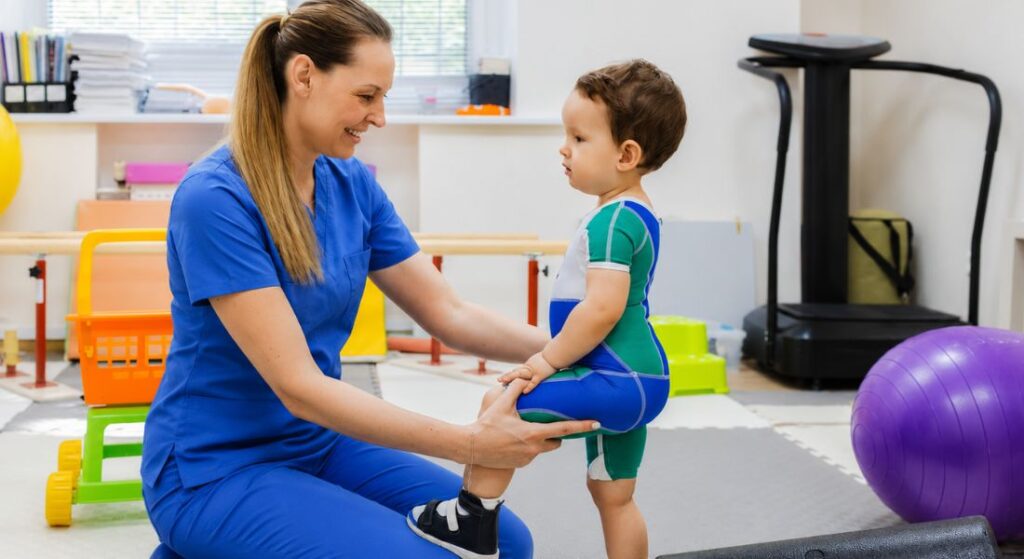
Treatment depends on why your child has hypotonia, muscle weakness or a combination of both. Once the cause is clearer, your healthcare team can recommend support that matches your child’s needs.
If no serious underlying condition is found, treatment may focus on physiotherapy, occupational therapy, posture, strength, endurance and developmental support. If your child has a neurological, neuromuscular, genetic or metabolic condition, they may need specialist monitoring, specific treatments where available, rehabilitation, feeding support, breathing support, orthotics, equipment or genetic counselling.
Although many neuromuscular conditions do not currently have a cure, treatment may help manage symptoms and improve mobility. Your child’s treatment plan should be personalised around their diagnosis, abilities, challenges and goals.
Can Hypotonia Improve?
Some children with idiopathic low muscle tone improve as they grow, build strength and receive the right support. Short warm-up activities may temporarily improve muscle activation and help some children prepare for movement, but they do not permanently change underlying muscle tone.
Progress can be gradual, and you may notice small but meaningful changes over time. Your child may develop better posture, balance, endurance and coordination, become more confident with movement, take part in play for longer or find everyday activities such as sitting, walking, climbing or dressing easier.
If your child has progressive weakness or an underlying neuromuscular condition, their progress will depend on the cause. This is why understanding why your child has hypotonia is important for planning the right support.
Can Muscle Weakness Improve?
Some types of muscle weakness can improve, especially when the underlying cause can be treated or when your child safely builds strength with the right support.
However, some causes of weakness may be longer-term or progressive and may need ongoing specialist care and monitoring. If your child’s weakness is getting worse or affecting everyday activities, it is important to seek medical advice.
The aim of assessment is to understand whether your child’s weakness is stable, improving, treatable, progressive or linked with another condition, so they can receive the right support.
What Parents Can Do at Home
You can support your child at home by encouraging safe movement, following therapy advice and creating opportunities for practice through everyday play. Some children tolerate short, regular activities better than prolonged sessions, but the duration and intensity should be adapted to your child’s diagnosis and fatigue levels.
Choose activities your child enjoys, such as swimming, ball games, safe climbing, walking, dancing, animal walks, playdough or obstacle courses, depending on their abilities and guidance from their healthcare team.
Try to avoid comparing your child with siblings or classmates. Your child may already be aware that some tasks feel harder, so focusing on effort, progress and confidence can make a real difference.
When to See a GP
You should speak to your GP or health visitor if you are worried about your child’s muscle tone, strength, posture, movement, feeding or development. Getting advice early can help you understand what is happening and whether your child needs further support.
Your GP can examine your child, review their milestones, consider possible causes and refer you to services such as paediatrics, physiotherapy, occupational therapy, neurology or child development teams if needed.
If you can, bring notes about your child’s development and videos showing movements such as sitting, walking, climbing stairs, getting up from the floor or feeding. These examples can help your clinician understand your child’s needs more clearly.
When to See a Paediatrician

A paediatrician can look at the wider picture when you are concerned about your child’s muscle tone or development. They can assess areas such as tone, strength, reflexes, feeding, breathing, growth, posture, coordination and family history.
They can help decide whether your child needs monitoring, therapy, further tests or referral to specialists such as neurology, genetics, orthopaedics, speech and language therapy or child development services.
A paediatric assessment can help you understand whether your child’s main difficulty is related to muscle tone, muscle strength or a combination of both.
When Neurology May Be Needed
You may be referred to a neurologist if your child has weakness that is sudden, getting worse, unexplained or linked with symptoms such as seizures, loss of skills, walking difficulties or possible nerve or muscle problems.
NICE recommends immediate neurological referral for sudden-onset or rapidly progressive limb or facial weakness, and urgent neurological referral for progressive limb weakness. A neurologist may use examinations, blood tests, nerve or muscle studies, imaging or genetic tests to understand the cause.
A neurology referral does not mean that your child has a serious condition. It simply means you need specialist advice to understand the pattern of symptoms and make sure your child receives the right support.
Common Myths About Hypotonia and Weakness
| Myth | Fact |
| Hypotonia and weakness mean the same thing | Hypotonia is low tone; weakness is reduced power |
| A floppy child is always weak | Some children with low tone have reasonable strength |
| A strong-looking child cannot have low tone | Some children compensate well but struggle with posture and endurance |
| Delayed walking always means serious disease | There are many causes, but delayed milestones should be assessed |
| Weakness will always be obvious | Mild or progressive weakness may show first during stairs, running or getting up |
| Therapy is only relevant for severe problems | Early assessment can identify whether targeted therapy or practical support may improve function, comfort or participation |
| Children with hypotonia are lazy | They may be using more effort than other children to move and sit upright |
| Gradually developing symptoms do not need assessment | Persistent weakness, developmental delay or loss of skills still needs medical review |
Understanding the difference can help parents ask better questions and seek the right support.
Key Takeaways
- Hypotonia means reduced muscle tone; weakness means reduced muscle force.
- A child may have hypotonia without significant weakness, weakness without obvious hypotonia, or both.
- Flexible joints, flat feet, fatigue and poor posture are not diagnostic by themselves.
- Floppiness with feeding or breathing problems needs urgent paediatric assessment.
- Sudden floppiness or rapidly progressive limb or facial weakness needs immediate assessment.
- Progressive weakness requires urgent neurological assessment.
- Loss of previously acquired skills always needs medical review.
- Tests and therapy should be selected according to the suspected cause.
- Generic strengthening is not appropriate for every child with unexplained weakness.
Frequently Asked Questions:
1. What is the difference between hypotonia and muscle weakness in children?
Hypotonia means reduced muscle tone, which affects the background tension that helps a child maintain posture and control movement. Muscle weakness means reduced muscle power, meaning the muscles cannot generate enough force. A child can have hypotonia without weakness, weakness without obvious hypotonia, or both together.
2. Can a child with hypotonia have relatively preserved muscle strength?
Yes. Some children with hypotonia have reasonable muscle strength but struggle with posture, balance, coordination or endurance. They may appear floppy or tire easily because their muscles need to work harder to maintain positions.
3. What are the signs of muscle weakness in a child?
Signs of weakness may include difficulty lifting the head, pushing up from the floor, climbing stairs, running, jumping, gripping objects, feeding, chewing or swallowing. Progressive weakness, loss of skills or weakness affecting breathing should be assessed promptly.
4. How can doctors tell the difference between hypotonia and weakness?
Doctors assess both muscle tone and muscle strength during a physical examination. They may look at how your child moves against gravity, check posture, reflexes, joint flexibility and observe activities such as walking, climbing, standing or reaching.
5. Can a child have both hypotonia and muscle weakness?
Yes. Some children have both low muscle tone and reduced muscle power. When hypotonia is combined with weakness, feeding difficulties, breathing problems or loss of skills, doctors may investigate more urgently for neurological, muscular or neuromuscular causes.
6. Does hypotonia always mean my child has a serious condition?
No. Some children with mild, non-progressive hypotonia make good functional progress over time. However, assessment remains important because low tone can also be associated with neurological, genetic, metabolic or muscular conditions.
7. What causes muscle weakness in children?
Muscle weakness can result from problems affecting the muscles, nerves, the connection between nerves and muscles, the spinal cord, the brain or certain metabolic conditions. The cause can vary widely, which is why specialist assessment may be needed.
8. When should I worry about weakness rather than low muscle tone?
You should seek medical advice if your child has worsening weakness, difficulty lifting their head, trouble climbing stairs, frequent falls, loss of previously gained skills, feeding problems, breathing difficulties or a sudden change in movement ability.
9. Can physiotherapy help children with hypotonia or muscle weakness?
A physiotherapy assessment may be useful for children with hypotonia, weakness or both. The goals and safety considerations depend on the underlying cause and may include posture, functional movement, mobility, endurance, fatigue management or preserving joint range.
10. When should my child see a paediatrician for hypotonia or weakness?
A paediatrician can help if your child has delayed milestones, unusual floppiness, poor posture, fatigue, movement difficulties, feeding concerns or possible weakness. They can assess whether your child needs monitoring, therapy, further tests or referral to specialists such as neurology or genetics. Seek immediate help if weakness develops suddenly, worsens rapidly, affects breathing or is accompanied by reduced alertness.
Final Thoughts: Understanding the Difference Helps You Get the Right Support
Hypotonia and muscle weakness can appear similar, but understanding the difference helps ensure your child receives the right assessment and support. While some children with low muscle tone may improve with time and therapy, muscle weakness, particularly when progressive or affecting feeding or breathing, may need more detailed investigation to identify the underlying cause. Early recognition, specialist assessment and personalised support can help your child develop confidence, independence and better movement skills. If you are considering support from a paediatrician for hypotonia in children, get in touch with us at London Paediatric Clinic.
References:
- National Institute for Health and Care Excellence (NICE) (2019, updated 2023) Suspected neurological conditions: recognition and referral. NICE guideline NG127. London: NICE. Available at: https://www.nice.org.uk/guidance/ng127/chapter/recommendations-for-children-aged-under-16
- NHS Tayside (2025) Assessment and investigation of the floppy infant. Right Decisions. Available at: https://www.rightdecisions.scot.nhs.uk/nhs-tayside-paediatrics-pathways/general-paediatrics/assessment-and-investigation-of-the-floppy-infant/
- De Santos-Moreno, M.G., Velandrino-Nicolás, A.P. and Gómez-Conesa, A. (2023) ‘Hypotonia: Is it a clear term and an objective diagnosis? An exploratory systematic review’, Pediatric Neurology, 138, pp. 107–117. Available at: https://www.sciencedirect.com/science/article/pii/S0887899422002314
- Morton, S.U. et al. (2022) ‘Multicenter consensus approach to evaluation of neonatal hypotonia in the genomic era: a review’, JAMA Neurology, 79(4), pp. 405–413. Available at: https://pmc.ncbi.nlm.nih.gov/articles/PMC10134401/
- Paleg, G.S., Hidalgo Robles, Á., Govender, P. and Livingstone, R.W. (2025) ‘Occupational and physical therapy interventions for young children with developmental central hypotonia: an overview of systematic reviews’, Disabilities, 5(1), Article 14. Available at: https://www.mdpi.com/2673-7272/5/1/14