




A healthy diet for children does not have to be perfect, expensive, or complicated. You can support your child’s growth, energy, development, immunity, concentration, digestion, and overall wellbeing by offering a variety of nutritious foods over time rather than aiming for perfect meals every day.
It is natural to wonder whether your child is eating well enough, especially if they are a fussy eater, avoid vegetables, prefer snacks, drink a lot of milk, refuse protein foods, or compare their lunchbox with friends at school. These situations are common and do not always mean there is a nutritional problem.
One difficult meal, a phase of eating only a few favourite foods, or a day of poor appetite does not usually define your child’s nutrition. What matters most is the overall pattern of eating across days and weeks, rather than what happens at a single meal.
Every child is different, and healthy eating is about building consistent habits rather than following strict rules. By making small, realistic changes and offering a balanced variety of foods, you can help your child develop a positive relationship with food that supports healthy growth over time.
What Does a Healthy Diet Mean for Children?
A healthy diet for children is about providing a balance of foods that support growth, development, and everyday energy. You do not need to create perfect meals, but offering a variety of nutritious foods throughout the week can help your child get the nutrients they need.
Your child needs carbohydrates for energy, protein for growth and repair, healthy fats for development, and vitamins and minerals to support healthy bones, the immune system, brain function, and many other body processes. Including foods from the main food groups is the best way to provide this balance.
A healthy diet does not mean your child can never enjoy treats. You can aim to make nutritious foods the everyday choice, while keeping sweets, crisps, cakes, biscuits, sugary drinks, and highly processed snacks as occasional treats rather than a regular part of their diet.
Children Are Not Small Adults
Children are not simply smaller versions of adults, and their nutritional needs change as they grow. You may notice your child’s appetite, energy needs, and eating habits change from one stage of development to the next.
Babies, toddlers, school-aged children, and teenagers all need slightly different approaches to healthy eating. After the age of two, your child should gradually move towards eating the same foods as the rest of the family in the proportions shown in the Eatwell Guide. Portions should still reflect their age, appetite, growth and activity level.
If your child has a medical condition, a food allergy, feeding difficulties, faltering growth, or a very restricted diet, they may need more personalised advice. You should speak to a healthcare professional to make sure their diet is safe, balanced, and suitable for their individual needs.
Evidence Note
The Eatwell Guide does not apply to children under two because their energy and nutritional needs are different. After age two, children should gradually move towards eating the same family foods in the proportions shown in the guide, while continuing to receive child-sized portions.
The Main Food Groups Children Need
A balanced diet is easier to plan when you think about food groups instead of individual nutrients. You can support your child’s health by offering a variety of foods across the day rather than aiming for perfection at every meal.
Your child will usually benefit from eating fruit and vegetables, starchy carbohydrates, protein foods, dairy or fortified alternatives, and small amounts of healthy fats. Their nutritional needs will change as they grow, so the balance of foods may look different at different ages.
You do not need to include every food group in exactly the right amount at every meal. Your child may eat more protein at breakfast, more carbohydrates at lunch, and more vegetables at dinner, and it is the overall pattern across the week that matters most.
A Healthy Plate at a Glance
| Food Group | What It Provides | Examples |
| Fruit and vegetables | Vitamins, minerals, fibre and variety | Apples, berries, carrots, peas, peppers, broccoli, tomatoes |
| Starchy carbohydrates | Energy, fibre and B vitamins | Potatoes, rice, pasta, bread, chapatti, oats, cereals |
| Protein foods | Growth, muscle repair, iron and zinc | Eggs, fish, chicken, meat, lentils, beans, tofu, chickpeas |
| Dairy or suitable alternatives | Calcium and protein; iodine and vitamins where the product is appropriately fortified | Milk, yoghurt, cheese and age-appropriate unsweetened fortified plant-based drinks |
| Healthy fats | Energy and fat-soluble vitamins | Oily fish, avocado, olive oil, nut butters where safe |
| Drinks | Hydration | Water and milk are usually best everyday choices |
Check plant-based drink labels because calcium, iodine, protein, vitamin D and energy content can vary. Fortified soya drinks often provide more protein than many oat or almond drinks, but nutritional content differs between brands.
Fruit and Vegetables

Fruit and vegetables provide vitamins, minerals, fibre, and many other nutrients that support your child’s health. You can also help your child become familiar with different colours, flavours, and textures by offering a variety of fruit and vegetables regularly.
For younger children, portions are naturally smaller than those for adults. A few cucumber sticks, a small satsuma, a spoonful of peas, or a handful of berries can all contribute to a balanced diet, and you can try including fruit or vegetables with each meal where possible.
If your child refuses vegetables, try not to worry or put pressure on them to eat. You can continue offering small amounts alongside familiar foods, as repeated exposure often helps children become more willing to try new foods over time.
Starchy Carbohydrates
Starchy carbohydrates are an important source of energy and should be included in your child’s daily diet. You can choose foods such as bread, rice, pasta, potatoes, oats, breakfast cereals, couscous, chapatti, noodles, yams, and other starchy foods to help support healthy growth and activity.
As your child gets older, you can gradually include more wholegrain options such as wholemeal bread, brown rice, oats, wholegrain cereals, and potatoes with their skins. For children under two, however, it is best not to rely only on wholegrain foods because their small stomachs need enough energy from a range of foods.
Offering different starchy foods throughout the week is a simple way to provide variety while meeting your child’s energy needs. You do not need to serve the same foods every day, as a balanced mix of options can support healthy eating habits over time.
Protein Foods
Protein is essential for your child’s growth, muscle repair, immune system, and many other important body functions. You can provide protein through a variety of foods, including meat, fish, eggs, beans, lentils, chickpeas, tofu, hummus, soya mince, dairy foods, nuts, and seeds where they are safe and suitable for your child’s age.
You do not need to serve meat at every meal to meet your child’s protein needs. Simple meals such as beans on toast, lentil soup, eggs, yoghurt, tofu stir-fry, hummus, dhal, chickpea curry, or fish can all provide valuable protein as part of a balanced diet.
Smooth nut butter or finely ground nuts may be offered in an age-appropriate form once safely introduced. Seek individual advice if your child has a suspected food allergy, significant eczema or a previous reaction.
Fish and Oily Fish
Fish can be a nutritious part of your child’s diet, as it provides protein, iodine, and other important nutrients. Oily fish, such as salmon, mackerel, and sardines, also contains omega-3 fats that support healthy growth and development.
You can aim to include at least one age-appropriate portion of oily fish each week. Boys should have no more than four portions of oily fish a week, while girls should have no more than two. Offering a variety of different foods across the week can also help your child receive a wide range of nutrients.
If your child does not eat fish, there is no need to worry. You can still provide a balanced diet by including other sources of protein, iron, iodine, and healthy fats, and if your child has a fish allergy or a strong dislike of fish, a paediatric dietitian can help you choose suitable alternatives.
Dairy and Fortified Alternatives
Dairy foods provide calcium, protein, and other important nutrients that support your child’s bones, teeth, and healthy growth. You can include foods such as milk, cheese, yoghurt, or fromage frais as part of a balanced diet to help meet these nutritional needs.
If your child does not have dairy, you can choose suitable calcium-fortified alternatives, such as unsweetened soya, almond, or oat drinks from the age of one. Rice drinks are not recommended for children under five, and younger children or those with allergies, restricted diets, or poor weight gain may need more individual guidance.
If your child has a cow’s milk allergy or intolerance, it is best to speak to your GP, health visitor, or a dietitian before changing their milk choices. This can help ensure your child continues to receive the nutrients they need while following a safe and balanced diet.
Why Children Need Dietary Fat
Fat is an important part of your child’s diet, particularly during the early years. It provides energy and helps the body absorb certain vitamins, so very low-fat diets are not suitable for babies and young toddlers unless a healthcare professional advises otherwise.
Full-fat cheese, yoghurt and fromage frais are recommended until age two. After age two, lower-fat dairy products may be introduced if your child is eating well and growing appropriately. Skimmed and 1% milk should not be used as a main drink before age five because they do not provide enough energy.
The aim is not to remove fat from your child’s meals but to choose healthier sources more often. You can include foods such as oily fish, olive oil, rapeseed oil, avocado, nut butters where appropriate, seeds, and suitable spreads, while limiting fried foods and those high in saturated fat.
What Should Children Drink?
Water and milk are usually the best everyday drinks for your child because they support hydration and healthy growth without adding unnecessary sugar. Babies under 12 months do not need juice or smoothies. If you choose to offer these drinks before age five, dilute one part juice with ten parts water and serve them only with a meal. From age five, limit undiluted juice and smoothies to a combined total of 150 ml daily and serve them with food.
If your child regularly drinks juice, squash, or fizzy drinks, you do not need to stop them all at once. You may find it easier to reduce them gradually while encouraging more water or unsweetened milk as everyday choices.
Sugar and Children’s Diets
Children do not need added sugar to stay healthy, although it is perfectly normal for them to enjoy sweet foods. You do not need to ban treats completely, but it is best not to make sugary foods and drinks part of your child’s everyday routine.
You can help protect your child’s teeth by keeping added sugar to a minimum and offering sweet foods with meals rather than as snacks. Choosing water or milk instead of sugary drinks and avoiding sweet foods before bedtime are also simple habits that can support better oral health.
An occasional slice of birthday cake or a pudding is absolutely fine as part of a balanced diet. The aim is to keep sweets, chocolate, biscuits, sugary yoghurts, juice drinks, and fizzy drinks as occasional treats rather than foods your child eats or drinks throughout the day.
Salt and Children’s Diets
Children do not need added salt in their meals, as most foods already contain enough. You can help your child develop healthier eating habits by avoiding extra salt during cooking or at the table.
Many processed foods, sauces, crisps, takeaways, processed meats, and ready meals are already high in salt. Choosing these foods less often can help reduce your child’s overall salt intake and encourage a preference for less salty foods.
You can add flavour to family meals with herbs, garlic, lemon, mild spices, or tomato-based sauces instead of relying on salt. Making these small changes benefits the whole family, and there is usually no need to prepare separate meals for your child.
Healthy Snacks for Children
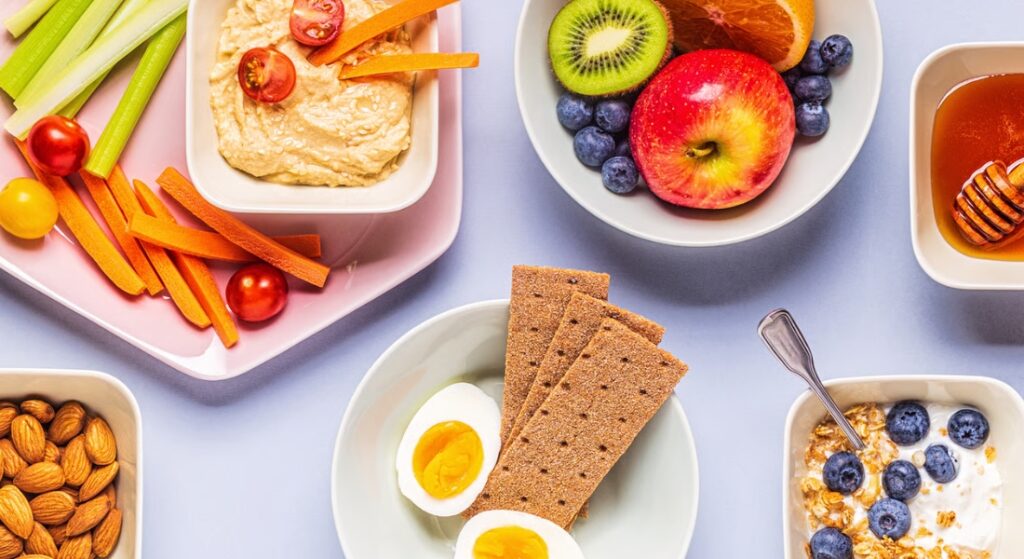
Babies under one do not normally need snacks between their milk feeds and meals. From around 12 months, many toddlers benefit from three meals and up to two healthy snacks each day. Older children’s snack needs vary according to their age, appetite and activity level.
You can offer snacks such as fruit, yoghurt, cheese, toast, oatcakes, hummus with pitta, vegetable sticks, a boiled egg, small sandwiches, homemade muffins with less sugar, or unsalted crackers. Choosing water or milk instead of sugary or fizzy drinks is also a simple way to support healthier eating habits.
If your child is under five, avoid giving whole nuts because they can be a choking hazard. Smooth nut butter may be offered in an age-appropriate form once it has been safely introduced. Seek individual advice if your child has a suspected food allergy, significant eczema or a previous reaction.
Healthy Meals by Age
A healthy diet changes as your child grows, and their nutritional needs will not stay the same at every age. You can support healthy development by adapting meals to match your child’s stage of growth.
Babies need breast milk or formula before gradually moving on to solid foods from around six months, while toddlers benefit from small, frequent meals that provide enough energy and healthy fats. As your child reaches school age, balanced meals help support learning, growth, and daily activity, and teenagers often need more energy during growth spurts, with particular attention to nutrients such as iron, calcium, and vitamin D.
Although nutritional needs change over time, the basic principles of healthy eating remain the same. You can focus on offering a variety of nutritious foods, while adjusting portion sizes and food choices to suit your child’s age, appetite, and stage of development.
Babies Starting Solids
Healthy eating starts early, and introducing a variety of tastes and textures can help your baby develop good eating habits. When your baby is developmentally ready, usually from around six months, you can begin offering a range of suitable foods.
You can introduce vegetables, fruit, starchy foods, protein foods and suitable dairy foods while continuing breast milk or first infant formula alongside an increasing variety of solid foods. First infant formula is the only suitable alternative to breast milk as a main drink during the first 12 months.
When preparing meals, avoid adding salt or sugar to your baby’s food or cooking water. Your baby may not accept every new food straight away, but offering different foods regularly and without pressure can help them become familiar with new flavours over time.
Toddlers and Young Children
Toddlers can be very unpredictable when it comes to eating, and this is often a normal part of development. You may find your child eats a large breakfast but very little at dinner, or happily eats a favourite food one week before refusing it the next.
You can support healthy eating by offering regular meals and snacks that include fruit and vegetables, starchy foods, milk or other dairy foods, and sources of protein such as beans, pulses, eggs, fish, tofu, or meat. A balanced approach helps provide the nutrients your child needs for healthy growth and development.
Try not to turn every mealtime into a struggle, as this can make eating more stressful for both of you. Your child may need to see and try a new food several times before accepting it, so staying patient and consistent is often the best approach.
School-Aged Children
School-aged children need balanced meals to support their learning, energy levels, and healthy growth. You can help by offering regular meals and snacks that include a variety of nutritious foods throughout the day.
Breakfast can help some children stay focused, particularly if they become hungry before lunchtime. You can also aim to pack a balanced lunch with a starchy food, a source of protein, fruit or vegetables, and a drink, while dinner is a good opportunity for the family to enjoy the same meal together.
After age two, children should gradually move towards the proportions shown in the Eatwell Guide. School-aged children can follow this overall pattern while continuing to receive child-sized portions that reflect their growth, appetite and activity level.
Teenagers
Teenagers often have bigger appetites during growth spurts, and this is usually a normal part of development. You may also notice changes in eating habits as your teenager becomes more independent and starts making more of their own food choices.
Your teenager may skip meals, eat more food away from home, try popular diets, use protein products, or avoid certain foods. You can encourage a balanced diet by including regular meals, protein, starchy carbohydrates, fruit and vegetables, calcium-rich foods, iron-rich foods, and plenty of fluids. Teenage girls who have periods may also need extra attention to their iron intake.
If your teenager avoids dairy, meat, or other animal products, careful meal planning can help provide enough calcium, vitamin D, iron, vitamin B12, and iodine. If you notice ongoing weight loss, frequent meal skipping, excessive exercise, very restricted eating, or anxiety around food, it is important to seek professional advice.
Meal Balance at a Glance
| Age Group | Meal Pattern to Aim For | Practical Example |
| Baby on solids | Small tastes from several food groups alongside milk feeds | Mashed lentils, soft vegetables, yoghurt, soft fruit |
| Toddler | Small regular meals and snacks with enough energy | Pasta with tomato sauce and cheese, peas, fruit |
| Preschool child | Family foods in smaller portions | Rice, chicken or tofu, vegetables, yoghurt |
| School-aged child | Balanced meals for energy and learning | Sandwich with egg or hummus, fruit, milk or water |
| Teenager | Larger balanced meals, especially during growth | Jacket potato with beans, salad, yoghurt, fruit |
| Fussy eater | Accepted food plus one small exposure food | Toasted sandwich plus cucumber sticks on the side |
| Vegan child | Planned meals with fortified foods and supplements where needed | Lentil dhal, rice, fortified yoghurt alternative, fruit |
Portion Sizes: How Much Should Children Eat?
There is no single perfect portion size for every child, as appetite naturally varies. How much your child eats can depend on their age, growth, activity level, sleep, health, and stage of development, so it is normal for their appetite to change from day to day.
A simple approach is to offer a small portion first and let your child ask for more if they are still hungry. Smaller portions often feel less overwhelming, especially for younger children, and can help reduce food waste.
Rather than focusing on how much is left on the plate, look at your child’s growth, energy levels, bowel habits, and the variety of foods they eat over time. If you notice your child is losing weight, dropping growth centiles, or eating very little on most days, it is important to seek professional advice.
Clinical Tip
If you are concerned about your child’s diet, record five to seven days of meals, snacks, milk and other drinks. Bring the diary with your child’s red book or growth records to the appointment. Include any feeding behaviours, digestive symptoms and supplements.
Food Variety Matters More Than Food Perfection

It is easy to worry about one unhealthy meal, but your child’s nutrition is shaped by what they eat over time rather than in a single day. Looking at the bigger picture is often more helpful than focusing on every mouthful.
You might notice your child refuses vegetables at lunch but eats fruit at breakfast and peas with dinner. They may avoid meat but happily eat eggs, beans, or yoghurt, or they may dislike milk while enjoying cheese, yoghurt, or fortified alternatives. A varied diet can still provide the nutrients they need.
Instead of judging one meal, try looking at your child’s eating habits across the week. You can ask yourself whether they are eating some fruit and vegetables, starchy foods, protein, calcium-rich foods, mostly drinking water or milk, having sweets and crisps only occasionally, and continuing to grow and develop well.
Research Insight
Systematic reviews have found associations between healthier dietary patterns and lower body fat, waist circumference, blood pressure and metabolic risk in children and adolescents. Research involving schoolchildren has also linked dietary patterns with factors such as meal skipping, screen time, nutritional status and family eating habits. However, much of this evidence is observational, so it cannot prove that one individual factor directly causes a particular health outcome.
Common Myths About Healthy Diets for Children
| Myth | Fact |
| A healthy diet means no treats | Occasional treats can fit into an overall balanced pattern |
| Children must finish everything on their plate | Pressuring children can make mealtimes stressful |
| Toddlers should eat like adults | Children under 2 have different nutritional needs |
| Wholegrain everything is best for toddlers | Under-2s should not have only wholegrain starchy foods |
| Fat is always unhealthy | Young children need enough fat and energy for growth |
| Juice is as good as whole fruit | Whole fruit is better; juice should be limited |
| Vegan diets are automatically unhealthy | They can be healthy when well planned, but key nutrients need attention |
| Fussy eating always means deficiency | Many fussy eaters grow well, but severe restriction needs review |
| Supplements can replace healthy meals | Supplements may help specific gaps but do not replace a balanced diet |
| A child who is a normal weight must have perfect nutrition | Weight is only one part of nutritional health |
Fussy Eating
Fussy eating is very common during childhood, and many children go through phases of refusing certain foods. You may notice your child prefers familiar foods, dislikes mixed textures, or is hesitant to try anything new.
You can support your child by continuing to offer a variety of foods without putting pressure on them to eat. It often takes several attempts before a child feels comfortable trying a new food, so patience and consistency are important.
Eating together as a family can also encourage your child to become more open to different foods, as children often learn by watching others. Try to avoid forcing, bribing, or making dessert a reward for eating vegetables, as these approaches can create unnecessary stress around mealtimes.
Practical Ways to Support a Fussy Eater
Supporting a fussy eater takes time, so try to keep mealtimes calm and predictable. You can offer one food your child already enjoys alongside a very small portion of a less familiar food, making the meal feel less overwhelming.
You can encourage your child to explore new foods by letting them touch, smell, or even lick them before taking a bite. Eating together as a family, avoiding pressure or criticism, and involving your child in simple tasks such as shopping, washing vegetables, stirring ingredients, choosing fruit, or setting the table can also help build confidence around food.
The NHS Healthier Families guidance also encourages involving children in preparing snacks, as this can make them more interested in trying different foods. If your child’s diet remains extremely limited or continues to become more restricted, it is important to seek professional advice rather than hoping they will simply grow out of it.
Vegetarian and Vegan Diets
Vegetarian and vegan diets can support healthy growth when they are planned carefully. If your child follows one of these diets, it is important to make sure they receive all the nutrients needed for healthy development, especially during the early years.
A vegan diet requires a dependable source of vitamin B12 through fortified foods, an appropriate supplement or both. Vitamin D, iodine, selenium, calcium, iron, zinc, omega-3 fats, protein and total energy intake may also need careful planning.
If you are unsure whether your child’s diet is meeting their nutritional needs, it is a good idea to seek professional advice. A paediatric dietitian can help you plan a balanced vegan diet, particularly if your child is under five, has growth concerns, or also has food allergies or very restricted eating.
Allergy-Restricted Diets
If your child has a food allergy, they may need to avoid certain foods, but removing whole food groups can affect their nutrition. A balanced diet is still possible, although it may require a little more planning.
For example, if your child cannot have dairy, they may need other sources of calcium, protein, iodine, and vitamin D. Children who avoid eggs, wheat, nuts, or several foods may also benefit from a more personalised nutrition plan, and it is sensible to speak to your GP or health visitor before introducing milk alternatives.
You should not remove major food groups for the long term without a clear medical reason and suitable alternatives. If your child has multiple allergies, poor growth, or anxiety around eating, a paediatric dietitian can help you provide a diet that is both safe and nutritionally complete.
Growth Provides Important Information
Your child’s growth pattern provides useful information about their overall energy and nutritional intake. However, normal growth does not rule out every vitamin or mineral deficiency, particularly when your child has a restricted diet or relevant symptoms.
If you notice your child is not gaining weight as expected, is losing weight, dropping centiles, growing more slowly in height, or has an ongoing poor appetite, it is important to seek a professional assessment. These changes should be assessed rather than monitored at home for long periods.
When there are concerns about faltering growth, healthcare professionals will usually assess your child’s health, development, feeding habits, and family circumstances before deciding whether further investigations are needed. You should avoid giving supplements or high-calorie drinks without professional advice, as the underlying cause needs to be identified first.
Healthy Diet and Weight
A healthy diet is about supporting your child’s growth and overall health, not achieving a particular body shape. Every child grows differently, and it is normal for body size, appetite, and growth patterns to vary.
If you are concerned about your child’s weight, try to avoid negative comments about their body or appearance. You can instead focus on building healthy family habits, including regular physical activity and balanced meals, while limiting foods and drinks that are high in sugar or fat.
If your child is underweight, overweight, or gaining weight more quickly than expected, it is a good idea to seek professional advice. Your GP, health visitor, paediatrician, or dietitian can assess your child’s growth and provide guidance that is tailored to their individual needs.
A Balanced Day of Eating
A balanced day of eating does not need to be complicated or perfectly planned. You can focus on offering a variety of nutritious foods across the day, rather than trying to make every meal look perfect.
For a school-aged child, you might offer porridge with milk and berries for breakfast, followed by a banana or yoghurt as a snack. You could then pack a lunchbox with a cheese, egg, tuna, chicken, hummus or bean sandwich, cucumber and fruit, before serving a dinner with rice, pasta, potatoes or chapatti, a protein such as lentils, chicken, fish, eggs or tofu, and vegetables. Milk or water during the day and fruit or yoghurt if your child is still hungry can also be included.
If you have a toddler, you may need to offer smaller portions and more frequent snacks throughout the day. Full-fat dairy may still be suitable depending on your child’s age, and this example should be used as a guide rather than a strict rule.
Healthy Lunchbox Ideas

Packing a healthy lunchbox can sometimes feel challenging, especially if your child’s school has nut-free rules or they are reluctant to try different foods. You can make things easier by keeping the meals simple and including a variety of familiar foods.
You can build a balanced lunchbox by adding a starchy food, a source of protein, a fruit or vegetable, a dairy food or fortified alternative, and water. Good options include an egg sandwich with cucumber sticks, yoghurt and fruit, a hummus pitta with carrot sticks, cheese and apple slices, or a chicken wrap with sweetcorn, yoghurt and berries.
You could also pack pasta salad with tuna or beans, chapatti with paneer, lentils or chicken, or rice and beans with vegetable sticks and yoghurt. If your child regularly brings food home, you may find the portion was too large, there was not enough time to eat, or the texture or choice of food was not appealing that day.
Healthy Snacks at a Glance
| Snack | Why It Can Help |
| Fruit with yoghurt | Fibre, calcium and protein |
| Toast with peanut butter, where safe | Energy, protein and healthy fats |
| Cheese and crackers | Calcium, protein and starchy carbohydrate |
| Hummus with pitta | Protein, fibre and energy |
| Boiled egg | Protein and micronutrients |
| Oatcakes with cream cheese | Energy and calcium |
| Vegetable sticks with dip | Exposure to vegetables and texture |
| Plain yoghurt with fruit | Protein, calcium and fruit variety |
| Beans on toast | Protein, fibre and iron |
| Porridge fingers or a lower-sugar oat bar | Starchy carbohydrate and energy |
What About Treats?
Treats can be part of a healthy diet, and there is no need to avoid them completely. A biscuit, an ice cream, or a party treat now and then is not usually a cause for concern.
The bigger issue is when foods that are high in sugar, salt, or fat become your child’s everyday snacks and drinks. Offering a good balance of nutritious foods most of the time helps create healthy eating habits without making treats feel off limits.
Try not to describe foods as “good” or “bad”, as this can create unnecessary guilt around eating. Instead, you can talk about “everyday foods” and “sometimes foods”, while setting a calm and positive example that helps your child build a healthy relationship with food.
Healthy Eating on a Budget
Eating well does not have to be expensive, and you do not need to buy costly “superfoods” to give your child a healthy diet. With a little planning, you can provide nutritious meals while staying within your budget.
You can choose affordable foods such as oats, potatoes, rice, pasta, lentils, beans, eggs, frozen vegetables, tinned tomatoes, tinned fish, plain yoghurt, seasonal fruit, wholemeal bread, and fortified cereals. Frozen vegetables and canned fruit in juice are also good options, and it is helpful to rinse canned beans or vegetables if they are stored in salted water.
You can prepare simple meals such as dhal with rice, beans on toast, a vegetable omelette, lentil soup, tuna pasta, jacket potatoes, porridge, or yoghurt with fruit. Choosing these nutritious meals regularly is much more important than spending money on expensive ingredients.
When Supplements Are Needed
A healthy diet should always come first, but some children may benefit from supplements. Breastfed babies should receive 8.5 to 10 micrograms of vitamin D daily from birth. Children aged six months to five years are generally advised to receive daily supplements containing vitamins A, C and D. Babies drinking more than 500 ml of infant formula daily usually do not need additional vitamin drops because formula is already fortified. Children aged one to four should receive 10 micrograms of vitamin D daily.
Some children may also need supplements if they follow a vegan diet, have a confirmed nutrient deficiency, experience faltering growth, eat a very restricted diet, or have certain medical conditions. The right supplement depends on your child’s individual nutritional needs.
It is important to remember that supplements are not a substitute for a balanced diet. If you are unsure what your child needs, speak to your GP, pharmacist, health visitor, or a paediatric dietitian for personalised advice. Check supplement labels before combining products. Vitamin drops, multivitamins and cod liver oil may contain overlapping vitamins, particularly vitamins A and D.
When to Seek Professional Advice
Seek advice if your child’s food range is becoming progressively narrower, they avoid entire food groups, regularly gag or vomit with textures, have difficulty chewing or swallowing, experience intense distress around food or show concerns about growth or weight.
You should also arrange an assessment if your child has food allergies, suspected coeliac disease, delayed development, or anxiety around eating. These concerns can affect both nutrition and overall wellbeing, so early support can make a positive difference.
It is also a good idea to seek advice if your child follows a vegan diet, avoids whole food groups, or drinks large amounts of milk instead of eating balanced meals. Ongoing stress or distress at mealtimes should not be ignored, as it may need further assessment and support.
When Nutrition Concerns Need Urgent Help
Contact NHS 111 or seek urgent medical advice if your child becomes unusually drowsy, stops drinking or breastfeeding, cannot keep fluids down, passes significantly less urine or has fewer wet nappies, has few or no tears, or shows other signs of dehydration. Seek prompt medical advice if your child has blood in their stool, particularly when this is accompanied by pain, diarrhoea, vomiting, fever or worsening illness.
Call 999 or attend A&E if your child has serious breathing difficulty, becomes unresponsive, collapses, is difficult to wake or develops signs of a severe allergic reaction. Do not attempt to manage serious or rapidly worsening symptoms with vitamins, protein powders or nutritional drinks at home.
Key Takeaways
- A healthy diet is based on balance and variety across days and weeks.
- The Eatwell Guide does not apply to children under two.
- After age two, children should gradually move towards the family diet in Eatwell Guide proportions.
- Babies under one do not normally need snacks.
- Water and milk are usually the best everyday drinks.
- Whole nuts are unsuitable for children under five because of choking risk.
- Rice drinks should not be given to children under five.
- Normal growth does not exclude every micronutrient deficiency.
- Vegan and allergy-restricted diets require careful planning.
- Supplements should follow UK age-specific guidance and should not replace food.
- Progressive dietary restriction, swallowing difficulty or faltering growth requires assessment.
- Serious breathing difficulty, reduced responsiveness or severe allergic reactions require emergency care.
Frequently Asked Questions
1. What is the healthiest diet for a child?
A healthy diet for children includes a balance of fruit and vegetables, starchy carbohydrates, protein foods, dairy or fortified alternatives, healthy fats, and plenty of water. Most meals do not need to be perfect, as overall eating patterns across the week are more important than individual meals.
2. How many meals should children eat each day?
Meal patterns depend on age. Babies under one do not normally need snacks. From around 12 months, many children have three meals and up to two healthy snacks, while older children’s needs vary according to appetite and activity.
3. How can I encourage my child to eat more fruit and vegetables?
Offer a variety of fruit and vegetables regularly without pressure, include them in family meals, and allow your child to explore new foods at their own pace. A child may need repeated, pressure-free opportunities to become familiar with a new food.
4. What should children drink every day?
Water and milk are usually the best everyday drinks. Babies under one do not need juice or smoothies. If these drinks are offered before age five, dilute one part juice with ten parts water and serve them only with a meal. From age five, limit undiluted juice and smoothies to a combined total of 150 ml daily.
5. Is it normal for toddlers to be fussy eaters?
Fussy eating is common in toddlers. Seek advice if the food range becomes progressively narrower, entire food groups are avoided, mealtimes cause intense distress or there are concerns about chewing, swallowing, weight or growth.
6. Can a child have a healthy vegetarian or vegan diet?
Yes. Vegetarian and vegan diets can support healthy growth when they are carefully planned. Children following these diets may need fortified foods or supplements, particularly for nutrients such as vitamin B12, vitamin D, calcium, iodine and iron.
7. Should children take vitamin supplements?
UK guidance recommends vitamin D from birth for breastfed babies and daily vitamins A, C and D from six months to five years, except when a baby drinks more than 500 ml of infant formula daily. Other supplements should address an identified dietary or medical need. Check labels carefully and avoid combining products that contain the same vitamins unless a healthcare professional has reviewed the total dose.
8. How do I know if my child is eating enough?
Growth, energy and development provide useful information about overall intake, but they do not rule out every nutritional deficiency. Arrange an assessment if your child loses weight, drops growth centiles, has a persistently poor appetite or follows a highly restricted diet.
9. Are treats allowed in a healthy diet?
Yes. Occasional treats such as cakes, biscuits or sweets can be part of a healthy diet when they are enjoyed in moderation. The focus should be on making nutritious foods the everyday choice rather than banning treats completely.
10. When should I seek medical advice about my child’s diet?
Arrange a routine assessment if your child has poor growth, significant weight loss, persistent feeding difficulties, restricted eating, ongoing vomiting or diarrhoea, swallowing problems or multiple food allergies. Contact NHS 111 or seek urgent advice if your child becomes unusually drowsy, cannot keep fluids down, has significantly fewer wet nappies or urine, or has few or no tears. Call 999 or attend A&E if your child has serious breathing difficulty, becomes unresponsive, collapses, is difficult to wake or develops a severe allergic reaction.
Final Thoughts: Building Healthy Eating Habits That Last
A healthy diet for children is based on balance, variety and age-appropriate foods rather than perfection at every meal. Offering regular meals and snacks, allowing your child to respond to their appetite and keeping mealtimes calm can support healthy growth and a positive relationship with food.
If you are concerned about your child’s growth, restricted eating, food allergies, swallowing, nutritional intake or feeding behaviour, London Paediatric Clinic can provide a paediatric assessment and advise whether dietetic support, further investigation or another specialist referral may be appropriate.
References:
- NHS (2022) The Eatwell Guide. Last reviewed 29 November 2022. Available at: https://www.nhs.uk/live-well/eat-well/food-guidelines-and-food-labels/the-eatwell-guide/
- NHS (2022) Drinks and cups for babies and young children. Last reviewed 5 October 2022. Available at: https://www.nhs.uk/baby/weaning-and-feeding/drinks-and-cups-for-babies-and-young-children/
- NHS (2023) What to feed young children. Last reviewed 28 March 2023. Available at: https://www.nhs.uk/baby/weaning-and-feeding/what-to-feed-young-children/
- NHS (2026) Young children and food: common questions. Last reviewed 28 April 2026. Available at: https://www.nhs.uk/baby/weaning-and-feeding/young-children-and-food-common-questions/
- NHS (2026) Foods to avoid giving babies and young children. Available at: https://www.nhs.uk/baby/weaning-and-feeding/foods-to-avoid-giving-babies-and-young-children/
- NHS (2024) Vitamins for children. Last reviewed 30 May 2024. Available at: https://www.nhs.uk/baby/weaning-and-feeding/vitamins-for-children/
- NHS (2026) The vegetarian diet. Available at: https://www.nhs.uk/live-well/eat-well/how-to-eat-a-balanced-diet/the-vegetarian-diet/
- NHS (2026) The vegan diet. Available at: https://www.nhs.uk/live-well/eat-well/how-to-eat-a-balanced-diet/the-vegan-diet/
- NHS Healthier Families (no date) Healthier snacks. Available at: https://www.nhs.uk/healthier-families/food-facts/healthier-snacks/
- National Institute for Health and Care Excellence (NICE) (2017) Faltering growth: recognition and management of faltering growth in children. NICE guideline NG75. Available at: https://www.nice.org.uk/guidance/ng75
- de Menezes, L.R.D., e Souza, R.C.V., Cardoso, P.C. and dos Santos, L.C. (2023) ‘Factors associated with dietary patterns of schoolchildren: a systematic review’, Nutrients, 15(11), article 2450. Available at: https://www.mdpi.com/2072-6643/15/11/2450
- Teixeira, B., Afonso, C., Rodrigues, S. and Oliveira, A. (2022) ‘Healthy and sustainable dietary patterns in children and adolescents: a systematic review’, Advances in Nutrition, 13(4), pp.1144–1185. Available at: https://pubmed.ncbi.nlm.nih.gov/34850824/