



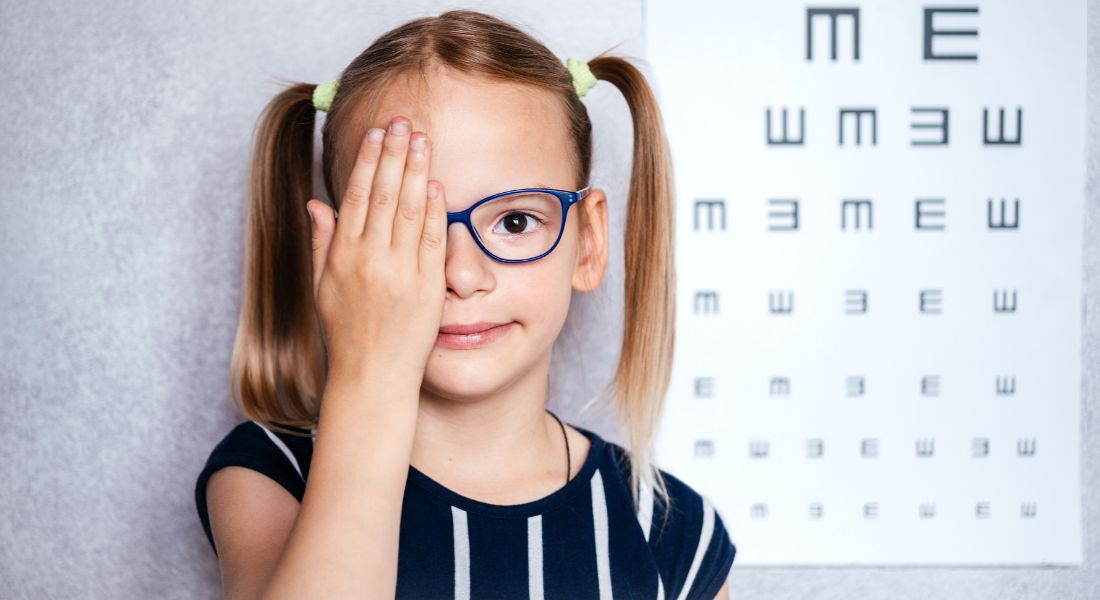
When your child complains of headaches after school, reading, homework or screen use, you may naturally wonder whether their eyesight is the cause. You may notice signs such as squinting at the television, sitting closer to screens or rubbing their eyes after concentrating for a long time.
Although vision problems can contribute to headaches in some children, eyesight is only one possible explanation. Children can also experience headaches due to migraine, tension-type headache, dehydration, missed meals, poor sleep, stress or illness. Children can also experience headaches due to migraine, tension-type headache, dehydration, missed meals, poor sleep, stress or illness. This is why it is important to look at the full pattern rather than focusing on one possible cause.
If your child’s headaches keep returning, become more frequent or start affecting school, sleep or everyday activities, you should consider seeking medical advice. A proper eye examination and wider assessment can help identify whether vision is contributing or whether another cause needs attention.
Can Eyesight Problems Really Cause Headaches?
Yes, some eyesight problems can contribute to headaches, especially when your child has to work harder to focus or see clearly for long periods. You may notice symptoms more during activities such as reading, homework, screen use or other close-up tasks.
Refractive errors such as astigmatism can cause blurred vision, eye strain and headaches, particularly after prolonged concentration. Significant long-sightedness can sometimes increase focusing demands and may contribute to visual discomfort in some children.
The important point is that eyesight problems can cause headaches, but they are not the only possible reason. If your child has a vision problem, correcting it may help, but this will only improve headaches when the visual issue is genuinely contributing to the symptoms.
Why Children May Not Tell You Their Vision Is Blurred
Children do not always realise that their vision is blurred or different from what others see. If your child has always experienced the world in a particular way, they may assume that their eyesight is normal and may not know how to explain the problem.
The NHS highlights that children may not recognise they have a vision difficulty, which is why routine eye checks and early assessment when you have concerns are important.
Instead of saying, “I cannot see properly,” your child may mention headaches, tired eyes or difficulty concentrating. You may notice changes in behaviour, such as avoiding reading or moving closer to objects, before your child can clearly describe a vision problem.
Signs That Eyesight May Be Contributing to Headaches
Headaches linked with visual effort may follow a noticeable pattern. You may find that your child’s headaches appear after reading, homework, computer work or other activities that require long periods of concentration.
You may also notice signs such as squinting, holding books very close, losing their place while reading, rubbing their eyes frequently or sitting closer than usual to the television. These behaviours can suggest that your child’s vision may need checking.
A repeated connection between close work and headaches can provide useful information, but you should not assume that eyesight is definitely the cause. An appropriate eye examination is needed to understand whether a vision problem is contributing to your child’s symptoms.
Headaches After Reading or Homework
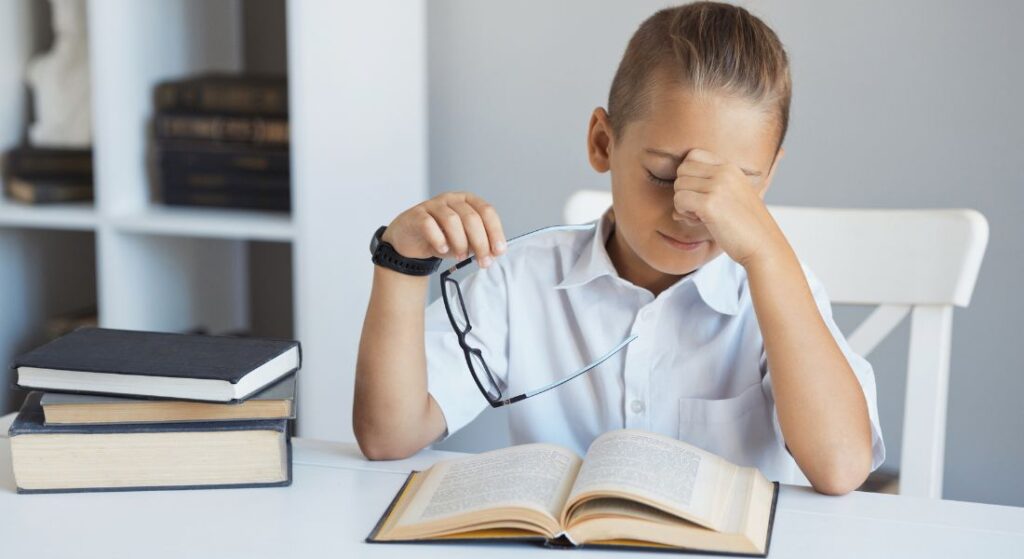
Some parents notice that their child’s headaches appear mainly after homework, reading or other close-up activities. You may wonder whether this is related to eyesight, especially if your child also complains of tired eyes, discomfort or difficulty focusing.
If your child has a significant refractive error that needs correction, it can contribute to visual strain and headaches during prolonged near work. An eye examination can help identify whether a vision problem may be playing a role.
However, you should also consider other factors that often occur around homework time. Tiredness, stress, dehydration, missed meals, poor posture and long periods of sitting can all contribute to headaches. Looking at the full pattern can help you understand whether the problem is truly linked to vision or whether other causes need attention.
Headaches During the School Day
School can place significant demands on your child’s visual system. During the day, your child may need to switch focus repeatedly between close-up tasks such as reading a book or using a tablet and looking at information displayed across the classroom.
If your child has short-sightedness, they may find it difficult to see distant writing clearly. You may notice signs such as sitting closer to the television or classroom board, rubbing their eyes, complaining of tired eyes or developing headaches during visually demanding activities.
Teachers can sometimes notice patterns that are less obvious at home. You may want to ask whether your child copies notes accurately, struggles to see the board or regularly complains of headaches during specific lessons or activities. These details can help when deciding whether an eye examination is needed.
Astigmatism and Headaches
Astigmatism is a common refractive error that affects how light is focused inside your child’s eye. It can occur on its own or alongside other vision problems such as short-sightedness or long-sightedness.
You may notice symptoms such as blurred vision, headaches or eye strain, particularly after activities that require prolonged concentration. Your child may complain of tired eyes after reading, using screens or doing detailed close-up work.
However, not every level of astigmatism causes noticeable symptoms or requires glasses. An eye examination will help determine whether the astigmatism is affecting your child’s vision and whether correction would be beneficial.
Can Problems With Both Eyes Working Together Matter?
An eye examination involves more than checking whether your child can read letters from a chart. You may not realise that the assessment can also look at how well your child’s eyes focus, move together and work as a team.
Depending on your child’s age, symptoms and examination findings, the optometrist can assess areas such as focusing ability, eye coordination, binocular vision and overall eye health. These findings can provide useful information when children experience discomfort during close work
If your child’s symptoms mainly appear while reading, using screens or doing other close-up activities, you should explain this during the appointment. Sharing when the symptoms occur can help the optometrist focus the examination on the areas that are most relevant to your child’s experience.
Headache Patterns: Vision Problems, Migraine and Tension-Type Headache
The location of a headache does not reliably tell you whether the eyes are responsible. Looking at the full pattern is more useful.
| Pattern | Possible Features | Useful Clues |
| Visual strain or refractive problem | Headache or tired eyes linked with reading, screens or focusing | May occur with blurred vision, squinting or reading difficulty |
| Migraine | Moderate or severe headache, sometimes with nausea or sensitivity to light and sound | Child may stop activity and seek quiet or darkness |
| Tension-type headache | Pressing or tightening discomfort | May occur during tired or stressful periods |
| Illness-related headache | Headache with infection symptoms | May occur with fever, sore throat or general illness |
| General lifestyle-related pattern | Headache after poor sleep, missed meals or low fluid intake | Diary may reveal predictable timing |
Migraine and tension-type headache are recognised primary headache disorders in children, and migraine in children may involve visual symptoms as part of aura.
This is why a child with headache and visual symptoms may need both a careful headache history and appropriate eye assessment.
Migraine Can Cause Visual Symptoms Too
Visual symptoms do not always mean that your child’s eyesight is the cause of their headache. You may naturally think that blurred or unusual vision points to a need for glasses, but some headache disorders can also affect vision.
Migraine aura can cause temporary visual changes. Your child may describe symptoms such as flashing lights, unusual patterns or areas of missing vision during an attack. These symptoms are different from the ongoing visual blur that can happen with some refractive errors.
Glasses do not treat migraine aura because the visual symptoms are related to the nervous system rather than an uncorrected focusing problem. If your child develops new, unusual or persistent visual symptoms, you should seek medical advice rather than assuming they are caused by eyesight strain or migraine alone.
How Migraine-Related Visual Symptoms May Differ
A refractive error usually affects your child’s visual clarity in a more consistent way, although you may notice that symptoms become more obvious during certain activities such as reading, screen use or looking at distant objects.
Migraine-related visual symptoms usually follow a different pattern and are linked with headache attacks. Your child may describe flashing lights, zigzag patterns, blind spots or other temporary changes in vision. These symptoms can occur before or during a migraine episode and are different from the ongoing blur caused by some vision problems.
When discussing these symptoms with a doctor, you should explain how long the visual changes last, whether they appear before or during the headache and whether your child feels completely well between episodes. These details can help distinguish between a vision problem and migraine-related symptoms.
Eye Strain Does Not Explain Every Headache After Screens
Screens are often the first thing people blame when a child develops headaches. While prolonged screen use can contribute to visual discomfort in some children, you should remember that headaches after screen time can have several possible causes.
Long periods on devices may happen alongside reduced blinking, continuous close focusing, tiredness, poor posture and not taking enough breaks. You may notice symptoms such as dry eyes, eye strain, blurred vision, difficulty focusing or headaches after extended use of tablets, phones or computers.
The answer is not always to remove screens completely. You should look at the overall pattern, including how long your child uses devices, whether they take regular breaks, the lighting and whether headaches also happen on days when screen use is limited.
The Role of Dry and Tired Eyes
Children who spend long periods focusing on screens, reading or detailed activities may blink less often. This can make the surface of the eyes feel dry, tired or uncomfortable, especially during extended periods of close work.
Your child may not describe this as “dry eyes”. Instead, you may hear complaints of burning, a gritty feeling, tired eyes or occasional blurred vision. Some children may also develop headaches alongside this general eye discomfort.
If your child has ongoing eye discomfort, you should arrange an appropriate assessment to understand the cause. You should also avoid using adult eye drops for your child unless a healthcare professional confirms that the product is suitable.
Headaches and Difficulty Seeing the Board
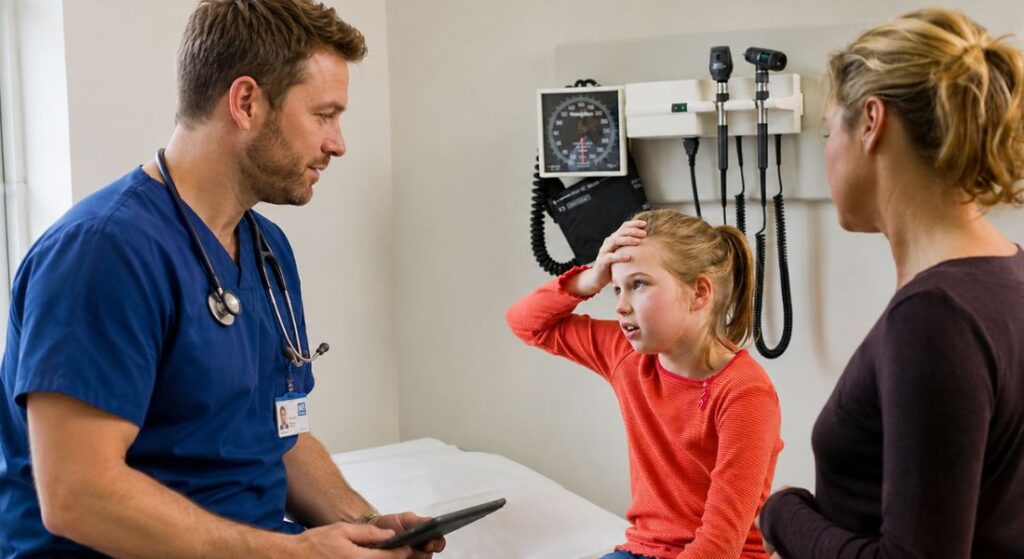
Difficulty seeing the board or other distant classroom information can be a sign that your child may have short-sightedness or another vision problem. Some children move closer to displays because distant objects appear blurred.
An eye examination can check whether a refractive error is affecting your child’s vision. If you are concerned about your child’s eyesight, you should arrange an assessment with an optician or discuss your concerns with your GP.
You should not wait until your child starts struggling academically before seeking help. Identifying and correcting a vision problem early can make everyday tasks such as reading, learning and classroom activities more comfortable.
Reading Difficulties and Vision
Vision can play an important role in how comfortably your child reads, but you should remember that reading difficulties can have many different causes. Not every problem with reading is due to eyesight, so it is important to look at the full picture.
You may want to consider an eye examination if your child holds books very close, frequently loses their place while reading or appears to avoid close-up tasks. These can be possible signs that your child’s vision needs checking.
If the eye examination does not identify a visual problem, you should not assume that the difficulties are unexplained. Your child may need further educational or medical assessment to explore other factors that could be affecting reading and learning.
Squinting and Headaches
Children may squint when they are trying to make a blurry or unclear image appear sharper. If your child frequently narrows their eyes, especially when looking at distant objects or concentrating, it may be a sign that their vision needs to be checked.
A true squint, also called strabismus, is different from simply narrowing the eyes. It happens when the eyes do not point in the same direction, and you may notice one eye turning in, out or sometimes upwards.
You should arrange an assessment if you notice a new eye turn or any concerns about your child’s eye alignment. Do not assume that a visible change is just a habit caused by tiredness, as early evaluation can help identify the right cause and support your child’s vision.
Safety Note:
A new eye turn needs appropriate assessment, but urgency depends on the accompanying symptoms. NICE advises immediate referral to acute paediatric services when a child develops a new-onset squint together with headache, vomiting or problems with balance and coordination. If these symptoms occur together, do not wait for a routine eye appointment.
Eye Rubbing, Tired Eyes and Headache
Regular eye rubbing can be a sign that your child’s eyes feel tired, irritated or uncomfortable, although it does not always point to a specific eye problem. You may notice it more often after reading, using screens or concentrating on close-up activities.
The NHS recognises frequent eye rubbing as one of the possible signs that an older child may need an eye assessment. However, eye rubbing can also happen with allergies, tiredness or general irritation.
When discussing this with an optometrist or doctor, you should mention any other symptoms you have noticed. Details such as redness, itching, discharge or whether the rubbing follows certain seasons or activities can help identify the possible cause.
Do Not Wait for School Screening When You Are Concerned
School vision screening can be useful for identifying some eyesight problems, but you should not wait for a routine screening appointment if you already have concerns about your child’s vision.
If you notice signs such as frequent squinting, difficulty seeing clearly, headaches during visual tasks or changes in how your child uses their eyes, you should arrange an eye assessment. The NHS advises speaking to a GP or visiting an optician when you are worried about your child’s eyesight.
Early assessment can be important because some childhood vision problems may affect learning, development and everyday activities if they are not recognised and managed at the right time.
What Happens During a Child’s Eye Examination?
The exact eye examination your child has will depend on their age, symptoms and ability to take part in the assessment. You may find that the appointment feels more like a conversation and a series of simple activities rather than a traditional sight test.
A child’s eye examination can check visual clarity, focusing ability, refractive errors, how well both eyes work together and the overall health of the eyes. Your child does not usually need a referral to access a community sight test, and NHS sight tests are available for eligible children.
The optometrist may use pictures, symbols, lights or other child-friendly techniques instead of relying only on letter charts. This helps the eye care professional understand your child’s vision accurately, even if they are too young to read letters or explain their symptoms clearly.
UK Eye-Care Note
You do not need to wait until your child can read letters before arranging an eye examination. Children can be assessed using age-appropriate techniques, and College of Optometrists guidance includes assessment of areas such as visual acuity, refractive error, eye alignment, binocular function and eye health according to the child’s needs.
NHS sight tests are free for children under 16. Young people aged 16, 17 or 18 may also qualify when they are in full-time education.
What an Eye Examination Can Check
The examination is designed to answer more than one question.
| Area Assessed | What It May Help Identify |
| Distance vision | Difficulty seeing classroom boards or distant objects |
| Near vision | Difficulty with reading and close work |
| Refraction | Short-sightedness, long-sightedness or astigmatism |
| Focusing | Whether focusing demands may be relevant to symptoms |
| Eye alignment | Squint or eye coordination concerns |
| Eye movements | Whether the eyes move appropriately |
| Eye health | Signs of disease or abnormality that need further assessment |
| Symptom pattern | Whether headache timing matches a possible visual cause |
College of Optometrists guidance states that the routine eye examination should include the assessments necessary to detect eye injury, disease or abnormality, with additional testing guided by professional judgement.
Tell the optometrist about the headache pattern rather than asking only whether your child needs glasses.
Are NHS Eye Examinations Free for Children?
Yes. In England, your child can receive a free NHS sight test if they are under 16. Young people aged 16, 17 or 18 may also be eligible if they are in full-time education. This means that many children can have their vision checked regularly without needing to pay for the eye examination.
If your child needs glasses after the assessment, you may also be able to get support through an NHS optical voucher. This can help with the cost of glasses or contact lenses for eligible children and young people, depending on the criteria and the prescription required.
You should ask your optician about NHS support when booking your child’s appointment, as they can confirm what your child is entitled to receive. It is also helpful to check the latest NHS information, as eligibility rules and support options can change over time.
What Happens if Glasses Are Prescribed?
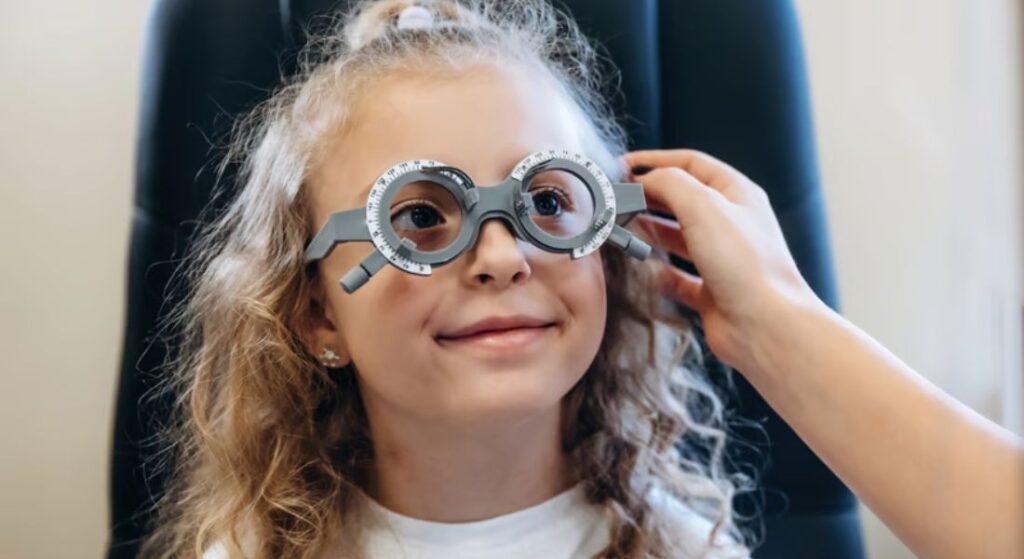
If your child has a refractive error that needs correction, your optometrist or eye care team will explain when the glasses should be worn. You may be advised that your child needs to wear them all the time, or only during certain activities, depending on the type and severity of the vision problem.
You may notice that your child says they can see perfectly well without glasses, especially if they have become used to compensating or focusing harder. However, some refractive errors can still contribute to eye strain, tired eyes and headaches even when your child feels their vision is acceptable.
You should follow the wearing plan recommended for your child rather than comparing it with another child’s routine. The advice is based on your child’s specific eye examination results and what will support their visual development and comfort.
How Quickly Should Headaches Improve After Getting Glasses?
There is no single timeframe for when headaches should improve after your child starts wearing glasses. If an uncorrected vision problem is genuinely contributing, you may notice a reduction in visual strain once the correct prescription is being used consistently.
However, you should remember that your child can have a refractive error and a separate headache disorder at the same time. Glasses may improve eyesight-related discomfort, but they will not treat headaches caused by migraine, tension-type headache or other non-visual causes.
If your child’s headaches continue despite wearing the correct prescription as advised, you should not assume that the glasses have “failed”. You may need to look at the wider headache pattern and discuss further assessment with your GP or paediatrician. An eye examination can be reassuring, as some children with headaches do not have an eye-related cause identified.
Evidence Note:
A 2019 study evaluated 262 children aged 5–16 years with persistent headaches; 56 children (21.4%) were found to have refractive errors such as short-sightedness, long-sightedness or astigmatism. Among those 56 children, 75% reported headache improvement eight weeks after refractive correction. However, this was a selected clinical population and the study design does not prove that refractive error causes headaches in all children.
Research on the relationship between refractive error and headache is not completely uniform, so an eye-test result should always be interpreted alongside the headache pattern rather than being assumed to explain every symptom.
For you as a parent, the practical point is that improvement after appropriate vision correction can provide useful information, but persistent headaches still deserve a wider assessment. Glasses should correct a genuine visual problem, while the headache pattern should continue to be reviewed separately if symptoms do not improve as expected.
What Patterns May Be Useful to Record?
When your child has repeated headaches, keeping track of the pattern can help you understand what may be contributing. You may find it useful to note whether the headache happens mainly after reading, during screen use or only after several hours of close work.
You can also record whether your child struggles to see distant writing, experiences nausea, vomiting or sensitivity to light, or notices temporary flashing lights or visual changes. It may also help to notice whether headaches continue during holidays when schoolwork and visual demands are different.
Looking at patterns over several weeks is usually more helpful than focusing on one isolated episode. These details can help you and your clinician decide whether the symptoms are more suggestive of a vision issue, a headache disorder or another cause.
Screens, Breaks and Comfortable Visual Habits
For children who spend a lot of time reading, studying or using screens, regular breaks can help reduce continuous visual strain. You can encourage your child to look into the distance, move around and change focus regularly during periods of close work.
You should also check that screens and books are positioned comfortably and that the room has suitable lighting. These simple habits may help your child feel more comfortable during visually demanding activities.
However, you should remember that these measures are not a replacement for an eye examination when your child has symptoms suggesting a vision problem. They also should not delay a headache assessment if the pain is frequent, getting worse or linked with any concerning symptoms.
Headaches With Eye Pain Need Careful Assessment
Headache and eye pain are not always caused by a vision problem or a need for glasses. You may assume that an eye-related symptom means your child needs an updated prescription, but other causes also need to be considered.
The NHS advises seeking urgent assessment through a GP, optician or NHS 111 if eye pain is severe or occurs with light sensitivity, changes in vision or a very red eye. You should seek advice promptly if these symptoms appear alongside a headache.
Sudden or significant loss of vision, severe eye pain or rapidly worsening eye symptoms should not wait for a routine sight test. You should arrange urgent assessment so that your child can receive the appropriate care without delay.
Persistent Blurred Vision Is Different From Temporary Migraine Aura
Persistent blurred vision is different from temporary visual changes that can occur with migraine aura. If your child has ongoing blurred vision, you should arrange an eye or medical assessment rather than assuming it is simply part of a headache.
Migraine aura usually follows a temporary pattern and settles after a period of time. In contrast, you may notice that refractive blur from a vision problem is more consistent and linked with activities such as reading, using screens or looking at objects at certain distances.
You should seek medical advice if your child develops new persistent blurred vision, double vision, a new squint or unusual eye movements. It is better to have these symptoms assessed rather than waiting several weeks to see whether they improve on their own.
Headache Red Flags That Should Not Be Blamed on Eyesight
Vision problems should not become the automatic explanation for every headache your child experiences. You may naturally wonder whether eyesight is the cause, but some headache patterns need medical assessment rather than a routine eye check alone.
NICE identifies several warning signs in children under 12 that require urgent neurological assessment. You should seek advice if headaches wake your child at night, are present on waking, keep getting worse, are triggered by coughing, sneezing or bending down, or occur with symptoms such as vomiting, balance problems, unusual drowsiness or changes in awareness.
When you notice these warning signs, the priority is to arrange urgent medical assessment. You should not delay care by assuming that your child simply needs glasses or a vision check.
UK Guideline Note:
In children under 12, certain headache features require urgent same-day neurological assessment rather than a routine eye or headache appointment. These include headaches that wake your child at night, are present on waking, progressively worsen, are triggered or aggravated by coughing, sneezing or bending down, or occur with vomiting, balance problems, reduced consciousness or unusual lethargy.
For children with recurrent headaches, NICE also recommends blood pressure measurement and fundoscopy, which allows examination of structures at the back of the eye and optic nerves. Any abnormal findings may require urgent neurological assessment.
Could the Eye Examination Reveal Something Other Than a Need for Glasses?
Yes. An eye examination looks at your child’s overall eye health as well as whether they need glasses. You may be surprised to learn that an eye examination is not only about checking vision clarity.
During the assessment, your optometrist may identify signs that need monitoring, further investigation or referral. You may find that a routine eye examination provides useful information about your child’s eye health that you were not expecting.
This is why you should not view an eye examination as simply a step towards buying glasses. A thorough check can help identify possible eye problems early and ensure your child receives the right advice or treatment when needed.
Headaches, Vision and Raised Pressure Inside the Head
Rarely, changes involving the optic nerves can be linked with increased pressure around the brain. This is very different from a common eyesight problem such as needing glasses, so you should not assume that all headaches with visual symptoms are caused by vision issues.
If your child has persistent visual changes, vomiting or other neurological symptoms alongside headaches, you should seek medical advice rather than simply assuming that a new pair of glasses will solve the problem. These symptoms may need a more detailed assessment.
NICE headache guidance includes warning signs that help identify children who may need urgent neurological review. You should remember that serious causes of headache are uncommon, but recognising these warning signs helps ensure your child receives the right care when it is needed.
Can Eye Problems and Migraine Occur Together?
Yes. Your child can need glasses and also experience migraine. You may find that correcting a vision problem improves visual clarity and reduces eye strain, but it may not completely stop the headaches if migraine is also present.
Migraine is a separate headache disorder and can occur alongside eye-related problems. You may notice symptoms such as visual changes, which can sometimes occur as part of migraine aura rather than being caused by a problem with your child’s eyesight.
When symptoms overlap, you may benefit from both paediatric and eye assessments. Looking at your child’s vision, headache pattern and other symptoms together can help you and your healthcare team understand what is contributing to the problem.
Can Stress and Eyesight Problems Both Contribute?
Headaches often have more than one possible contributing factor. You may find that your child has an uncorrected vision problem while also dealing with poor sleep, missed meals, screen use or school-related stress.
Correcting one factor, such as providing the right glasses, may improve some symptoms but may not remove every headache. You should also consider the wider lifestyle and health factors that could be influencing your child’s headaches.
This is why a balanced assessment is usually more helpful than looking for one single cause. You and your clinician should consider visual symptoms alongside the overall headache pattern to understand what may be contributing.
Supporting Your Child at School
If a vision problem has been identified, you should make sure the school understands how your child has been advised to use their glasses. You may find that sharing this information helps teachers support your child more effectively during classroom activities.
A child who has difficulty with distance vision may benefit from adjustments such as an appropriate classroom position while their vision is being corrected or reviewed. You can also ask teachers to look out for patterns, such as whether your child rubs their eyes, loses their place while reading or complains of headaches after certain tasks.
Good communication between you, your child’s teachers and healthcare professionals can make it easier to recognise patterns and provide the right support. You may find that information from different settings helps create a clearer picture of what your child is experiencing.
When to See an Optometrist
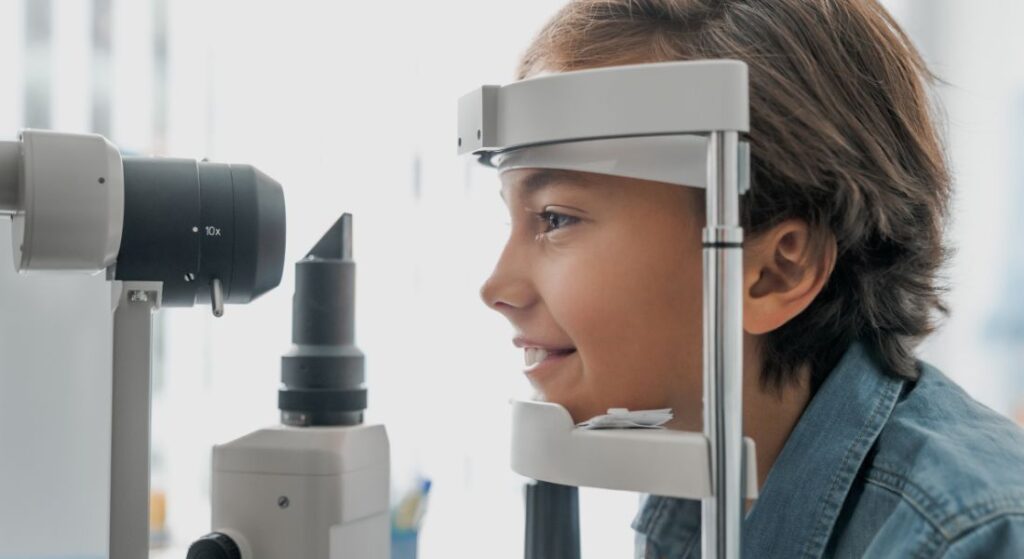
You should arrange an eye examination if your child has repeated headaches alongside symptoms that suggest a possible vision problem. You may notice signs such as blurred vision, eye strain, difficulty seeing the board at school, frequent squinting or reading difficulties that seem linked to visual tasks.
You should also consider an assessment if your child regularly rubs their eyes, complains of tired eyes, uses an unusual head position when looking at things or closes one eye to see more clearly. These small changes can provide useful clues about how your child’s eyes are working.
If you have concerns about your child’s eyesight, you should arrange an assessment rather than waiting for a routine screening appointment. A timely eye examination can help you understand whether a vision problem may be contributing to the headaches.
When to See a GP or Paediatrician
A medical headache assessment is important when your child’s headaches keep returning, become more frequent or start affecting school, sleep, sport or family life. You may want to seek advice if the pattern is changing or if you are finding that the headaches are becoming harder to manage.
A paediatrician can look at the wider range of causes of childhood headaches rather than focusing only on vision problems. You may find that this broader assessment helps identify whether migraine, tension-type headache or another condition could be contributing to your child’s symptoms.
A review can be particularly useful when an eye examination has not fully explained the headaches or when other headache disorders need to be considered. This allows you and your clinician to look at the complete picture and decide on the most appropriate next steps.
Preparing for an Eye Examination
Before the appointment, you can write down when your child’s headaches occur and what they are doing at the time. You may notice useful patterns, such as whether symptoms appear during reading, screen use, homework or looking at things in the distance.
If your child already wears glasses, you should bring them to the examination. It is helpful to tell the optometrist how consistently your child wears them and whether the headaches happen when wearing glasses, without glasses or in both situations.
You should also mention any blurred vision, double vision, eye pain, visual changes or difficulties linked to reading or distance viewing. Your understanding of your child’s symptoms can provide valuable information and help the optometrist make a more complete assessment.
Preparing for a Paediatric Headache Appointment
Bring any previous eye-test results to your child’s appointment if they are available, especially if your child has already been told that their vision is normal or has been prescribed glasses. You may find that these details help your clinician understand what has already been assessed.
Keeping a headache diary can also be very useful. You can record how often the headaches occur, how long they last, any associated symptoms and how they affect your child’s school, sleep or daily activities.
You should also note symptoms such as nausea, vomiting, sensitivity to light or sound and any visual changes. Recording whether headaches happen only during close work or in a range of different situations can help you and your clinician distinguish possible visual strain from migraine or another headache disorder.
Myth vs Fact: Vision and Childhood Headaches
| Myth | Fact |
| Every child with recurring headaches needs glasses. | Vision problems are only one possible contributor. Migraine, tension-type headache, illness and other health or lifestyle factors may also cause or contribute to headaches. |
| If my child can read small print, their eyes must be normal. | Reading one type of print does not assess every aspect of vision. An eye examination can consider distance and near vision, refractive error, eye alignment, binocular function and eye health according to the child’s needs. |
| Any headache after screen use must be caused by damaged eyesight. | Headaches occurring after screen use may be influenced by continuous close focusing, reduced blinking, posture, tiredness, insufficient breaks or other factors. Screen-associated symptoms do not automatically mean permanent eye damage or a need for stronger glasses. |
| Glasses should stop headaches immediately. | Glasses may help when an uncorrected refractive problem is genuinely contributing to the symptoms. They will not treat migraine, tension-type headache or unrelated causes of headache. |
| A normal eye examination means the headache is not real. | A normal eye examination can help rule out certain visual explanations, but the child may still have migraine, tension-type headache or another cause that needs appropriate assessment. |
| Flashing lights or zigzag patterns always mean an eye disease. | Temporary visual symptoms can occur with migraine aura. However, new, persistent or unusual visual changes still need appropriate assessment rather than being automatically attributed to migraine. |
Key Takeaways:
- Vision problems can contribute to headaches in some children, particularly when symptoms repeatedly follow visually demanding tasks.
- Signs such as blurred vision, frequent squinting, eye rubbing, difficulty seeing the classroom board or discomfort during reading may suggest that an eye examination is worthwhile.
- Astigmatism, significant long-sightedness and some focusing or binocular vision problems may contribute to visual discomfort or headaches in certain children.
- Vision is only one possible explanation for recurrent headaches. Migraine, tension-type headache, illness, dehydration, missed meals, poor sleep and stress should also be considered.
- Temporary visual symptoms such as flashing lights, zigzag patterns or blind spots can occur with migraine aura and are different from persistent visual blur.
- A normal eye examination does not mean that your child’s headache symptoms are not real. Another headache disorder may still need assessment.
- Correct glasses can help when a genuine visual problem is contributing, but glasses will not treat migraine or other non-visual causes of headache.
- Keeping a headache and vision diary can help show whether symptoms follow reading, homework, screen use, distance viewing or an independent headache pattern.
- Seek prompt assessment for persistent blurred vision, double vision, a new squint, severe eye pain or significant changes in vision.
- Specific red-flag headache patterns in children require urgent medical assessment and should not be attributed to eyesight without appropriate evaluation.
Frequently Asked Questions:
1. Can vision problems really cause headaches in children?
Yes, some vision problems can contribute to headaches, especially when a child has to work harder to focus or see clearly. Refractive errors such as short-sightedness, long-sightedness or astigmatism may contribute to eye strain or discomfort during prolonged visual tasks in some children.
2. How can it be determined if a child’s headache is related to their eyesight?
Headaches linked with vision problems often appear after activities such as reading, homework, screen use or looking at distant objects. Other clues may include squinting, rubbing the eyes, sitting close to the television, difficulty seeing the board or blurred vision.
3. Does my child need glasses if they complain of headaches?
Not necessarily. Some children with headaches need glasses because of an underlying vision problem, but many headaches are caused by other factors such as migraine, stress, dehydration, poor sleep or illness. An eye examination can help determine whether eyesight is contributing.
4. Can too much screen time cause headaches in children?
Prolonged screen use may contribute to eye strain, tired eyes, reduced blinking and discomfort, which can sometimes be associated with headaches. However, screen-related headaches can also involve factors such as poor posture, lack of breaks, tiredness and dehydration.
5. What eye problems can cause headaches in children?
Some refractive errors, particularly when they create significant visual or focusing demands, may contribute to headaches or visual discomfort in certain children. Astigmatism and significant long-sightedness may be relevant in some cases, while short-sightedness commonly causes difficulty seeing distant objects clearly and may occur alongside symptoms such as eye strain or headache. Problems with focusing or how the eyes work together may also be considered during a full eye examination.
6. Can migraines cause visual symptoms that look like an eye problem?
Yes. Migraine can cause temporary visual symptoms such as flashing lights, zigzag patterns or blind spots, known as migraine aura. These symptoms do not necessarily mean that a child needs glasses or has an eye disease.
7. When should my child have an eye examination for headaches?
An eye examination may be helpful if headaches occur alongside blurred vision, squinting, eye rubbing, reading difficulties, trouble seeing the board or discomfort during close work. You should also arrange an assessment if you have any concerns about your child’s eyesight.
8. Can a normal eye examination rule out all causes of headaches?
No. A normal eye examination can make an eye-related cause less likely, but children can still experience headaches from conditions such as migraine or tension-type headache. Further assessment may be needed if headaches continue.
9. When should headaches with vision problems be checked urgently?
Seek urgent medical advice if headaches are associated with sudden vision changes, double vision, persistent blurred vision, severe eye pain, vomiting, confusion, difficulty waking, weakness or other neurological symptoms.
10. What information should be recorded before a child’s eye or headache appointment?
Keep a diary of when headaches happen, how long they last and what your child was doing beforehand. Record any blurred vision, eye discomfort, screen use, reading, nausea, light sensitivity, vomiting and whether symptoms improve with rest or stopping visual tasks.
Final Thoughts: Understanding the Link Between Vision and Headaches
Vision problems can sometimes contribute to headaches in children, especially when issues such as uncorrected refractive errors, focusing difficulties or eye strain make visual tasks more demanding. However, eyesight is only one possible factor, and recurring headaches should always be assessed by looking at the complete pattern of symptoms.
An eye examination can help identify whether a visual problem may be contributing, but a normal result does not mean your child’s symptoms are not real. Headaches caused by migraine, tension, lifestyle factors or other medical conditions may still need further assessment and support. If you are looking for a trusted paediatrician for headaches in children, you can contact us at London Paediatric Clinic to arrange a consultation and discuss your child’s needs.
References:
- NHS (2023) Eye tests for children. Available at: https://www.nhs.uk/tests-and-treatments/eye-tests-in-children/
- National Institute for Health and Care Excellence (NICE). Suspected neurological conditions: recognition and referral. NG127. Recommendations for children aged under 16. Available at: https://www.nice.org.uk/guidance/ng127/chapter/recommendations-for-children-aged-under-16
- National Institute for Health and Care Excellence (NICE). Headaches and ‘red flag’ symptoms in children. Quality Standard QS198. Available at: https://www.nice.org.uk/guidance/qs198/chapter/Quality-statement-1-Headaches-and-red-flag-symptoms-in-children
- Mehboob, M.A. (2019). ‘Ametropia in children with headache’. Pakistan Journal of Medical Sciences, 35(3), pp. 701–704. Available at: https://pmc.ncbi.nlm.nih.gov/articles/PMC6572967/
- Hendricks, T.J.W. et al. (2007). ‘Relationship between habitual refractive errors and headache complaints in schoolchildren’. Optometry and Vision Science. Available at: https://pubmed.ncbi.nlm.nih.gov/17299344/
- Thorud, H.M.S. et al. (2021). ‘Headache and musculoskeletal pain in school children are associated with uncorrected vision problems and need for glasses: a case-control study’. Available at: https://pubmed.ncbi.nlm.nih.gov/33483534/