



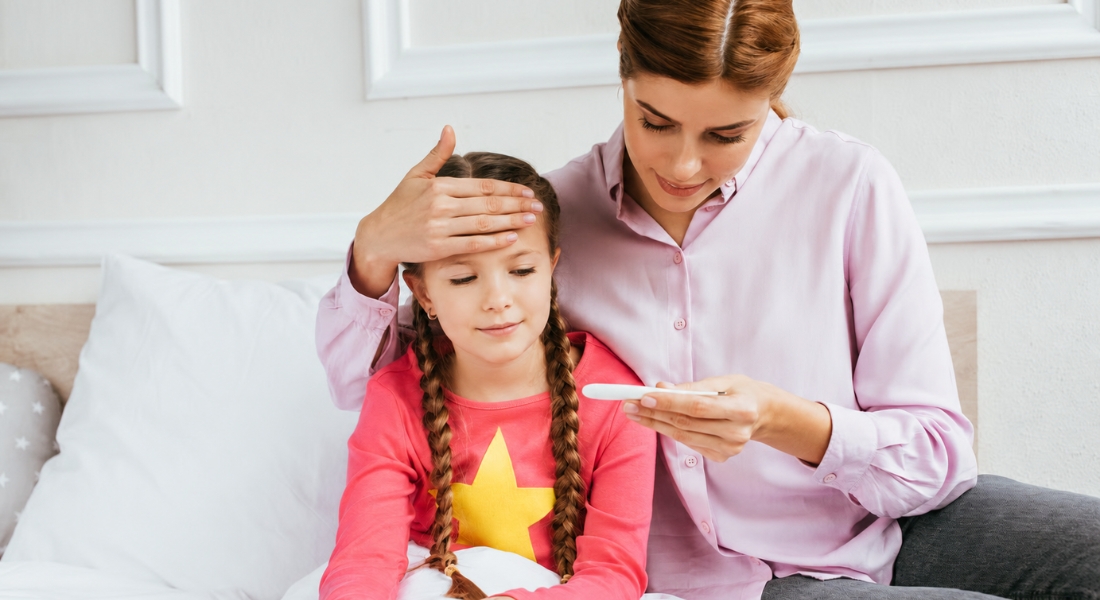
Seeing your child suddenly become unresponsive, stiffen or start jerking can be extremely frightening. When this happens with a fever, it may be a febrile seizure, sometimes called a febrile convulsion or fever fit.
Febrile seizures occur in young children with a raised temperature and can look alarming, but they are usually brief and unlikely to cause lasting harm. Having one does not mean your child has epilepsy, although there is a small increase in the risk of developing epilepsy compared with children who have never had a febrile seizure.
Key Takeaways
- Febrile seizures usually occur in young children with a fever and are most common between around six months and six years of age.
- Most febrile seizures are brief and are unlikely to cause lasting harm.
- A febrile seizure does not mean your child has epilepsy.
- Seek emergency help for a first seizure, a seizure lasting more than five minutes, breathing difficulty, one-sided movements, more than one seizure within 24 hours, or if your child is sleepier than usual for more than one hour afterwards.
- Do not restrain your child or put anything in their mouth during a seizure.
- Paracetamol or ibuprofen may help if your child is distressed by fever, but these medicines do not reliably prevent another febrile seizure.
What Is a Febrile Seizure?
A febrile seizure is a seizure that occurs in a young child with a fever, typically during an infection outside the central nervous system. Doctors will also assess for other causes of a seizure with fever, including serious infections affecting the brain or its coverings.
Febrile seizures commonly affect children from around six months to six years of age and do not mean that your child has epilepsy. Most episodes last only a few minutes, but your child should still be assessed to understand what is causing the fever and whether an infection needs treatment.
Should You Be Worried About a Febrile Seizure?
It is completely understandable to feel worried when your child has a seizure, especially when they suddenly become unresponsive or unaware of you. Although febrile seizures can look dramatic, most are brief and are unlikely to cause long-term problems.
Even so, you should not dismiss the episode. Seek emergency help if this is your child’s first seizure, if the seizure lasts more than five minutes, affects only one side of their body, happens more than once within 24 hours, causes breathing difficulties or is followed by unusual sleepiness lasting more than an hour.
Why Do Febrile Seizures Happen?

Febrile seizures can happen in some young children when they develop a fever during an illness, although it is not always clear why some children are affected while others are not. Your child’s age and developing brain may play a role, and having close relatives who experienced febrile seizures may also increase the likelihood.
These seizures are usually linked to an infection causing the fever, often a common childhood viral illness, although other causes are possible. A seizure can happen early in the illness, sometimes before you realise your child has a temperature, so you should not blame yourself or feel that you could have prevented it by checking their temperature more often or using fever-reducing medicine.
What Does a Febrile Seizure Look Like?
A febrile seizure can start suddenly, with your child becoming unresponsive and no longer looking at you or responding when you call their name. Their body may stiffen before their arms and legs begin to twitch, shake or jerk, while their eyes may roll upwards or appear fixed, and their breathing may briefly change.
Your child may lose consciousness, be sick or wet themselves, although these signs do not occur every time. After the movements stop, they may remain sleepy, irritable or confused for a while, so noting how the seizure started, which parts of the body were involved and how long it lasted can help doctors assess what happened.
How Long Does a Febrile Seizure Usually Last?
Most febrile seizures stop without treatment within a few minutes, with current NHS information stating that they usually last around two to three minutes. When you are watching your child have a seizure, though, those minutes can feel much longer, so try to check the time or start a timer as soon as it begins.
Knowing how long the seizure lasts can help you describe what happened and understand when emergency help is needed. If the seizure continues for more than five minutes, NHS advice is to call 999, while any individual emergency treatment plan provided by your child’s medical team should be followed exactly.
Simple and Complex Febrile Seizures Compared
| Feature | Simple febrile seizure | Complex febrile seizure |
| Movements | Usually affect both sides of the body | May affect only one side or have focal features |
| Duration | Less than 15 minutes | More than 15 minutes |
| Recurrence | Does not recur within 24 hours or during the same febrile illness | May happen again within 24 hours or during the same illness |
| Assessment | Further neurological tests are not routinely needed after a simple febrile seizure with no concerning features, although your child still needs appropriate clinical assessment. | Further assessment may be needed depending on the seizure features and your child’s clinical condition. |
| Recovery | Complete recovery within one hour | Recovery may be incomplete after one hour |
What Tests Might Your Child Need?

Not every child who has a febrile seizure needs extensive neurological tests, as the investigations depend on your child’s age, symptoms, medical history and the suspected cause of the fever. Doctors will usually focus on finding the illness behind the temperature and checking for signs that the episode was not a straightforward febrile seizure.
Depending on the circumstances, your child may need blood or urine tests, while a lumbar puncture may sometimes be considered if doctors are concerned about meningitis or another infection affecting the central nervous system. Tests used to investigate epilepsy, such as an EEG or brain scan, are not routinely required after a straightforward simple febrile seizure. Further neurological assessment may be considered if the seizure has unusual or complex features, occurs without a fever, recurs outside febrile illnesses or if there are other clinical concerns.
What Should You Do While Your Child Is Having a Febrile Seizure?
Your priority is to keep your child safe while the seizure continues, so stay close, note the time and move any hard, sharp or dangerous objects away. Protect their head with your hands or something soft if you can do so safely, but do not hold their arms or legs down to stop the movements.
Never put your fingers, a spoon, medicine or anything else into your child’s mouth during a seizure. Once the seizure stops, place your child in the recovery position, check their breathing and stay with them while they recover. Do not give them food or drink until they are fully alert. Seek emergency help if this is your child’s first seizure or if the seizure lasts more than five minutes. If your child is still having a seizure or remains unconscious, call 999.
Clinical Tip
If it is safe, start a timer when the seizure begins. Knowing how long it lasts can help the medical team and identify when emergency help is needed. Your child’s safety must always come before trying to record the episode.
What Happens After a Febrile Seizure?
After a febrile seizure, your child may be tired, upset, confused or want to sleep, especially after strong convulsive movements. Some drowsiness is common, but you should stay with them, monitor their breathing and responsiveness, and offer comfort and fluids once they are awake enough to swallow safely.
Your child should be medically assessed after their first febrile seizure, as the illness causing the fever may need further treatment. While the event is still fresh in your mind, try to remember how it started, how long it lasted, whether both sides of the body moved and how quickly your child returned to their usual behaviour.
Can You Prevent Another Febrile Seizure?
Unfortunately, there is no reliable way to guarantee that your child will not have another febrile seizure. Although you may feel that controlling every fever could prevent another episode, fever-reducing medicines do not prevent febrile seizures and should not be given specifically for this purpose.
Paracetamol or ibuprofen may still be suitable when your child is uncomfortable or distressed by their illness, but they should be used to help them feel better rather than to prevent a seizure. Do not use cold or tepid sponging to try to bring your child’s temperature down, and avoid either underdressing or over-wrapping them. Focus instead on keeping them comfortable and following appropriate advice for the illness causing the fever.
Do Febrile Seizures Cause Brain Damage?
It is natural to worry that the jerking movements or temporary loss of consciousness could cause permanent brain damage, but a typical short febrile seizure is not generally associated with lasting harm. NHS guidance states that febrile seizures are unlikely to harm your child or cause long-term effects, even though they can look extremely severe.
The situation can be different if the seizure is prolonged or your child has signs of a serious underlying infection, which is why the duration and their overall condition matter. If the seizure lasts more than five minutes, call 999. Seek urgent assessment if your child has breathing difficulties, one-sided movements, repeated seizures or does not recover as expected.
Will Your Child Have Another Febrile Seizure?

Some children have just one febrile seizure and never experience another, while others may have another episode during a future illness. Recurrence is possible, but it is not inevitable.
The chance of recurrence can be higher if your child was very young when they had their first seizure or if there is a family history of febrile seizures. Rather than constantly worrying when your child develops a fever, it is more helpful to have a clear first-aid plan and make sure regular carers, such as grandparents or nursery staff, know what to do.
Evidence Note
NICE CKS estimates that around 32% of children will have another febrile seizure after their first episode. Of children who do have a recurrence, about three-quarters experience it within the following year. This means that most children will not have another febrile seizure.
Do Febrile Seizures Mean Your Child Has Epilepsy?
No, having a febrile seizure does not mean that your child has epilepsy. Febrile seizures happen with a fever during early childhood, while epilepsy involves an ongoing tendency to have epileptic seizures that are not simply explained by a temporary fever or another immediate trigger.
NHS guidance confirms that febrile seizures are different from epilepsy, although children who have experienced one have a slightly increased risk of developing epilepsy later. If your child has prolonged, focal or repeated febrile seizures, or later has a seizure without a fever, their doctor may recommend further assessment to understand whether additional investigations or treatment are needed.
How Can You Tell a Febrile Seizure From Epilepsy?
You cannot reliably tell the difference between a febrile seizure and an epileptic tonic-clonic seizure simply by watching the movements, as they can look very similar. Doctors will consider the circumstances around the episode, including whether your child had a fever, was unwell beforehand or had symptoms suggesting an infection.
They will also look at the seizure pattern, including how long it lasted, whether the movements affected the whole body or one side and whether another episode occurred during the same illness. Your child’s medical and developmental history will also help guide the assessment, and if a future unusual episode can be safely recorded, the video may provide useful information without ever taking priority over keeping your child safe.
When Should You Seek Emergency Help?

Seek emergency help if this is your child’s first seizure, if the seizure lasts more than five minutes, if they have difficulty breathing, if stiffness or twitching affects only one side of their body, if they have more than one seizure within 24 hours, or if they remain more sleepy than usual for more than one hour afterwards.
If your child is still having a seizure or remains unconscious, call 999 rather than trying to drive them to A&E yourself. Even when the seizure stops quickly, you should seek medical assessment if your child appears severely unwell with a fever or you are concerned about their overall condition.
UK Guidance Note
A seizure with a fever should not automatically be assumed to be a straightforward febrile seizure. Seek emergency medical help if your child is very difficult to wake, has a stiff neck, develops a rash that does not fade when pressed, has serious breathing problems or appears rapidly more unwell. These can be warning signs of conditions such as meningitis or another serious infection. Do not wait for every symptom or for a rash to appear before seeking help if you are seriously concerned.
How Can You Feel More Prepared If It Happens Again?
Having a clear plan can help you feel more prepared. Make sure regular carers know the basic seizure first-aid steps, how to time an episode and when emergency medical help is needed.
Myth vs Fact: Febrile Seizures
| Myth | Fact |
| A febrile seizure means my child has epilepsy. | No. Febrile seizures are different from epilepsy, although there is a small increase in later epilepsy risk. |
| Every fever needs to be brought down quickly to prevent a seizure. | Fever medicines do not reliably prevent febrile seizures and should mainly be used when your child is distressed or uncomfortable. |
| I should hold my child still during the seizure. | No. Do not restrain them. Move hazards away and protect their head instead. |
| I should put something in my child’s mouth so they do not bite their tongue. | Never put anything in their mouth during a seizure. |
| A short febrile seizure usually causes brain damage. | Typical brief febrile seizures are unlikely to cause lasting harm. |
Frequently Asked Questions
1. What is a febrile seizure in a child?
A febrile seizure is a seizure that happens when a young child has a fever. It can cause your child to become unresponsive, stiffen or develop shaking and jerking movements, but it does not usually mean they have epilepsy.
2. At what age do febrile seizures usually happen?
Febrile seizures most commonly affect children between around six months and six years of age. They are linked to the developing brain’s response to fever during early childhood.
3. How long does a febrile seizure usually last?
Most febrile seizures stop within a few minutes and usually last around two to three minutes. If your child’s seizure lasts for more than five minutes, call 999 for emergency help.
4. What should I do if my child has a febrile seizure?
Keep your child safe by moving nearby hazards away and protecting their head with something soft. Do not restrain their movements or put anything into their mouth, and once the seizure stops, place them in the recovery position and stay with them.
5. When should you call 999 for a febrile seizure?
Seek emergency help if this is your child’s first seizure, if it lasts more than five minutes, if they have difficulty breathing, if stiffness or twitching affects only one side of their body, if they have more than one seizure within 24 hours, or if they are more sleepy than usual for more than one hour afterwards. If your child is still having a seizure or remains unconscious, call 999 rather than trying to take them to A&E yourself.
6. Can febrile seizures cause brain damage?
Typical brief febrile seizures are unlikely to cause brain damage or lasting harm. Prolonged seizures or signs of serious infection need urgent assessment.
7. Will my child have another febrile seizure?
Some children have only one febrile seizure, while others experience another during a future illness. The risk of recurrence is around 32% after a first febrile seizure and can be higher when the first seizure occurs at a younger age or there is a family history.
8. Do febrile seizures mean my child has epilepsy?
No. Febrile seizures are different from epilepsy because they occur in association with fever during early childhood. Having a febrile seizure does slightly increase your child’s later risk of epilepsy, particularly when seizures have unusual features.
9. Can you prevent febrile seizures by treating your child’s fever?
No. Paracetamol or ibuprofen may improve comfort during fever but do not reliably prevent febrile seizures.
10. Does my child need tests after a febrile seizure?
Not every child needs extensive tests after a febrile seizure. Your child should be medically assessed, particularly after their first seizure, so doctors can look for the cause of the fever. Depending on their symptoms, they may need tests such as blood or urine tests, while a lumbar puncture may sometimes be considered if there is concern about meningitis or another infection. An EEG or brain scan is not routinely needed after a straightforward simple febrile seizure.
Final Thoughts: Knowing What to Do During a Febrile Seizure
Seeing your child have a febrile seizure can be frightening, but most episodes are brief and are unlikely to cause lasting harm. Knowing how to keep your child safe, when to call 999 and what information to share with their doctor can help you feel more prepared if another seizure happens.
If your child needs specialist support and you are looking for children’s epilepsy treatment in London, you can contact us at London Paediatric Clinic for support.
References:
- National Institute for Health and Care Excellence (NICE) (no date) Febrile seizure. Clinical Knowledge Summary. Available at: https://cks.nice.org.uk/topics/febrile-seizure/
- NHS (2023) Febrile seizures. Page last reviewed: 21 June 2023. Available at: https://www.nhs.uk/conditions/febrile-seizures/
- National Institute for Health and Care Excellence (NICE) (2019, updated 2021) Fever in under 5s: assessment and initial management. NICE guideline NG143. Available at: https://www.nice.org.uk/guidance/ng143
- Eilbert, W. and Chan, C. (2022) ‘Febrile seizures: A review’, Journal of the American College of Emergency Physicians Open, 3(4), article e12769. Available at: https://pubmed.ncbi.nlm.nih.gov/36016968/
- Ferretti, A., Riva, A., Fabrizio, A., Bruni, O., Capovilla, G., Foiadelli, T. et al. (2024) ‘Best practices for the management of febrile seizures in children’, Italian Journal of Pediatrics, 50(1), article 95. Available at: https://pubmed.ncbi.nlm.nih.gov/38735928/
- Corsello, A., Marangoni, M.B., Macchi, M., Cozzi, L., Agostoni, C., Milani, G.P. and Dilena, R. (2024) ‘Febrile seizures: A systematic review of different guidelines’, Pediatric Neurology, 155, pp. 141–148. Available at: https://www.sciencedirect.com/science/article/pii/S0887899424000997
- Leung, J.S.C. (2024) ‘Febrile seizures: An updated narrative review for pediatric ambulatory care providers’, Current Pediatric Reviews, 20(1), pp. 43–58. Available at: https://pubmed.ncbi.nlm.nih.gov/36043723/
- Sawires, R., Buttery, J. and Fahey, M. (2022) ‘A review of febrile seizures: Recent advances in understanding of febrile seizure pathophysiology and commonly implicated viral triggers’, Frontiers in Pediatrics, 9, article 801321. Available at: https://pmc.ncbi.nlm.nih.gov/articles/PMC8793886/
- Rosenbloom, E., Finkelstein, Y., Adams-Webber, T. and Kozer, E. (2013) ‘Do antipyretics prevent the recurrence of febrile seizures in children? A systematic review of randomized controlled trials and meta-analysis’, European Journal of Paediatric Neurology, 17(6), pp. 585–588. Available at: https://pubmed.ncbi.nlm.nih.gov/23702315/
- Vestergaard, M., Pedersen, C.B., Sidenius, P.C., Olsen, J. and Christensen, J. (2007) ‘The long-term risk of epilepsy after febrile seizures in susceptible subgroups’, American Journal of Epidemiology, 165(8), pp. 911–918. Available at: https://academic.oup.com/aje/article-abstract/165/8/911/184889