




If your child is taking longer to develop certain skills, you may wonder whether they have a developmental delay, autism or a combination of developmental needs. This can be difficult to understand because speech, play, communication and social differences can occur in more than one developmental condition.
Developmental delay and autism are not the same, although they can occur together. A specialist needs to consider your child’s overall developmental level, social communication, behaviour, medical history, strengths and everyday needs rather than trying to distinguish the two from one symptom or milestone.
Key Takeaways
- Developmental delay means that one or more skills are developing later than expected, while global developmental delay usually affects at least two developmental areas in a child under 5.
- Autism involves a particular pattern of social communication and interaction differences together with restricted or repetitive behaviours, interests or activities.
- Developmental delay and autism can occur together.
- Speech delay, sensory differences or repetitive behaviours cannot diagnose autism on their own.
- If your child loses previously acquired language, social or motor skills, seek professional advice promptly.
What Is Developmental Delay and Global Developmental Delay?
Developmental delay means that your child is developing one or more skills later than expected for their age. This may involve movement, fine motor skills, speech and language, learning, self-care or social development.
When a child under 5 has significant delay affecting two or more developmental areas, this is usually described as global developmental delay (GDD). GDD describes your child’s developmental profile rather than identifying a particular cause. Your paediatric team may therefore consider both the areas in which your child needs support and whether an underlying developmental, genetic, neurological, hearing, vision or other medical factor needs further assessment.
Does Global Developmental Delay Always Lead to a Learning Disability?
No. Global developmental delay describes your child’s developmental profile during the early years and does not by itself predict their exact long-term outcome. Some children make substantial developmental progress and reduce the gap with their peers, while others continue to have significant developmental or learning needs as they get older.
As your child develops, their cognitive and adaptive functioning may be reassessed. In UK terminology, a learning disability, often called an intellectual disability internationally, involves significantly reduced intellectual ability together with significant difficulties in everyday or adaptive functioning that began before adulthood. Having global developmental delay does not automatically mean that your child will later meet this definition.
What Can Cause Developmental Delay?
There are many possible underlying or contributing factors when your child’s development is delayed. Depending on their individual history and examination, clinicians may consider genetic or chromosomal conditions, complications around pregnancy or birth, prematurity, neurological conditions, serious infections, hearing or vision difficulties and other developmental or medical factors.
Sometimes no specific cause is identified. Your child’s assessment should therefore focus both on investigating possible explanations when appropriate and on identifying the practical developmental support they need.
What Is Autism?
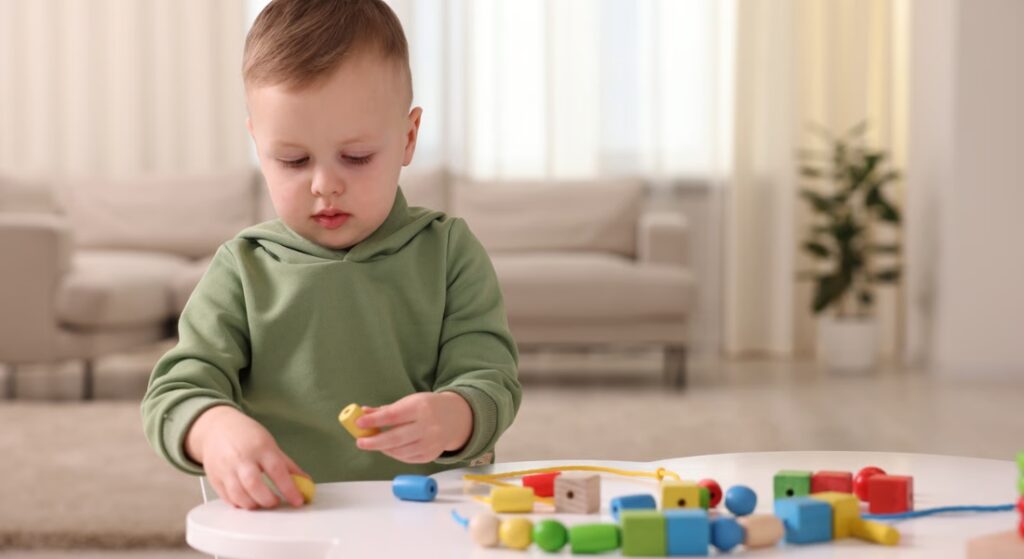
Autism is a lifelong neurodevelopmental difference associated with a particular pattern involving social communication and social interaction, together with restricted or repetitive behaviours, interests or activities. Sensory differences can also form part of your child’s autistic profile.
Autistic children vary considerably in their strengths and support needs. Your child may have delayed development in some areas, develop other skills at the expected age or show particular strengths, so autism should not be understood simply as your child developing more slowly overall.
Developmental Delay vs Autism: A Quick Comparison
| Area | Developmental Delay | Autism |
| What it describes | Your child is acquiring one or more developmental skills later than expected | Your child has a particular neurodevelopmental pattern involving social communication/interaction and restricted or repetitive behaviours, interests or activities |
| Developmental areas | Your child may have delay in one area or several | Your child may have delayed, expected or uneven development across different areas |
| Global developmental delay | Your child has significant delay in at least two developmental domains before the age of 5 | Your autistic child may or may not also have GDD |
| Speech | Your child’s speech can be delayed | Your child’s speech may be delayed, typical for age or used differently |
| Social communication | Your child’s social communication may develop more slowly as part of their wider developmental profile | Your child has a characteristic pattern of differences in social communication and interaction that is interpreted in relation to their overall developmental level |
| Repetitive behaviour | May occur but is not specific to one condition | Forms part of the diagnostic pattern when combined with other autism characteristics |
| Sensory differences | Can occur | Can form part of your child’s autistic profile |
| Diagnosis | Your child needs assessment of developmental domains and possible underlying causes | Your child needs a comprehensive specialist autism assessment |
| Can they occur together? | Developmental delay can occur alongside autism | Autism can occur alongside developmental delay |
What Signs May Suggest Autism?
Possible autism characteristics can include differences in how your child communicates and interacts socially, responds to other people, uses gestures or language, manages change or engages in repetitive behaviours and interests. Your child may also experience sensory differences involving sound, light, touch, textures, tastes or smells.
No individual characteristic can confirm or exclude autism. Your child may make good eye contact, show affection or have age-appropriate spoken language and still be autistic, so specialists consider the complete developmental pattern rather than relying on one commonly recognised sign.
Can Speech Delay Occur in Both?
Yes. Your child’s delayed speech or language development may occur as part of developmental delay and can also occur in autistic children. However, some autistic children develop spoken language at an expected age, so speech delay is neither required for autism nor enough to establish the diagnosis.
Your specialist should consider how your child understands and uses language, communicates socially and interacts with other people. Hearing difficulties, specific speech or language disorders, global developmental delay and other developmental needs may also need to be considered.
How Does Social Interaction Differ?

Social and communication difficulties can occur in both developmental delay and autism, so your specialist cannot distinguish the two simply by asking whether your child’s social skills are late. A child with global developmental delay may have social communication that broadly reflects their overall developmental level, while autism involves a characteristic pattern of social communication and interaction differences alongside restricted or repetitive behaviours, interests or activities.
When your child has significant developmental delay, clinicians therefore consider whether their social communication differences are consistent with their general developmental level or whether the wider pattern also meets autism diagnostic criteria. This can require careful specialist assessment rather than a simple milestone comparison.
Can Repetitive Behaviors or Sensory Differences Suggest Autism?
Repetitive movements, highly focused interests, a strong preference for familiar routines and unusual sensory responses can form part of an autistic child’s developmental profile. Your child may find unexpected changes difficult, repeat particular movements or activities, or respond strongly to sounds, touch, textures, tastes, smells or visual stimulation.
However, repetitive behaviours and sensory differences are not specific to autism and cannot establish the diagnosis on their own. Specialists consider them alongside your child’s social communication, interaction, developmental level and wider pattern of behaviour.
How Is Developmental Delay Assessed?
Your child’s developmental assessment should consider their progress across relevant areas such as gross and fine motor skills, communication, learning, social development and everyday self-care. Your clinician will usually ask about pregnancy and birth, family history, developmental milestones and any loss of previously acquired skills. A clinical assessment may also include physical and developmental examination and measurements such as your child’s growth and head circumference.
Depending on your child’s pattern of delay, medical history and examination findings, hearing or vision assessment and selected investigations may also be appropriate. Genetic or genomic testing, blood or urine tests or imaging may be considered when clinically indicated, but not every child with developmental delay needs the same investigations.
How Is Autism Assessed?
Your child’s autism assessment should bring together a detailed developmental and medical history, information about their experiences at home and in education and direct assessment of their social communication, interaction and behaviour. Structured autism-specific tools may contribute, but they cannot determine the diagnosis by themselves.
The team should also consider your child’s physical health, developmental level, possible alternative or coexisting conditions and their individual strengths and support needs. Information from nursery or school, previous developmental assessments and hearing or vision results may also be relevant.
Is There a Test That Can Tell Autism from Developmental Delay?

There is no single blood test, genetic test, brain scan, questionnaire or observation that can reliably distinguish autism from developmental delay in every child. Autism is diagnosed clinically by considering your child’s developmental history, social communication, interaction and behaviour alongside information from relevant settings and recognised diagnostic criteria. Autism-specific questionnaires or structured tools may support the assessment, but they should not be used alone to confirm or exclude an autism diagnosis.
Medical investigations have a different role when clinicians are looking for a possible underlying cause of developmental delay. Depending on your child’s developmental pattern, history and examination, genetic or genomic testing, hearing or vision assessment, blood or urine tests or imaging may sometimes be appropriate.
Does Your Child Need to Wait for a Diagnosis Before Getting Support?
No. Your child’s identified developmental needs can often be supported while diagnostic assessment is still taking place. Depending on those needs, this may involve speech and language therapy, physiotherapy, occupational therapy, educational support or other local developmental services.
Referral for an autism assessment should not prevent your child from receiving appropriate help for needs that have already been identified, and educational support should not depend on your child first receiving an autism diagnosis. Support should be based on what your child needs rather than waiting for one diagnostic label before anything can begin.
When Should You Seek Specialist Advice?
You should consider speaking with a healthcare professional when your child is persistently missing expected developmental milestones or when you have ongoing concerns about their communication, social interaction, movement, learning, behaviour or everyday skills. Your child’s GP, health visitor or another child-development professional can help decide which assessment or service may be appropriate.
If your child loses language, social, motor or other developmental skills they previously had, you should seek professional advice promptly rather than waiting to see whether the skills return. NICE recommends referral to the autism team when a child younger than 3 loses language or social skills. If your child is older than 3 and loses language, or loses motor skills at any age, they should first be assessed by a paediatrician or paediatric neurologist, who can arrange autism assessment when appropriate.
When Might an Autism Assessment Be Helpful?
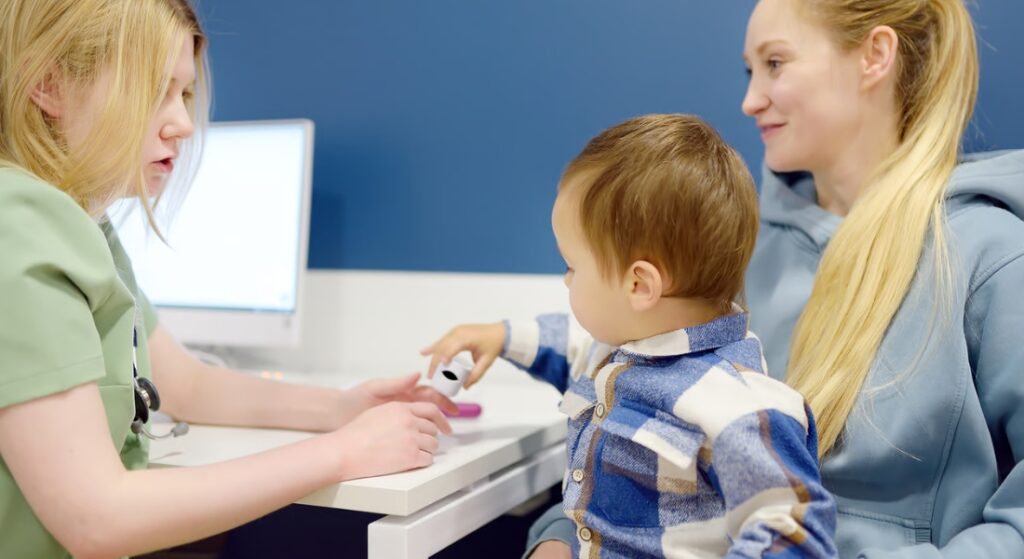
An autism assessment may be appropriate when your child has persistent differences involving social communication and interaction together with restricted or repetitive behaviours, interests or activities, particularly when the overall pattern raises concern about autism. Your concerns remain relevant even when another developmental condition has already been identified.
If you are seeking a specialist autism assessment for children in London with an experienced paediatric team, the assessment can help determine whether autism forms part of your child’s developmental profile, whether another or coexisting condition should be considered and which next steps may be appropriate.
UK Guidance Note
Developmental delay and autism should not be treated as mutually exclusive. A child can have global developmental delay and also be autistic.
When autism is being considered, NICE recommends a comprehensive assessment that includes developmental and medical history, direct assessment of social communication and behaviour, physical examination, consideration of developmental and other differential diagnoses, assessment of coexisting conditions and a profile of the child’s strengths and support needs. No autism-specific diagnostic tool should be used alone.
Myth vs Fact: Developmental Delay and Autism
| Myth | What You Should Know |
| Developmental delay and autism are the same condition. | Your child’s developmental delay describes slower acquisition of skills, while autism involves a particular neurodevelopmental pattern. |
| Any delay in one skill means your child has global developmental delay. | GDD generally refers to significant delay in at least two developmental domains in a child under 5 years of age. |
| Speech delay means your child is autistic. | Your child’s speech may be delayed for many reasons, and some autistic children have age-appropriate spoken language. |
| Good eye contact means your child cannot be autistic. | Your child’s good eye contact does not exclude autism. |
| Repetitive behaviour alone means autism. | Your child’s repetitive behaviours need to be considered within their complete developmental pattern. |
| Sensory differences prove autism. | Your child’s sensory differences can occur with autism but are not diagnostic on their own. |
| Your child cannot have autism if they already have GDD. | Your child can have both autism and global developmental delay. |
| A questionnaire can tell whether your child has autism or developmental delay. | Your child’s specialist needs information from several sources and clinical assessment. |
| Your child needs blood tests or a brain scan to find out whether they are autistic. | Your child does not routinely need medical tests solely to diagnose autism. |
| Your child must wait for a diagnosis before receiving developmental support. | Your child’s existing developmental needs can be supported while assessment continues. |
FAQs
1. Can your child have developmental delay without being autistic?
Yes. Your child’s developmental delay can affect one or more areas without them being autistic. Autism requires a particular pattern involving social communication and interaction together with restricted or repetitive behaviours, interests or activities.
2. Can your autistic child also have developmental delay?
Yes. Autism and developmental delay can occur together. Your autistic child may have global developmental delay, a learning disability or delays affecting particular skills, while another autistic child may have age-appropriate development in many areas.
3. What is the difference between developmental delay and global developmental delay?
Developmental delay can describe your child developing later than expected in one or more areas. Global developmental delay is generally used when a child under 5 years of age has significant delay affecting at least two developmental domains.
4. Does your child’s speech delay mean they are autistic?
No. Speech delay can occur for different developmental, language or hearing-related reasons. Some autistic children have delayed speech while others achieve typical spoken-language milestones, so speech delay cannot diagnose autism by itself.
5. Can your child’s developmental delay improve as they get older?
Some children make substantial developmental progress and may reduce the gap with their peers, while others continue to have significant developmental or learning needs. Your child’s longer-term progress depends on the underlying cause, pattern and severity of their delay, and you should not be given a guarantee that they will simply catch up.
6. Does autism go away as your child gets older?
Autism is a lifelong neurodevelopmental difference, but the way it affects your child and the support they need can change significantly as they develop. Your child may build skills, develop coping strategies and become increasingly independent in some areas.
7. Can your child be assessed for autism when they are very young?
Yes. Young children can be referred when autism characteristics or developmental concerns are present. However, NICE notes that diagnostic uncertainty can be greater in children younger than 24 months or with a developmental age below 18 months.
8. Who assesses developmental delay and autism in your child?
Developmental assessment commonly involves a paediatric or child-development service, with input from professionals such as speech and language therapists, physiotherapists, occupational therapists or psychologists according to your child’s needs. Autism assessment should be carried out through an appropriately skilled autism assessment service or team.
9. What should you do if your child loses skills they previously had?
You should seek professional advice promptly. NICE recommends referral to the autism team for language or social regression in children younger than 3. If your child is older than 3 and loses language, or loses motor skills at any age, NICE recommends assessment first by a paediatrician or paediatric neurologist, who can refer to the autism team when appropriate.
10. Does your child need a diagnosis before receiving support?
No. Your child’s identified communication, developmental, motor, educational or other support needs can be addressed while diagnostic assessment continues. Referral for autism assessment should not prevent appropriate input from other services.
Final Thoughts: Understanding Your Child’s Development
Understanding the difference between developmental delay and autism can help you make sense of the changes you may notice in your child’s development. While some signs can overlap, each child has their own pattern of strengths and difficulties, so a specialist assessment may be helpful when concerns persist.
If you’re looking for an autism assessment for children and would like specialist guidance, you can speak with the team at London Paediatric Clinic about your concerns and your child’s developmental needs. If you need a trusted autism assessment for children, get in touch with us at London Paediatric Clinic.
References
- de Lima, T.A., Zuanetti, P.A., Nunes, M.E.N. and Hamad, A.P.A. (2023) ‘Differential diagnosis between autism spectrum disorder and other developmental disorders with emphasis on the preschool period’, World Journal of Pediatrics, 19(8), pp. 715–726. Available at: https://pubmed.ncbi.nlm.nih.gov/36282408/
- Mithyantha, R., Kneen, R., McCann, E. and Gladstone, M. (2017) ‘Current evidence-based recommendations on investigating children with global developmental delay’, Archives of Disease in Childhood, 102(11), pp. 1071–1076. Available at: https://pmc.ncbi.nlm.nih.gov/articles/PMC5738593/
- National Institute for Health and Care Excellence (2011, updated 2017) Autism spectrum disorder in under 19s: recognition, referral and diagnosis. Clinical guideline CG128. Available at: https://www.nice.org.uk/guidance/cg128
- National Institute for Health and Care Excellence (2013, updated 2021) Autism spectrum disorder in under 19s: support and management. Clinical guideline CG170. Available at: https://www.nice.org.uk/guidance/cg170
- National Institute for Health and Care Excellence (2019, updated 2023) Suspected neurological conditions: recognition and referral. NICE guideline NG127. Available at: https://www.nice.org.uk/guidance/ng127
- NHS (2026a) ‘Autism assessments’. Page last reviewed 6 May 2026. Available at: https://www.nhs.uk/conditions/autism/assessments/
- NHS (2026b) ‘Signs of autism in children’. Page last reviewed 6 May 2026. Available at: https://www.nhs.uk/conditions/autism/signs-in-children/
- NHS (2026c) ‘What is autism?’. Page last reviewed 6 May 2026. Available at: https://www.nhs.uk/conditions/autism/what-is-autism/
- Genomics Education Programme (2026) ‘Presentation: Patient with developmental delay’. . Last reviewed 6 February 2026. Available at: https://www.genomicseducation.hee.nhs.uk/genotes/in-the-clinic/patient-with-developmental-delay/
- NHS England (2023, updated 2026). Operational guidance to deliver improved outcomes in all-age autism assessment pathways: Guidance for integrated care boards. Last updated 22 July 2026. Available at: https://www.england.nhs.uk/long-read/operational-guidance-to-deliver-improved-outcomes-in-all-age-autism-assessment-pathways-guidance-for-integrated-care-boards/