



If your child has been diagnosed with hypotonia, one of the first questions you may ask is, “Will they grow out of it?” This is a completely natural concern, and you may be wondering how it will affect their development, independence and everyday life as they grow.
The answer depends on what is causing your child’s hypotonia. Some children whose hypotonia is mild, non-progressive and not linked to an identified underlying condition make substantial functional progress as they grow. Low muscle tone may become much less noticeable in everyday life, although some children continue to experience difficulties with posture, endurance, coordination or strength. The outlook varies considerably, so the word “hypotonia” alone cannot predict your child’s long-term movement, independence or need for support.
If your child’s hypotonia is linked to a neurological, genetic, muscular, metabolic or developmental condition, their journey may be different. They can still make meaningful progress, but they may continue to benefit from physiotherapy, occupational therapy, speech and language therapy, school support or ongoing medical care.
The good news is that many children develop new skills and become more confident with the right support, even if their low muscle tone does not completely disappear. In this guide, you will learn what influences your child’s prognosis, what progress may look like and when specialist assessment or treatment may be needed.
What Does Hypotonia Mean?
Hypotonia means low muscle tone, which is the natural level of tension in your child’s muscles that helps them maintain posture and move with control. When muscle tone is lower than expected, everyday movements may require more effort and stability can be affected.
You may notice that your child feels floppy when lifted, sits with a slumped posture, tires easily, seems unusually flexible or reaches motor milestones later than expected.
It is important to remember that hypotonia is not a diagnosis on its own but a clinical sign. Understanding why your child has low muscle tone is the key to predicting their outlook, particularly if it is accompanied by symptoms such as muscle weakness, feeding difficulties, developmental delay, seizures or loss of previously acquired skills.
Can Children Really Grow Out of Hypotonia?
Some children do appear to “grow out of” hypotonia, particularly when the low muscle tone is mild, non-progressive and not linked to a serious underlying condition. Even if your child’s muscle tone remains slightly lower than average, they may develop greater functional strength, coordination and confidence as they grow, although the degree of progress varies.
As your child develops, improvements in functional movement, posture or coordination may make low muscle tone less noticeable in everyday life. Even so, it is important not to assume that your child will simply grow out of hypotonia without support. If they have delayed milestones, muscle weakness or are not progressing as expected, they should be properly assessed so they can receive the right care and support as early as possible.
What Is Idiopathic Hypotonia?
Idiopathic hypotonia is a term that may be used when no specific underlying cause has been identified after an appropriate assessment. It does not guarantee that your child will have no ongoing difficulties or that further review will never be needed.
Some children make substantial functional progress as they grow, while others continue to need support with posture, mobility, endurance, coordination, fine motor skills or school participation.
The term “idiopathic” should be used only after your child has been properly assessed and other possible causes have been considered. The need for follow-up depends on your child’s development, symptoms and underlying diagnosis. Some children need ongoing review, while others with mild, stable difficulties may be discharged with advice about when to seek reassessment.
Why Prognosis Depends on the Cause
The long-term outlook for hypotonia depends on what is causing your child’s low muscle tone. This is why two children with similar symptoms can have very different experiences and levels of progress over time.
One child may have mild idiopathic hypotonia and gradually catch up with support, while another may have an underlying condition such as Down syndrome, cerebral palsy or a genetic, muscular or neurological disorder. According to StatPearls, identifying the underlying cause is an important part of understanding prognosis and planning the right care.
This is why a thorough paediatric assessment is so valuable. It helps you understand not only that your child has low muscle tone, but also what it means for their development, the support they may need and what you can realistically expect in the future.
Hypotonia Prognosis at a Glance
| Situation | Possible Outlook | What Usually Helps |
| Mild idiopathic hypotonia | Some children make substantial functional progress, although ongoing difficulties may remain | Individualised assessment, appropriate activity or therapy when function is affected, and review if concerns change |
| Low tone with delayed milestones but steady progress | Continued skill development is encouraging, but the long-term outlook still depends on the underlying cause | Developmental assessment, therapy, follow-up |
| Hypotonia linked with prematurity | Progress varies and should be assessed using corrected age | Developmental surveillance and early support |
| Hypotonia with genetic syndrome | Child may improve function but may need long-term support | Therapy, paediatric care, condition-specific monitoring |
| Hypotonia with true weakness | Needs careful assessment, especially if progressive | Paediatric or neurological assessment, cause-directed investigations and condition-appropriate support |
| Hypotonia with feeding or breathing problems | More urgent assessment is needed | Paediatric review, feeding and respiratory support |
| Hypotonia with regression | Needs specialist assessment | Neurology or child development referral |
| Hypotonia affecting school function | May need ongoing practical support | Physiotherapy, occupational therapy, school adjustments |
Improvement Does Not Always Mean Tone Has Become Normal

When your child improves, it does not always mean their muscle tone has returned to a typical level. In many cases, the biggest change is that they are able to move, play and manage everyday activities more easily, even if their low muscle tone is still present.
You may notice your child sitting for longer, walking more steadily, falling less often, climbing stairs with greater confidence, joining in playground games, writing for longer or taking part in PE more comfortably. These are all important signs that your child’s function is improving.
This is why therapy usually focuses on what your child can do rather than on muscle tone alone. As their strength, balance, coordination and motor skills develop, low muscle tone often becomes less limiting in everyday life.
Common Myths About Growing Out of Hypotonia
| Myth | Fact |
| All children grow out of hypotonia | Some improve greatly, but prognosis depends on the cause |
| If a child walks, hypotonia is no longer relevant | Low tone may still affect stamina, posture, balance or school tasks |
| Mild hypotonia never needs support | Some children need therapy or school adjustments even with mild low tone |
| Hypotonia always means a serious disease | Hypotonia has many possible causes, and the outlook depends on the underlying diagnosis and the child’s development |
| Therapy cures low tone completely | Therapy may support function, participation or comfort but does not permanently normalise every cause of low muscle tone |
| Delayed milestones should always be watched and waited out | NICE gives referral thresholds for delayed sitting, walking and early hand preference |
| Weakness and hypotonia are the same thing | Low tone and weakness are different, although they can occur together |
| If tests are normal, the child cannot have real difficulties | Some children have functional challenges even without a clear diagnosis |
Evidence Note
Physiotherapy and occupational therapy are widely used for children with developmental central hypotonia, but evidence for many specific interventions remains limited. Most published research involves young children with Down syndrome, and the findings cannot automatically be applied to every cause of hypotonia. Treatment should therefore be personalised and reviewed against clear functional goals.
What Progress Can Look Like in Babies
In babies, progress is often seen through small but meaningful developmental milestones. You may notice your baby lifting their head more steadily, enjoying tummy time for longer, bringing their hands together, reaching for toys, rolling, sitting with support, sitting independently, crawling or pulling up to stand.
Continuing to gain skills without losing previously acquired abilities is generally encouraging. However, progress should still be interpreted alongside your baby’s strength, reflexes, feeding, breathing and wider development.
NICE recommends referral to a child development service, with consideration of physiotherapy or occupational therapy, if a child is not sitting unsupported by 8 months corrected age, not walking independently by 15 months for girls or 18 months for boys corrected age, or shows an early hand preference before 1 year.
These milestone guidelines are not designed to cause unnecessary worry. Instead, they help identify babies who may benefit from earlier assessment and support, giving your child the best opportunity to continue developing their skills.
What Progress Can Look Like in Toddlers
As your child grows into the toddler years, progress may be seen in many different ways. You might notice improvements in standing, cruising, walking, squatting, climbing, running, stepping up stairs or getting up from the floor without help.
If your child has hypotonia, they may learn to walk later than other children but continue to make steady progress with practice and, where needed, physiotherapy. You may first notice better sitting balance, followed by greater confidence when standing, before walking and climbing skills gradually develop.
If your child is not walking within the expected age range or you feel their progress has slowed or stopped, it is important to seek advice rather than waiting to see what happens. Early assessment can help you understand whether any additional support would benefit your child.
What Progress Can Look Like in School-Aged Children
As your child gets older, hypotonia often becomes less about reaching early developmental milestones and more about how they manage everyday school activities. You may notice improvements in stamina, posture, coordination and confidence as they become more independent.
Your child may become more confident in the playground, take part more easily in PE, improve their balance, cope better with handwriting, walk longer distances, climb stairs more comfortably or sit with better posture. These are all meaningful signs that they are continuing to develop important skills.
At the same time, school can highlight challenges that were not as noticeable at home. If your child becomes tired during long school days, struggles with sitting upright, avoids sport, writes slowly or seems clumsy, it does not mean they have failed to grow out of hypotonia. Instead, it may simply show that they would benefit from practical support at this stage of their development.
Why Some Children Still Need Support Even After They Improve
Your child may make excellent progress and still benefit from some ongoing support. Even when they are walking, running and taking part in everyday activities, low muscle tone can continue to affect endurance, posture and joint stability.
You may notice that your child manages well most of the time but finds longer walks, PE lessons, handwriting-heavy school days or growth spurts more challenging. Some children only need physiotherapy for a short period, while others benefit from another review when new demands arise as they grow.
The level of support your child needs should be based on how well they are functioning in everyday life. If they are participating confidently and managing well, they may need less input, but if new challenges begin to affect their comfort, confidence or participation, a further review can help identify the right support.
Hypotonia and Long-Term Outcomes
Long-term outcomes for children with hypotonia can vary greatly and depend on the underlying cause. When no underlying cause has been identified and the hypotonia is mild and non-progressive, some children make substantial functional progress. Others continue to experience difficulties with posture, endurance, coordination or strength, so prognosis should be based on your child’s individual development rather than the term “idiopathic” alone.
If your child’s hypotonia is linked to an underlying condition, their progress will depend on that diagnosis, as some conditions remain stable, some improve with support and others require ongoing specialist care.
Even if your child’s low muscle tone does not completely disappear, they can still make meaningful progress with the right support. Physiotherapy, occupational therapy or other appropriately selected support may help your child work towards functional goals and participate more comfortably in everyday activities.
How Physiotherapy May Support Functional Progress
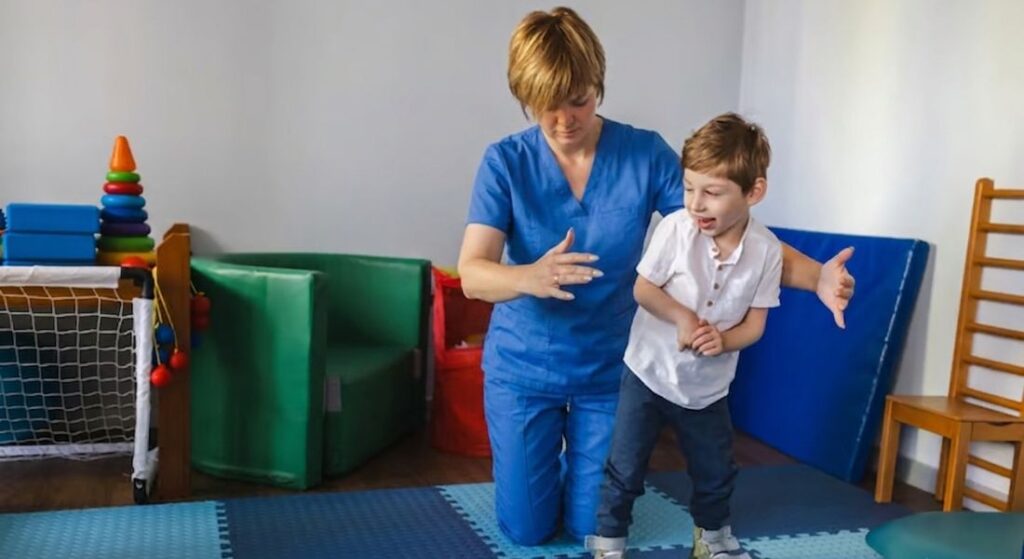
Physiotherapy does not remove every cause of hypotonia or guarantee that muscle tone will change. It may help selected children practise functional movement, improve mobility, manage fatigue and take part more comfortably in everyday activities.
The programme should reflect your child’s diagnosis, strength, joint stability, respiratory health and personal goals. Progress should be measured through meaningful activities rather than assumed from the diagnosis alone.
Research Insight
Evidence for many individual physiotherapy and occupational therapy interventions in developmental central hypotonia remains low or very low quality. Most studies have involved young children with Down syndrome, so outcomes cannot be generalised to every child or every cause of hypotonia.
The Role of Occupational Therapy
If low muscle tone is affecting your child’s everyday activities, occupational therapy may be an important part of their support. It focuses on helping your child develop the practical skills they need to become more confident and independent at home, at school and during play.
Your child may benefit from occupational therapy if they find handwriting, dressing, using cutlery, sitting with good posture, fine motor tasks, play activities or managing fatigue more difficult. Even if your child has learned to walk, they may still benefit from occupational therapy if hand skills, posture or participation at school continue to be affected. This is why improvement should be measured by your child’s overall function and independence, rather than by walking alone.
What Helps Children Make Progress?
Children may benefit when support is appropriate to the underlying cause, relevant to everyday activities and reviewed as their needs change. By working closely with your child’s healthcare team, you can help them build skills gradually while keeping everyday activities enjoyable and achievable.
Depending on your child’s needs, they may benefit from physiotherapy, occupational therapy or speech and language therapy if feeding, swallowing or speech are affected. Depending on the assessment, support may include safe active play, condition-appropriate movement activities, school adjustments or individually prescribed footwear, orthotics or equipment.
According to StatPearls, treatment for hypotonia is usually supportive and often involves a team of healthcare professionals working together, including rehabilitation and nutritional support where appropriate. The aim is to help your child take part more confidently in everyday life, rather than making every day feel like therapy.
Factors That Affect Prognosis
The table below shows factors that may influence your child’s outlook.
| Factor | Why It Matters |
| Underlying cause | Some children make substantial functional progress, but the term “idiopathic” does not guarantee a benign or symptom-free outcome. |
| Presence of weakness | True weakness may suggest a different pathway and need more specialist review |
| Feeding or breathing issues | These can indicate more significant involvement |
| Developmental progress | Steady gains are usually reassuring |
| Regression | Losing skills is a red flag |
| Early intervention | Targeted support may assist functional practice and participation for selected children |
| Access to appropriate support | Timely assessment, practical adaptations and opportunities to participate may reduce the impact of functional difficulties |
| School support | Adjustments can prevent fatigue, frustration and low confidence |
| Associated diagnoses | Genetic, neurological or developmental conditions may affect long-term needs |
Can Therapy Change Muscle Tone?
You may wonder whether therapy can actually change your child’s muscle tone. In many cases, particularly when hypotonia is linked to a genetic or neurological condition, therapy does not permanently change the underlying muscle tone itself.
Therapy may give selected children opportunities to practise functional movement, mobility, balance, postural control and participation. The goals and expected outcomes should reflect the underlying diagnosis and your child’s individual needs. These improvements often make everyday activities much easier, even if your child’s muscle tone remains lower than average.
This is why you may sometimes hear different explanations from healthcare professionals. A therapist may tell you that your child’s muscle tone is still low, while you can clearly see they are walking better, moving more confidently and doing more than before. Both of these observations can be true at the same time.
Will My Child Walk?
Some children with hypotonia learn to walk independently, often later than expected, while others need walking aids or longer-term mobility support. Walking ability depends more on the underlying diagnosis, muscle strength, neurological function and wider development than on low muscle tone alone.
Your child may benefit from physiotherapy, orthotics, walking aids or longer-term therapy if walking is delayed or more challenging. NICE highlights delayed walking as a reason for developmental referral, including when a child is not walking independently by 15 months in girls or 18 months in boys, corrected for gestational age.
A delay in walking does not automatically mean your child will never walk. It does mean your child should be assessed so the right support can begin as early as possible, helping the healthcare team identify the most appropriate mobility support and developmental plan.
What if My Child Was Born Premature?
If your child was born prematurely, they may reach developmental milestones later than babies born at full term. This is why your healthcare team will usually assess your child’s early development using their corrected age, as it provides a more accurate picture of their progress.
NICE recommends using corrected age during the first two years when assessing the development of children born preterm. Some preterm children, particularly those born very early or with additional medical risk factors, are offered enhanced developmental surveillance and multidisciplinary follow-up.
Although prematurity can explain some early delays, it should not be used to dismiss ongoing concerns. If you feel your child is still floppy, weak, delayed or not making the progress you would expect, it is important to ask for a developmental review so they can receive any additional support they may need.
Hypotonia in Down Syndrome
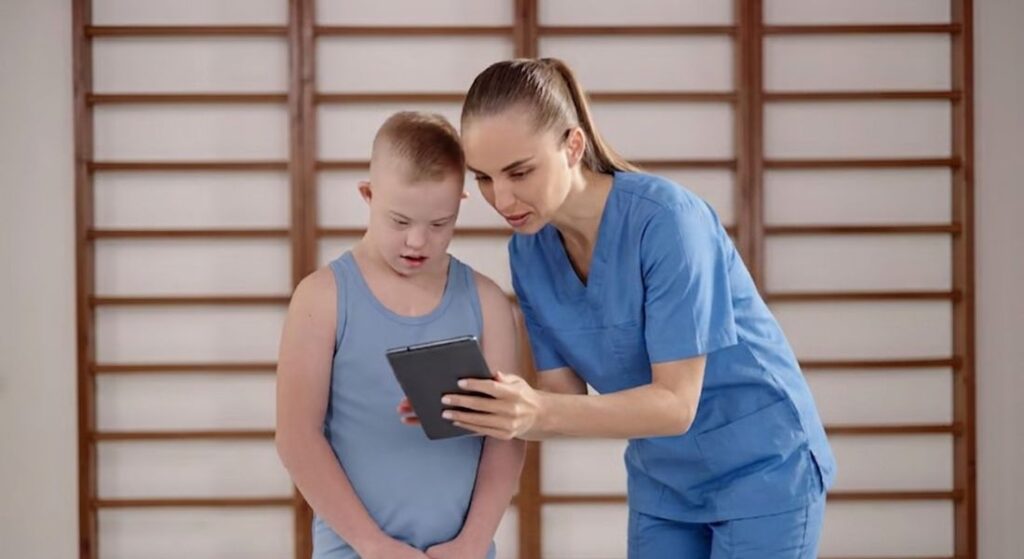
Many children with Down syndrome have low muscle tone, so they may reach motor milestones later than other children. Children with Down syndrome usually continue to develop motor and everyday skills, although the pace of development and the support required vary considerably.
The NHS explains that children with Down syndrome may benefit from support from different healthcare professionals, including a physiotherapist if low muscle tone affects walking. This support is designed to help your child build confidence, improve mobility and take part more comfortably in daily activities.
Support should be tailored to your child’s individual movement, participation and developmental needs. Not every child requires the same physiotherapy programme or duration.
Hypotonia in Cerebral Palsy
If your child has cerebral palsy, they may have hypotonia, particularly during infancy, although their muscle tone can change as they grow. This means you may notice different movement patterns or changes in muscle tone over time.
NICE recognises hypotonia as one of the possible signs of cerebral palsy and recommends referral to a child development service if your child has delayed motor milestones. Your child’s progress will depend on the type and severity of cerebral palsy, any associated needs and the therapy and support they receive.
For children with cerebral palsy specifically, NICE advises that a child who can sit independently at two years is likely, although not certain, to walk without assistance by six years. A child who cannot sit but can roll may still walk independently, while a child who can neither sit nor roll is unlikely to do so. These predictions should not be applied to children with other causes of hypotonia.
Hypotonia Linked With Neuromuscular Conditions
If your child’s hypotonia is linked to a neuromuscular condition, their outlook will depend on the underlying diagnosis. Some of these conditions can be treated, some remain stable over time and others may gradually progress, so understanding the cause is an important step.
Depending on your child’s needs, they may be referred to a neurologist and receive support from a wider team. This can include respiratory care, feeding support, physiotherapy, occupational therapy, orthotics, genetic testing or regular specialist monitoring to help manage their condition.
According to StatPearls, some causes of hypotonia have specific treatments, while many children benefit from supportive care and rehabilitation. This is why it is important to seek medical assessment if your child has low muscle tone alongside weakness, feeding difficulties, breathing problems or developmental regression.
Signs That Progress Is Reassuring
Some signs can reassure you that your child is making positive progress, even if improvements happen gradually. Every child develops at their own pace, so small, steady changes are often just as important as reaching major milestones.
You may notice better head control, improved sitting balance, more purposeful movement, increasing strength, greater interest in active play, fewer falls, improved stamina or better posture. Another reassuring sign is that your child continues to gain new skills without losing ones they have already achieved.
If you are unsure whether your child’s progress is on track, it is worth discussing this with their healthcare team. Bringing milestone notes and short videos to the appointment can help show how your child is developing over time and make it easier to assess their progress. Continuing to gain skills without regression is encouraging, but it does not by itself rule out an underlying neurological, developmental or genetic condition.
Signs That Need Review
You should arrange a medical review if your child is no longer making progress, seems to be falling further behind or develops new weakness. It is also important to seek advice if they lose previously acquired skills or begin having feeding, breathing or swallowing difficulties.
NICE recommends immediate referral for children who develop sudden or rapidly worsening weakness in their arms, legs or face, and urgent referral for progressive limb weakness. A new-onset gait abnormality requires immediate referral to acute paediatric services.
If you feel your child’s symptoms are changing, becoming worse or affecting their safety, do not wait until the next routine appointment. Trust your instincts and contact your healthcare team so your child can be assessed as soon as possible.
Red Flags That Need Immediate or Urgent Assessment
Some symptoms should not wait for a routine appointment. Seek immediate medical help if your baby or child suddenly becomes floppy, develops sudden or rapidly worsening limb or facial weakness, becomes difficult to wake, has serious breathing difficulty or develops a new walking abnormality.
A baby whose hypotonia has been present for weeks or months needs urgent paediatric assessment if they also have weakness, feeding difficulty or breathing problems. Progressive limb weakness requires urgent neurological assessment. Loss of previously acquired skills requires specialist assessment, with urgency determined by the speed of change and any associated symptoms.
Red Flags at a Glance
| Red flag | Why it matters |
| Sudden floppiness | Needs immediate paediatric assessment |
| Sudden or rapidly worsening limb or facial weakness | Needs immediate neurological assessment |
| Progressive weakness | Needs urgent neurological assessment |
| Feeding difficulty in a floppy or weak baby | Needs urgent paediatric and feeding assessment |
| Serious breathing difficulty | Call 999 or attend A&E |
| Reduced alertness | Needs immediate medical assessment |
| Fever with sudden floppiness | May indicate acute illness and needs immediate assessment |
| Loss of previously acquired skills | Needs specialist assessment |
| New-onset gait abnormality | NICE recommends immediate referral |
| Prolonged seizure or failure to recover normally | Call 999 |
| Poor weight gain with feeding difficulty | Needs prompt paediatric and feeding assessment |
How Doctors Monitor Prognosis
Your child’s doctors and therapists will monitor their progress over time rather than relying on a single appointment. This helps them understand how your child is developing and whether their symptoms are improving, staying the same or becoming more noticeable.
During these reviews, they may assess your child’s muscle tone, strength, reflexes, head control, sitting, crawling, standing, walking, feeding, speech, fine motor skills, growth, fatigue and participation at school. If needed, they may also discuss further investigations, such as blood tests, genetic testing, metabolic testing, imaging or a neurology review.
By following your child’s development over time, the healthcare team can build a much clearer picture of their progress. This allows them to recommend the right support, adjust treatment when needed and decide whether any further assessment would be helpful.
Progress may reflect natural development, management of an underlying condition, everyday opportunities to practise and any therapy or adaptations provided. It should not automatically be attributed to one intervention.
Clinical Tip
Keep brief notes or videos showing changes in your child’s everyday abilities, such as sitting duration, falls, walking distance, stair use, feeding or fatigue. These can help the healthcare team assess progress that may not be visible during a short appointment. Do not delay urgent medical care to record a video.
Why Follow-Up Matters Even if Things Improve
Follow-up should be based on the cause of hypotonia, your child’s developmental progress and whether ongoing concerns affect daily functioning. Some children need regular multidisciplinary review, while others with mild and stable symptoms may be discharged with advice about when to seek reassessment.
For example, a child who learns to walk well may later need support with stairs, balance, PE or handwriting. Another child may catch up with their early motor skills but still become tired more easily during longer physical activities or school routines.
Follow-up does not mean your healthcare team expects something serious to happen. It simply allows your child’s development to be monitored so that support can be adjusted if needed, and if they continue to do well, appointments may become less frequent over time.
Will My Child Need Long-Term Therapy?
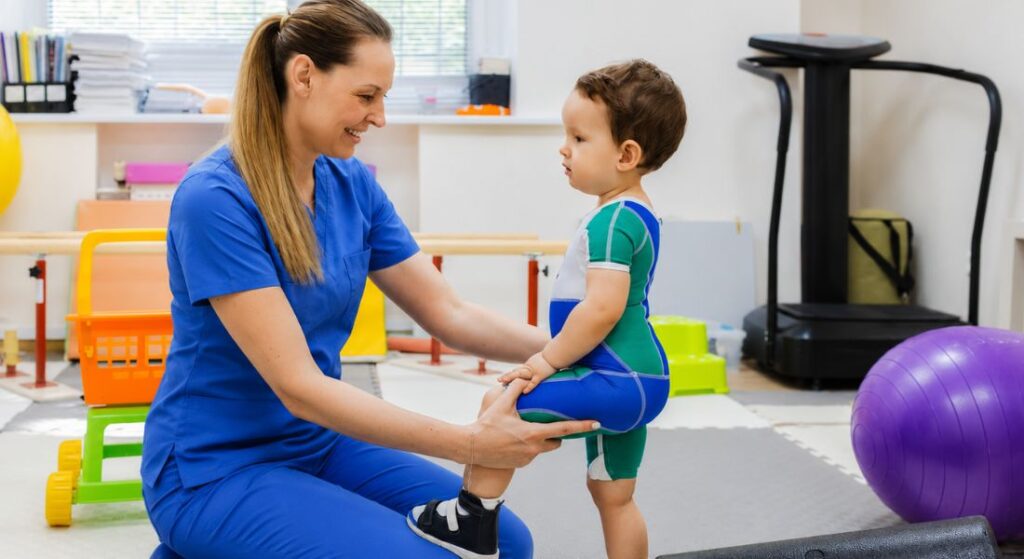
The amount of therapy your child needs will depend on the cause of their hypotonia and how it affects their daily life. Some children only need short-term support, while others may benefit from therapy at different stages as they grow.
Longer-term or intermittent therapy may be considered when an underlying condition or continuing functional difficulty affects mobility, posture, endurance, self-care or school participation. Physiotherapy may address mobility, posture, balance, walking or fatigue management, while occupational therapy may support self-care, handwriting, school activities and everyday participation.
Therapy should always be based on your child’s individual goals rather than a fixed timetable. The aim is to help your child build the skills they need to take part more confidently in everyday life.
School and Long-Term Outcomes
As your child starts school, it may become easier to see whether low muscle tone is still affecting their everyday activities. They may find it harder to sit comfortably for long periods, take part in PE, use playground equipment or keep up during school trips.
If your child needs extra support, simple adjustments can make a big difference. These may include movement breaks, seating advice, adapted PE activities, extra time for dressing, or guidance from an occupational therapist or physiotherapist.
Even if your child has made good progress since early childhood, they may still need additional support during growth spurts or as schoolwork becomes more demanding. The goal is not to label your child unnecessarily, but to help them take part in school with greater confidence and independence.
Hypotonia and Confidence
Children often notice when movement feels more difficult for them than it does for their friends. If your child has hypotonia, they may avoid playgrounds, sports, parties or school trips because they feel less confident or worry about keeping up with others.
You may also notice your child becoming frustrated or saying they “can’t do it” before they even give something a try. Choosing activities that match their abilities and interests can help them enjoy movement and experience success more often.
Remember that progress is not only about physical milestones. When your child becomes more willing to join in, play with others and try new activities, they are building confidence as well as developing important movement skills.
What Parents Can Do at Home
You can support your child’s progress at home by encouraging safe, regular and enjoyable movement. Everyday activities may provide opportunities to practise movement, build confidence and participate in family life without making home feel like a therapy setting.
Depending on your child’s age, this may include tummy time, floor play, reaching games, crawling, safe climbing, ball games, dancing, swimming or short walks. The most important thing is to keep activities enjoyable and suited to your child’s abilities. When movement feels like play rather than a chore, your child is much more likely to stay engaged, practise regularly and continue making steady progress.
These are general examples rather than a treatment programme. Activities should be selected according to your child’s diagnosis, strength, joint stability, breathing, fatigue and developmental level. Ask for individual advice before introducing strengthening or endurance activities if weakness is significant, progressive or unexplained.
Avoid Comparing Your Child With Others
It is natural to compare your child with other children, especially friends or siblings, but this can often create unnecessary worry. Every child develops at their own pace, and children with hypotonia may reach milestones later without this automatically meaning they will have a poor long-term outcome.
Instead of comparing your child with others, try to focus on their own progress over time. Ask yourself whether they are stronger than they were a few months ago, more stable on their feet, attempting new movements or becoming more confident in everyday activities.
Steady progress, even if it is gradual, is usually a positive sign and something to celebrate. If you notice that your child’s progress has stopped, they seem to be losing skills or their symptoms are getting worse, it is important to arrange a review with their healthcare team.
When to Ask for a Reassessment
If you feel your child’s needs have changed, it is sensible to ask for a reassessment. New challenges can appear as your child grows, particularly after starting nursery or school, and a fresh review can help ensure they continue to receive the right support.
You should consider asking for another assessment if your child is struggling with PE, experiencing new pain or fatigue, falling more often, finding handwriting difficult, walking later than expected, developing new weakness or taking part in fewer activities than before. These changes may suggest that their needs have evolved and should be reviewed.
Depending on the concerns, the reassessment may involve a paediatrician, physiotherapist, occupational therapist, neurologist, clinical geneticist or child development team. It is perfectly reasonable to ask your healthcare team whether the diagnosis still fits with benign or idiopathic hypotonia, or whether it is time to review it in more detail.
When to See a GP
If you are worried about your child’s muscle tone, movement, feeding, walking, fatigue or overall development, it is a good idea to speak to your GP or health visitor. It is always better to discuss your concerns early, even if you are unsure whether anything is wrong.
Your GP can examine your child, review their growth and developmental milestones, and decide whether a referral to a paediatrician or another specialist is needed. They can also help coordinate any support or services that may benefit your child as they grow.
If possible, bring notes about developmental milestones along with short videos of your child sitting, crawling, standing, walking or climbing stairs, as these can provide valuable information during the assessment.
When to See a Paediatrician
If you are concerned about your child’s low muscle tone, seeing a paediatrician is an important first step. They will assess your child’s muscle tone, strength, development, reflexes, growth, feeding, breathing, posture, coordination and family history to build a complete picture of their health.
After the assessment, your paediatrician can help you understand whether the hypotonia appears mild and stable, whether monitoring or therapy may be appropriate, and whether further investigations or specialist referral are needed. If needed, they can also recommend further tests or refer you to the most appropriate specialist for additional assessment.
A paediatric review can also give you a clearer idea of what progress you can realistically expect over time. It helps you understand which forms of monitoring, support or further assessment may be appropriate and what the next steps in their care may be.
When Neurology or Genetics May Be Needed
If your child has significant or unexplained hypotonia, your paediatrician may recommend that you see a neurologist or clinical geneticist. This may also be advised if the low muscle tone is linked with muscle weakness, seizures, developmental regression or a broader pattern of developmental differences. It does not automatically mean your child has a serious condition, but it does mean the cause needs a closer look.
These specialist assessments are carried out to help you understand why your child has hypotonia. By exploring the underlying cause in more detail, the healthcare team can build a clearer picture of your child’s needs and recommend the most appropriate support.
According to StatPearls, finding the cause of hypotonia can be challenging and usually involves a detailed medical history and thorough physical examination. A clearer diagnosis can help you understand what to expect in the future, guide treatment and monitoring, and support family planning where appropriate.
Key Takeaways
- Hypotonia is a clinical sign, and prognosis depends mainly on its cause.
- Some children make substantial functional progress even when muscle tone remains low.
- “Idiopathic” should be used only after appropriate assessment has not identified a cause.
- Steady skill development is encouraging but does not prove that hypotonia is benign.
- Walking ability cannot be predicted from muscle tone alone.
- Therapy should focus on function and participation rather than promising to normalise tone.
- Corrected developmental age is used for the first two years after preterm birth.
- Sudden floppiness, rapidly worsening weakness or a new gait abnormality need immediate assessment.
- Progressive weakness, feeding difficulty with weakness or loss of skills require prompt specialist review.
Frequently Asked Questions
1. Can a child completely grow out of hypotonia?
Some children with mild, non-progressive hypotonia make substantial functional progress and experience little interference in everyday activities. Others continue to have low tone or difficulties with posture, endurance, coordination or strength. The outcome depends on the underlying cause.
2. How long does it take for a child with hypotonia to improve?
There is no standard timeframe. Progress depends on the underlying cause, the child’s wider development, the presence of weakness or other medical concerns and the particular functional skill being assessed.
3. Does physiotherapy help children with hypotonia?
A physiotherapy assessment may be useful when hypotonia affects movement, mobility, posture, endurance or participation. Treatment may support functional progress for selected children, but it does not guarantee that muscle tone will normalise.
4. Will my child with hypotonia learn to walk?
Some children learn to walk independently, while others need walking aids or longer-term mobility support. Walking ability depends more on the underlying cause, strength and neurological development than on low muscle tone alone.
5. Can children with hypotonia live normal, active lives?
Children with mild hypotonia may take part in school, play, sport and everyday activities with little support. Others need ongoing adaptations or specialist input but can still participate in meaningful and enjoyable activities.
6. What factors affect the long-term outlook for hypotonia?
The prognosis depends on the underlying cause, the presence of muscle weakness, the child’s developmental pattern, feeding or breathing concerns and any associated medical conditions.
7. Does hypotonia always require long-term treatment?
No. Some children only need short-term physiotherapy or occupational therapy, while others benefit from ongoing support during key developmental stages. Treatment plans should be based on the child’s individual needs rather than a fixed timeframe.
8. When should parents be concerned if progress seems slow?
Seek immediate help if your child suddenly becomes floppy, develops rapidly worsening weakness, becomes difficult to wake, has serious breathing difficulty or develops a new walking abnormality. Progressive weakness, loss of skills or feeding difficulty in a floppy or weak baby also requires prompt specialist assessment.
9. Can hypotonia become more noticeable as children get older?
Yes. While some children improve significantly, others may find that low muscle tone becomes more noticeable when school, sports or longer periods of physical activity place greater demands on posture, endurance and coordination.
10. How can parents support a child with hypotonia at home?
Parents can provide safe and enjoyable opportunities for movement, follow individual therapy guidance, celebrate functional progress and work with healthcare professionals and school staff. Activities should be adapted to the child’s diagnosis, strength, joint stability, breathing and fatigue.
Final Thoughts: Supporting Your Child’s Progress with Confidence
Every child with hypotonia has a unique journey. While some children with mild or idiopathic hypotonia improve to the point where low muscle tone has little impact on everyday life, others may continue to benefit from therapy or specialist support as they grow. The key is understanding the underlying cause, monitoring developmental progress and ensuring that support is tailored to your child’s individual needs.
Early assessment, appropriate follow-up and individually selected support may help your child work towards meaningful goals in mobility, confidence and everyday participation. If you are looking for a trusted paediatrician for hypotonia in children, you can contact us at London Paediatric Clinic to arrange a consultation and discuss your child’s needs.
References:
- National Institute for Health and Care Excellence (NICE) (2019, updated 2025) Suspected neurological conditions: recognition and referral. NICE guideline NG127. Available at: https://www.nice.org.uk/guidance/ng127
- National Institute for Health and Care Excellence (NICE) (2017, updated 2024) Cerebral palsy in under 25s: assessment and management. NICE guideline NG62. Available at: https://www.nice.org.uk/guidance/ng62/chapter/recommendations
- National Institute for Health and Care Excellence (NICE) (2017) Developmental follow-up of children and young people born preterm. NICE guideline NG72. Available at: https://www.nice.org.uk/guidance/ng72/chapter/recommendations
- Paleg, G.S., Hidalgo Robles, Á., Govender, P. and Livingstone, R.W. (2025) ‘Occupational and physical therapy interventions for young children with developmental central hypotonia: an overview of systematic reviews’, Disabilities, 5(1), Article 14. Available at: https://www.mdpi.com/2673-7272/5/1/14
- Madhok, S.S. and Shabbir, N. (2022) ‘Hypotonia’, in StatPearls. Treasure Island, FL: StatPearls Publishing. Available at: https://www.ncbi.nlm.nih.gov/books/NBK562209/
- NHS (2023) ‘How to help children and young people with Down’s syndrome’. Last reviewed 17 February 2023. Available at: https://www.nhs.uk/conditions/downs-syndrome/how-to-help-children-and-young-people/
- American Academy for Cerebral Palsy and Developmental Medicine (AACPDM) (2019) Central Hypotonia Care Pathway. Milwaukee, WI: AACPDM. Available at: https://www.aacpdm.org/publications/care-pathways/central-hypotonia