




If your child has hypotonia, you may be wondering whether physiotherapy could help them sit, stand, walk, balance or take part more confidently in everyday activities. Physiotherapy does not remove every cause of low muscle tone, but it may support movement, mobility and participation when treatment is tailored to your child’s individual needs.
A paediatric physiotherapist looks at much more than muscle tone alone. They may assess your child’s posture, strength, joint stability, coordination, balance, endurance, mobility and gross motor development. The programme should reflect your child’s age, diagnosis, abilities and the activities that matter most to them and your family.
Physiotherapy should complement an appropriate medical assessment rather than replace it. This is particularly important if your child has weakness, feeding or breathing problems, developmental regression, sudden floppiness or symptoms that are becoming progressively worse.
What Is Hypotonia?
Hypotonia means reduced muscle tone, which is the natural background tension in your child’s muscles that helps them stay upright and move with control. When muscle tone is low, your child may need to use more effort to maintain posture and complete everyday movements.
You may notice that your child feels floppy when lifted, sits with a rounded posture, becomes tired more quickly or finds it harder to stay upright for long periods. The signs of hypotonia can vary with age, so babies, toddlers, school-aged children and teenagers may all show different patterns.
Children with low muscle tone may feel floppy, have increased flexibility, use more effort to maintain posture and reach some gross motor milestones later than expected. Hypotonia is not a diagnosis on its own, so your child may need further assessment to understand the underlying cause and the most appropriate support.
Why Physiotherapy Is Often Helpful
Physiotherapy may help your child practise physical skills that are important for everyday life when low muscle tone affects their movement, posture, mobility or participation. Rather than focusing only on exercises, it supports movement, confidence and independence through activities that match your child’s age and stage of development.
For babies, physiotherapy may focus on head control, tummy time, rolling, sitting and crawling. As your child grows, it may include standing, walking, balance, climbing stairs, moving up from the floor, improving posture, building strength, developing coordination and taking part in running, jumping or school activities.
Physiotherapists and occupational therapists may recommend activities, positioning strategies and practical adjustments according to how low muscle tone affects your child’s daily functioning. The aim is to help your child work towards functional goals at home, nursery, school and during play, rather than concentrating only on how they perform during appointments.
Physiotherapy Does Not “Cure” Hypotonia
It is important to have realistic expectations if your child is receiving physiotherapy for hypotonia. Physiotherapy does not remove the underlying cause in every child, but appropriately targeted therapy and opportunities to practise movement may support progress in stability, mobility, confidence or everyday participation. The type and extent of progress vary according to the underlying condition and your child’s individual development.
Research has evaluated approaches such as active movement practice, positioning, treadmill training, orthotics and mobility support. However, evidence for many interventions remains limited, and findings from children with Down syndrome or developmental central hypotonia cannot automatically be applied to every child with low muscle tone.
Evidence Note:
Physiotherapy and occupational therapy are commonly used for children with developmental central hypotonia, but evidence for many individual treatments remains low or very low quality. Most research has involved young children with Down syndrome, so treatment should be personalised and progress should be measured against functional goals rather than assumed from the diagnosis alone.
How Hypotonia Affects Movement
Low muscle tone can make movement more challenging because your child has to use extra effort to stabilise their body. As a result, everyday activities that seem simple for other children may require much more energy and concentration.
You may notice that your child finds it difficult to hold their head up, sit without slumping, crawl, pull to stand, walk steadily, balance on one leg, climb stairs or keep up with their peers. Children with low muscle tone often become tired more quickly because they need to work harder to activate their muscles and maintain good posture.
This is why your child may sometimes seem reluctant to join in with physical activities, even when they want to take part. Rather than being lazy, they may simply be using much more effort than other children to complete the same movements.
Hypotonia and Delayed Milestones
Physiotherapy is often recommended when low muscle tone affects your child’s motor development and everyday movement. If your child is reaching physical milestones more slowly than expected, early assessment can help identify the most appropriate support.
NICE recommends referral to a child development service and considering physiotherapy or occupational therapy if your child is not sitting unsupported by 8 months corrected age, not walking independently by 15 months for girls or 18 months for boys corrected age, or shows early hand preference before 1 year corrected age. These milestones are used to guide assessment and ensure children receive help when it is needed.
These recommendations are not intended to cause unnecessary worry. If your child is developing more slowly, a physiotherapy assessment may help identify activities, positioning or practical support appropriate to your child’s current stage of development.
What Physiotherapy May Help With
Depending on the assessment, physiotherapy may address areas such as head and trunk control, transitions, sitting, crawling, standing, walking, balance, mobility, endurance and participation in physical activities. Not every child will need support in every area.
Every child is different, so the goals of physiotherapy should be tailored to your child’s abilities, diagnosis and daily challenges. Rather than following a generic exercise programme from the internet, your child should have a personalised plan that supports meaningful progress in everyday life.
Tone, Strength and Movement Control

During your child’s assessment, the physiotherapist will look at much more than muscle tone alone. They will consider how your child moves and whether other factors may be affecting their physical development and everyday function.
The assessment may include looking for weakness, reduced endurance, poor balance, joint hypermobility, delayed motor planning, altered posture or difficulty coordinating movement. This is important because your child can have low muscle tone with good strength, or low muscle tone alongside true muscle weakness.
If the physiotherapist notices signs of weakness, loss of previously gained skills or a possible neurological concern, they should recommend a medical review rather than treating it as simple low muscle tone. NICE also recommends urgent referral for progressive limb weakness and immediate referral if your child develops sudden-onset or rapidly progressive limb or facial weakness.
Clinical Tip
Before the appointment, note which activities are most difficult for your child and what you would most like them to manage more comfortably. A goal such as sitting through a meal, climbing nursery steps or joining a playground activity is usually more useful than a general aim to “improve muscle tone”.
Physiotherapy for Babies With Hypotonia
For babies with hypotonia, physiotherapy often focuses on developing early movement skills that form the foundation for future development. You can support your baby’s progress by encouraging these skills during everyday routines and play.
Your baby’s physiotherapy programme may include positioning, tummy time, head control, reaching, rolling, supported sitting, weight-bearing through the arms, kicking, trunk activation and early transitions. Tummy time should always be supervised while your baby is awake, and you may need to begin with short, comfortable sessions if they find it challenging.
Because low muscle tone makes anti-gravity movements more difficult, your baby may need extra support to bring their hands together, lift their head, roll or sit. Your physiotherapist can show you practical ways to encourage these skills during play, feeding, carrying and floor time, helping you build confidence while supporting your baby’s development.
If your baby has marked weakness, respiratory problems, feeding concerns, significant head lag or an undiagnosed medical condition, ask the paediatric or physiotherapy team how to position them safely before beginning a home programme.
How Often Is Physiotherapy Needed?
There is no standard physiotherapy schedule for every child with hypotonia. The appropriate frequency depends on your child’s age, diagnosis, functional difficulties, treatment goals, rate of progress and how confidently activities can be practised at home.
Some children may initially need regular appointments, while others may benefit from periodic reviews combined with a personalised home programme. Children with changing mobility needs, significant developmental delay or an underlying neurological or genetic condition may require longer-term follow-up.
More frequent appointments do not automatically produce faster progress. Your physiotherapist should regularly review whether treatment is helping your child achieve meaningful goals and adjust the frequency when their needs change.
Physiotherapy for School-Aged Children
As your child gets older, hypotonia may begin to affect everyday activities at school as well as physical development. You may notice difficulties with posture, endurance, PE lessons, handwriting, playground activities, stair climbing or becoming tired more quickly than other children.
Your child may slouch while sitting at a desk, avoid running games, struggle to keep up on school trips or find some sports more challenging. A physiotherapy assessment may identify strategies for mobility, balance, posture, endurance and participation in PE or playground activities. The therapist may also advise the school about adjustments when physical difficulties affect your child’s day.
You may also find that your child’s school needs practical advice to support their learning and participation. Rather than assuming your child is not trying, teachers can make simple adjustments that help them stay comfortable, maintain good posture and join in with PE and other activities.
Building Core Strength
You may often hear that your child with hypotonia needs to build “core strength”, but this does not mean doing adult-style abdominal exercises. Instead, it refers to improving trunk control, which helps your child stay stable and move more efficiently during everyday activities.
Clinicians may use the phrase “trunk control” to describe your child’s ability to stabilise their head, chest and pelvis during sitting, reaching, standing and movement. This is usually more meaningful than simply describing the aim as stronger abdominal muscles.
Every child develops at their own pace, so physiotherapy should always be matched to your child’s age and developmental stage. The activities that help a baby will be very different from those used for a toddler, school-aged child or teenager.
Improving Balance
Low muscle tone can affect your child’s balance because they may have less automatic postural control when moving or changing position. As a result, you may notice that your child falls more often, avoids playground equipment or feels less confident on uneven ground.
Your child’s physiotherapist may use activities such as stepping stones, balance beams, cushions, obstacle courses, single-leg games, stair practice, ball games or playground-based tasks to provide graded opportunities to practise balance. These activities are introduced gradually so your child can practise safely without feeling overwhelmed.
Building confidence is just as important as improving physical skills. If your child has fallen repeatedly, they may become anxious and avoid movement, so physiotherapy aims to help them feel more secure while encouraging regular practice and steady progress.
Improving Coordination
Coordination is your child’s ability to use different parts of their body together in a smooth and controlled way. When your child has hypotonia, they may find it more difficult to coordinate movements during everyday play and physical activities.
You may notice challenges with crawling, running, jumping, catching, kicking, climbing or changing direction. To help develop these skills, your child’s physiotherapist may use movement games, rhythm activities, ball skills, obstacle courses, crawling patterns, jumping practice and simple sequencing tasks.
Repeated, appropriately graded practice may help your child become more confident and efficient with selected movement skills. Your child is more likely to stay motivated and make steady progress when activities feel like play and are linked to things they enjoy doing.
Improving Posture

Low muscle tone can make it harder for your child to maintain a comfortable and stable posture throughout the day. You may notice that your child sits with a rounded back, leans on the table, locks their knees when standing or naturally chooses positions that require less effort.
Your child’s physiotherapy programme may include strengthening exercises, positioning advice, seating support, regular movement breaks and activities that improve trunk and hip stability. These approaches may help your child find more stable or comfortable positions during selected activities.
Improving posture can have benefits beyond movement alone. More stable positioning may make activities such as play, eating or schoolwork more comfortable for some children. The effect depends on your child’s individual difficulties and the activity being addressed.
Improving Endurance
Endurance is your child’s ability to stay active without becoming overly tired. When your child has hypotonia, they may manage an activity for a short time but become fatigued much sooner than other children.
You may notice that your child asks to be carried, avoids walking longer distances, sits down during play or becomes irritable when they are tired. Physiotherapy may help identify a manageable balance between activity and rest and, where clinically appropriate, introduce gradual activity progression.
The aim is to increase activity without causing unnecessary fatigue or frustration. Your physiotherapist can help you find the right balance between encouraging your child to keep moving and recognising when they need time to rest and recover.
Unusual exhaustion, deteriorating strength, breathlessness or a prolonged decline after activity should be medically reviewed rather than treated simply by increasing exercise.
Physiotherapy Activities at a Glance
| Goal | Example Activities | Parent Tip |
| Head control | Tummy time, supported reaching, carrying positions | Keep sessions short and positive |
| Trunk control | Sitting play, reaching sideways, rolling games | Use toys to encourage movement |
| Arm strength | Crawling games, pushing balls, animal walks | Make it playful rather than formal |
| Leg strength | Sit-to-stand, stepping, squats during play | Use everyday routines |
| Balance | Stepping stones, cushions, low beams | Stay close for safety |
| Coordination | Ball games, obstacle courses, climbing | Repeat skills in fun ways |
| Endurance | Short walks, swimming, playground play | Increase only as advised and tolerated |
| Posture | Seating advice, movement breaks, strengthening | Avoid long static sitting |
| Walking | Gait practice, footwear advice, stairs | Ask if orthotics are needed |
| Confidence | Achievable physical challenges | Praise effort and progress |
These activities are examples rather than a standard treatment programme. Activities should be selected according to your child’s diagnosis, muscle strength, joint stability, respiratory health and fatigue levels. Ask for individual advice if your child has unexplained weakness or a diagnosed neuromuscular condition.
Home Exercise Programmes
Some children are given a home programme to practise selected skills between appointments, while others may mainly need advice, monitoring or periodic review. This does not mean setting aside long exercise sessions every day, especially as children usually learn best through play and everyday routines.
Your physiotherapist may suggest simple activities that you can include during nappy changes, bath time, floor play, playground visits, mealtimes, getting dressed or walking to nursery. These everyday opportunities can help your child practise movement skills in a way that feels natural and enjoyable.
Your home programme should be practical, realistic and suited to your family’s routine. Your physiotherapist should give you clear guidance so you feel confident supporting your child, without adding unnecessary pressure or making you feel overwhelmed. Parents should not be expected to deliver constant therapy throughout the day. Rest, spontaneous play and ordinary family activities remain important.
Physiotherapy for Toddlers With Hypotonia
Toddlers with hypotonia may need extra support as they learn to stand, walk, balance and move confidently through everyday activities. Physiotherapy aims to help your child build these skills in a way that feels natural, enjoyable and appropriate for their stage of development.
During sessions, your child’s physiotherapist may work on activities such as sitting to standing, squatting, stepping, cruising, walking on different surfaces, practising stairs, ball games and safe climbing. If foot position or ankle instability significantly affects standing or walking, your physiotherapist may consider whether an orthotic assessment is appropriate.
NICE recommends referral to a child development service and consideration of physiotherapy or occupational therapy when motor milestones are delayed. The goal is to help your toddler become more independent, confident and comfortable with movement, without making physical activity feel stressful or overwhelming.
Physiotherapy Through Play
Play can make movement practice more engaging and can provide natural opportunities for repetition, exploration and problem-solving. When activities are enjoyable, your child is more likely to stay engaged, practise regularly and build confidence.
Activities such as reaching for bubbles, crawling through a tunnel, kicking a ball or carefully supervised climbing may provide opportunities to practise movement skills through play. As your child gets older, activities such as playground games, swimming, cycling or obstacle courses can help improve balance, coordination and overall movement.
Play-based activities can be clinically valuable when they are linked to clear goals and adapted to your child’s abilities. Your physiotherapist should build activities around your child’s interests, whether that means animal walks, ball games, music or other favourite activities, so therapy feels enjoyable as well as effective.
Orthotics and Supportive Footwear
Some children with hypotonia may benefit from individually prescribed insoles, ankle supports or other orthotic devices when foot position or instability affects standing and walking. Orthotics are not appropriate for every child, and the research evidence in childhood central hypotonia remains limited.
Decisions should be based on your child’s mobility, foot position, joint stability and functional goals rather than the presence of hypotonia alone. Avoid buying orthotics without an assessment by a physiotherapist, orthotist or appropriate specialist.
Equipment and Positioning
Some children with hypotonia may benefit from equipment that supports posture, mobility or participation in everyday activities. If your child needs extra support, the equipment should be chosen to match their individual needs and stage of development.
Depending on your child’s needs, equipment may include supportive seating, standing frames, walkers, adapted chairs, wedges, foot supports or other specialist aids. Equipment may be recommended to support safety, positioning, mobility, comfort or participation.
Each item should have a clear functional purpose and should be reviewed as your child grows. The aim should be to support independence and participation rather than unnecessarily restrict natural movement.
Physiotherapy and Occupational Therapy Together
Physiotherapy and occupational therapy often work together to support children with hypotonia. If your child needs help in different areas of development, you may find that both professionals play an important role in their care.
Physiotherapy usually focuses on gross motor skills, posture, balance, walking, strength and movement, while occupational therapy concentrates on everyday activities such as fine motor skills, hand use, dressing, feeding, school tasks, sensory needs and independence. Depending on your child’s needs, you may see one or both therapists involved in their assessment and treatment.
Some children may benefit from input from both professions when hypotonia affects gross motor movement as well as fine motor skills or everyday activities. For example, physiotherapy may address trunk control and balance, while occupational therapy may support skills such as handwriting, using cutlery and getting dressed more independently.
Physiotherapy and Speech or Feeding Support

Some children with hypotonia also have difficulties with feeding, swallowing, dribbling or speech. If you notice these challenges, your child may benefit from support from more than one healthcare professional.
Physiotherapy can help improve movement and posture, but it does not replace speech and language therapy or a feeding assessment. If your child has difficulties with mouth control, chewing, swallowing or speaking clearly, you may be advised to see a speech and language therapist alongside their physiotherapy.
You should seek medical advice if your child coughs during meals, takes a long time to feed, has poor weight gain, experiences repeated chest infections or struggles with different food textures. Early assessment can help identify the cause and ensure your child receives the most appropriate support.
Physiotherapy for Children With Down Syndrome
Many children with Down syndrome have low muscle tone, although it can affect each child differently. If your child has Down syndrome, physiotherapy can provide support that is tailored to their individual strengths, needs and stage of development.
Children with Down syndrome commonly experience hypotonia, joint laxity and delayed gross motor development, but their physiotherapy needs vary. Some evidence supports selected interventions, particularly treadmill-based stepping practice in infants and toddlers, although results cannot be generalised to every child or every physiotherapy technique.
Depending on the assessment, the programme may include opportunities to practise posture, transitions, standing, walking, balance and physical participation. The aim is to help your child become as independent and confident as possible while supporting their participation at home, school and in the community.
Physiotherapy for Developmental Central Hypotonia
Developmental central hypotonia describes low muscle tone associated with central nervous-system function. It is a clinical category rather than a single diagnosis and may occur alongside conditions such as Down syndrome, developmental delay or cerebral palsy.
Your child’s physiotherapy programme may focus on motor learning, strength, posture, balance, positioning, mobility and activities that you can continue at home. These approaches are tailored to your child’s age, abilities and individual goals, helping them build confidence through regular practice.
Research in this area is still developing, so physiotherapy should be based on realistic expectations rather than guaranteed results. Your child’s treatment plan should be personalised and reviewed regularly to make sure it is supporting meaningful progress in everyday life.
Physiotherapy When the Cause Is Unknown
Sometimes your child may be diagnosed with hypotonia before the underlying cause is fully understood. This uncertainty can be frustrating, and you may feel that you want clear answers before starting treatment.
Physiotherapy may sometimes begin while medical investigations continue, provided a paediatrician or appropriate clinician has assessed the child and the programme is safe for the suspected condition. Early functional support may help your child remain active and participate in age-appropriate movement while the cause is being investigated.
In some children, no specific cause is identified after assessment. Some make substantial functional progress as they grow, while others continue to experience difficulties with posture, endurance, coordination, strength or mobility. Regular reviews can help ensure that support remains appropriate as your child’s needs change.
When Physiotherapy Alone Is Not Enough
Physiotherapy can play an important role in supporting your child, but it should not replace a medical assessment when there are signs of a more serious problem. If your child has concerning symptoms, it is important to seek the right medical advice as well as physiotherapy.
Depending on your child’s symptoms, they may need assessment by paediatric, neurological, genetic, orthopaedic, respiratory, feeding or developmental specialists. NICE recommends immediate referral for babies under 1 year with sudden-onset hypotonia and concerning signs, and urgent referral for babies with hypotonia lasting weeks or months if they also have weakness, feeding difficulties or breathing problems.
Physiotherapy works best as part of your child’s overall care rather than as an alternative to further medical assessment. By combining therapy with appropriate specialist reviews, you can help ensure your child receives the most suitable support and treatment for their individual needs.
Red Flags Parents Should Know
Some symptoms need immediate or urgent medical assessment and should not be managed through physiotherapy alone.
Seek immediate medical help if your baby or child suddenly becomes floppy, develops sudden or rapidly worsening limb or facial weakness, becomes difficult to wake, has serious breathing difficulty or develops a new walking abnormality.
A baby whose hypotonia has been present for weeks or months needs urgent paediatric assessment if they also have weakness, feeding difficulty or breathing problems. Progressive weakness and loss of previously acquired skills also require specialist assessment.
Red Flags at a Glance
| Red flag | Why it matters |
| Sudden floppiness | Needs immediate paediatric assessment |
| Sudden or rapidly worsening limb or facial weakness | Needs immediate neurological assessment |
| Progressive weakness | Needs urgent neurological assessment |
| Feeding difficulty in a floppy or weak baby | Needs urgent paediatric and feeding assessment |
| Serious breathing difficulty | Call 999 or attend A&E |
| Reduced alertness | Needs immediate medical assessment |
| Fever with sudden floppiness | May indicate acute illness and needs immediate assessment |
| Loss of previously acquired skills | Needs specialist assessment |
| New-onset gait abnormality | NICE recommends immediate referral |
| New seizure | Needs urgent medical assessment |
| Poor weight gain with feeding difficulty | Needs prompt paediatric and feeding assessment |
Red flags do not always mean a serious diagnosis, but they should never be ignored.
How Progress Is Measured
Progress in physiotherapy is usually measured by how your child functions in everyday life rather than by whether they appear “less hypotonic”. You may notice small but meaningful improvements that make daily activities easier and help your child become more confident.
Your child may be able to sit for longer, spend more time during tummy time, develop new crawling skills, stand with less support, walk more steadily, improve their balance, become less tired or take part more easily in play, nursery or school. These changes often happen gradually as your child continues to practise and develop their skills.
Every child progresses at their own pace, so it is important not to compare your child’s journey with someone else’s. Even small improvements can have a positive impact on your child’s independence and make everyday life easier for both your child and your family.
How Long Does Physiotherapy Take?
There is no reliable standard timeframe for improvement. Some functional goals may change over a relatively short period, while others may require months of practice or longer-term support. Progress depends on the underlying cause, your child’s age, development, health and the particular skill being addressed.
Physiotherapy is rarely a quick fix, as movement skills develop through regular practice, repetition and growth. Your child’s progress will depend on factors such as their age, diagnosis, individual abilities and how often they can practise their skills in everyday life.
It can be helpful to ask your physiotherapist about both short-term and long-term goals for your child. A longer-term goal might involve moving independently with or without equipment, climbing steps safely, tolerating a school day more comfortably or joining a preferred playground activity.
Helping Your Child Stay Motivated
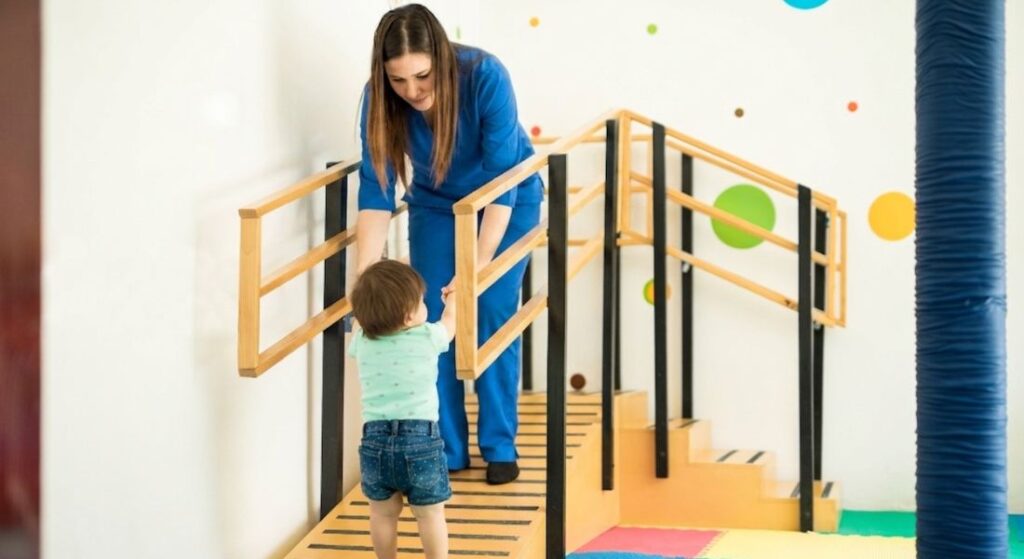
Your child is more likely to stay motivated when physiotherapy feels enjoyable rather than like a daily chore. You can encourage regular practice by turning activities into games and choosing things your child already enjoys.
Instead of presenting every activity as “exercise”, try using toys, songs, playground equipment, family walks, swimming, pretend play or simple challenges. These everyday experiences can help your child build movement skills while keeping therapy fun and engaging.
You can also support your child’s confidence by praising their effort, even when progress seems slow. Avoid comparing your child with siblings or classmates, as every child develops differently, and the goal is to help your child feel capable, confident and motivated to keep trying.
Pain, Fatigue and Safety
Mild, short-lived exertion can occur during active play or therapy, but pain, breathlessness, unusual weakness, marked distress or prolonged fatigue should not be regarded as a necessary part of treatment. Because of low muscle tone, your child may become tired more quickly as they use extra effort to maintain posture and movement. If your child has unexplained weakness or a diagnosed neuromuscular condition, strengthening and endurance activities should follow condition-specific advice.
Your physiotherapist should help you understand the difference between a healthy level of challenge and doing too much. This allows you to support your child safely while encouraging steady progress without causing unnecessary discomfort.
If your child is unusually tired after therapy, avoids activities because of pain, becomes breathless, loses previously gained skills or seems weaker than before, you should seek professional advice. These changes may indicate that your child’s programme needs to be reviewed or that further medical assessment is required.
Physiotherapy and Nursery Support
Nursery can provide valuable opportunities for your child to practise movement skills as part of everyday play and learning. With the right support, your child can build confidence while taking part in activities alongside other children.
You may find that your child needs extra help with floor play, sitting, climbing, outdoor play, moving between activities, using stairs, getting dressed or managing fatigue during the day. With your permission, the physiotherapist can also provide practical advice to nursery staff on safe positioning, encouraging movement, allowing rest breaks and adapting activities when needed.
It is important that nursery staff understand how hypotonia affects your child. Rather than rushing, pressuring or criticising them, giving your child extra time, encouragement and appropriate support can help them participate more comfortably and confidently.
Physiotherapy and School Support
Hypotonia can affect many parts of your child’s school day, including posture, handwriting, PE, playground activities, using stairs, sitting on the floor and maintaining energy throughout lessons. With the right support, your child can take part more comfortably and confidently in school life.
Your child’s school support plan may include movement breaks, supportive seating, a footrest, adapted PE activities, extra time for changing, strategies to reduce fatigue or safe playground adjustments. If handwriting is affected, you may also be advised to involve an occupational therapist to provide additional support.
If your child has a diagnosis or clear functional needs, you may find it helpful for the school to receive written recommendations from the physiotherapist or occupational therapist. The aim is to help your child participate as fully as possible in learning and school activities, rather than limiting their involvement.
What Parents Can Do Every Day
You can support your child’s development by making movement part of your everyday routine rather than setting aside long exercise sessions. Simple activities throughout the day can help your child practise important skills in a natural and enjoyable way.
You might encourage your child to walk short distances, climb safely at the playground, help with simple household tasks, carry light objects, play on the floor, swim, dance, throw balls or practise using the stairs. Some children tolerate shorter, more regular activities better than prolonged sessions.
It is important to follow your physiotherapist’s advice, but try not to let home life become centred around constant therapy. Your child also needs time to rest, play, enjoy family life and build confidence, as these are just as important for their overall development.
What Parents Should Avoid
There are a few things you can do to help make physiotherapy a positive experience for your child. Try not to assume that your child is being lazy or unwilling, as children with hypotonia often need much more effort to complete everyday movements.
You should also avoid forcing exercises that cause pain, fear or extreme tiredness, and avoid buying equipment or braces without professional advice. Discuss any plan to reduce, pause or change therapy with the physiotherapist, particularly if your child’s symptoms, diagnosis or functional needs have changed.
You should never ignore warning signs such as progressive weakness, loss of previously gained skills, feeding difficulties or breathing problems, as these need prompt medical assessment. It is also helpful to avoid comparing your child’s progress with another child’s, because every child with hypotonia develops at their own pace and follows a different journey.
When to Ask for a Physiotherapy Referral
You may want to ask about a physiotherapy referral if your child has low muscle tone and is finding everyday movement more difficult. This may include delays in motor milestones, poor posture, balance problems, frequent falls, difficulty with walking or stairs, tiredness, or reduced confidence during play and school activities.
NICE recommends considering physiotherapy or occupational therapy when certain motor milestones are delayed, as early assessment may identify appropriate movement activities, practical support or further investigation. If you are concerned about your child’s progress, it is worth discussing these concerns with a healthcare professional.
You can speak to your GP, paediatrician, health visitor, child development service or your child’s school about referral options. Some families also choose private paediatric physiotherapy, but if your child has warning signs or the cause of their hypotonia is unclear, physiotherapy should be combined with an appropriate medical assessment.
When to See a Paediatrician
If you are concerned about your child’s muscle tone, movement or development, seeing a paediatrician is an important first step. They can carry out a detailed assessment to understand your child’s tone, strength, reflexes, growth, feeding, breathing, posture, coordination and overall development.
Based on the assessment, your paediatrician can decide whether your child would benefit from physiotherapy, occupational therapy, speech and language therapy, orthotics, blood tests, genetic testing, referral to a neurologist or support from a child development service. This helps ensure that any underlying cause is investigated when necessary.
Your paediatrician can also make sure physiotherapy forms part of the right overall care plan for your child. By looking at the full picture, they can recommend the most appropriate support and coordinate any additional assessments or treatments your child may need.
When Neurology or Genetics May Be Needed
In some situations, your child may need to be referred to a neurologist or genetics specialist for further assessment. This is more likely if the hypotonia is significant, has no clear cause, is associated with weakness, seizures, developmental regression or forms part of a wider pattern of concerns.
A referral does not automatically mean your child has a serious condition. Instead, it helps specialists investigate the possible cause and decide whether any further tests or treatment are needed. NICE recommends urgent neurological assessment for progressive limb weakness and immediate neurological assessment for sudden-onset or rapidly progressive limb or facial weakness.
Your child’s physiotherapist may recognise signs that suggest a medical review is needed and advise you to seek further assessment. However, any diagnosis should be made by a paediatrician or the appropriate specialist after a full clinical evaluation.
Common Myths About Physiotherapy for Hypotonia
| Myth | Fact |
| Physiotherapy cures hypotonia completely | It may support function, mobility or participation but does not remove every cause of low muscle tone |
| More exercises always mean faster progress | Children need safe, realistic practice with rest and play |
| A child with hypotonia is lazy | Many children are working harder than peers to move and stay upright |
| Therapy should be painful to work | Pain is not the goal and should be discussed |
| Orthotics are needed for every child | Orthotics should be individually assessed |
| Once a child walks, therapy is no longer needed | Some children still need support with balance, endurance, posture or school activities |
| Online exercises are enough | A child with hypotonia should have assessment and an individual plan |
| Mild hypotonia never affects school | Low tone can affect sitting, PE, handwriting, fatigue and confidence |
Key Takeaways
- Physiotherapy does not cure every cause of hypotonia.
- Treatment should focus on functional movement, participation and meaningful family goals.
- No single exercise programme is suitable for every child.
- Evidence for many individual interventions remains limited.
- The frequency of appointments should be reviewed according to the child’s needs and progress.
- Home activities should be safe, realistic and incorporated into ordinary routines.
- Orthotics and equipment require individual assessment.
- Physiotherapy should complement, not replace, paediatric investigation.
- Sudden floppiness, rapidly worsening weakness, serious breathing problems or a new gait abnormality need immediate assessment.
- Progressive weakness, feeding difficulty with weakness or loss of skills require prompt specialist review.
Frequently Asked Questions
1. Can physiotherapy improve hypotonia in children?
Physiotherapy may support strength, balance, posture, mobility and gross motor development when treatment is matched to the child’s individual needs. It does not remove every cause of hypotonia, and outcomes vary considerably.
2. At what age should a child with hypotonia start physiotherapy?
Physiotherapy may be considered when low muscle tone affects movement, motor development, comfort or participation. The appropriate time to begin depends on the assessment and whether any underlying medical concerns need investigation.
3. How often does a child with hypotonia need physiotherapy?
There is no standard schedule. Some children may initially need regular appointments, while others may benefit from periodic reviews and a personalised home programme. Frequency should be reviewed according to the child’s diagnosis, goals and progress.
4. What exercises are commonly used for children with hypotonia?
A paediatric physiotherapist may use activities such as tummy time, crawling games, balance exercises, climbing, obstacle courses, ball games, sit-to-stand practice and strengthening exercises. Most activities are designed to be playful and appropriate for the child’s age and abilities. Exercises should not be copied from another child’s programme, particularly when weakness or a neuromuscular condition is suspected.
5. Can physiotherapy help my child walk independently?
Physiotherapy may provide opportunities to practise balance, posture, mobility and functional movement skills that contribute to walking. However, it cannot guarantee independent walking because the outcome depends largely on the underlying condition, muscle strength and wider neurological development.
6. Will my child need exercises at home?
Some children receive a home programme, while others mainly need advice, monitoring or periodic review. When home activities are recommended, they should be clearly demonstrated, realistic for your family and adapted to your child’s diagnosis and abilities.
7. Are orthotics or supportive footwear always necessary for children with hypotonia?
No. Orthotics and supportive footwear are not routinely required for every child with hypotonia. They may be considered when foot position, ankle instability or alignment affects standing, walking or participation. A physiotherapist or orthotist should assess whether they are appropriate for your child.
8. Can physiotherapy be combined with other therapies?
Yes. Some children need input from several professionals, depending on whether hypotonia affects gross motor movement, fine motor skills, feeding, swallowing, communication or wider development. This may include physiotherapy, occupational therapy, speech and language therapy, feeding support or paediatric specialist care.
9. When should I seek medical advice instead of relying on physiotherapy?
Seek immediate medical help if your child suddenly becomes floppy, develops rapidly worsening weakness, has serious breathing difficulty, becomes difficult to wake or develops a new walking abnormality. Progressive weakness, loss of skills or feeding difficulty in a floppy or weak baby also requires prompt specialist assessment.
10. How long does it take to see results from physiotherapy for hypotonia?
There is no standard timeframe. Progress depends on the underlying cause, your child’s age and development, the functional goal being addressed and how the skill is practised in everyday life.
Final Thoughts: Supporting Your Child’s Progress with Physiotherapy
Physiotherapy may play a valuable role in supporting strength, balance, posture, mobility and everyday participation in children with hypotonia. It does not treat every underlying cause of low muscle tone, and progress varies considerably between children. A personalised programme can help your child work towards meaningful motor goals, build confidence and become more independent in everyday activities. Appropriate assessment, graded practice and realistic goals may support progress over time.
Every child with hypotonia has unique needs, so assessment and treatment should always be tailored to their individual abilities and challenges. If you are looking for expert support or would like to consult a paediatrician for hypotonia in children, you can contact London Paediatric Clinic.
References:
- National Institute for Health and Care Excellence (NICE) (2019, updated 2023) Suspected neurological conditions: recognition and referral. NICE guideline NG127. Available at: https://www.nice.org.uk/guidance/ng127/chapter/recommendations-for-children-aged-under-16
- NHS Tayside (2025) ‘Assessment and investigation of the floppy infant’. Right Decisions. Last reviewed 12 December 2025. Available at: https://www.rightdecisions.scot.nhs.uk/nhs-tayside-paediatrics-pathways/general-paediatrics/assessment-and-investigation-of-the-floppy-infant/
- American Academy for Cerebral Palsy and Developmental Medicine (AACPDM) (n.d.) Central Hypotonia Care Pathway. Milwaukee, WI: AACPDM. Available at: https://www.aacpdm.org/publications/care-pathways/central-hypotonia
- Paleg, G.S., Hidalgo Robles, Á., Govender, P. and Livingstone, R.W. (2025) ‘Occupational and physical therapy interventions for young children with developmental central hypotonia: an overview of systematic reviews’, Disabilities, 5(1), Article 14. Available at: https://www.mdpi.com/2673-7272/5/1/14
- Paleg, G., Romness, M. and Livingstone, R. (2018) ‘Interventions to improve sensory and motor outcomes for young children with central hypotonia: a systematic review’, Journal of Pediatric Rehabilitation Medicine, 11(1), pp. 57–70. Available at: https://pubmed.ncbi.nlm.nih.gov/29630564/