



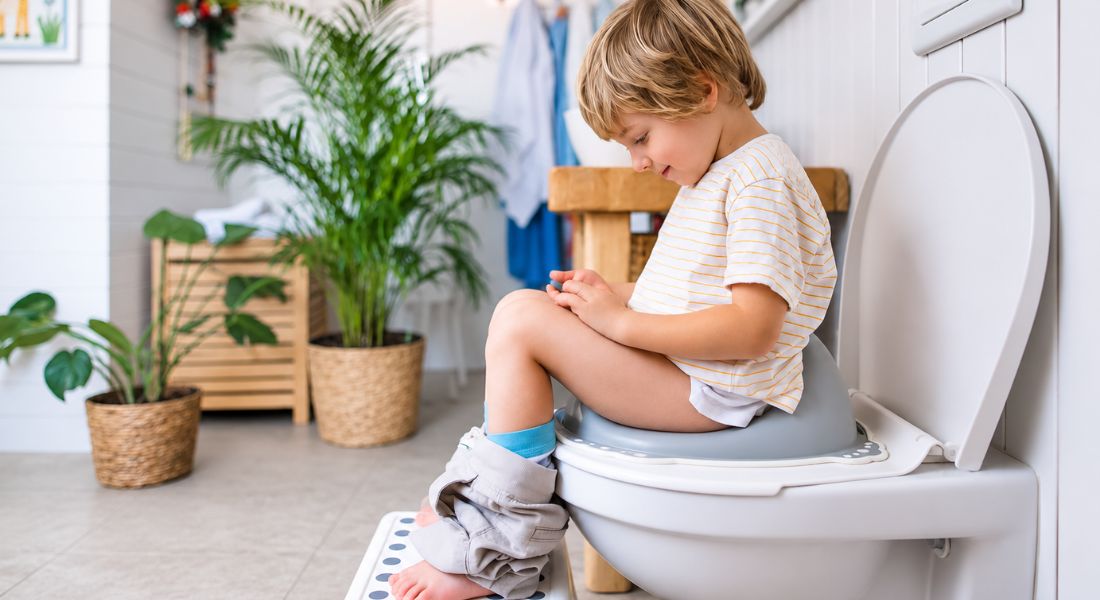
Toilet training is an important milestone, but it does not always go as smoothly as you hope. You may find that your child is happy to wee in the potty or toilet but becomes anxious, resistant or upset when it is time to poo. Although constipation during toilet training is common, early support and treatment can usually help children regain confidence and establish healthy toileting habits.
Constipation is common during the potty training years. The NHS notes that constipation commonly develops during the potty training years, often around ages 2 to 3. For some children, it begins after one painful bowel movement, while for others the move from nappies to a potty or toilet simply feels unfamiliar or frightening.
Once your child starts withholding stools, a cycle of pain, fear and constipation can quickly develop. In this guide, you will learn why toilet training can trigger constipation, how stool withholding develops, the signs to look out for and how you can help your child develop healthy, confident toileting habits.
Why Constipation Can Start During Toilet Training
Constipation often begins during toilet training because your child is adjusting to several new changes at the same time. They are learning to recognise the urge to have a poo, follow new routines and use a different place to empty their bowels.
You may find that your child is happy to wee in the potty but feels worried about pooing there. Pooing can feel more private, more physically uncomfortable and more emotionally challenging than passing urine. ERIC explains that stool withholding is especially common during toilet training and can also happen when your child uses unfamiliar toilets, such as those at nursery or school.
This does not mean you have done anything wrong or that toilet training has failed. It simply means your child may need a slower, calmer and more supportive approach while they build confidence.
Why Children Hold in Their Poo
Children may hold in their poo for many different reasons, but one of the most common is fear after a painful bowel movement. If your child has experienced pain while pooing, they may worry that it will happen again and start avoiding the toilet.
ERIC explains that stool withholding often begins after constipation, as even one painful poo can make a child anxious. Other reasons include fear of the potty or toilet, worrying about falling in, disliking the flushing noise, not wanting to stop playing, embarrassment, changes in routine, avoiding nursery or school toilets, or only feeling comfortable pooing in a nappy.
The reason is not always obvious, and your child may not be able to explain how they feel. You may simply notice that they refuse to use the potty, ask for a nappy or hide when they feel the urge to poo.
The Pain and Withholding Cycle
Constipation and stool withholding often become a cycle that is difficult to break. If your child passes a hard, painful stool, they may start holding in the next one because they are worried it will hurt again.
When your child holds in a stool, it stays in the bowel for longer, where more water is absorbed from it. This makes the stool harder, larger and even more painful to pass. ERIC describes this as a vicious cycle, where fear of pain leads to withholding, which then makes constipation worse.
This pattern can develop quickly during toilet training, and reassurance alone may not be enough once your child expects pooing to be painful. Treatment aims to keep stools soft and comfortable long enough for your child to regain confidence.
Evidence Note:
Research and UK clinical guidance show that early treatment can help interrupt the cycle of pain, stool withholding and worsening constipation, which may make toilet training easier for many children.
Constipation Symptoms During Toilet Training
Constipation during toilet training does not always mean your child is simply “not going” to the toilet. Your child may still pass stools, but they can be hard, large, painful or difficult to pass.
You may notice that your child cries, strains, avoids sitting on the toilet, complains of tummy pain or soils their underwear. The NHS also lists signs such as fewer than three bowel movements a week, pellet-like stools, bleeding after passing a large hard stool, a poor appetite and tummy pain that improves after pooing.
Passing a stool every day does not necessarily rule out constipation, particularly if stools are hard, painful or difficult to pass. If stools are consistently hard, painful or difficult to pass, constipation may still be present.
Toilet Training Constipation at a Glance
The table below can help you recognise common patterns.
| What You May Notice | What It May Mean | Helpful Response |
| Refusing to sit on the potty | Fear, pressure or lack of readiness | Pause pressure and rebuild confidence |
| Asking for a nappy to poo | Toilet avoidance or fear of change | Allow gradual transition rather than forcing |
| Hard or pellet-like stools | Constipation | Seek advice and soften stools |
| Crying when pooing | Painful bowel movements | Treat constipation early |
| Hiding to poo | Withholding or privacy need | Stay calm and avoid shame |
| Smudges in pants | Possible overflow or incomplete emptying | Consider constipation, not laziness |
| Very large stools | Stool has built up | Medical review may be needed |
| Tummy pain | Stool retention may be contributing | Track pattern and seek advice |
| Avoiding nursery toilets | Toilet anxiety or privacy concerns | Discuss support with nursery |
| Repeated accidents | Constipation or readiness issue | Avoid punishment and review the plan |
No single sign proves the cause. The pattern over several days or weeks is more useful.
Pooing in a Nappy After Toilet Training Has Started
Some children will happily use the potty or toilet for wees but still ask for a nappy when they need to poo. This is a common stage of toilet training and does not necessarily mean your child is going backwards.
ERIC explains that many children go through this phase and advises that if your child insists on using a nappy to poo, it is usually better not to refuse.
Instead, allow your child to use the nappy while gradually helping them become more comfortable with pooing in the bathroom and, later, on the potty or toilet. A slow, supportive approach is often more successful than expecting an immediate change.
Why Forcing the Potty Can Backfire
Toilet training can quickly become a struggle if your child feels pressured or anxious about using the potty. If they are frightened of pain or the toilet itself, forcing them to sit may increase their fear rather than help.
When this happens, your child may start holding in their stools more often or hide when they feel the urge to poo. This does not mean you should ignore the problem, but instead focus on making bowel movements feel comfortable, predictable and safe.
A calm, supportive approach is usually more effective than repeated reminders or arguments. Your child needs to feel that you are helping them, not blaming or pressuring them, as this can build confidence and make toilet training easier over time.
Toilet Readiness Matters
Every child becomes ready for toilet training at their own pace. Your child may be physically ready to use the toilet but still need more time to feel emotionally confident.
It is common for a child to understand where wee goes but still feel worried about pooing. Passing a stool often requires more body awareness, longer periods of sitting and a greater sense of privacy, which can take time to develop.
ERIC advises that children learn toilet skills at different rates and should be given the time they need to develop them gradually. If toilet training is causing distress or constipation, you may find it more helpful to step back for a while rather than pushing your child to continue.
Should You Pause Toilet Training if Your Child Is Constipated?
If your child is constipated, it is often helpful to pause toilet training and focus on treating the constipation first. This can make the process less stressful and give your child a better chance of succeeding when they are ready.
ERIC advises making sure constipation is well managed before trying to change toileting behaviour in children who avoid the potty or toilet. If your child is passing hard, painful stools, they are unlikely to feel comfortable or confident using the potty.
Pausing toilet training does not mean giving up or losing progress. Instead, you are removing pressure while helping your child pass soft, comfortable stools and rebuild their confidence before trying again.
Constipation Should Be Treated Early

If your child is constipated, it is best to seek help early rather than waiting for the problem to improve on its own. Constipation can become more difficult to treat the longer it continues.
The NHS advises seeing your GP if you think your child may be constipated, as treatment depends on your child’s age and symptoms. Early treatment can help prevent the cycle of painful bowel movements, stool withholding and ongoing constipation from becoming established.
You do not need to wait until toilet training has become a daily struggle before asking for advice. A conversation with your GP, health visitor or paediatrician can help you understand the cause and decide on the most appropriate treatment for your child.
How Doctors Diagnose Constipation During Toilet Training
Constipation is usually diagnosed by talking about your child’s symptoms and carrying out a physical examination. In most cases, no special tests are needed to identify the problem.
Your healthcare professional may ask how often your child poos, what their stools look like, whether passing a stool is painful, if they are withholding, whether they have accidents and if toilet training has recently started. You may also be asked about your child’s bowel habits from birth, their diet, fluid intake, medicines, growth and any warning signs.
NICE recommends making a positive diagnosis of idiopathic constipation based on clinical history and examination, while assessing for features that may suggest an underlying condition. This helps ensure your child receives the most appropriate treatment and support.
When Constipation Is Functional
Most constipation during toilet training is functional, which means there is no structural problem with your child’s bowel causing the symptoms. Even so, it is a real medical condition that can affect your child’s comfort and confidence.
Functional constipation can lead to pain, bloating, a poor appetite, stool withholding, soiling and changes in your child’s mood or behaviour. These symptoms can make toilet training more difficult if they are not managed properly.
NICE explains that idiopathic constipation cannot currently be explained by anatomical, physiological, radiological or histological abnormalities. This does not mean that nothing is wrong, but rather that your child’s bowel habits have become disrupted and need appropriate treatment and support.
Red Flags That Need Medical Assessment
Most constipation during toilet training is not serious, but some symptoms need prompt medical assessment. Knowing when to seek help can ensure your child receives the right treatment without delay.
NICE advises that children with red-flag symptoms should not simply be treated for constipation and should be assessed urgently by a healthcare professional with experience in children’s health. You should seek medical advice if your child’s constipation started from birth or the first few weeks of life, they passed their first stool late as a newborn, or they have severe tummy swelling, persistent vomiting, poor growth, leg weakness, abnormalities of the anus or spine, or appear very unwell.
A small amount of blood after passing a hard stool may be caused by a tiny tear around the anus. However, if the bleeding is persistent, unexplained or heavy, your child should be assessed by a healthcare professional as soon as possible.
Red Flags at a Glance
| Red Flag or Concern | Why It Matters |
| Constipation from birth or first few weeks | May suggest an underlying bowel condition |
| Delayed first stool as a newborn | Needs medical history review |
| Severe abdominal swelling | May suggest significant stool build-up or another problem |
| Persistent vomiting | Should not be treated as routine constipation |
| Poor growth or weight loss | May suggest a wider health issue |
| Abnormal leg weakness or delayed walking | May suggest neurological involvement |
| Abnormal anus or spine findings | Needs clinical assessment |
| Child appears very unwell | Requires urgent medical attention |
| Persistent blood in stool | Needs review |
| Severe pain that is worsening | Needs prompt assessment |
A red flag does not automatically mean your child has a serious condition. It means the child needs proper assessment before constipation is treated as routine.
Faecal Impaction During Toilet Training
Faecal impaction is a build-up of hard stool in the bowel that becomes difficult for your child to pass. When this happens, normal toilet training can become much more challenging and uncomfortable.
Your child may go several days without pooing, pass very large stools, have tummy pain, lose their appetite or experience soiling. Loose, unpleasant-smelling stool can also leak around the hard stool, which may seem confusing but is a recognised sign of constipation.
NICE recommends assessing children with idiopathic constipation for faecal impaction by taking a careful history and carrying out a physical examination when appropriate. If your child has faecal impaction, they may need a specific disimpaction plan before toilet training can progress successfully.
Why Soiling Can Happen During Toilet Training
Soiling during toilet training can be confusing and frustrating, and you may wonder why it is happening. However, if your child is constipated, it is often not something they can control.
When stool builds up in the bowel, softer stool can leak around the blockage, causing soiling without your child fully feeling or controlling it. NICE recognises soiling, also known as overflow, as a common sign of idiopathic constipation.
Try not to punish or blame your child for accidents, as this can increase anxiety and make stool withholding worse. A calm, supportive response helps your child understand that their body needs treatment and reassurance, not criticism.
Laxatives and Toilet Training
Some children need laxatives during toilet training because they are constipated or have a build-up of hard stools. Treating constipation early can make toilet training more comfortable and help your child regain confidence.
NICE recommends macrogol 3350 with electrolytes as the first-line oral treatment for disimpaction when it is needed. After this, your healthcare professional may advise maintenance treatment to help keep your child’s stools soft and regular.
You may worry that laxatives will delay toilet training, but keeping bowel movements comfortable can help your child rebuild trust and confidence during toilet training. The type of medicine, the dose and how long it should be used should always be guided by a healthcare professional.
Fluids, Fibre and Movement
Your child’s bowel health is supported by regular fluids, fibre-containing foods and daily physical activity. Healthy habits can help keep stools softer and encourage regular bowel movements.
ERIC recommends encouraging regular water-based drinks throughout the day so your child stays well hydrated, including plenty of fruit and vegetables in your child’s diet, and encouraging regular movement and play. Try to keep these habits relaxed rather than making every meal about constipation.
You can offer fruit, vegetables, wholegrain foods and other age-appropriate sources of fibre as part of normal family meals. Encourage your child to drink regularly throughout the day instead of expecting them to have a large amount before bedtime.
Building a Calm Toilet Routine
A calm, predictable routine helps your child know what to expect and can make toilet training feel less stressful. Following the same routine each day can also encourage regular bowel habits.
Guidance from ERIC suggests encouraging your child to sit on the toilet 20 to 30 minutes after meals and before bed, as this is when the bowel is often more active. You should also encourage a comfortable sitting position and use a footstool if needed.
Keep toilet sits short and pressure-free rather than expecting your child to sit for a long time. A few calm, relaxed minutes are usually more effective than a session that feels rushed or stressful.
Toilet Posture Matters
Many children find it difficult to use an adult toilet because their feet cannot reach the floor, leaving them feeling unstable and insecure. This can make it harder for your child to relax and pass a bowel movement comfortably.
A footstool can make a big difference. ERIC recommends that your child’s feet are flat and supported, with their knees slightly higher than their hips, and that they use a child’s toilet seat if it helps them feel more secure.
This position allows your child to relax their pelvic floor muscles and use their tummy muscles more effectively when pooing. Although good posture will not treat constipation on its own, it can make bowel movements feel easier and less frightening.
Clinical Tip:
Many parents focus on encouraging their child to sit on the toilet for longer. In reality, correct posture is often more important than time. Supporting your child’s feet with a footstool and keeping the knees slightly higher than the hips helps relax the pelvic floor and makes bowel movements easier.
Practical Toilet Training Plan
The table below gives a simple structure you can adapt.
| Step | What to Do | Why It Helps |
| Treat pain first | Seek advice if stools are hard or painful | A child cannot train confidently if pooing hurts |
| Keep stools soft | Use prescribed laxatives as advised | Reduces fear and withholding |
| Use short toilet sits | Try after meals and before bed | Uses natural bowel activity |
| Support feet | Use a footstool | Helps secure, relaxed posture |
| Avoid pressure | Do not force long sits | Reduces fear and resistance |
| Praise effort | Reward sitting, trying and taking medicine | Builds confidence |
| Allow privacy | Stay nearby but avoid crowding | Helps children feel safe |
| Track patterns | Use a simple bowel diary | Helps guide treatment |
| Work with nursery | Agree toilet access and support | Prevents withholding outside home |
| Reduce slowly | Do not stop laxatives suddenly | Helps prevent relapse |
Your child may need several weeks or months of consistency. Progress is not always immediate.
Rewards and Praise
Rewards can be a helpful way to encourage your child during toilet training, especially when they focus on effort rather than results. Praising small achievements helps build confidence and makes the experience feel more positive.
You can praise your child for sitting on the toilet calmly, listening to their body, drinking enough fluids, taking their medicine or telling you when they need to poo. If your child is constipated, avoid only rewarding a successful bowel movement, as this may add unnecessary pressure.
Simple rewards, such as stickers, a progress chart, extra story time or choosing a favourite song, can make toilet routines more enjoyable. The aim is to reduce stress and encourage healthy habits, not to make your child feel they have to perform.
Avoiding Shame Around Poo
Your child quickly notices how you react to accidents or bowel movements. If they see anger, frustration or disgust, they may become more anxious about pooing and be more likely to hold in their stools.
Try to use calm, reassuring language when talking about constipation. You might say, “Your poo is stuck, and we are helping your body make it softer,” so your child understands that the problem can be treated.
Avoid calling your child lazy, dirty or babyish, even if you feel frustrated. Helping your child see that constipation is a physical problem rather than something they have done wrong can build confidence and reduce anxiety.
When Your Child Refuses the Potty
Potty refusal is common and does not always mean your child is not trying. They may not feel ready yet, be worried about sitting on the potty or have learned to associate pooing with pain because of constipation.
If your child is constipated, treating the constipation should come first. ERIC advises that constipation often contributes to potty or toilet avoidance, so it should be managed before focusing on changing toileting behaviour.
You can keep the potty in a familiar place and make it feel positive without any pressure. Let your child sit on it fully clothed, read a book nearby or watch normal bathroom routines, so they gradually feel safe and confident before being expected to use it.
When Your Child Will Only Poo Standing Up
Some children will only poo while standing, squatting or hiding because that is what feels familiar from wearing nappies. Moving to a sitting position can feel unfamiliar and may take time for your child to accept.
You can help by making the change gradually rather than expecting an immediate switch. Your child might first use a nappy in the bathroom, then near the potty, before sitting on the potty while still wearing the nappy.
As your child’s confidence grows, you can slowly loosen the nappy or reduce their reliance on it, one step at a time. Try not to rush the process, as gradual progress is often more successful than forcing a sudden change.
When Your Child Asks for a Nappy to Poo
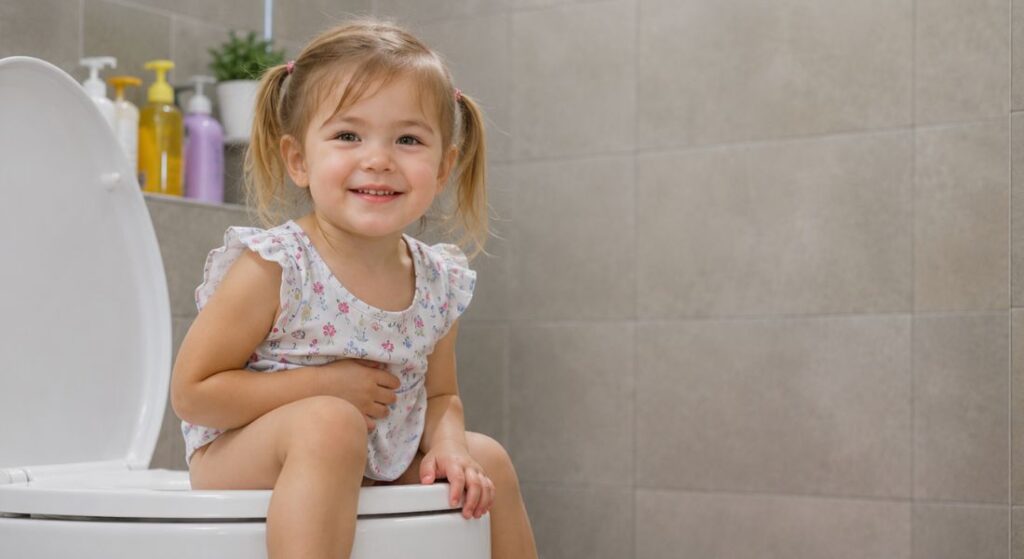
If your child asks for a nappy to poo, it may feel like they are going backwards with toilet training. Removing the nappy suddenly may cause some children to delay passing stool, increasing anxiety and discomfort.
A gradual transition is usually recommended rather than removing the nappy suddenly, as this may increase stool withholding. Instead, you can gradually change where and how the nappy is used while helping your child feel safe and confident.
For example, you could first encourage your child to use the nappy in the bathroom. As their confidence grows, they can sit on a closed toilet lid or potty while wearing it, making the transition to the toilet feel more comfortable over time.
Nursery and Childcare Support
Nursery staff can play an important role in helping your child avoid stool withholding. If your child is constipated or feels anxious about pooing, let the nursery know so they can provide the right support.
You should ask whether your child has enough privacy, can use the toilet whenever they need to and is given enough time without feeling rushed. Some children also feel more confident with a familiar adult, a regular toilet routine or a simple reward system.
Do not assume the nursery knows what is happening at home. Ask nursery staff to let you know if they notice stool withholding, accidents or reluctance to use the toilet, as this information can help you and your healthcare professional monitor progress.
Starting School With Constipation
Starting school can be challenging if your child is constipated, especially if they avoid using the school toilets. Holding in stools throughout the day can make constipation worse and make bowel movements more painful.
ERIC notes that many children prefer not to poo at school, which can increase the risk of constipation. If this is affecting your child, speaking with the school can help create a supportive plan that meets their needs.
You can ask the school to provide easy toilet access, privacy, permission to go when needed, spare clothes and a trusted adult your child can speak to. Your child should never be shamed for a medical condition, and protecting their dignity is an important part of successful treatment.
Toilet Training Regression
It is not unusual for your child to start having accidents again after they have been toilet trained. This can happen after an illness, a stressful event, the arrival of a new sibling, moving home, starting nursery or experiencing painful constipation.
Regression does not always mean your child is being defiant or refusing to cooperate. It may be a sign that something has changed physically or emotionally, and your child may need extra reassurance, patience and support.
ERIC advises that if toilet training problems continue, you should consider possible underlying causes such as constipation, a bladder infection, diabetes, threadworms or emotional and developmental factors. If your child’s regression continues, it is best to seek advice from a healthcare professional rather than relying on stricter rules.
Children With Additional Needs
If your child has autism, sensory sensitivities, learning differences, communication difficulties or developmental delay, they may need a more personalised toileting plan. ERIC also notes that stool withholding is common in some children with additional needs, including those with autism.
Your child may find certain parts of the bathroom uncomfortable, such as loud flushing sounds, bright lights, strong smells, cold toilet seats or even the feeling of sitting on the toilet. These sensory experiences can make toilet training more challenging and increase anxiety.
The same principles still apply, including keeping stools soft, following calm routines, using a footstool and avoiding punishment. You may simply need to move at your child’s pace and use extra support, such as visual schedules, social stories or sensory adjustments, to help them feel more comfortable.
Emotional Anxiety Around Toileting
Toileting can become emotionally stressful if your child has experienced painful bowel movements or accidents. They may worry that passing a stool will hurt, that they will be told off, or that something unpleasant will happen when they use the toilet.
NICE recognises that psychological factors and toilet training can contribute to constipation. If your child feels anxious, they are more likely to avoid using the toilet, which can make constipation worse.
You can help by offering reassurance, keeping toilet routines predictable and giving your child a sense of control. Simple choices, such as picking a book to read, choosing a reward sticker or deciding whether the bathroom door stays slightly open, can help them feel more comfortable and confident.
What Parents Can Do Instead
Stay calm and take a practical approach if your child is struggling with constipation during toilet training. Small, consistent changes are often more helpful than putting pressure on your child to use the toilet.
If your child has been prescribed laxatives, follow the treatment plan as advised. You should also make toilet sits relaxed and predictable, use a footstool, praise your child’s efforts, keep stools soft and work closely with their nursery or school if needed.
Keeping a simple diary of bowel movements, pain, withholding, accidents, medicines and toilet sits can help you track progress. If your child remains in pain, continues withholding, has ongoing soiling or does not improve, arrange a review with your healthcare professional.
When to See a Paediatrician

If your child’s constipation is ongoing, painful, difficult to treat or causing frequent soiling, it may be time to see a paediatrician. A specialist review can also be helpful if toilet training has become stressful or your child is anxious about using the toilet.
A paediatrician will look at the full picture, including your child’s bowel habits, withholding behaviour, diet, fluid intake, growth and response to previous treatment. They will also check for any warning signs and discuss whether nursery or school routines may be affecting progress.
After the assessment, you will have a clearer understanding of the next steps. This may include disimpaction, maintenance treatment, a behavioural toileting plan or, if needed, further investigations to identify the underlying cause.
How Long Can Recovery Take?
Recovery from constipation can take time, especially if your child has been constipated for several weeks or months. Although this may feel frustrating during toilet training, it is normal for progress to happen gradually.
NICE advises that effective treatment is available, but it may take several months for constipation to fully resolve. You should continue following your child’s treatment plan and healthy routines, even if improvements seem slow at first.
Recovery is rarely completely linear. It is common for children to have good days and more difficult days while their bowel recovers. Signs of improvement may include softer stools, less fear of using the toilet, fewer withholding episodes and growing confidence.
Preventing Constipation From Returning
Constipation can return if your child’s stools become hard again or if they start holding in their bowel movements. Even after symptoms improve, keeping up healthy habits helps reduce the chance of it coming back.
You should continue regular toilet sits, encourage plenty of fluids, provide balanced meals and keep your child active. If maintenance treatment has been prescribed, continue it until your healthcare professional advises reducing it.
NICE recommends reducing constipation medicines gradually over several months rather than stopping them suddenly. Watch for early signs such as hiding, harder stools, missed bowel movements, tummy pain or small smears in underwear, as acting early can help prevent a relapse.
Myth vs Fact
| Myth | Fact |
| Toilet training constipation means the child is being stubborn | Many children withhold because pooing has hurt or the toilet feels frightening |
| A child who asks for a nappy should be refused | Refusing may lead to withholding; gradual change is often safer |
| Soiling means the child is lazy | Soiling can happen through overflow around retained stool |
| More fruit and water will always fix it | Diet helps, but established constipation often needs laxatives and routine support |
| Laxatives should stop once the child poos | NICE advises children who are toilet training should remain on laxatives until training is well established |
| Long toilet sits are best | Short, relaxed sits are usually better than pressure |
| Accidents should be punished | Punishment increases shame and may worsen withholding |
| Constipation always resolves by itself | Early treatment can prevent chronic constipation and toilet anxiety |
Key Takeaways
- Toilet training is a common time for constipation to develop, especially around age 2 to 3.
- Stool withholding often develops after a child experiences pain, fear or discomfort during bowel movements, causing them to avoid passing stool.
- Withholding can look like straining, hiding, stiffening, crossing legs, asking for a nappy or refusing the potty.
- A child who will only poo in a nappy should not be forced suddenly, as refusing the nappy may make withholding worse.
- Established constipation usually needs more than diet changes alone. NICE recommends laxatives with non-punitive behavioural support and dietary measures when treating idiopathic constipation.
- Children who are toilet training may need to stay on laxatives until toilet training is well established, and treatment should not be stopped suddenly.
- Toilet routines work best when stools are soft, the child feels safe, feet are supported and praise focuses on effort rather than performance.
- Seek medical advice if constipation is painful, persistent, associated with soiling, causing toilet refusal or linked with red-flag symptoms.
FAQs:
1. Why does constipation often start during toilet training?
Constipation can develop during toilet training because children are adjusting to new sensations, routines and expectations. Some children become worried about using the potty or toilet, especially if they have experienced a painful poo. This can lead to stool withholding, which makes constipation worse.
2. How can I tell if my child is withholding their poo?
Signs of stool withholding may include hiding, standing stiffly, crossing their legs, clenching their bottom, going quiet, refusing the potty or asking for a nappy to poo. Some children may appear to strain when they are actually trying to stop themselves from passing a stool.
3. Should I stop toilet training if my child is constipated?
If your child has painful or hard stools, it may be helpful to pause the pressure around toilet training while constipation is treated. The priority is making bowel movements soft and comfortable so your child can rebuild confidence.
4. My child will only poo in a nappy. Should I refuse to give them one?
Refusing a nappy suddenly can make some children hold in their stool and worsen constipation. A gradual approach is usually better, such as allowing the nappy while slowly encouraging your child to use the bathroom or move closer to using the potty.
5. Can constipation cause accidents or soiling during toilet training?
Yes. Soiling can happen when stool builds up in the bowel and softer stool leaks around the retained poo. This is usually not something your child can control and should not be treated as laziness or bad behaviour.
6. Will increasing fibre and fluids cure toilet training constipation?
A balanced diet with enough fibre and fluids supports healthy bowel habits, but established constipation often needs additional treatment. Many children require laxatives alongside behavioural strategies and dietary support to soften stools and break the withholding cycle.
7. How long does constipation during toilet training take to improve?
Improvement can take weeks or months, especially if your child has been withholding for a long time. The goal is not just one successful poo but regular, soft and comfortable bowel movements that help your child feel confident using the toilet.
8. Should I use rewards during toilet training if my child is constipated?
Rewards can help when they focus on effort rather than results. Praising your child for sitting calmly, trying, drinking fluids or telling you they need to poo can build confidence without creating extra pressure.
9. When should I see a paediatrician about my child’s constipation?
A paediatric review may be helpful if constipation is persistent, painful, associated with soiling, causing severe toilet anxiety, not improving with treatment or affecting your child’s daily life. A specialist can assess bowel habits and recommend an appropriate treatment plan.
10. What are the warning signs that constipation may need urgent medical assessment?
Seek medical advice if constipation started from birth, your child had delayed first stool as a newborn, has severe tummy swelling, persistent vomiting, poor growth, abnormal weakness, significant bleeding, severe worsening pain or appears very unwell. These symptoms may need further assessment rather than routine constipation treatment.
Final Thoughts: Supporting Your Child Through Toilet Training and Constipation
Toilet training can be a challenging milestone, particularly if constipation or stool withholding develops along the way. Although progress may feel slow, most children improve with early treatment, soft and comfortable stools, consistent routines and plenty of reassurance. Remaining patient and avoiding pressure can help your child rebuild confidence and establish healthy bowel habits over time. If your child continues to struggle with constipation, stool withholding or toilet training, seeking advice from a trusted paediatrician in London can help identify the cause and develop an appropriate treatment plan.
References:
- National Institute for Health and Care Excellence (NICE) (2010, updated 2017) Constipation in children and young people: diagnosis and management. NICE Clinical Guideline CG99. Available at: https://www.nice.org.uk/guidance/cg99
- Bokova, E., Svetanoff, W.J., Levitt, M.A. and Rentea, R.M. (2023) ‘State of the art bowel management for pediatric colorectal problems: Functional constipation’, Children, 10(6), article 1078. Available at: https://www.mdpi.com/2227-9067/10/6/1078
- Taubman, B. (1997) ‘Toilet training and toileting refusal for stool only: A prospective study’, Pediatrics, 99(1), pp.54–58. Available at: https://pubmed.ncbi.nlm.nih.gov/8989338/
- Blum, N.J., Taubman, B. and Nemeth, N. (2004) ‘During toilet training, constipation occurs before stool toileting refusal’, Pediatrics, 113(6), pp.e520–e522. Available at: https://pubmed.ncbi.nlm.nih.gov/15173531/
- Canadian Paediatric Society (2000) ‘Toilet learning: Anticipatory guidance with a child-oriented approach’, Paediatrics & Child Health, 5(6), pp.333–335. Available at: https://academic.oup.com/pch/article/5/6/333/2655785
- NHS. Constipation in children. Available at: https://www.nhs.uk/conditions/baby/health/constipation-in-children/
- ERIC – The Children’s Bowel & Bladder Charity. Available at: https://eric.org.uk/